Day 2: Mughal Delhi - Red Fort, Chandni Chowk, and Humayun’s Tomb
Start with Red Fort, a 17th-century masterpiece built by Emperor Shah Jahan, who also built the Taj Mahal. Its red sandstone ramparts once symbolised the heart of Mughal powe, and, later, British rule. From here, take a rickshaw through Chandni Chowk, one of Asia’s oldest markets.
The lanes are thick with spice stalls, tailors, and vendors calling out over the clatter of wheels. Stop at Jama Masjid, India’s largest mosque, able to hold 25,000 worshippers. Its marble domes and slender minarets offer panoramic views of Old Delhi’s maze. For lunch, sample parathas and lassi in Paranthe Wali Gali, a narrow alley that’s been serving fried bread since the 1870s.
In the afternoon, head south to Humayun’s Tomb, built in 1570 and a direct architectural precursor to the Taj Mahal. The symmetry and red sandstone arches mark the beginning of the Mughal architectural style that would later reach perfection in Agra. End the day wandering the Lodhi Art District, where street artists have transformed old government housing into an open-air gallery. Dinner at Hauz Khas Village, a bohemian enclave overlooking a medieval reservoir, ends the day on a calm note.
Day 3: Delhi to Udaipur
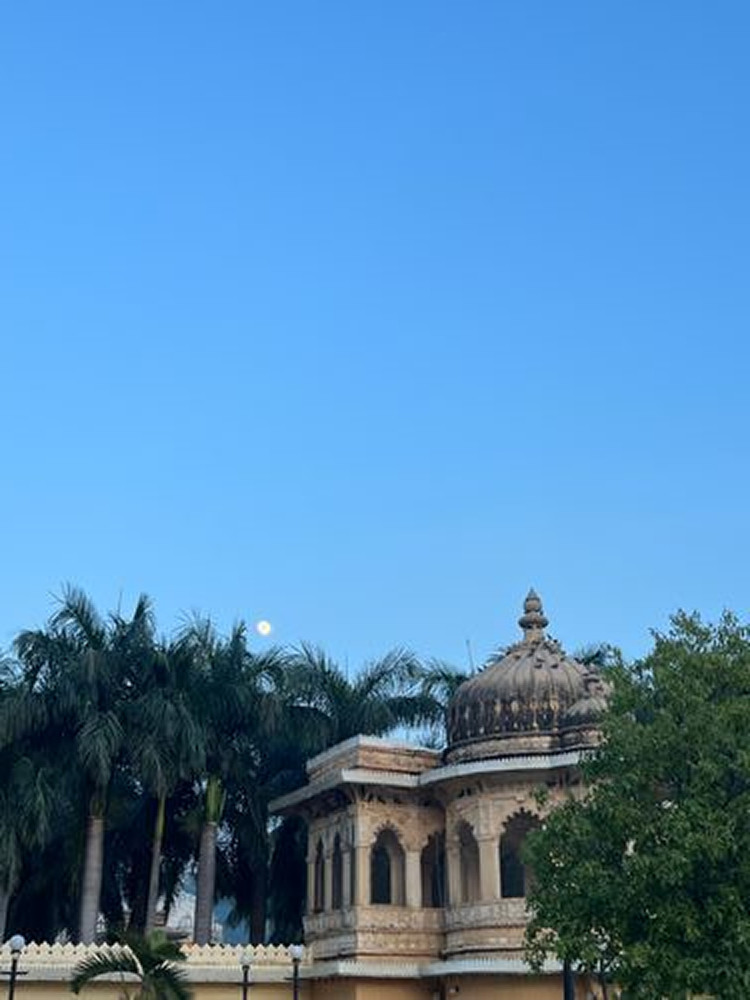
Catch a morning flight to Udaipur, Rajasthan’s “City of Lakes.” Founded in 1559 by Maharana Udai Singh II after the fall of Chittorgarh, it became the capital of the Mewar kingdom and one of the most romantic cities in India.
Spend the afternoon on a boat ride across Lake Pichola, where marble palaces rise directly from the water. The Lake Palace (now a hotel) was once the royal family’s summer retreat, while Jag Mandir island offered refuge to Mughal princes in times of conflict. From the boat, you’ll see life unfold on the ghats, women washing clothes, children jumping in to swim, priests lighting incense.
At sunset, head to Ambrai Ghat, where the reflection of the City Palace turns gold. Dinner at Ambrai Restaurant pairs candlelight with lake views, but for a budget-friendly option, nearby rooftop cafés serve thalis under string lights.
Day 4: Exploring Udaipur
After breakfast, explore the City Palace, a sprawling complex built over 400 years by successive Mewar rulers. Its mirrored halls, marble balconies, and detailed mosaics tell stories of battles, festivals, and royal processions. Don’t miss the Mor Chowk (Peacock Courtyard), where each tile forms an intricate feather.
From the palace, walk to Bagore Ki Haveli, a restored 18th-century mansion on the lakefront. The small museum inside displays Rajasthani costumes and puppets, Udaipur’s folk art heritage. If you’re here in the evening, the haveli hosts a short dance and puppet show in its courtyard.
Spend the late afternoon wandering the narrow streets, ducking into leather shops, miniature painting studios, and stalls selling camel-bone jewellery. For dinner, find a rooftop spot overlooking the lake, Rainbow Restaurant and Jheel’s Ginger Coffee Bar are relaxed favourites, whilst Umre is more refined.
Day 5: Udaipur to Pushkar (6 hrs drive)
Leave early for the six-hour drive to Pushkar, one of India’s oldest and holiest towns. Legend says Lord Brahma, the Hindu creator god, dropped a lotus flower here and where it fell, Pushkar Lake appeared. The town grew around it, becoming one of only a few places in the world with a Brahma Temple.
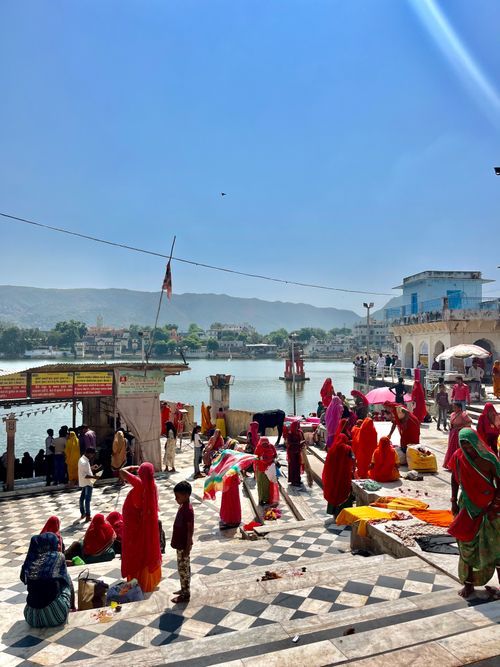
As you arrive, the mood changes: Pushkar feels half-sacred, half-bohemian. Pilgrims circle the lake’s 52 ghats chanting prayers, while travellers sip coffee on terraces above them. Visit the Brahma Temple (remove your shoes before entering) and walk the lake at sunset, when musicians play and devotees release floating lamps.
For dinner, Pushkar’s cafés are vegetarian by law; try falafel plates or lentil thali at Sunset Café or The Laughing Buddha, both with lake views.
Day 6: Pushkar to Jaipur (3 hrs drive)
Drive to Jaipur, the “Pink City,” built in 1727 by Maharaja Sawai Jai Singh II. The city’s grid layout was revolutionary for its time, reflecting the ruler’s passion for astronomy and urban planning. The distinctive terracotta hue, closer to salmon than pink: was added in 1876 to welcome the visiting Prince of Wales, symbolising hospitality.
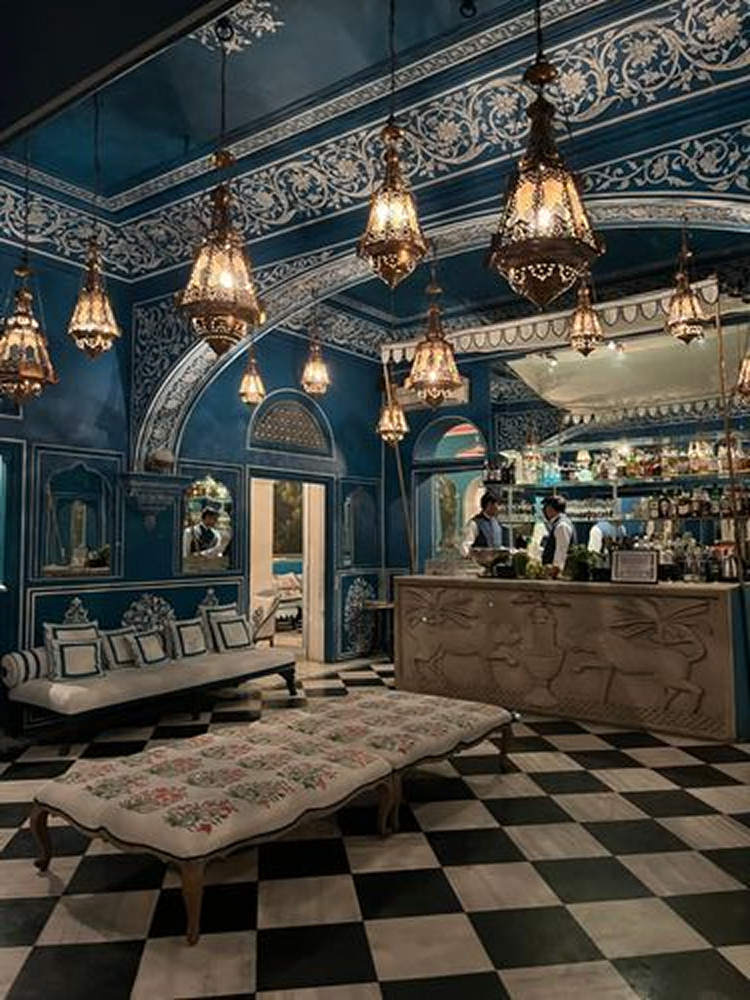
Spend the afternoon getting your bearings: rickshaw through the old city, admire Hawa Mahal, and stop for masala chai at a street stall. Dinner at Bar Palladio, a Mughal-Italian fusion restaurant set in an old palace garden, offers a serene, blue-walled contrast to the city’s chaos.
Day 7: Amber Fort & Jaipur’s Royal Legacy
Set out early for Amber Fort, perched high above Maota Lake. Built in 1592 by Raja Man Singh, the fort was both palace and fortress, blending Hindu and Mughal styles. Inside, the Sheesh Mahal (Mirror Palace) dazzles, thousands of glass pieces were arranged so a single candle would light the room.
Return to the city for City Palace, where part of the complex remains the residence of Jaipur’s current maharaja. Nearby is Jantar Mantar, Jai Singh’s vast 18th-century observatory featuring stone instruments used to track the stars and measure time, still accurate to this day.
In the afternoon, browse Johari Bazaar for gems and Bapu Bazaar for block-printed textiles. For dinner, Niros serves old-school Rajasthani curries, while Tattoo Café across from Hawa Mahal has views that glow pink as the sun sets.
Day 8: Jaipur’s Markets & Backstreets
Today is slower. Explore Jaipur’s side streets, where artisans hand-carve marble, hammer brass, and dye fabric in open courtyards. Visit Galta Ji, the “Monkey Temple,” a series of cliffside shrines with natural springs said to cleanse sins.
Stop for lunch at Anokhi Café, attached to a fair-trade textile store, for organic Rajasthani-Italian fusion dishes. In the afternoon, wander through Nahargarh Fort for panoramic views over Jaipur: it was built as a retreat and lookout against Mughal invasion.
End the day watching the city light up from a rooftop.
Day 9: Jaipur to Agra via Fatehpur Sikri
Leave Jaipur after an early chai and drive east. The land flattens, fields of mustard and millet sliding past the window. An hour before Agra, stop at Fatehpur Sikri, Emperor Akbar’s red-sandstone capital founded in the 1570s. Its courtyards feel theatrical, but the city was abandoned within a generation, likely due to chronic water shortages and shifting politics. Walk through Diwan-i-Khas with its carved central pillar and the broad Jama Masjid beside the white marble tomb of Salim Chishti, where visitors still tie threads for wishes. Continue to Agra, check in near the east gate of the Taj, and keep the evening gentle, tomorrow starts before dawn.
Day 10: Taj Mahal at Dawn, then onto Delhi
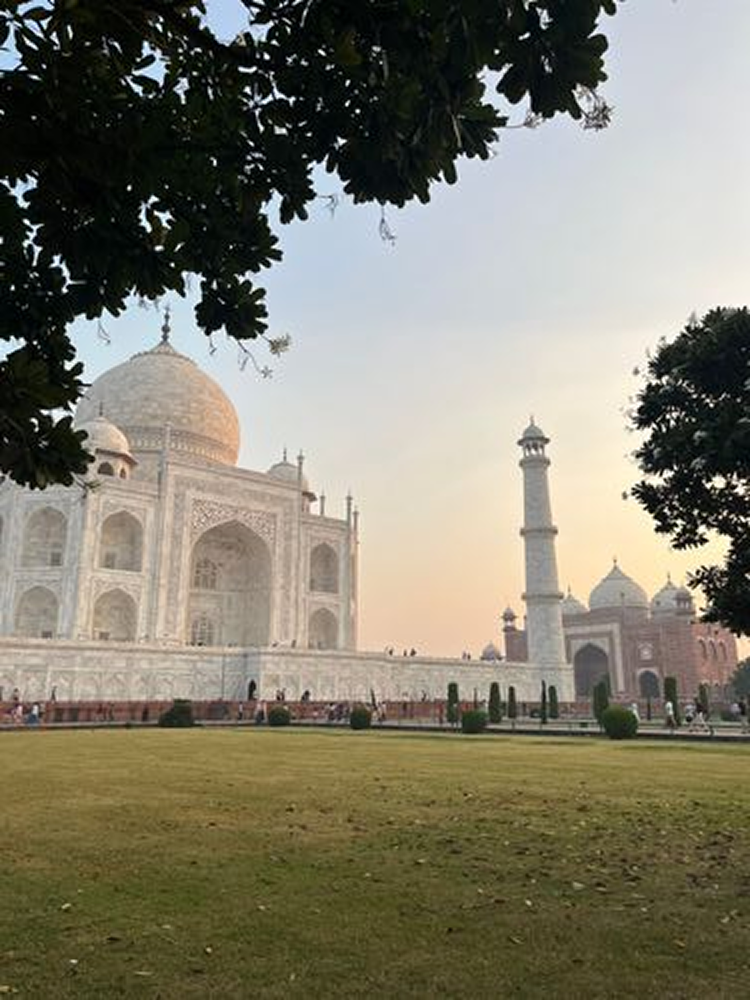
Be at the Taj Mahal gates before first light. Built 1632–1653 by Shah Jahan for Mumtaz Mahal, it’s a study in symmetry: identical gardens, flanking mosques, and a perfectly proportioned dome. Look for pietra dura inlay, semi-precious stones set into marble to form flowers that won’t fade. After sunrise, walk the Yamuna riverbank view at Mehtab Bagh or move on to Agra Fort, a walled palace where Shah Jahan spent his final years under house arrest, able to see the Taj from a distance. After lunch, drive back to Delhi (allow 4 hours with stops). Evening stretch around Qutub Minar’s complex, whose 12th-century victory tower rises above a forest of ancient pillars. Dinner nearby at Olive Qutub (splurge) or Rajinder Da Dhaba (budget, excellent kebabs).
Day 11: Delhi to Dharamshala (Flight)
Morning flight north to Dharamshala (Kangra airport). The air drops ten degrees; deodar pines and prayer flags replace Delhi’s din. Dharamshala/ McLeod Ganj has been home to the Tibetan government-in-exile and the Dalai Lama since 1959, after China’s crackdown in Lhasa. Visit the Tsuglagkhang Complex (Dalai Lama’s temple) to hear the low murmur of prayer wheels and see monks debating in the courtyard, a living reminder of a culture preserved abroad. Complete the Kora Circuit, a peaceful, easy circular walk (about 1.6 km) featuring prayer flags, stupas, and scenic valley view, stroll Bhagsu lanes to the small waterfall, snack on momos at Tibet Kitchen, and pick up extra layers for the trek.
Day 12: Trek to Triund Ridge
Taxi to Gallu/ Bhagsu trailhead and begin the hike, 9 km of steady, rocky path climbing above the town. Tea shacks punctuate the route; stop for sweet chai and a plate of Maggi noodles that tastes far better than it should at altitude. After 4–6 hours, crest Triund Ridge (2,850 m) and the Dhauladhar wall fills the horizon, jagged, snow-tipped, close enough to feel. As the sun drops, temperature plunges; campsites at the top provide tent and simple dal-rice dinner. The stars here are shockingly bright; if skies are clear, you’ll see the Milky Way arch over the ridge. Bring a headlamp, warm layers, and cash; facilities are basic by design.
Day 13: McLeod Ganj
Wake to the mountains lit pink. After paratha and chai, descend slowly. Back in McLeod Ganj, visit the Norbulingka Institute, dedicated to preserving Tibetan arts like thangka painting and woodcarving; workshops are open to watch. If you want more context, the Tibet Museum gives a sober, compact overview of the 20th-century exile story. Late afternoon café time with cinnamon tea and views across the valley. Dinner atJimmy's Himalayan Kitchen.
Day 14: Dharamshala to Mumbai (Flight)
Travel day: fly via Delhi to Mumbai (~8 hours total), a city built from seven islands joined by land reclamation during British rule. Check into Bandra, where colonial villas, street art, and Catholic shrines sit between modern cafés. Walk the Bandra Fort and Carter Road Promenade at sunset, humidity, sea breeze, runners weaving past chai sellers. Dinner at a coastal thali spot (Highway Gomantak for Konkan flavours) or small plates at Veronica’s; if you’re up for it, a late kulfi on Pali Hill.
Day 15: Mumbai, Colaba, Gateway, and Leopold’s Story
Head to Colaba for a walking loop. The Gateway of India (1911) basalt arch facing the harbour commemorated the visit of King George V; in 1948, British troops marched out beneath it, ending the Raj. Nearby is the Taj Hotel, worth a wander around its corridors and an afternoon tea. Around the corner, Leopold Café (est. 1871) still serves cold beer and biryani; it was one of the sites attacked during 26/11 (2008). You’ll still see bullet scars on metal and walls and many Mumbaikars consider eating here an act of remembrance as much as routine. Stop here for lunch. Continue along Kala Ghoda for galleries and Art Deco facades, then up to Marine Drive, the “Queen’s Necklace,” which arcs in lights after dark. For dinner, Mumbai has many options. See reccomendations below.
Day 16: Fly Out
A final walk, then pack for the airport.
.png)
.jpeg)

.png)
.png)
-p-1600%201.png)