Day 4: Brisbane and the Gold Coast
The Greyhound Australia coach network connects Melbourne, Sydney, Brisbane and all coastal stops northward; the Greyhound OzExperience Hop On Hop Off pass is the most flexible option for the full East Coast route, allowing you to get on and off wherever you choose within the validity period. Book in advance online for the best prices.
Brisbane is 1,000 km north of Sydney, approximately 10 hours by overnight Greyhound or one hour by flight. The city sits on the Brisbane River and has improved significantly as a destination following years of urban investment. South Bank Parklands (a cultural precinct built on the 1988 World Expo site) has the Streets Beach, a man-made lagoon beach in the city centre that is one of Brisbane's stranger and more enjoyable features. The Gallery of Modern Art (GOMA) is free to enter and holds one of the most significant modern art collections in the Southern Hemisphere. Fortitude Valley for the evening bar and music scene.
From Brisbane, the Gold Coast is 78 km south, approximately one hour by bus or train on the light rail. The Gold Coast is the most explicitly hedonistic stretch of the East Coast: Surfers Paradise is towers of glass above six kilometres of beach, theme parks, nightclubs and surf schools. It is unapologetically itself. Currumbin Wildlife Sanctuary south of the main strip is worth a morning if the wildlife is a draw; it has reliable kangaroo and koala encounters.
Days 5 to 7: Byron Bay
Byron Bay is 165 km south of Brisbane, approximately two and a half hours by bus. It sits on the most easterly point of mainland Australia and has been one of the defining stops on the East Coast backpacker route since the 1980s; its reputation for barefoot culture, live music and surf is entirely accurate and not particularly reduced by the increasing number of wellness retreats and boutique hotels that have arrived in recent years. The town is small enough to walk across in 20 minutes.
Cape Byron Lighthouse: The most easterly lighthouse in Australia, reached by a 3.7 km coastal walk from the town centre. The path climbs through eucalyptus and banksia scrub to the lighthouse on the headland at 85 metres above sea level, with views north along the coast and south to Mount Warning. Dolphins are regularly visible from the headland in the bay below. From May to November, humpback whales pass this point during their annual migration north. The sunrise from the lighthouse is the one that gets described in every Byron diary; get there before 5:30 am and you will likely be largely alone.
Surf: Byron Bay has three main breaks. Belongil Beach at the northern end is the gentlest and most suitable for beginners. Main Beach in front of town is consistent and social. The Pass at the southern end is a long right-hand point break that attracts better surfers. Surf lesson operators (Byron Bay Surf School, Style Surf School) run daily beginner sessions from $65 to $85 including board and wetsuit hire.
Hinterland waterfalls: The Nightcap National Park and Minyon Falls, 30 km inland from Byron, are the most accessible hinterland trip; the falls drop 100 metres into a pool accessible by a 20-minute hike from the car park. Protest Falls at Terania Creek is the alternative. Both can be combined in a half-day; hire a car or join a day tour from any Byron hostel.
Aquarius Hostel: Aquarius is the social base in Byron, with a pool and a long tradition of being the meeting point for the East Coast community. Arts Factory Lodge is the more bohemian alternative with bush camping, a cinema and a more relaxed pace.
Evening: The Beach Hotel on Jonson Street has live music most evenings and a direct beach view; the crowd spills onto the sand. The Farm in the hinterland direction has a good restaurant using its own produce if you want to escape the town atmosphere for an evening.
Days 8 to 10: K'gari (Fraser Island)
Travel north from Byron toward Rainbow Beach, the departure point for K'gari (Fraser Island). The Greyhound goes via the town of Gympie; from there a local bus or shuttle to Rainbow Beach takes about 45 minutes. Alternatively, Noosa (90 km north of the Sunshine Coast) also serves as a departure point with some operators.
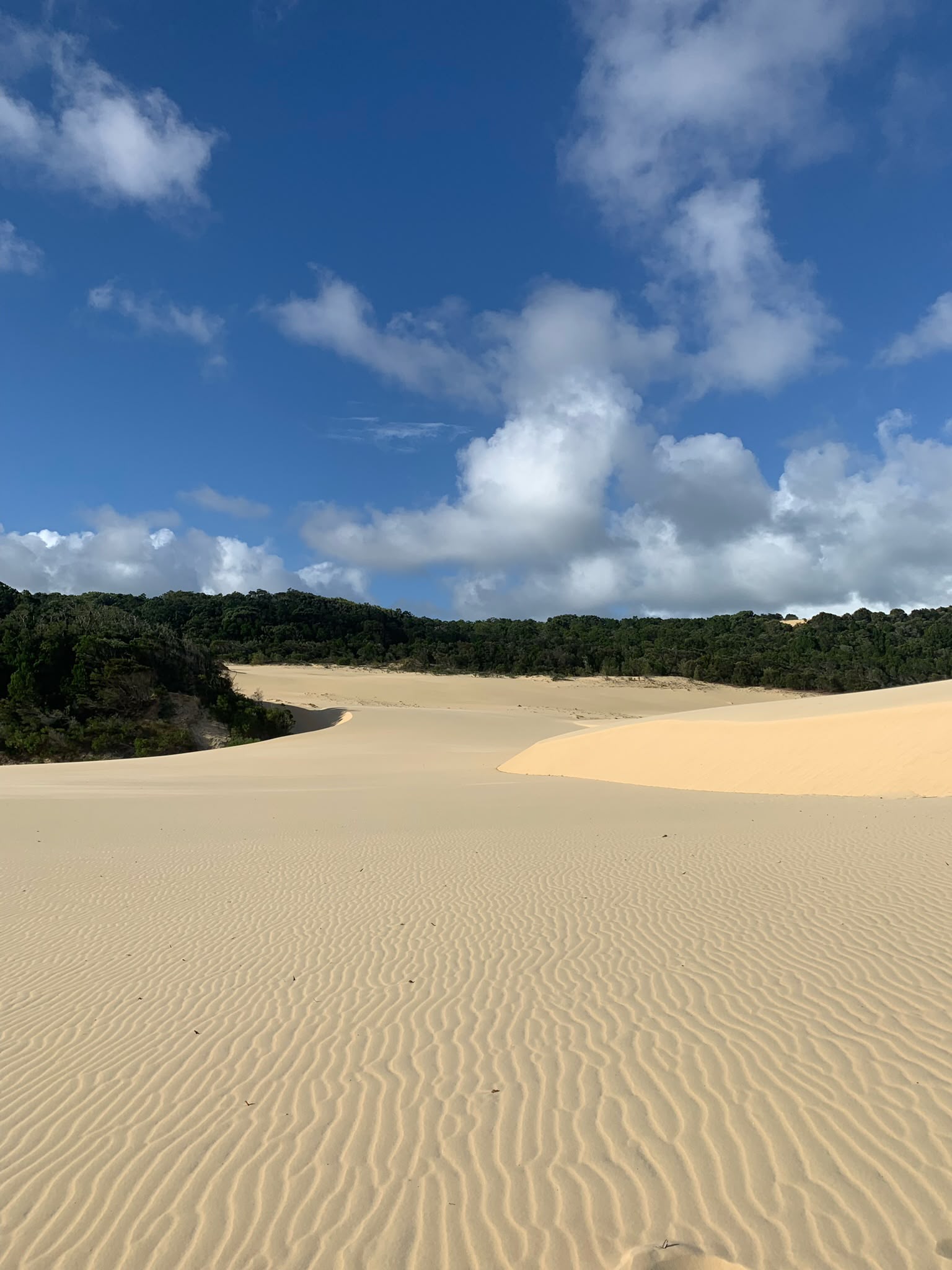
K'gari is the world's largest sand island, 122 km long and covering 1,840 square kilometres, with a freshwater lake system that exists impossibly on top of sand rather than rock. The whole island is a UNESCO World Heritage Site and the land holds deep significance for the Butchulla people, its traditional owners; K'gari means paradise in the Butchulla language.
Booking the tour: The 3-day, 2-night tag-along 4WD tour is the standard format for independent travellers and is almost universally described as a trip highlight. The main operators departing from Rainbow Beach are Dingo's K'gari Adventures (the most consistently reviewed, departs from Freedom Hostel in Rainbow Beach, mandatory 7 am safety briefing on departure day) and Fraser Explorer Tours. The tag-along format means you drive your own 4WD in convoy behind a lead vehicle; you must be 21 or older with a full manual licence held for at least a year to drive. If you cannot drive manual or are under 21, you can ride as a passenger. The tour includes the vehicle, fuel, camping permits, all camping gear (foam mat, sleeping bag and pillow), two breakfasts, two dinners and three lunches. BYO alcohol is permitted but no spirits or cask wine; pre-mixed cans are fine. Book at least several days ahead in peak season (June to September); the tours run with a minimum group size and departures can be combined.
What you will see: Lake McKenzie (Boorangoora), the most photographed lake on the island: a circular freshwater lake with white silica sand shores and water so clear it appears aquamarine from the bank and transparent at your feet. Swimming in it is the standard experience; the silica is reputed to be good for skin and hair, and visitors emerge visibly clean. Eli Creek, a freshwater stream flowing across the beach into the ocean; walk upstream through ankle-deep water and float back down. The SS Maheno shipwreck on 75 Mile Beach, a passenger liner wrecked in a cyclone in 1935 and now rusted into the sand, accessible directly from the beach at low tide. The Champagne Pools, natural rock pools on the northern coast where ocean swell creates a constant bubbling and frothing effect. The coloured sand cliffs at The Pinnacles and Red Canyon, natural formations in tones from white to red to deep ochre. Central Station, the centre of the island's old forestry operation and now a rainforest walk, one of the most disorienting features of K'gari: a fully mature subtropical rainforest growing from pure sand with no soil underneath.
Dingoes: K'gari holds the most genetically pure population of dingoes in Australia. You will see them; they are wild animals, not pets. National Parks Queensland has strict rules: do not feed dingoes, do not approach them, maintain a distance of 10 metres, and never run (it triggers prey instinct). Dingo incidents at the island have historically occurred when these rules were ignored. The campsite briefing covers this in full; take it seriously.
Camping and practicalities: The campsite on the eastern beach is purpose-built and managed in consultation with the Butchulla people. Facilities are basic but functional: portable toilets and showers. Temperatures drop significantly at night even in Queensland summer; bring warmer layers than you expect to need. Mobile coverage is intermittent throughout the island; let people know before you go.
Days 11 to 13: Airlie Beach and the Whitsundays
Continue north from Rainbow Beach on the Greyhound to Airlie Beach, approximately five to six hours. Airlie Beach is a small town that exists primarily as the gateway to the Whitsunday Islands; its main street runs several hundred metres along a hillside above the marina and is lined with hostels, dive shops, restaurants and the booking offices for every sailing and island tour in the region.
Choosing a sailing trip: The Whitsundays sail trip is the other experience described universally as a highlight of the East Coast route. Boats leave from Abel Point Marina in Airlie and spend two to three nights crossing between 74 islands. The standard trip is two nights, three days; three nights adds either a second island or more time at Whitehaven Beach. The most-named boats in the East Coast community are Atlantic Clipper (large, social, the party boat), New Horizon (reliable, good size, consistent reviews), Spank Me (the frequently renamed vessel that appears in a lot of trip diaries; always check what the current boat is actually called as operators rebrand frequently). For a calmer experience: Southern Cross Club and Summertime are both smaller and less party-focused. Book through your hostel or directly with the marina booking desks; prices range from approximately $500 to $700 AUD for a two-night trip including all meals and snorkelling equipment.
Whitehaven Beach: A 7 km beach on Whittunday Island (note: the beach and the island are both spelled differently from the regional name) composed almost entirely of pure silica sand with a silica content of 98.9%. The sand does not absorb heat, making it comfortable to walk on even in direct sun. The Hill Inlet viewpoint at the northern end, reached by a 20-minute walk from the beach, gives the aerial view of the sand and tidal patterns swirling in turquoise water that appears on every Whitsundays photograph.
Snorkelling: The fringing reefs around the outer Whitsunday Islands hold good coral and fish; the snorkelling from the boat is one of the main daily activities. Sea turtles are regularly sighted. The Great Barrier Reef proper begins 70 km east of the Whitsundays; day trips to the outer reef are available from Airlie Beach but are a separate booking from the sailing trip.
Days 14 to 16: Magnetic Island
Take the ferry from Townsville (one hour north of Airlie Beach by bus) to Magnetic Island. The Sealink ferry runs multiple times daily and takes approximately 20 minutes. Townsville's transit Greyhound stop is near the ferry terminal.
Magnetic Island (Maggie in local shorthand) is 52 square kilometres, 30 minutes from a major city, and yet feels genuinely remote in the right spots. Over half the island is national park. It was named by James Cook in 1770 who believed (incorrectly) that the island was interfering with his ship's compass.
Getting around: The Moke (electric Mini Moke style vehicles, often painted pink) and scooter rentals are the island's characteristic transport and are available at the Picnic Bay and Nelly Bay ferry terminals. The island has a ring road connecting the four main bays (Picnic Bay, Nelly Bay, Arcadia and Horseshoe Bay) and is fully circutable in under an hour. Most accommodation is at Nelly Bay or Horseshoe Bay.
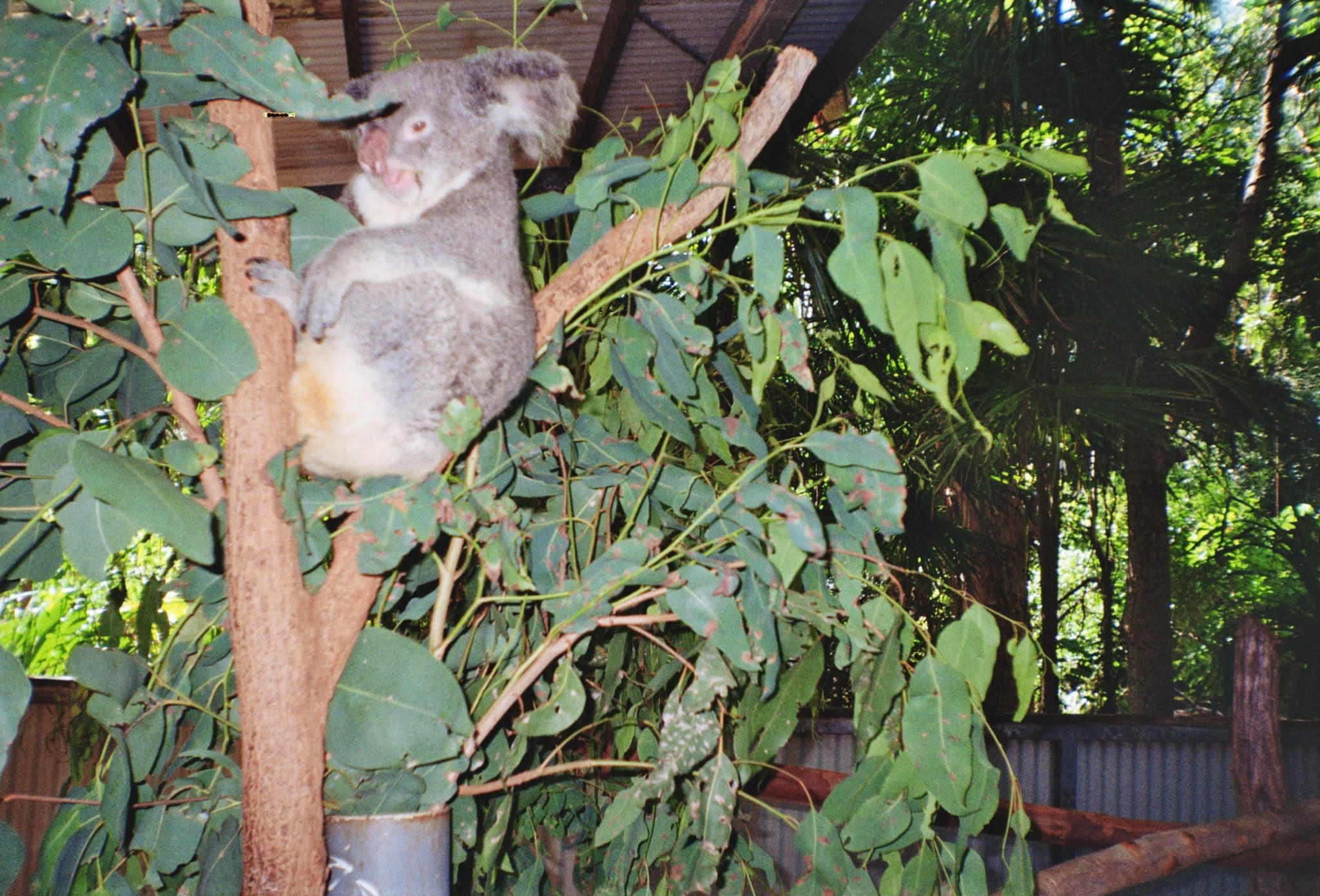
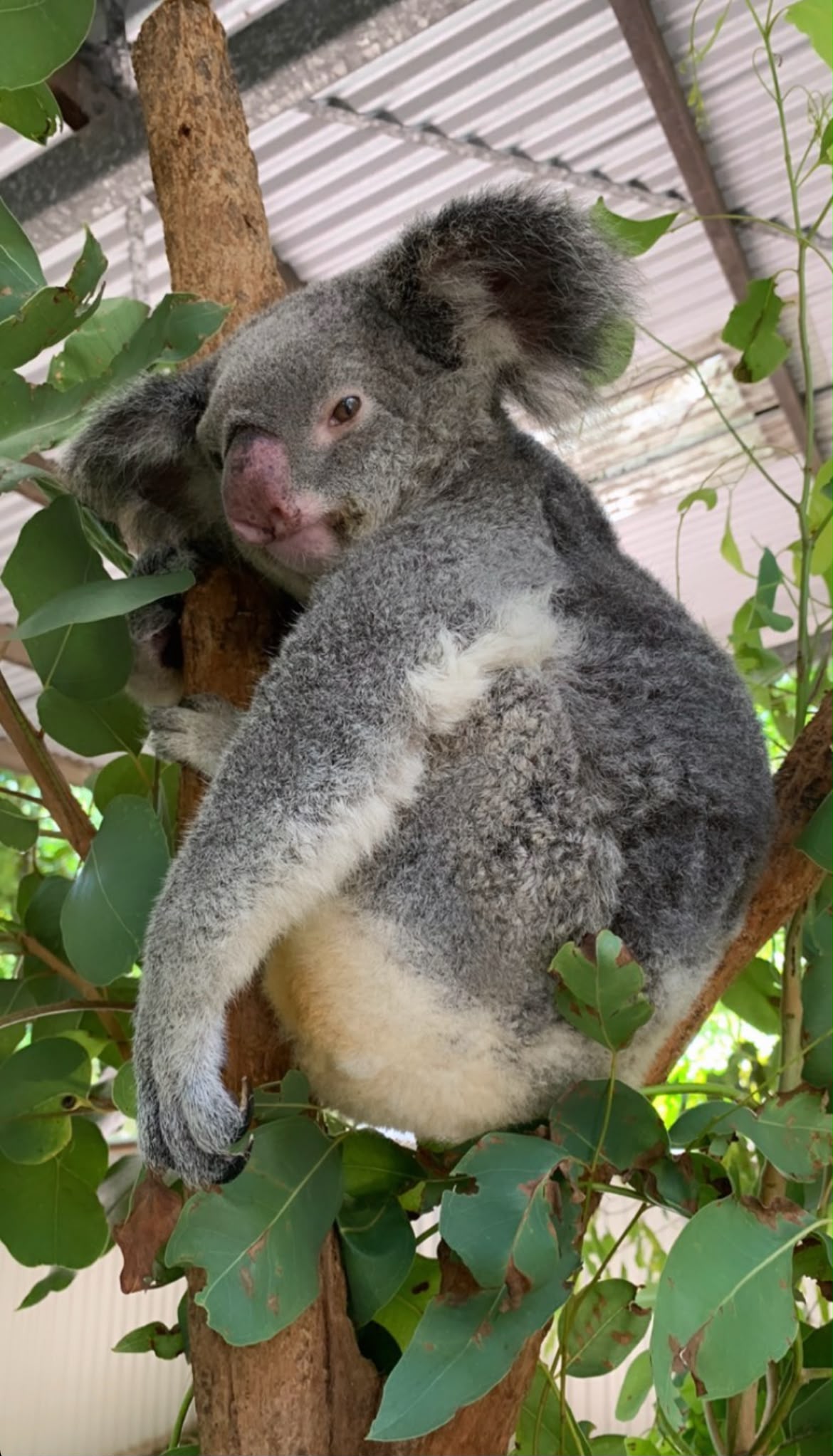
WWII Forts Walk: A 2.8 km loop from Horseshoe Bay through coastal heath and granite boulders to the remnants of the 1942 gun emplacements built to defend Townsville from Japanese attack. The trail is where wild koalas are most reliably spotted in Australia without any managed encounter; the eucalyptus trees along the upper section regularly have four or five koalas sleeping in the forks. Go early morning for the best light and most active koalas. The return via Balding Bay adds a swim at one of the island's best and quietest beaches.
Geoffrey Bay: The snorkelling reef at Geoffrey Bay on the eastern side of the island is one of the most accessible reef snorkelling experiences on the East Coast, reachable directly from the beach with no boat required. Green sea turtles are regularly encountered at close range. The reef starts approximately 50 metres offshore.
Selina Magnetic Island and Nomads Magnetic Island are both beachfront hostels at Horseshoe Bay with the hammock and social atmosphere.
Day 17: Mission Beach
Mission Beach is 145 km north of Townsville, approximately two and a half hours by Greyhound. The town sits at the base of the rainforest-covered Cardwell Ranges immediately behind the beach, creating the dramatic backdrop of green hills above a long palm-fringed strip of sand.
Skydiving: Mission Beach skydiving uses the beach as a landing zone, dropping from 14,000 feet over the Coral Sea with the Whitsundays visible to the south on a clear day. The 60-second freefall lands on the beach itself. Operators include Skydive Mission Beach; cost approximately $299 AUD for a tandem jump from 14,000 feet. Book the day before to allow a good weather window.
Dunk Island: A day trip by water taxi (15 minutes from Mission Beach, multiple departures daily) to the largely unpopulated island with good snorkelling reefs, walking tracks and near-empty beaches. The SS Yongala wreck, one of Australia's best dive sites (a passenger ship sunk in a 1911 cyclone, 15 km offshore and now home to an extraordinary concentration of marine life), is accessible from Townsville but also from Mission Beach with a longer boat ride; the dive requires Advanced Open Water certification.
Treehouse Hostel at Mission Beach; the property sits in rainforest and is one of the more distinctive hostel settings on the East Coast.
Days 18 to 22: Cairns and the Tropical North
Cairns is 140 km north of Mission Beach, approximately two hours by Greyhound. The city is the largest on the East Coast north of Brisbane and exists almost entirely in service of the Great Barrier Reef and the Daintree; it has a busy esplanade, excellent restaurant options, a lagoon swimming pool directly on the waterfront (the city beach is stinger-netted but the esplanade lagoon is the safer and more comfortable option), and a concentration of hostels ranging from the very social to the quiet eco-lodge variety.
Great Barrier Reef: Go to the outer reef, not the inner reef. The outer reef is 50 to 80 km offshore; the boat journey takes 90 minutes each way. Inner reef sites are significantly more degraded and represent poor value for the same effort. Outer reef operators from Cairns include Passions of Paradise (eco-certified, smaller boat, two outer reef sites per day, snorkel and introductory dive options), Divers Den (the most consistently reviewed dive operator for certified divers wanting three dives), ProDive Cairns (five-night liveaboard option for serious divers). All day trips include an environmental management charge of approximately $8.50 AUD per person which goes directly to reef management; this is included in most operator prices but confirm when booking. Always choose a High Standard Tourism Operator certified through Ecotourism Australia or EarthCheck; the Reef Authority publishes the list.
Coral bleaching note: The Great Barrier Reef has experienced significant bleaching events in recent years driven by elevated sea temperatures. Coral condition varies by site and by season. No large-scale bleaching occurred in 2025 and some recovery is visible. The outer reef consistently shows better condition than inshore areas. Check the Australian Institute of Marine Science (AIMS) most recent Annual Summary Report for current conditions before booking.
Do not fly within 18 hours of any scuba dive (introductory or certified). Plan your reef day accordingly if you have an onward flight from Cairns.
Stinger season: From November to May, Irukandji jellyfish (a near-invisible and potentially dangerous species) can be present on the outer reef. All operators provide full-body stinger suits during this period; wear the suit regardless of how warm the water feels.
Daintree Rainforest and Cape Tribulation: The Daintree is the world's oldest continuously surviving rainforest, with origins approximately 180 million years ago. It is the only place in the world where two UNESCO World Heritage Sites (the reef and the forest) meet at the same coastline. The Cape Tribulation section north of the Daintree River crossing (ferry crossing, $28 per car return) is where the forest reaches the beach. The itinerary names Uncle Brian's Cape Tribulation and Daintree tour as the recommended two-day option; this tour runs river crocodile spotting cruises, mangrove walks with a guide, cassowary habitat explanation, natural swimming holes at Emmagen Creek and Alexandra Range lookout. The southern cassowary (a large flightless bird) is resident throughout the Daintree lowlands and is one of the most sought wildlife sightings in Australia; it looks like a small emu with a blue neck and a bony casque on the head and is classified as endangered. The Daintree Discover Centre near the Cow Bay area is an alternative self-guided option for those not doing the full tour.
Atherton Tablelands: The highlands immediately west of Cairns, reached by the Gillies Highway, contain Millaa Millaa Falls (the circular pool with a waterfall backdrop that appears in every Queensland tourism photograph), Lake Eacham and Lake Barrine (volcanic crater lakes with swimming and wildlife), and several natural swimming holes at Josephine Falls and Crystal Cascades accessible from the Cairns side. A self-drive circuit takes a full day; hire a car from Cairns rather than joining a tour for maximum flexibility.
Gilligan's Hostel in Cairns is the main social hostel in the city: pool, bar, nightclub and a reliable social atmosphere. The Asylum Hostel and Tropic Days Boutique Hostel are the quieter eco-leaning alternatives.
.png)
.jpeg)

.jpeg)
.jpeg)
.jpeg)
.jpeg)
.jpeg)