image of popular travel destinations

Cambodia

A journey through Cambodia reveals a country that carries both extraordinary beauty and one of the most profound human histories in Asia.

Temples, islands and the story of an entire nation

Cambodia offers a remarkable balance of cultural immersion and restorative nature. Begin in Phnom Penh, where the recent past is preserved in two national memorials that document the tragedy of the Khmer Rouge period. Travel south to the slow riverside town of Kampot for pepper plantations and countryside rides, then continue to Koh Rong for turquoise waters and relaxed days. Finish in Siem Reap, gateway to Angkor, where temples, night markets and Khmer cuisine illuminate the richness of ancient Cambodian civilisation.

Highlights

image of vibrant dining space (for a mexican restaurant)

Phnom Penh’s Living Memory

Walk through Cambodia’s recent past at the Killing Fields and S21 Prison, two of the most important memorial sites in Southeast Asia. These places provide a difficult but essential understanding of the Khmer Rouge era and honour the resilience of the Cambodian people.

image of a guided tour group

Island Life on Koh Rong

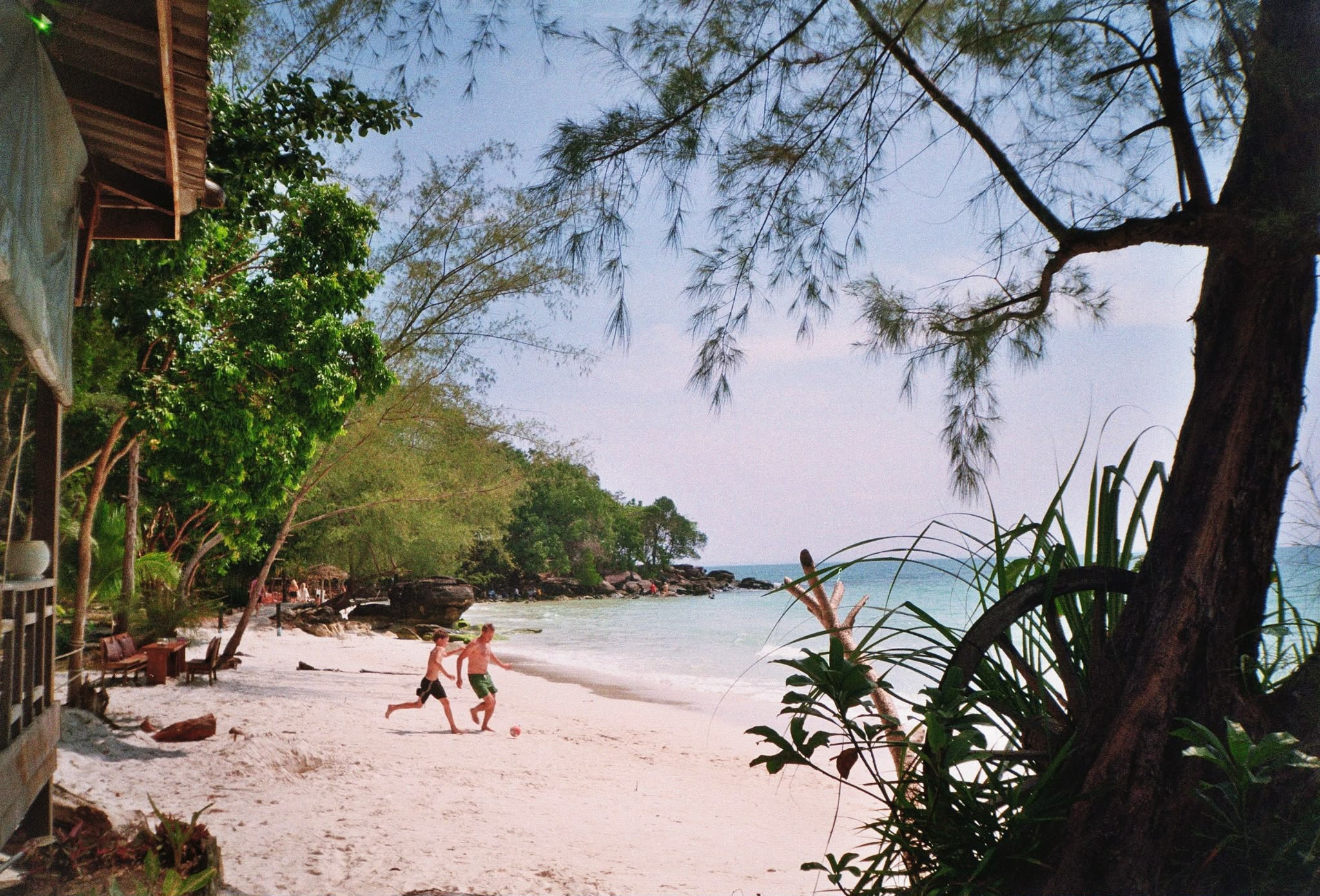
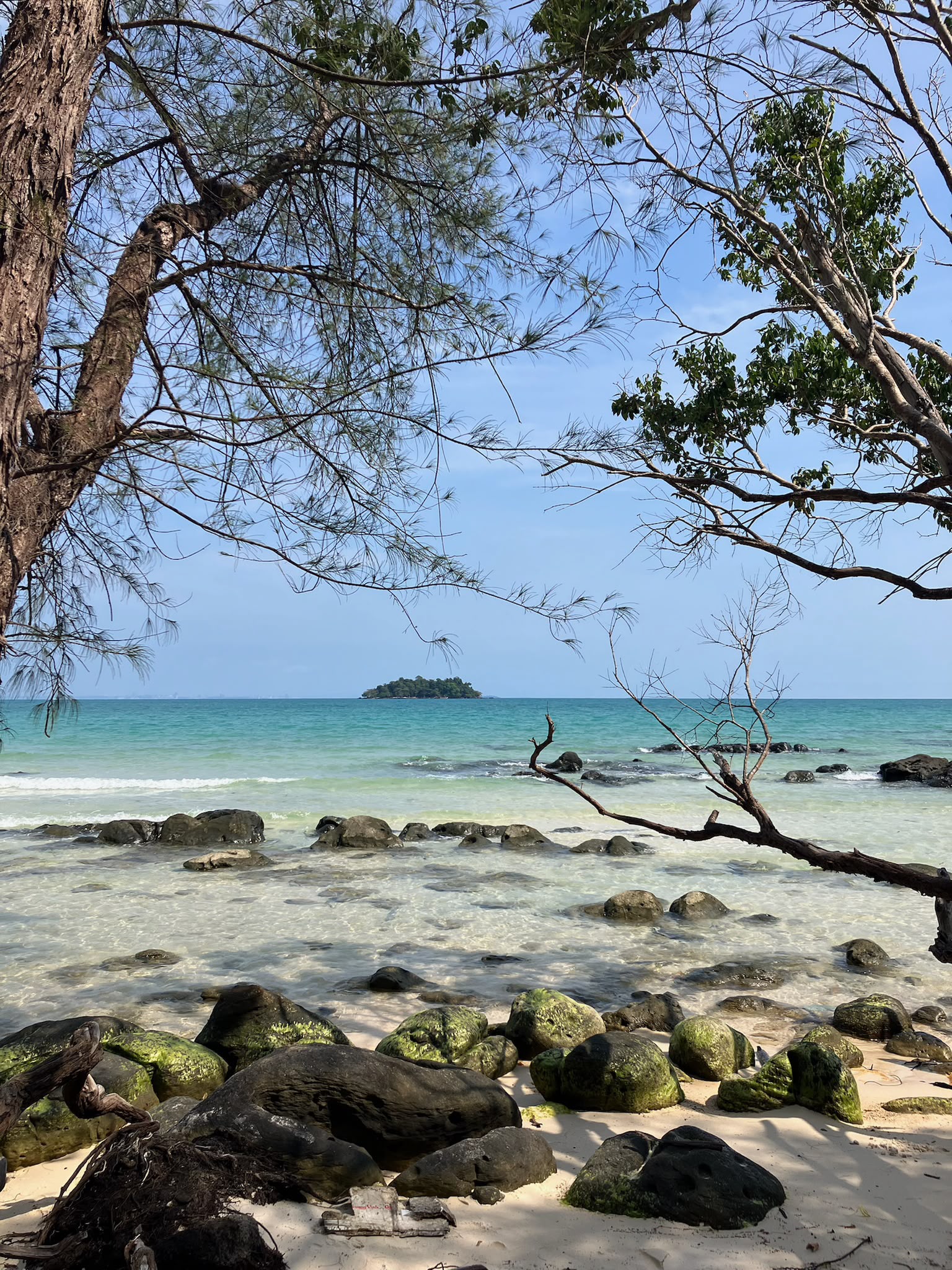
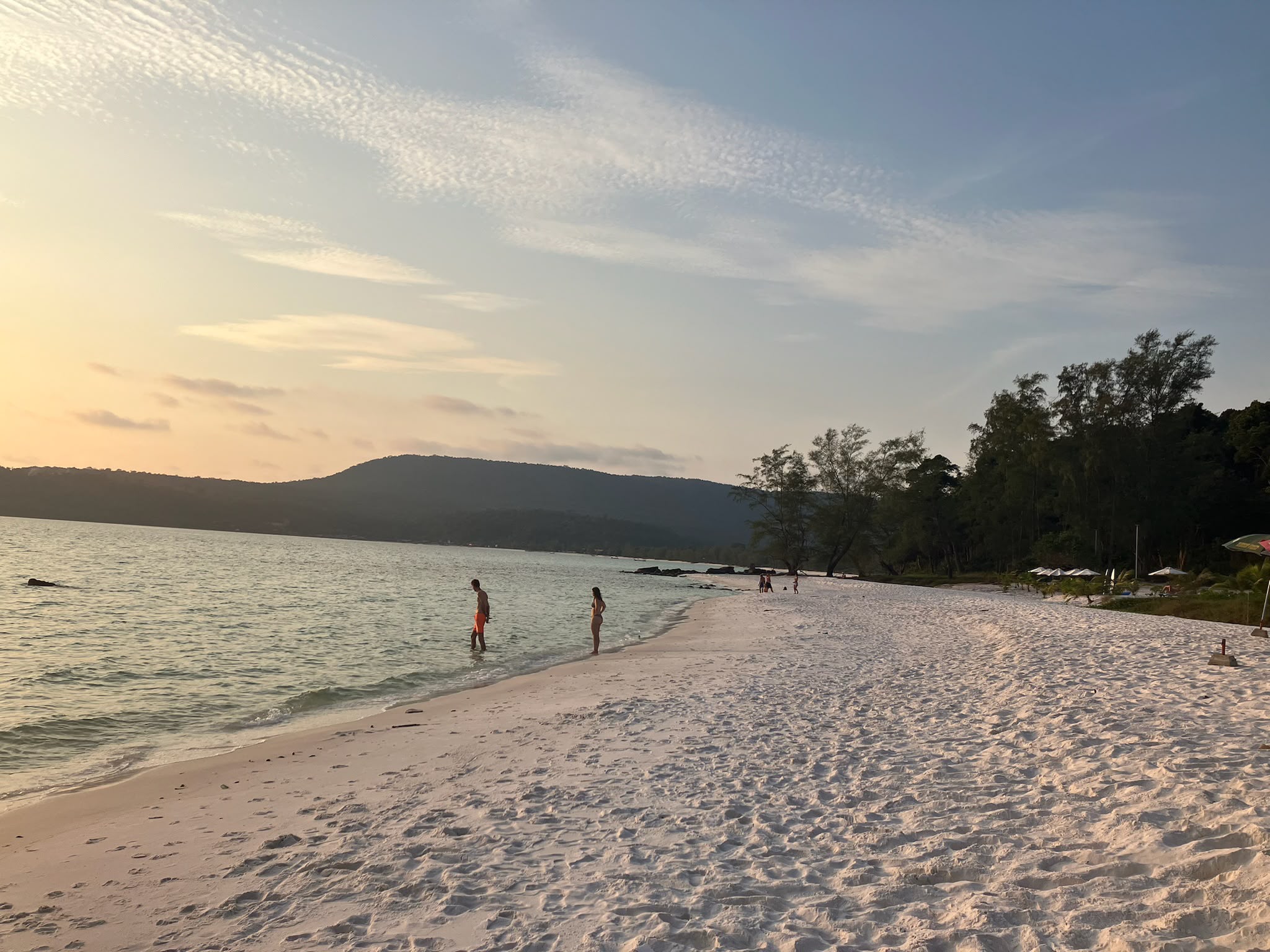
Golden beaches, jungle-covered hills and some of Cambodia’s clearest waters. Koh Rong is the country’s tropical escape, with snorkelling, plankton swims and slow island days.
image of a local tour guide (for a travel agency)

Angkor, the Heart of Ancient Khmer Civilisation

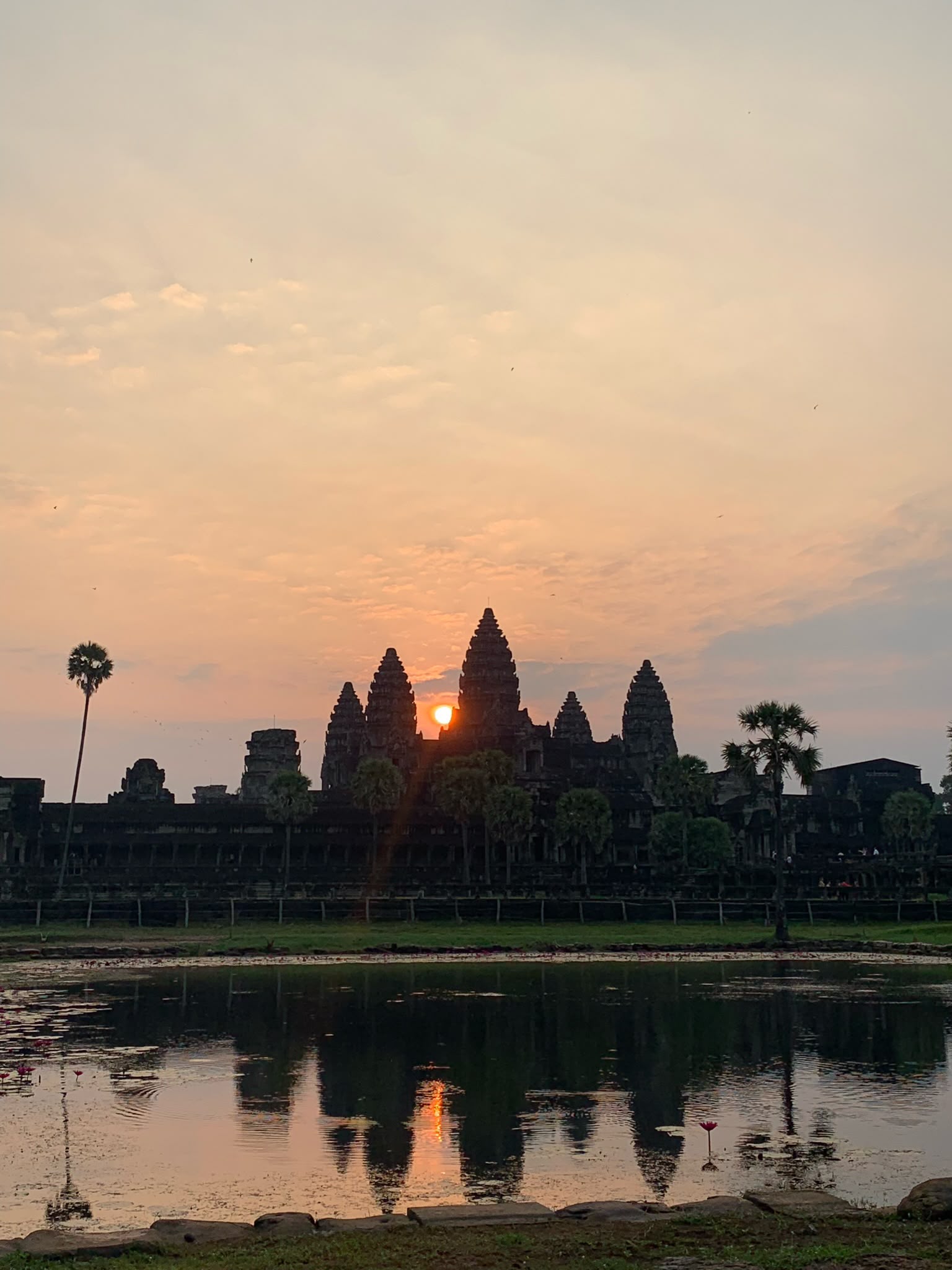
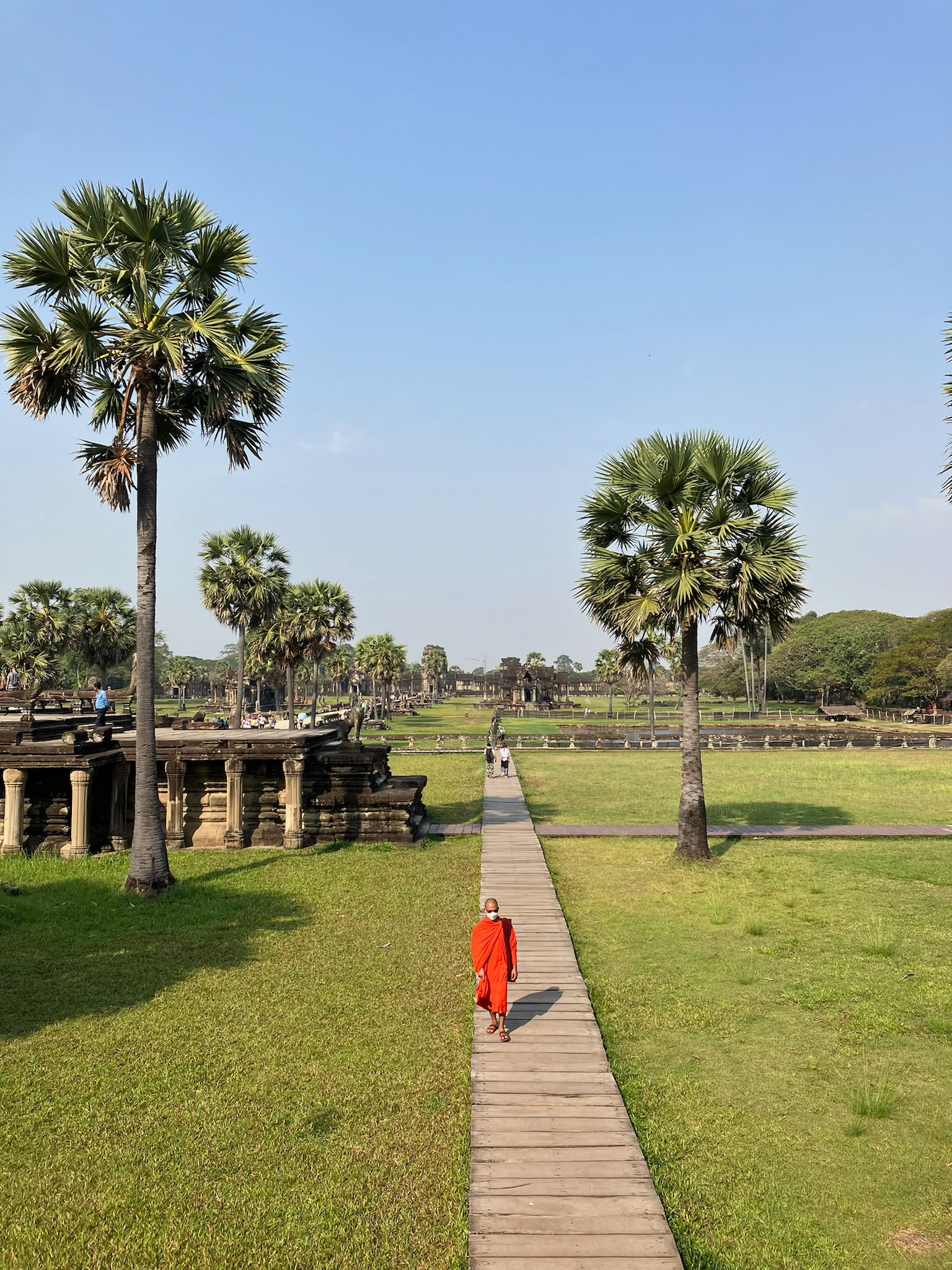
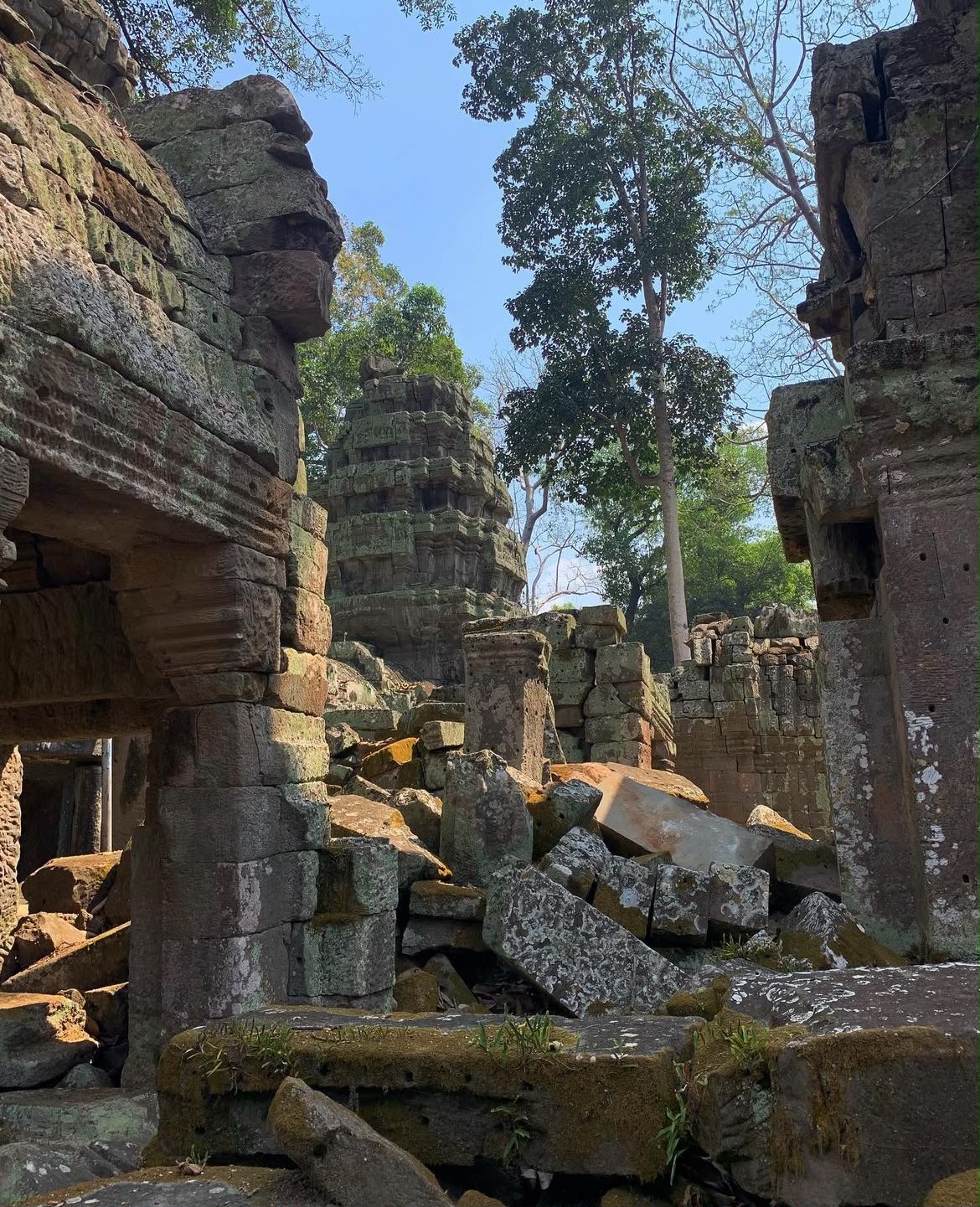
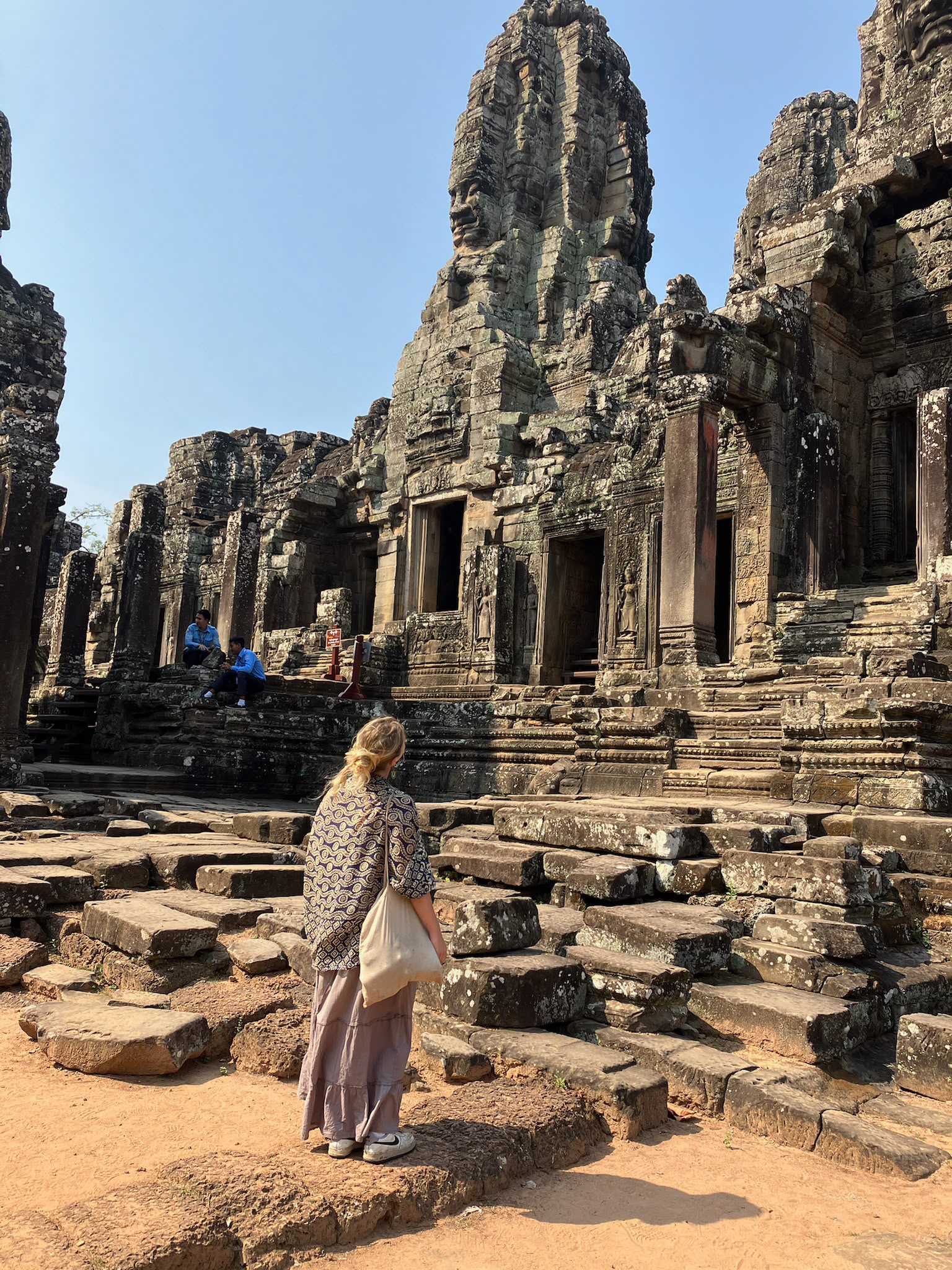
Experience Angkor Wat at sunrise, wander the gatehouses of Angkor Thom and climb through Ta Prohm, where silk-cotton trees coil around thousand-year-old stone. This is one of the most extraordinary archaeological landscapes in the world.
image of vibrant dining space (for a mexican restaurant)

Phnom Penh’s Living Memory

Walk through Cambodia’s recent past at the Killing Fields and S21 Prison, two of the most important memorial sites in Southeast Asia. These places provide a difficult but essential understanding of the Khmer Rouge era and honour the resilience of the Cambodian people.

image of a guided tour group

Island Life on Koh Rong

Golden beaches, jungle-covered hills and some of Cambodia’s clearest waters. Koh Rong is the country’s tropical escape, with snorkelling, plankton swims and slow island days.
image of a local tour guide (for a travel agency)

Angkor, the Heart of Ancient Khmer Civilisation

Experience Angkor Wat at sunrise, wander the gatehouses of Angkor Thom and climb through Ta Prohm, where silk-cotton trees coil around thousand-year-old stone. This is one of the most extraordinary archaeological landscapes in the world.

Journey itinerary

Itinerary overview
Detailed breakdown follows

Day 1: Phnom Penh / Tuol Sleng Genocide Museum, Killing Fields of Choeung Ek and riverside evening

Day 2: Kampot / Bokor National Park by moped, La Plantation pepper farm and riverside dinner

Days 3 to 4: Koh Rong / Long Beach, bioluminescent plankton boat trip and island snorkelling

Day 5: Travel to Siem Reap / Night Market, Khmer Kitchen and first temple evening

Day 6: Angkor Archaeological Park / sunrise at Angkor Wat, Angkor Thom and Ta Prohm

Day 7: Siem Reap countryside / cycling tour through rice paddies, community projects and Pub Street

Day 8: Beng Mealea or Tonlé Sap Floating Villages / final temple adventure or lake community visit

Day-by-day itinerary
Day 1: Phnom Penh

Phnom Penh's Pochentong International Airport (PNH) is 7 km west of the city centre. Grab (Southeast Asia's Uber equivalent, works well throughout Cambodia) is the most reliable and cheapest option from the airport; download the app before landing. Tuk-tuks are also available from the airport and cost approximately $8 to $12 to most city-centre hotels depending on negotiation; agree the price before getting in. The city sits at the confluence of four rivers: the Tonlé Sap, the Mekong, the Bassac and the Tonlé Sap tributary, which gives the riverfront its wide, flat quality and explains why the French chose this site for their Indochinese capital.

Base yourself in the riverside area or the BKK1 neighbourhood (Boeung Keng Kang 1), the latter being the most concentrated area of good restaurants, cafés and guesthouses for independent travellers. The area around the Sisowath Quay riverfront is atmospheric for evenings but slightly more tourist-facing; BKK1 is where the city actually eats and socialises. Onederz Hostel is a reliable and social base.

Tuol Sleng Genocide Museum (S-21): Open daily 8 am to 5 pm. Entry $5 without audio guide, $8 with audio guide. Take the audio guide; it is essential and significantly better than reading the information boards alone. S-21 was a high school called Tuol Svay Prey before the Khmer Rouge converted it in 1975 into their most notorious security prison. Between 1975 and 1979, approximately 17,000 people passed through; fewer than a dozen survived. The classrooms were subdivided into tiny brick cells or used as torture chambers; the iron beds with shackles, the photograph walls showing prisoners on arrival, and the preserved interrogation rooms are all as they were found in January 1979 when Vietnamese forces entered and the remaining guards fled. Two survivors who were in the building when it was liberated gave testimony at the site for decades; one, Chum Mey, continued visiting until recently. Allow two hours minimum. Do not rush the photograph galleries; the individual faces are the most important thing in the building.

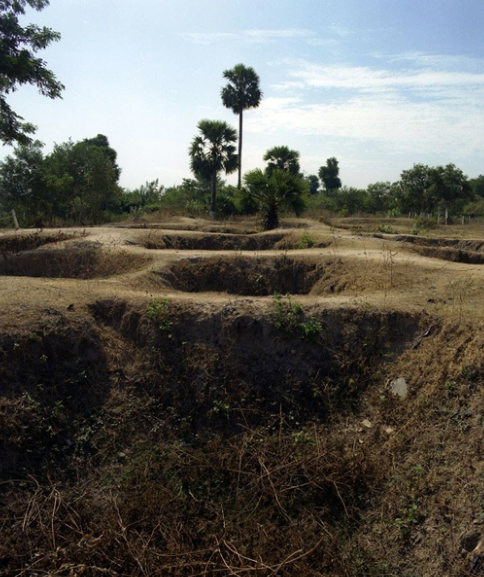
Choeung Ek Genocidal Centre (Killing Fields): 17 km south of central Phnom Penh, approximately 30 to 40 minutes by tuk-tuk. Entry $6, which includes the audio guide narrated partly by Him Huy, a former Khmer Rouge guard and executioner who describes what happened here from the inside. This is an extraordinary and difficult listening experience. The site was once a Chinese cemetery and fruit orchard; between 1975 and 1979 approximately 17,000 people were executed here, transported from S-21 when the prison had no more capacity. 86 of the 129 mass graves have been exhumed; the remainder were left undisturbed as a mark of respect. The Memorial Stupa at the centre of the site contains 5,000 skulls, arranged by sex and age of victim. The boardwalk path passes the numbered grave sites, the chemical pit, and the Killing Tree, a large palm tree against which small children were killed. Allow two hours. Dress modestly; this is a sacred site as well as a memorial.

Visit Choeung Ek before S-21 if possible, not after; the reverse order (S-21 then Killing Fields) can be emotionally overwhelming in sequence. Most tours do S-21 first; going independently by Grab allows you to choose the order. Both sites together take a full day; do not try to rush through either to combine them with other sightseeing.

Evening: Walk the Sisowath Quay riverfront as the city cools down. Street food vendors set up along the river in the early evening: grilled meats on charcoal, nom banh chok (rice noodle soup with green curry, Cambodia's most distinctive breakfast food which also appears at evening stalls), fresh sugar cane juice and papaya salad. The riverside is where Phnom Penh shows its more relaxed character; it runs for several kilometres and the light on the water at dusk is very good.

Day 1: Phnom Penh

Phnom Penh's Pochentong International Airport (PNH) is 7 km west of the city centre. Grab (Southeast Asia's Uber equivalent, works well throughout Cambodia) is the most reliable and cheapest option from the airport; download the app before landing. Tuk-tuks are also available from the airport and cost approximately $8 to $12 to most city-centre hotels depending on negotiation; agree the price before getting in. The city sits at the confluence of four rivers: the Tonlé Sap, the Mekong, the Bassac and the Tonlé Sap tributary, which gives the riverfront its wide, flat quality and explains why the French chose this site for their Indochinese capital.

Base yourself in the riverside area or the BKK1 neighbourhood (Boeung Keng Kang 1), the latter being the most concentrated area of good restaurants, cafés and guesthouses for independent travellers. The area around the Sisowath Quay riverfront is atmospheric for evenings but slightly more tourist-facing; BKK1 is where the city actually eats and socialises. Onederz Hostel is a reliable and social base.

Tuol Sleng Genocide Museum (S-21): Open daily 8 am to 5 pm. Entry $5 without audio guide, $8 with audio guide. Take the audio guide; it is essential and significantly better than reading the information boards alone. S-21 was a high school called Tuol Svay Prey before the Khmer Rouge converted it in 1975 into their most notorious security prison. Between 1975 and 1979, approximately 17,000 people passed through; fewer than a dozen survived. The classrooms were subdivided into tiny brick cells or used as torture chambers; the iron beds with shackles, the photograph walls showing prisoners on arrival, and the preserved interrogation rooms are all as they were found in January 1979 when Vietnamese forces entered and the remaining guards fled. Two survivors who were in the building when it was liberated gave testimony at the site for decades; one, Chum Mey, continued visiting until recently. Allow two hours minimum. Do not rush the photograph galleries; the individual faces are the most important thing in the building.

Choeung Ek Genocidal Centre (Killing Fields): 17 km south of central Phnom Penh, approximately 30 to 40 minutes by tuk-tuk. Entry $6, which includes the audio guide narrated partly by Him Huy, a former Khmer Rouge guard and executioner who describes what happened here from the inside. This is an extraordinary and difficult listening experience. The site was once a Chinese cemetery and fruit orchard; between 1975 and 1979 approximately 17,000 people were executed here, transported from S-21 when the prison had no more capacity. 86 of the 129 mass graves have been exhumed; the remainder were left undisturbed as a mark of respect. The Memorial Stupa at the centre of the site contains 5,000 skulls, arranged by sex and age of victim. The boardwalk path passes the numbered grave sites, the chemical pit, and the Killing Tree, a large palm tree against which small children were killed. Allow two hours. Dress modestly; this is a sacred site as well as a memorial.

Visit Choeung Ek before S-21 if possible, not after; the reverse order (S-21 then Killing Fields) can be emotionally overwhelming in sequence. Most tours do S-21 first; going independently by Grab allows you to choose the order. Both sites together take a full day; do not try to rush through either to combine them with other sightseeing.

Evening: Walk the Sisowath Quay riverfront as the city cools down. Street food vendors set up along the river in the early evening: grilled meats on charcoal, nom banh chok (rice noodle soup with green curry, Cambodia's most distinctive breakfast food which also appears at evening stalls), fresh sugar cane juice and papaya salad. The riverside is where Phnom Penh shows its more relaxed character; it runs for several kilometres and the light on the water at dusk is very good.

Button Text
Day 2: Kampot and the surrounding countryside

Kampot is 148 km south of Phnom Penh, approximately two and a half to three hours by bus or private taxi on a good sealed road. Mekong Express and Giant Ibis are the two most reliable bus operators in Cambodia; book online in advance. The Giant Ibis service specifically has a strong safety and reliability record and is consistently recommended for inter-city travel.

Kampot is a French colonial river town whose reputation in the independent travel circuit significantly exceeds its size. The colonial shopfront architecture along the riverside streets, the slow-moving Kampot River, the surrounding pepper plantations and the cool air of the Bokor plateau above it create a pace and atmosphere that most travellers find immediately addictive. A day here often becomes two or three.

Moped rental: $8 to $12 per day from most guesthouses. This is the correct way to explore the surrounding countryside; the distances are manageable, the roads outside town are quiet and flat, and the freedom to stop at pepper plantations, roadside fruit stalls and river viewpoints without a schedule is the whole point of the day. If you are not comfortable on a moped, a tuk-tuk driver arranged through your hostel for a half-day tour covers the same ground at a slightly higher cost.

Bokor National Park: The mountain plateau above Kampot, reaching 1,050 metres, is reached by a sealed road that climbs steeply from the town. The main attraction is the abandoned colonial ghost town at the summit: the Bokor Palace Hotel and Casino (built 1925, abandoned when the Khmer Rouge took the area in 1972, now partly restored), the Black Palace (a royal residence used by King Sihanouk), the old Catholic church and the Bokor Hill Station complex. The drive through cloud forest is dramatic and the summit is genuinely cool relative to the heat below. Allow three to four hours including driving time.

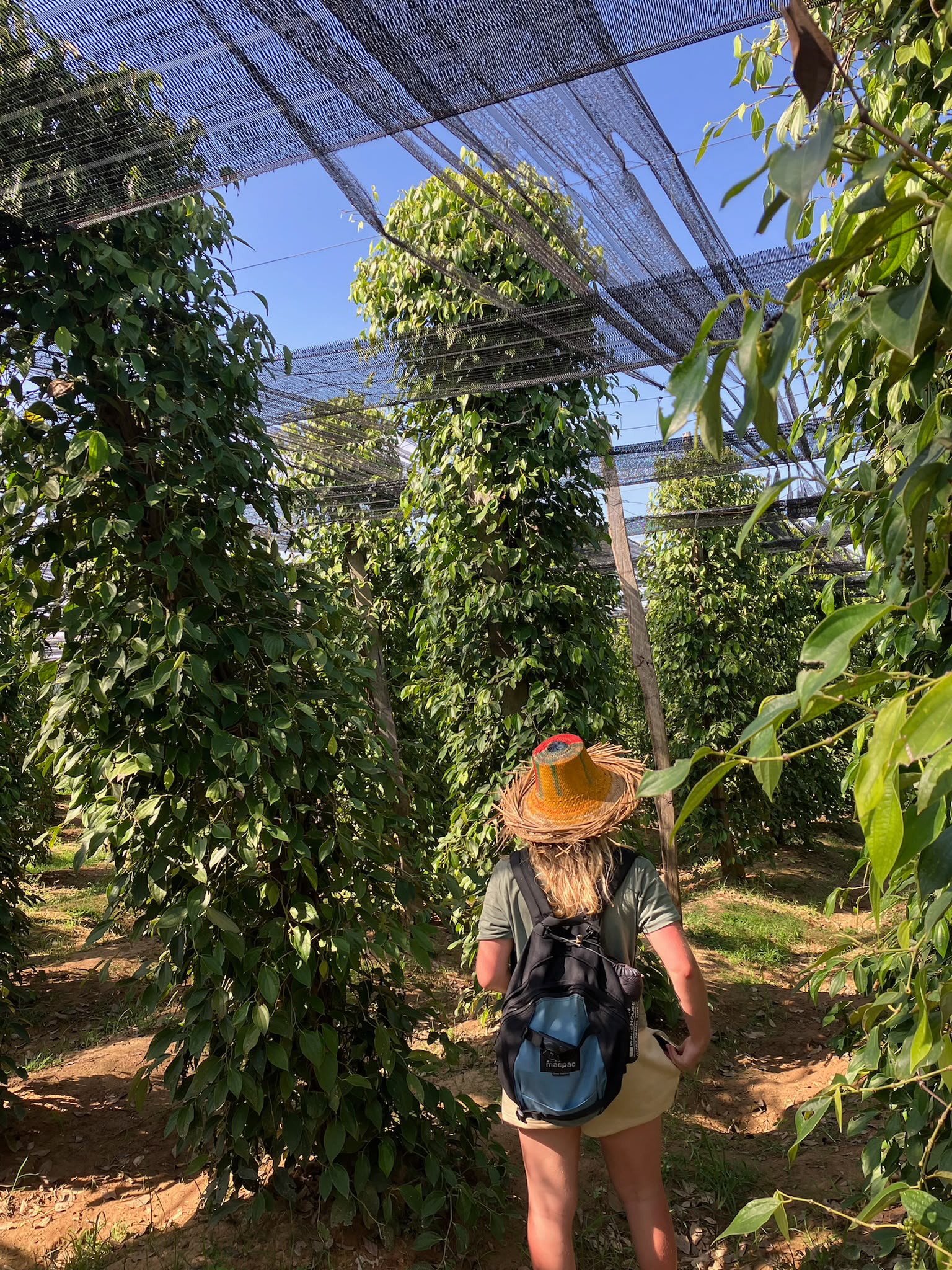
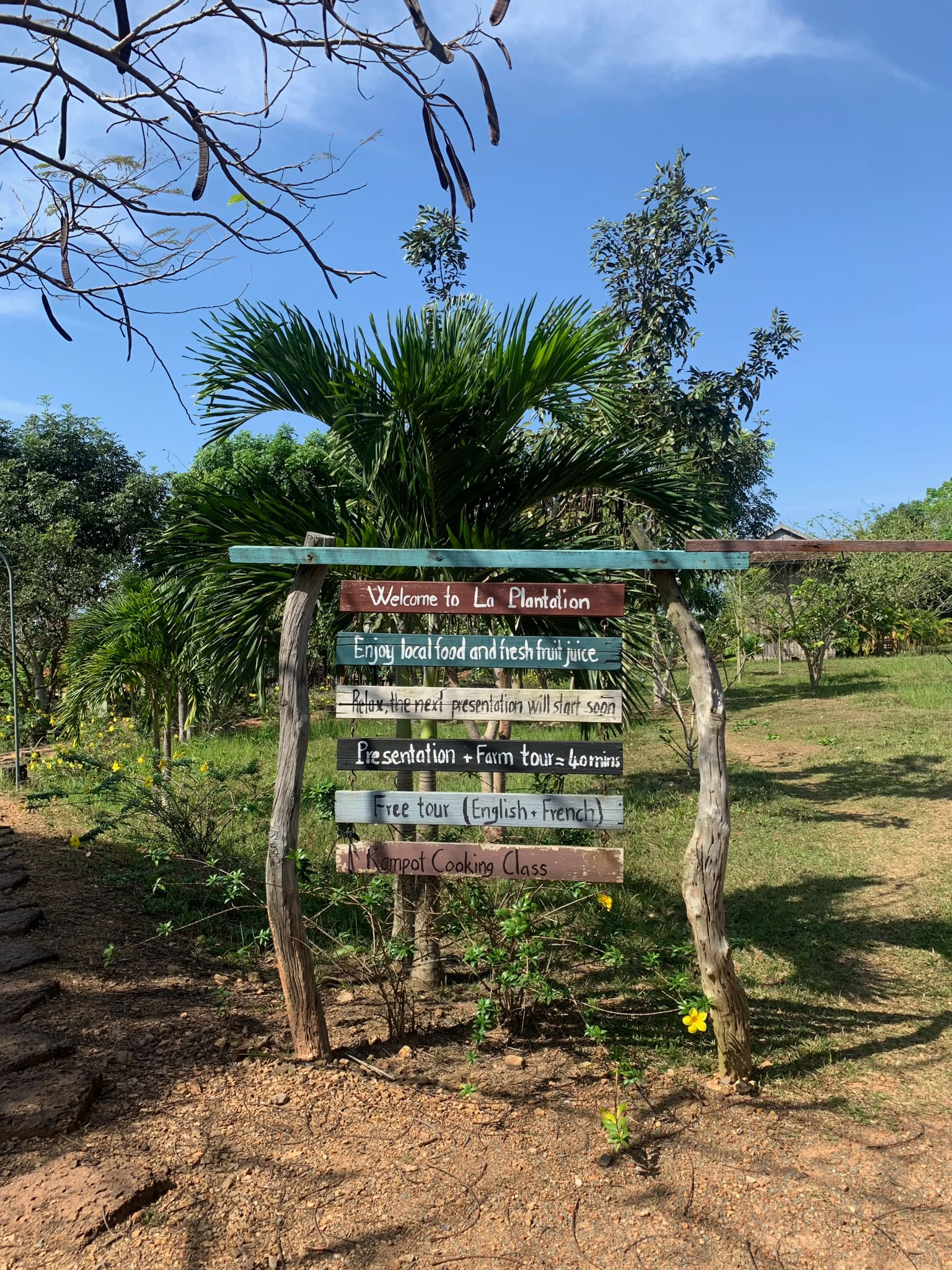
La Plantation pepper farm: Located approximately 10 km outside Kampot toward the Vietnamese border, La Plantation offers free guided tours of its working pepper farm explaining the cultivation, harvesting, drying and grading of Kampot pepper. Kampot pepper has EU Protected Geographical Indication status, one of only a handful of Southeast Asian agricultural products to achieve this. The farm grows four varieties: black, red, white and wild, each with distinct flavour profiles. The on-site shop sells the pepper directly; buying here rather than in tourist shops guarantees genuinely produced Kampot pepper rather than the Vietnamese imports mislabelled as Kampot that are common in tourist markets. The tour is free; tipping the guide is standard.

For dinner, Simon's restaurant is the most consistently recommended Indian restaurant in Kampot; rich curries, fresh roti and a reliable standard. Rikitikitavi is another long-standing Kampot favourite with a river view and a good range of Cambodian and international dishes.

Day 3: Koh Rong island arrival

The ferry to Koh Rong departs from Sihanoukville (Preah Sihanouk), approximately two hours by bus from Kampot. The ferry from Sihanoukville to Koh Rong takes approximately 45 minutes to one hour on the speed ferry or 90 minutes on the slower boat. Speed Ferries Cambodia and Buva Sea Cambodia are the main operators; book in advance online particularly in peak season (November to February and July to August). Ferry schedules can be disrupted in the wet season (May to October) when seas are rough; build buffer time around any island connection during this period.

Important note on Sihanoukville: The city has undergone significant transformation since 2018 following a wave of Chinese casino development that dramatically changed its character. It is now primarily a transit point rather than a destination; get through it efficiently and continue to the island.

Koh Rong: The island is 78 square kilometres of jungle-covered hills and beaches. There are no sealed roads crossing the island; movement between beaches and villages is by boat or on foot. The main town and pier on the east coast is the logistics hub; most accommodation is either here or at Long Beach (also called Sok San Beach) on the western coast.

Nest Hostel and Nestival: The Nest Hostel at Long Beach. Nestival, their Saturday night beach festival, is a genuine highlight of the island's social calendar: music, fire shows, games and a community atmosphere on the beach. If your timing allows a Saturday night, plan around it.

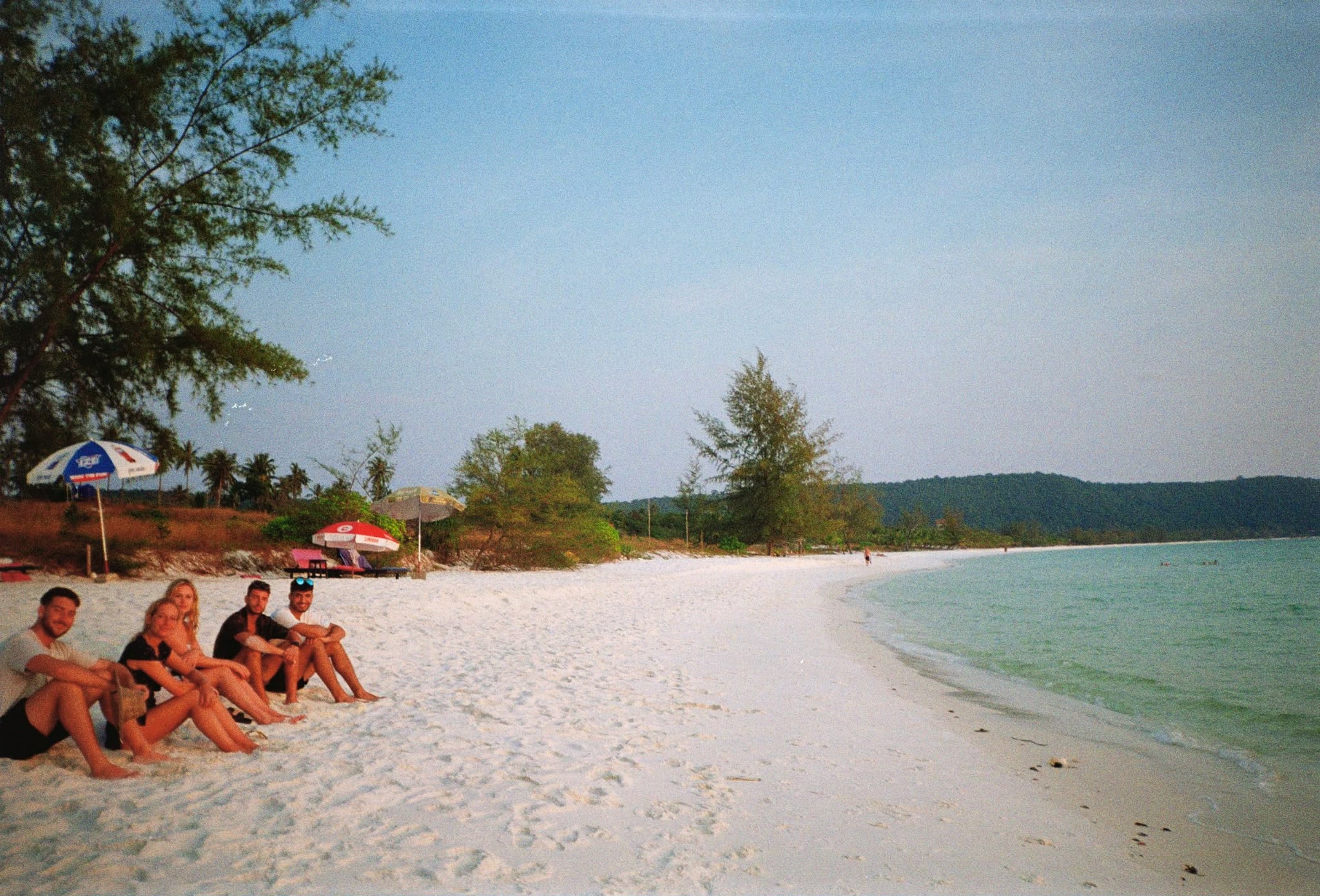
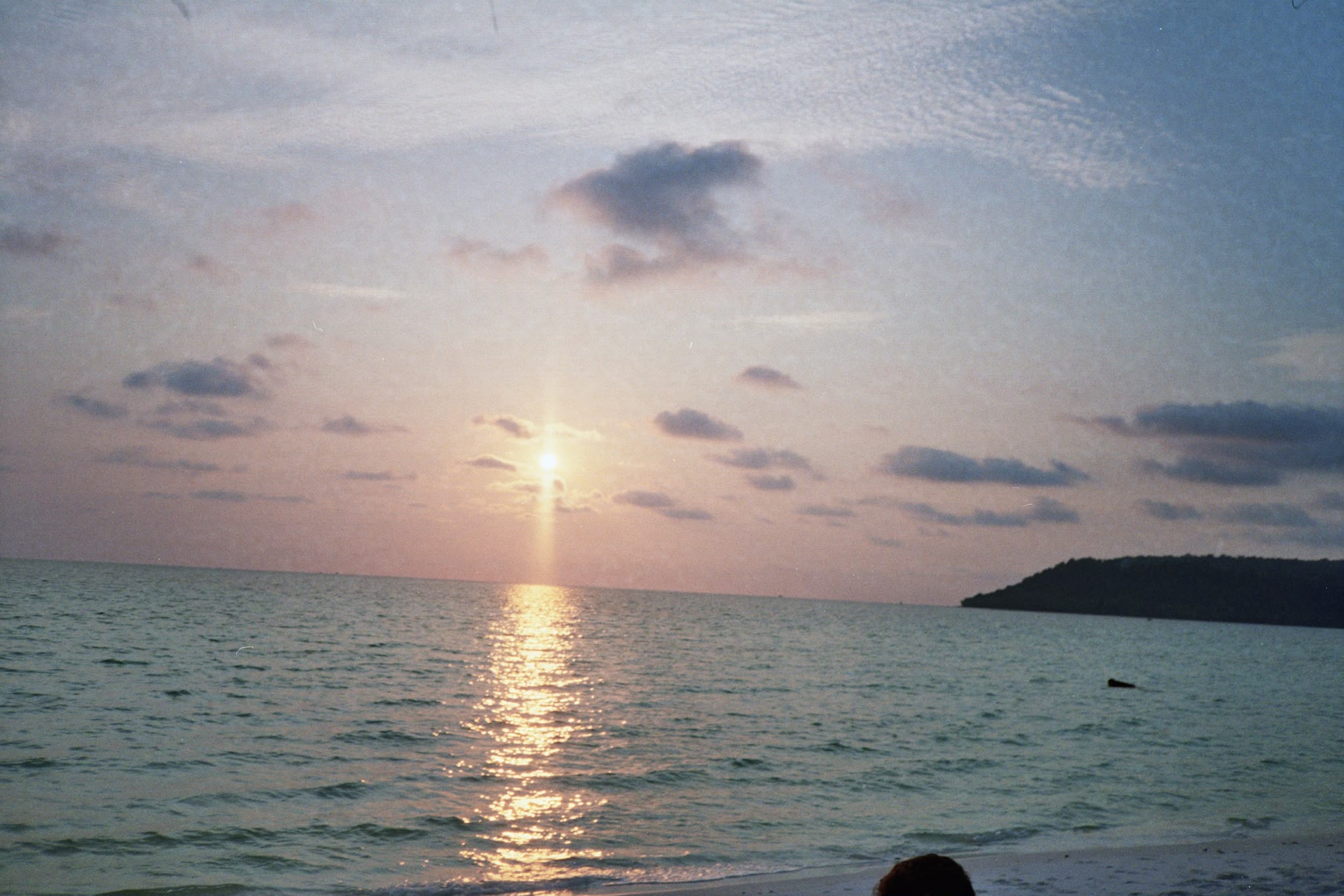
Long Beach (Sok San Beach): The most consistently recommended beach on the island, a 7 km stretch of white sand on the western coast. The walk from the main town to Long Beach takes approximately 45 minutes through jungle trail; boats also make the crossing for $3 to $5. The western exposure means the sunset here is directly over the water.

Bioluminescent plankton: The evening boat trip to swim with bioluminescence is weather and season dependent; the effect is strongest in the wet season (May to October) when warm water concentrations of dinoflagellates are highest. In the dry season the phenomenon is less predictable. Go on a moonless night for maximum effect; even a half-moon significantly reduces the visibility of the glow. Tour operators in the main town organise these nightly for approximately $15 to $20 per person. Bring waterproof sandals, not valuables.

Day 4: Snorkelling and island life

Snorkelling trips leave from the main town pier most mornings, typically at 9 am, run by multiple operators. Most tours cover three to four snorkelling sites around the island and the nearby smaller island of Koh Rong Sanloem, stop at a remote beach for lunch, and return by late afternoon. Cost approximately $20 to $30 per person including equipment. The coral around Koh Rong has suffered bleaching damage in recent warmer years but marine life remains varied: scorpionfish, parrotfish, moray eels, and sea turtles are regularly encountered.

Koh Touch village on the east coast is the main social hub in the evenings: beach bars, seafood restaurants, hammocks strung between palm trees. 4Js Bar is consistently named as the most reliable beach bar. The evening rhythm is simple: grilled seafood at one of the waterfront restaurants, cold Angkor beer, and the kind of social serendipity that island beach bars produce naturally.

Day 5: Travel to Siem Reap

The routing from Koh Rong to Siem Reap is the most logistically involved day of the trip. The cleanest option: ferry back to Sihanoukville, then either fly from Sihanoukville (operated by Cambodia Bayon Airlines; approximately one hour to Siem Reap) or take a direct bus (eight to nine hours, Giant Ibis operates this route). The bus option is long but operates at night or day; a sleeping bus overnight can save a hotel night. Alternatively, return to Phnom Penh first and take the domestic flight or express bus onward to Siem Reap from there.

Book the onward transport from Koh Rong the day before departure; ferries have set departure times and missing the first connection cascades. Allow the full day as a travel day rather than trying to arrive and immediately do anything.

Check into Lub d Hostel in Siem Reap, the best social hostel in the city: pool, organised excursions, communal spaces and a reliable central location within walking distance of the Night Market and Pub Street.

Siem Reap Night Market: The Old Market (Psar Chaa) and the Angkor Night Market are the two main evening market areas. The Night Market runs approximately 3 pm to midnight. Lacquerware, krama scarves, shadow puppets, silk and silverwork. The Arts and Crafts Market within the Night Market complex connects purchases directly to community workshops. Khmer Kitchen restaurant is reliable; amok curry (fish steamed in a coconut and lemongrass paste inside a banana leaf, Cambodia's most distinctive national dish) is the order.

Day 6: Angkor Wat and the Angkor Archaeological Park

Buy your pass the afternoon before. The Angkor Enterprise ticket office is on Road 60, several kilometres from the town centre; it opens from 4:45 pm to 5:30 pm for afternoon sales and 5 am the following morning. Buying the day before removes the risk of queue delays on your sunrise morning. A one-day pass costs $37 USD, a three-day pass $62, a seven-day pass $72. If you are spending two or more days at Angkor the three-day pass is worth it; the complex is too large to cover in a single day.

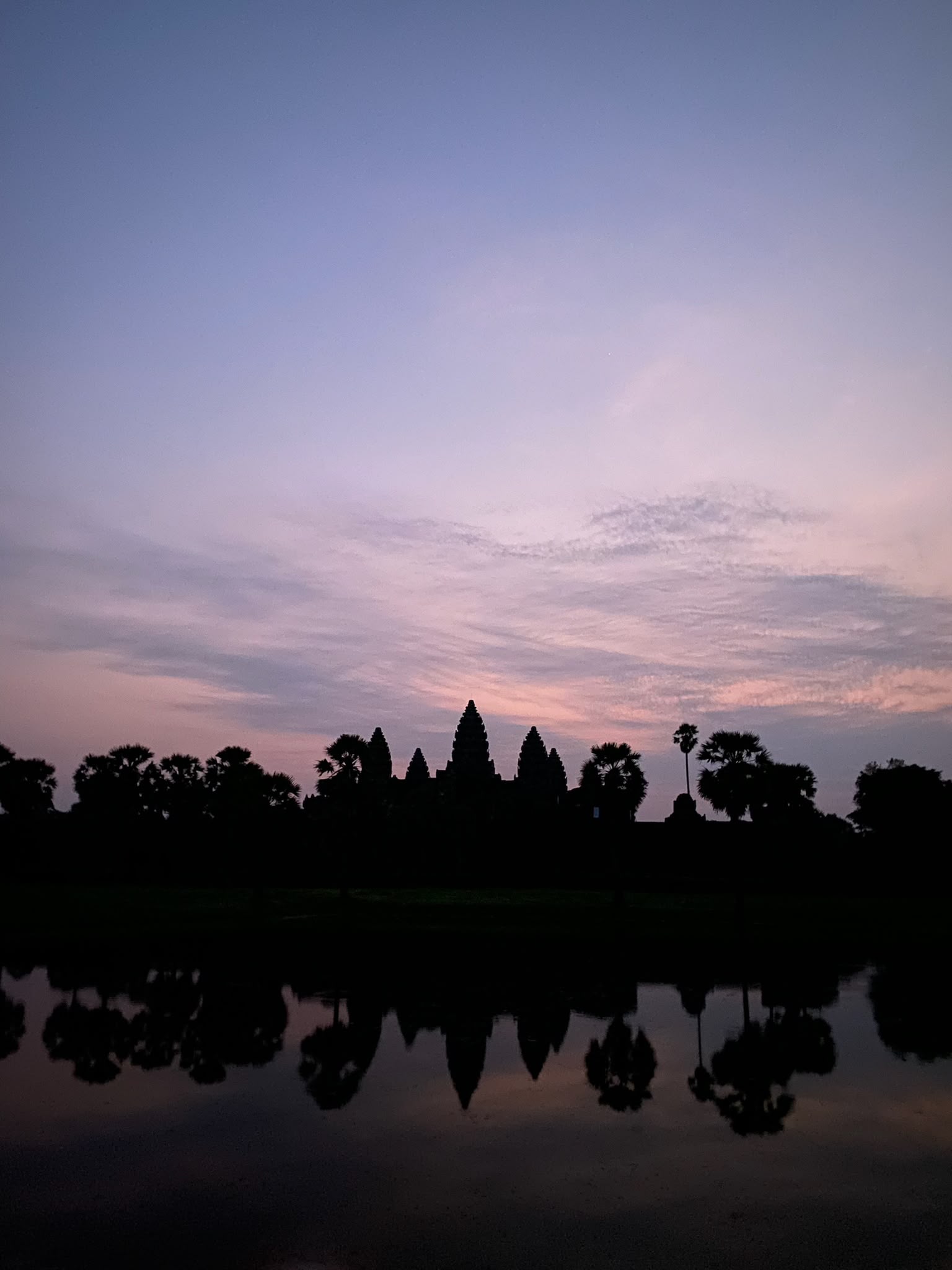
Sunrise logistics: Leave your hotel no later than 4:30 am. The gate opens at 5 am; arrive as it opens. The North Reflecting Pool in front of the west entrance is the classic sunrise position: the five towers of Angkor Wat reflected in the still water as the sky lightens behind them. This spot fills up by 5 am in peak season (November to February); the front row of the north pond is claimed even earlier. If you miss the front row, the elevated south library terrace gives a wider angle and is often less crowded. Sunrise time varies from 5:30 am in June to 6:20 am in January; check the precise time for your date and arrive 45 minutes before it.

After sunrise, do not leave immediately. The 30 to 45 minutes after the sun rises and before the crowd disperses is the best time inside the temple itself: the morning light enters the western galleries sideways, illuminating the bas-reliefs in ways that midday light cannot. The bas-relief galleries run for 800 metres and depict the Churning of the Ocean of Milk (the Hindu creation myth that underpinned Khmer royal ideology), the Battle of Kurukshetra, and the 37 heavens and 32 hells of Khmer cosmology with extraordinary narrative detail. A guide hired at the temple entrance for approximately $20 to $30 for the morning makes these galleries legible in a way that self-guided visits rarely do.

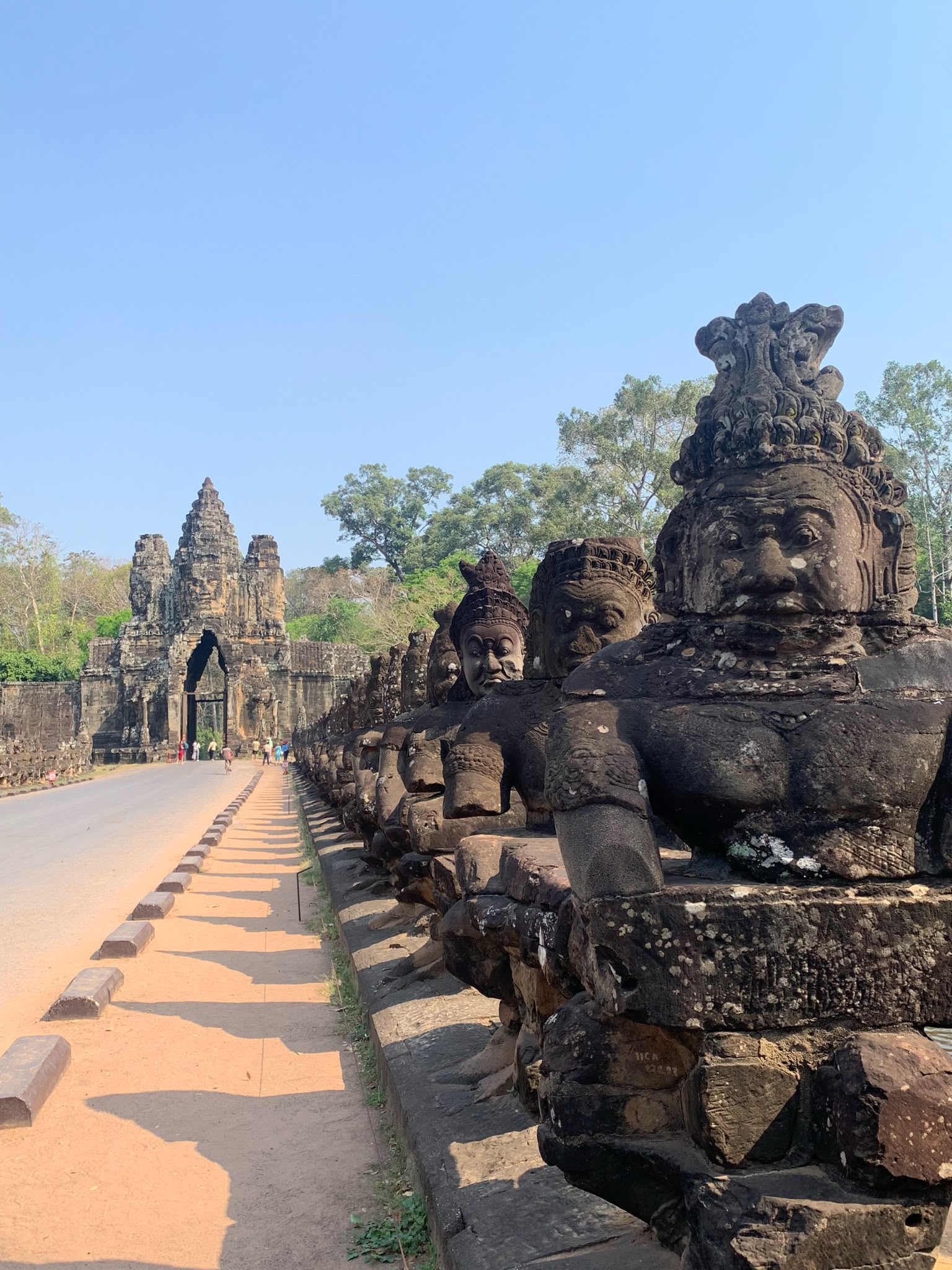
Angkor Thom: The fortified royal city immediately north of Angkor Wat, covering 9 square kilometres and once home to perhaps a million people. Enter through the South Gate, the best-preserved of the five entrances, where 54 stone gods and 54 stone demons line the causeway pulling the body of the great serpent Naga in a reference to the creation myth. The Bayon temple at the centre of the city is the most immediately striking structure in the entire archaeological park: 216 massive stone faces carved into 54 towers, each face depicting either the Bodhisattva Avalokitesvara or King Jayavarman VII himself (scholars disagree), looking out in all four cardinal directions. The effect from inside the temple, surrounded by faces at every scale and angle, is one of the most strange and powerful architectural experiences in Asia.

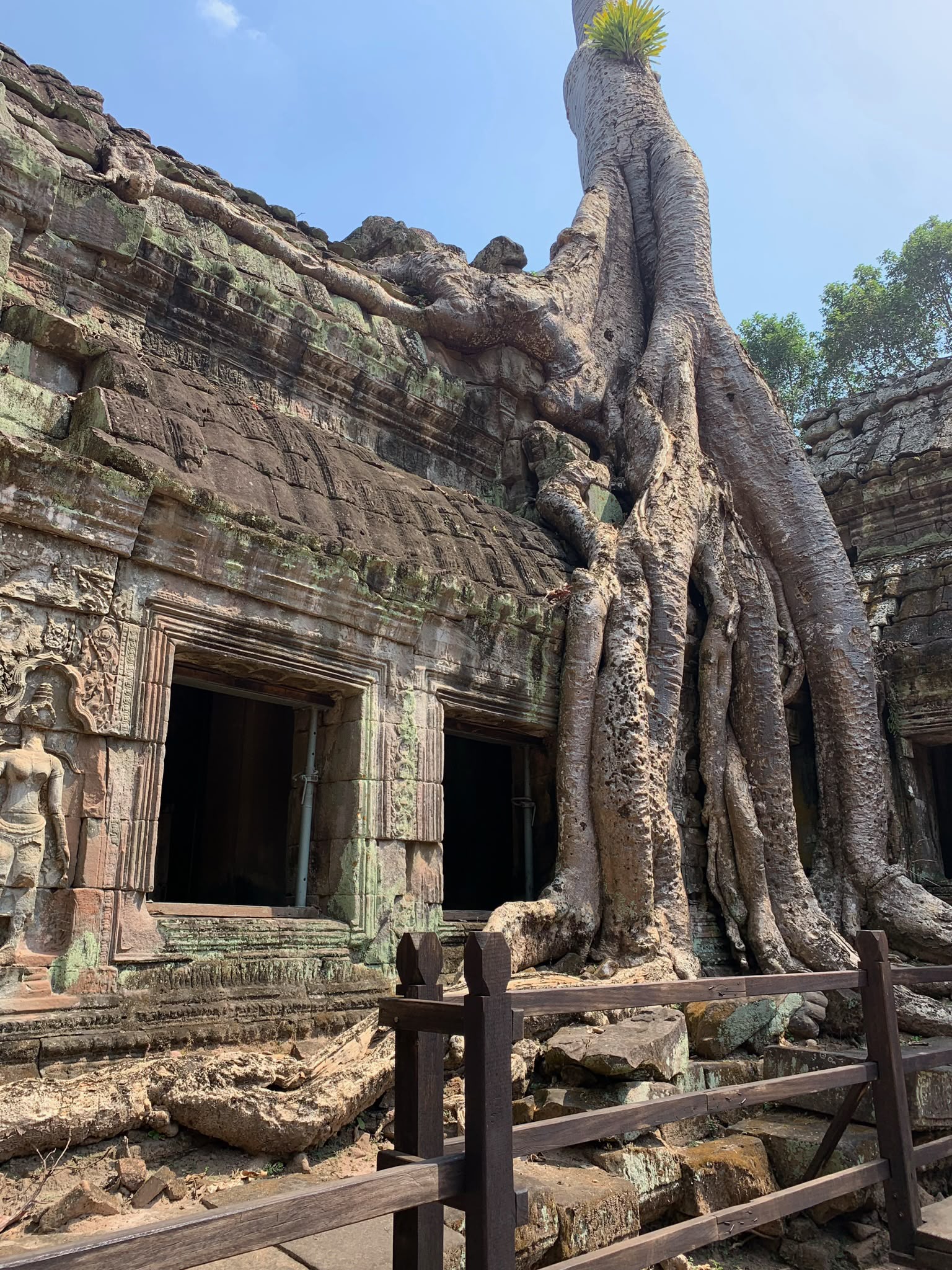
Ta Prohm: Built in 1186 by Jayavarman VII as a temple monastery, Ta Prohm was left largely uncleared when French archaeologists began restoration of the Angkor complex in the early 20th century. Silk-cotton and strangler fig trees have grown into the stone over eight centuries; their roots coil over doorways, lift stone blocks from foundations and split gallery walls into irregular sections. The result is that Ta Prohm shows what the rest of the complex looked like when Henri Mouhot described it in 1860: jungle reclaiming architecture at a pace that makes the stones feel temporary. Visit in the late afternoon when tour groups have moved on and the light through the tree canopy is dramatic.

Day 7: Countryside, community projects and local culture

Countryside cycling tour: Lub d runs a guided sunset countryside tour by bicycle or tuk-tuk through the villages and rice paddies around Siem Reap, typically departing 3 to 4 pm. The route passes working rice fields, traditional wooden stilt houses, local temples and the small family workshops that produce the silk and lacquerware sold in the night markets. Meeting people outside the tourist circuit is the point; this is not a landmark visit but a texture visit.

Navutu Dreams Wellness Resort pool: Non-guests can use the pool for a day fee of approximately $10, which converts into a food and drink voucher at the poolside restaurant. The resort is 3 km from the city centre; a tuk-tuk there and back is cheap. Use it for the two hours between the temples closing and the countryside tour departing.

Artisans Angkor: The community bakery and training centre is most likely the PAUL bakery/café associated with the Artisans Angkor cooperative, which trains young Cambodians from rural communities in hospitality and craft skills. Artisans Angkor's main workshop near the Chantiers Écoles complex is open to visitors and shows silk weaving, lacquer work and stone carving as living crafts rather than historical demonstration. The café attached serves good pastries and coffee. Entry to the workshop is free.

Cambodian Landmine Museum: Located 25 km northeast of Siem Reap on the road toward Banteay Srei, founded by Aki Ra, a former child soldier forced to lay mines for the Khmer Rouge who later spent years clearing them by hand. The museum explains Cambodia's landmine legacy (the country has one of the highest rates of landmine injury and amputation in the world as a proportion of the population), the clearance process and the ongoing work of mine-detecting dogs. The visiting dog programme shows trained dogs demonstrating their detection behaviour; it is educational and not remotely as gimmicky as it sounds. Entry approximately $5. Combine with a trip to Banteay Srei (the 10th-century pink sandstone temple famous for its extraordinarily detailed carvings, considered the finest stone carving in the Angkor complex) on the same road.

Pub Street: The central entertainment street runs nightly with bars, live music (Fish, Angkor What? and Temple Bar are the long-standing reliable options) and street food. Cambodian night entertainment has a particular energy that the Pub Street version captures at its most concentrated; the fish amok and lok lak (stir-fried beef with lime dipping sauce) at the riverside restaurants off the main street are the evening's best food option.

Day 8: Beng Mealea or Tonlé Sap Floating Villages

Beng Mealea: 68 km east of Siem Reap, approximately one hour by tuk-tuk or car. Built in the early 12th century at roughly the same time as Angkor Wat, Beng Mealea was largely left to the jungle; it was partly cleared but not structurally restored, leaving towers collapsed, galleries filled with fallen stone and tree roots growing through the walls at every point. Unlike Ta Prohm at Angkor, Beng Mealea receives very few visitors and the sense of genuine archaeological discovery, climbing over rubble and through jungle to find carved doorways in the dark, is present in a way that the main Angkor sites cannot replicate. Hire a local guide at the entrance for approximately $5 to $10; the site is complex without one. Entry $5. Best visited in the morning before any heat.

Tonlé Sap Floating Villages: The Tonlé Sap lake is the largest freshwater lake in Southeast Asia and one of the most productive fishing ecosystems in the world. Between June and November the Mekong floods backward into the Tonlé Sap river, reversing its flow and expanding the lake from approximately 2,500 to 16,000 square kilometres, flooding vast tracts of forest and supporting the lake's extraordinary fish population. Several communities live permanently on the lake in floating villages: houses, schools, churches and petrol stations built on bamboo rafts or stilts, relocating seasonally as the water level changes. Kampong Phluk (35 km south of Siem Reap) is the most visited; Kampong Khleang (50 km south) is less crowded and more authentic. Both require a boat transfer. Tours run from $15 to $25 per person. The high water season (August to November) is the most dramatic time to visit; low water (February to May) exposes the stilt village structures more clearly. Visit in the late afternoon for the best light on the water.

In pictures

No items found.

Traveller suggestions

Accomodation

Phnom Penh

Premium : Plantation Urban Resort and Spa (boutique colonial-era building, Penh House Hotel (riverfront)

Mid-tier : The Pavilion (boutique, pool in a heritage villa)

Budget : Onederz Hostel, Mad Monkey Phnom Penh (very social, party hostel option), Eighty8 Backpackers

Stay in BKK1 or the riverside area; both are safe, walkable and within easy Grab distance of the S-21 and market areas. BKK1 has the better restaurant and café concentration.

Kampot

Premium : The Plantation (boutique resort on the river)

Mid-tier : Rikitikitavi (guesthouse rooms above the restaurant, river view), Les Manguiers (riverside bungalows)

Budget : Onederz Kampot (same reliable chain as Phnom Penh, social), Monkey Republic (long-running backpacker hostel, social bar)

Koh Rong

Premium : Song Saa Private Island (between Koh Rong and Koh Rong Sanloem, overwater and jungle villas)

Mid-tier : Koh Rong Sanloem's Lazy Beach (on quieter neighbouring island, bungalows directly on the beach)

Budget : Nest Hostel (Nestival Saturday nights, social), Mad Monkey Koh Rong (reliable chain option), 4Js Beach Bungalows (simple and cheap)

Siem Reap

Premium : Amansara (benchmark luxury hotel, former royal guesthouse), Shinta Mani Angkor (boutique, most design-forward hotel), La Résidence d'Angkor (river view, colonial design)

Mid-tier : Villa Nagara (boutique), Jaya House River Park (boutique)

Budget : Lub d Hostel (social, well-organised Angkor excursions, the best backpacker base), Mad Monkey Siem Reap (party hostel), Onederz Siem Reap (quieter chain alternative)

Food & Drink

Phnom Penh

Premium : Malis (Khmer fine dining), Topaz (French bistro with a beautiful courtyard)

Mid-tier : 54 Langeach Sros (Khmer barbecue and beer garden, live cover band most nights), Lemongrass (Thai-Khmer combination, koh tiou caramelised pork with Kampot pepper), Banteay Srey (Khmer dishes, good introduction to amok and lok lak for first-timers)

Budget : Street food at Phsar Thmey (Central Market), Phsar Chas (Old Market) and Tuol Tompoung (Russian Market); the market stalls serve the most honest and cheapest Cambodian food in the city (Nom banh chok rice noodles, Lort cha stir-fried rice noodles with egg and vegetables)

The essential Cambodian dishes to eat before leaving Phnom Penh: fish amok (steamed fish curry mousse in banana leaf, mild and coconut-heavy), lok lak (stir-fried beef with Kampot pepper dip), bai sach chrouk (pork and rice, the classic Khmer breakfast), and sugar palm fruit in any form from the market stalls.

Kampot

Mid-tier : Simon's (Indian), Rikitikitavi (Cambodian and international, river view terrace), Epic Arts Café (social enterprise training deaf and disabled Cambodians)

Budget : The riverside street food strip near the Old Bridge for cheap Khmer noodles and grilled meats in the evening

Koh Rong

Budget : Grilled seafood at the beach restaurants along Koh Touch village waterfront for the evening meal; freshest fish is whatever was caught that day.

4Js Bar for cold Angkor beer and snacks after snorkelling.

Nest Hostel's own kitchen if staying there; the hostel meals are reliable and social.

Siem Reap

Premium : Cuisine Wat Damnak (most acclaimed Cambodian restaurant in the country six-course tasting menu), Embassy (monthly-changing set menu)

Mid-tier : Malis Siem Reap (sister restaurant to Phnom Penh), Marum (social enterprise garden restaurant, traditional Khmer dishes reimagined as sharing tapas), Haven, Chanrey Tree (refined Khmer in a traditional wooden house)

Budget : Khmer Kitchen, Sister Srey Café (social enterprise, brunch and coffee)

The essential Siem Reap order before Angkor: a full Khmer breakfast of bai sach chrouk (pork and rice) or nom banh chok followed by fish amok for dinner. The Kampot pepper in every form encountered here is the best in the world.

Reminders & Cautions

Visas: Most Western nationalities (UK, EU, USA, Australia, Canada) can obtain a Cambodian e-visa online at evisa.gov.kh before arrival. Cost is $36 USD including service fee, valid for 30 days single entry. Processing takes two to three business days; apply at least a week before travel. Alternatively, visa on arrival is available at Phnom Penh and Siem Reap airports for the same cost. Carry a passport photo and $36 in cash if doing visa on arrival. Do not use third-party visa services; only the official government website is legitimate.

Transport between cities: Giant Ibis and Mekong Express are the two most reliable intercity bus operators in Cambodia; Giant Ibis specifically has an outstanding safety and punctuality record. Book online at giantibis.com or virak.com. The main routes on this itinerary: Phnom Penh to Kampot (three hours, $9 to $12), Kampot to Sihanoukville (one and a half hours, $6 to $8), Phnom Penh to Siem Reap (six to seven hours, $12 to $15) or domestic flight (45 minutes, $50 to $90 on Cambodia Bayon Airlines or Cambodia Airways). Flying to Siem Reap saves a full day; driving is an option if you want the Tonlé Sap lake views on the approach.

Getting around cities: Grab is the most reliable and transparent transport option throughout Cambodia; download the app before arriving and use it for all tuk-tuk and car hires. The fare is agreed in the app before departure, removing negotiation. Traditional tuk-tuks are also fine but agree the price firmly before getting in; $2 to $4 for most city journeys is standard.

Angkor pass: Buy from the official Angkor Enterprise ticket office on Road 60, open 4:45 pm to 5:30 pm the afternoon before, or from 5 am on the day. Buy the afternoon before for sunrise visits; this removes all morning time pressure. Keep the pass accessible throughout the visit; it is checked at every site entrance. Current prices: one day $37, three days $62, seven days $72. If visiting more than two temples the three-day pass is almost always worth buying.

Koh Rong ferries: Speed Ferries Cambodia and Buva Sea Cambodia operate from Sihanoukville to Koh Rong; the journey takes 45 minutes to one hour. Book online in advance. Ferries can be cancelled or reduced during the wet season (May to October) when sea conditions deteriorate; build a buffer day into any island connection during this period rather than booking a same-day connection onward. The last ferry back from Koh Rong is usually around 3 pm; check current schedules before planning your departure day.

Money: Cambodia uses both the Cambodian Riel (KHR) and US Dollars interchangeably, with USD effectively functioning as the main currency for anything above $1. ATMs dispense USD and are widely available in Phnom Penh, Siem Reap and Kampot; less reliable on Koh Rong (one ATM, often out of cash). Withdraw USD in cities before heading to the island. Tipping is not mandatory but is appreciated: $1 per person per guide is standard, $1 at restaurants where the service has been good.

Health: Tap water is not drinkable anywhere in Cambodia. Use bottled water throughout or carry a filter bottle. Stomach issues from street food are common; start cautiously with cooked food from busy stalls rather than raw preparations. Mosquito repellent is essential; dengue risk exists throughout the country. No malaria prophylaxis is generally recommended for the main tourist circuit but consult a travel health clinic before departure. Sun protection is critical, particularly during temple visits where shade is limited and the stone surfaces reflect heat. Carry oral rehydration salts.

Dress at temples and memorials: Shoulders and knees must be covered at all Angkor temples; sarongs are available to borrow at the main gates but bringing your own light layer is more comfortable. At S-21 and Choeung Ek, modest dress is also required as a mark of respect at sites that remain sacred to Cambodians. Remove shoes when entering any active Buddhist temple.

Sihanoukville transit: Use the city only as a transit point between Kampot and Koh Rong. Since the 2018 wave of Chinese casino development the city has changed character significantly; there is little of interest for independent travellers and the transit is best done quickly.

Season: November to February is the dry season and the best window for the full itinerary: clear skies for Angkor sunrise, calm seas for Koh Rong ferries and snorkelling, and comfortable temperatures throughout. March to May is hotter and drier, still good for temples. June to October is the wet season: bioluminescence is at its strongest, the temples are less crowded and cheaper, but ferries are less reliable and temple photography is more challenging in cloud and rain. The wet season is genuinely beautiful in the countryside but requires flexibility.

image of vibrant dining space (for a mexican restaurant)

Phnom Penh’s Living Memory

Walk through Cambodia’s recent past at the Killing Fields and S21 Prison, two of the most important memorial sites in Southeast Asia. These places provide a difficult but essential understanding of the Khmer Rouge era and honour the resilience of the Cambodian people.

image of a guided tour group

Island Life on Koh Rong

Golden beaches, jungle-covered hills and some of Cambodia’s clearest waters. Koh Rong is the country’s tropical escape, with snorkelling, plankton swims and slow island days.
image of a local tour guide (for a travel agency)

Angkor, the Heart of Ancient Khmer Civilisation

Experience Angkor Wat at sunrise, wander the gatehouses of Angkor Thom and climb through Ta Prohm, where silk-cotton trees coil around thousand-year-old stone. This is one of the most extraordinary archaeological landscapes in the world.

Reminders from Collective travellers

Visas: Most Western nationalities (UK, EU, USA, Australia, Canada) can obtain a Cambodian e-visa online at evisa.gov.kh before arrival. Cost is $36 USD including service fee, valid for 30 days single entry. Processing takes two to three business days; apply at least a week before travel. Alternatively, visa on arrival is available at Phnom Penh and Siem Reap airports for the same cost. Carry a passport photo and $36 in cash if doing visa on arrival. Do not use third-party visa services; only the official government website is legitimate.

Transport between cities: Giant Ibis and Mekong Express are the two most reliable intercity bus operators in Cambodia; Giant Ibis specifically has an outstanding safety and punctuality record. Book online at giantibis.com or virak.com. The main routes on this itinerary: Phnom Penh to Kampot (three hours, $9 to $12), Kampot to Sihanoukville (one and a half hours, $6 to $8), Phnom Penh to Siem Reap (six to seven hours, $12 to $15) or domestic flight (45 minutes, $50 to $90 on Cambodia Bayon Airlines or Cambodia Airways). Flying to Siem Reap saves a full day; driving is an option if you want the Tonlé Sap lake views on the approach.

Getting around cities: Grab is the most reliable and transparent transport option throughout Cambodia; download the app before arriving and use it for all tuk-tuk and car hires. The fare is agreed in the app before departure, removing negotiation. Traditional tuk-tuks are also fine but agree the price firmly before getting in; $2 to $4 for most city journeys is standard.

Angkor pass: Buy from the official Angkor Enterprise ticket office on Road 60, open 4:45 pm to 5:30 pm the afternoon before, or from 5 am on the day. Buy the afternoon before for sunrise visits; this removes all morning time pressure. Keep the pass accessible throughout the visit; it is checked at every site entrance. Current prices: one day $37, three days $62, seven days $72. If visiting more than two temples the three-day pass is almost always worth buying.

Koh Rong ferries: Speed Ferries Cambodia and Buva Sea Cambodia operate from Sihanoukville to Koh Rong; the journey takes 45 minutes to one hour. Book online in advance. Ferries can be cancelled or reduced during the wet season (May to October) when sea conditions deteriorate; build a buffer day into any island connection during this period rather than booking a same-day connection onward. The last ferry back from Koh Rong is usually around 3 pm; check current schedules before planning your departure day.

Money: Cambodia uses both the Cambodian Riel (KHR) and US Dollars interchangeably, with USD effectively functioning as the main currency for anything above $1. ATMs dispense USD and are widely available in Phnom Penh, Siem Reap and Kampot; less reliable on Koh Rong (one ATM, often out of cash). Withdraw USD in cities before heading to the island. Tipping is not mandatory but is appreciated: $1 per person per guide is standard, $1 at restaurants where the service has been good.

Health: Tap water is not drinkable anywhere in Cambodia. Use bottled water throughout or carry a filter bottle. Stomach issues from street food are common; start cautiously with cooked food from busy stalls rather than raw preparations. Mosquito repellent is essential; dengue risk exists throughout the country. No malaria prophylaxis is generally recommended for the main tourist circuit but consult a travel health clinic before departure. Sun protection is critical, particularly during temple visits where shade is limited and the stone surfaces reflect heat. Carry oral rehydration salts.

Dress at temples and memorials: Shoulders and knees must be covered at all Angkor temples; sarongs are available to borrow at the main gates but bringing your own light layer is more comfortable. At S-21 and Choeung Ek, modest dress is also required as a mark of respect at sites that remain sacred to Cambodians. Remove shoes when entering any active Buddhist temple.

Sihanoukville transit: Use the city only as a transit point between Kampot and Koh Rong. Since the 2018 wave of Chinese casino development the city has changed character significantly; there is little of interest for independent travellers and the transit is best done quickly.

Season: November to February is the dry season and the best window for the full itinerary: clear skies for Angkor sunrise, calm seas for Koh Rong ferries and snorkelling, and comfortable temperatures throughout. March to May is hotter and drier, still good for temples. June to October is the wet season: bioluminescence is at its strongest, the temples are less crowded and cheaper, but ferries are less reliable and temple photography is more challenging in cloud and rain. The wet season is genuinely beautiful in the countryside but requires flexibility.

Reminders from Collective travellers

Visas: Most Western nationalities (UK, EU, USA, Australia, Canada) can obtain a Cambodian e-visa online at evisa.gov.kh before arrival. Cost is $36 USD including service fee, valid for 30 days single entry. Processing takes two to three business days; apply at least a week before travel. Alternatively, visa on arrival is available at Phnom Penh and Siem Reap airports for the same cost. Carry a passport photo and $36 in cash if doing visa on arrival. Do not use third-party visa services; only the official government website is legitimate.

Transport between cities: Giant Ibis and Mekong Express are the two most reliable intercity bus operators in Cambodia; Giant Ibis specifically has an outstanding safety and punctuality record. Book online at giantibis.com or virak.com. The main routes on this itinerary: Phnom Penh to Kampot (three hours, $9 to $12), Kampot to Sihanoukville (one and a half hours, $6 to $8), Phnom Penh to Siem Reap (six to seven hours, $12 to $15) or domestic flight (45 minutes, $50 to $90 on Cambodia Bayon Airlines or Cambodia Airways). Flying to Siem Reap saves a full day; driving is an option if you want the Tonlé Sap lake views on the approach.

Getting around cities: Grab is the most reliable and transparent transport option throughout Cambodia; download the app before arriving and use it for all tuk-tuk and car hires. The fare is agreed in the app before departure, removing negotiation. Traditional tuk-tuks are also fine but agree the price firmly before getting in; $2 to $4 for most city journeys is standard.

Angkor pass: Buy from the official Angkor Enterprise ticket office on Road 60, open 4:45 pm to 5:30 pm the afternoon before, or from 5 am on the day. Buy the afternoon before for sunrise visits; this removes all morning time pressure. Keep the pass accessible throughout the visit; it is checked at every site entrance. Current prices: one day $37, three days $62, seven days $72. If visiting more than two temples the three-day pass is almost always worth buying.

Koh Rong ferries: Speed Ferries Cambodia and Buva Sea Cambodia operate from Sihanoukville to Koh Rong; the journey takes 45 minutes to one hour. Book online in advance. Ferries can be cancelled or reduced during the wet season (May to October) when sea conditions deteriorate; build a buffer day into any island connection during this period rather than booking a same-day connection onward. The last ferry back from Koh Rong is usually around 3 pm; check current schedules before planning your departure day.

Money: Cambodia uses both the Cambodian Riel (KHR) and US Dollars interchangeably, with USD effectively functioning as the main currency for anything above $1. ATMs dispense USD and are widely available in Phnom Penh, Siem Reap and Kampot; less reliable on Koh Rong (one ATM, often out of cash). Withdraw USD in cities before heading to the island. Tipping is not mandatory but is appreciated: $1 per person per guide is standard, $1 at restaurants where the service has been good.

Health: Tap water is not drinkable anywhere in Cambodia. Use bottled water throughout or carry a filter bottle. Stomach issues from street food are common; start cautiously with cooked food from busy stalls rather than raw preparations. Mosquito repellent is essential; dengue risk exists throughout the country. No malaria prophylaxis is generally recommended for the main tourist circuit but consult a travel health clinic before departure. Sun protection is critical, particularly during temple visits where shade is limited and the stone surfaces reflect heat. Carry oral rehydration salts.

Dress at temples and memorials: Shoulders and knees must be covered at all Angkor temples; sarongs are available to borrow at the main gates but bringing your own light layer is more comfortable. At S-21 and Choeung Ek, modest dress is also required as a mark of respect at sites that remain sacred to Cambodians. Remove shoes when entering any active Buddhist temple.

Sihanoukville transit: Use the city only as a transit point between Kampot and Koh Rong. Since the 2018 wave of Chinese casino development the city has changed character significantly; there is little of interest for independent travellers and the transit is best done quickly.

Season: November to February is the dry season and the best window for the full itinerary: clear skies for Angkor sunrise, calm seas for Koh Rong ferries and snorkelling, and comfortable temperatures throughout. March to May is hotter and drier, still good for temples. June to October is the wet season: bioluminescence is at its strongest, the temples are less crowded and cheaper, but ferries are less reliable and temple photography is more challenging in cloud and rain. The wet season is genuinely beautiful in the countryside but requires flexibility.

Reminders from Collective travellers

Visas: Most Western nationalities (UK, EU, USA, Australia, Canada) can obtain a Cambodian e-visa online at evisa.gov.kh before arrival. Cost is $36 USD including service fee, valid for 30 days single entry. Processing takes two to three business days; apply at least a week before travel. Alternatively, visa on arrival is available at Phnom Penh and Siem Reap airports for the same cost. Carry a passport photo and $36 in cash if doing visa on arrival. Do not use third-party visa services; only the official government website is legitimate.

Transport between cities: Giant Ibis and Mekong Express are the two most reliable intercity bus operators in Cambodia; Giant Ibis specifically has an outstanding safety and punctuality record. Book online at giantibis.com or virak.com. The main routes on this itinerary: Phnom Penh to Kampot (three hours, $9 to $12), Kampot to Sihanoukville (one and a half hours, $6 to $8), Phnom Penh to Siem Reap (six to seven hours, $12 to $15) or domestic flight (45 minutes, $50 to $90 on Cambodia Bayon Airlines or Cambodia Airways). Flying to Siem Reap saves a full day; driving is an option if you want the Tonlé Sap lake views on the approach.

Getting around cities: Grab is the most reliable and transparent transport option throughout Cambodia; download the app before arriving and use it for all tuk-tuk and car hires. The fare is agreed in the app before departure, removing negotiation. Traditional tuk-tuks are also fine but agree the price firmly before getting in; $2 to $4 for most city journeys is standard.

Angkor pass: Buy from the official Angkor Enterprise ticket office on Road 60, open 4:45 pm to 5:30 pm the afternoon before, or from 5 am on the day. Buy the afternoon before for sunrise visits; this removes all morning time pressure. Keep the pass accessible throughout the visit; it is checked at every site entrance. Current prices: one day $37, three days $62, seven days $72. If visiting more than two temples the three-day pass is almost always worth buying.

Koh Rong ferries: Speed Ferries Cambodia and Buva Sea Cambodia operate from Sihanoukville to Koh Rong; the journey takes 45 minutes to one hour. Book online in advance. Ferries can be cancelled or reduced during the wet season (May to October) when sea conditions deteriorate; build a buffer day into any island connection during this period rather than booking a same-day connection onward. The last ferry back from Koh Rong is usually around 3 pm; check current schedules before planning your departure day.

Money: Cambodia uses both the Cambodian Riel (KHR) and US Dollars interchangeably, with USD effectively functioning as the main currency for anything above $1. ATMs dispense USD and are widely available in Phnom Penh, Siem Reap and Kampot; less reliable on Koh Rong (one ATM, often out of cash). Withdraw USD in cities before heading to the island. Tipping is not mandatory but is appreciated: $1 per person per guide is standard, $1 at restaurants where the service has been good.

Health: Tap water is not drinkable anywhere in Cambodia. Use bottled water throughout or carry a filter bottle. Stomach issues from street food are common; start cautiously with cooked food from busy stalls rather than raw preparations. Mosquito repellent is essential; dengue risk exists throughout the country. No malaria prophylaxis is generally recommended for the main tourist circuit but consult a travel health clinic before departure. Sun protection is critical, particularly during temple visits where shade is limited and the stone surfaces reflect heat. Carry oral rehydration salts.

Dress at temples and memorials: Shoulders and knees must be covered at all Angkor temples; sarongs are available to borrow at the main gates but bringing your own light layer is more comfortable. At S-21 and Choeung Ek, modest dress is also required as a mark of respect at sites that remain sacred to Cambodians. Remove shoes when entering any active Buddhist temple.

Sihanoukville transit: Use the city only as a transit point between Kampot and Koh Rong. Since the 2018 wave of Chinese casino development the city has changed character significantly; there is little of interest for independent travellers and the transit is best done quickly.

Season: November to February is the dry season and the best window for the full itinerary: clear skies for Angkor sunrise, calm seas for Koh Rong ferries and snorkelling, and comfortable temperatures throughout. March to May is hotter and drier, still good for temples. June to October is the wet season: bioluminescence is at its strongest, the temples are less crowded and cheaper, but ferries are less reliable and temple photography is more challenging in cloud and rain. The wet season is genuinely beautiful in the countryside but requires flexibility.

Journey adjustments

If you have less time, cut Kampot and go directly to Koh Rong.

Kampot is the most logistically demanding stop to incorporate into an eight-day route since it requires a backtrack toward Sihanoukville before heading north to Siem Reap. Removing it saves a day and simplifies the southern section to a direct Phnom Penh to Sihanoukville to island sequence. The trade-off is losing Bokor National Park, La Plantation and the specific atmosphere of the river town that most travellers find is their unexpected Cambodia highlight. If you are short on days, Kampot is the cut; if you have flexibility, keep it.

If you want to slow down, add a third night on Koh Rong.

Two island days covers the main snorkelling and bioluminescence activities but three nights lets the island settle into its natural rhythm: a day of doing very little, walking the forest interior paths, finding hidden beaches accessible only on foot or by kayak, and letting the pace become the experience rather than the activities. Most travellers wish they had stayed longer on Koh Rong; it is the stop where extra time is least wasted.

If you want a more historically immersive experience, add a second Angkor day and use it for the outer temples.

The main Angkor circuit (Angkor Wat, Angkor Thom, Ta Prohm) covers the largest and most visited structures but barely touches the wider archaeological park. A second day allows Banteay Srei (the pink sandstone temple 25 km north, the most detailed stone carving in the complex), Preah Khan (a temple monastery built simultaneously with Ta Prohm, quieter and equally atmospheric), and the Pre Rup sunset viewpoint (the best alternative to the crowded Phnom Bakheng for watching the light go off the temple spires). A three-day Angkor pass covers this naturally.

If you want to add the Royal Palace in Phnom Penh, include it on the afternoon of Day 1 before the memorial sites.

The Royal Palace and Silver Pagoda complex is the most architecturally significant building in Phnom Penh still in active royal use. The Silver Pagoda contains a 90 kg solid gold Buddha and over 5,000 diamond stones; the surrounding compound is the most complete example of Khmer royal architecture in the capital. Allow 90 minutes. It sits near the riverfront and combines naturally with the riverside evening walk. This makes Day 1 very full; alternatively move it to the evening of Day 2 before the Kampot departure the following morning.

If you want a more remote island, consider Koh Rong Sanloem instead of or alongside Koh Rong.

Koh Rong Sanloem is the smaller island immediately south of Koh Rong, less developed, with fewer travellers and equally good beaches. Saracen Bay on the eastern shore is the main accommodation area: a calm turquoise bay with a wide arc of sand and bungalows ranging from budget to mid-tier. The two islands are connected by a short boat ride; combining one night on each gives the contrast between Koh Rong's livelier hostel beach scene and Sanloem's quieter character within the same island section.

If you want to extend into northeast Cambodia, add Kratie and the Mekong dolphins.

Kratie is a colonial river town 320 km northeast of Phnom Penh on the Mekong, the main base for seeing the critically endangered Irrawaddy river dolphins. Fewer than 100 remain in the Cambodian section of the Mekong; boat trips from Kratie see them reliably in the dry season. Two nights in Kratie can be added between Phnom Penh and Siem Reap without backtracking on the bus or domestic flight route. This adds two days and a genuinely different character from the rest of the itinerary.

Collective travellers' testimonials

Saskia - London, UK

"Cambodia is a country that moves you. I learnt a lot about the history, the people are very open about it and want to share their stories. It was a very profound cultural immersion."

Francesca - Cecina, Italy

"Tourists are starting to come, but it is still rather unexplored compared to neighbours like Vietnam and Thailand. I would recommend a trip before it becomes mainstream, and it is already becoming more expensive apparently)."

Kyle - Zurich, Switzerland

"I loved learning about the pre-colonial civilization there at Angkor Wat. It is one of the only countries in South East Asia where this pre-colonial history is still so visible"