Days 4 to 5: Xi'an
Beijing West to Xi'an North by high-speed rail: 4.5 to 6 hours depending on the service, with over 20 daily G-train departures, so this slots easily into a single morning without an early alarm. Xi'an North station is 20 km from downtown, roughly 40 to 60 minutes by taxi or metro to the Bell Tower area. Base yourself around the Bell Tower or Muslim Quarter: everything on this leg is within walking distance or a short taxi, and the Terracotta Army is the only stop requiring transport out of the city.
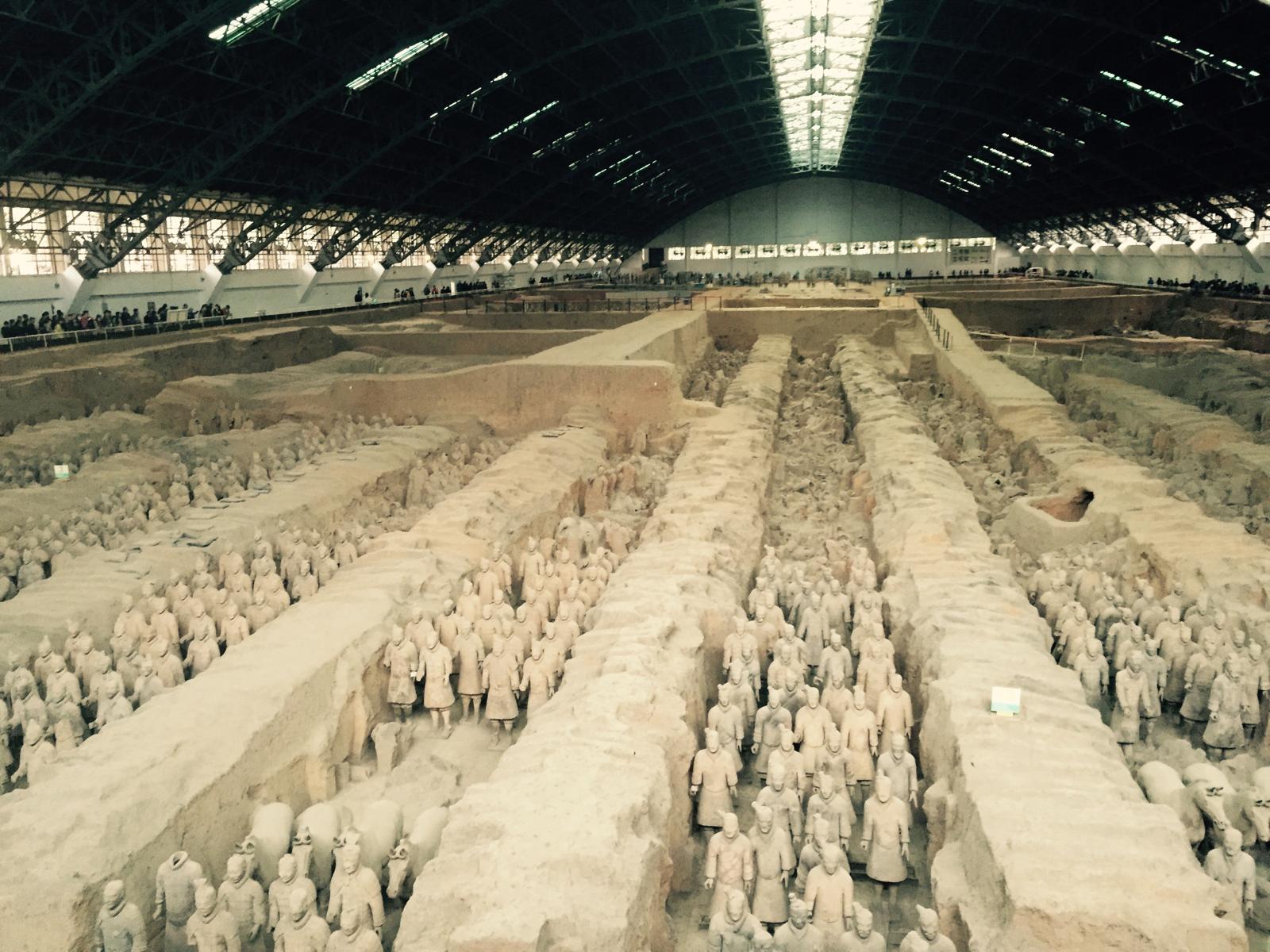
Day 4: The Terracotta Army. The site is at Mount Li, about an hour east of central Xi'an by taxi, or by tourist bus (游5/306) from the Xi'an Railway Station forecourt, cheaper but slower. ⚠️ Go in the morning; tour groups arrive in force from mid-morning onward and the crowds around Pit 1 thicken considerably by midday. Pit 1 is the main hall, 230 metres of ranked infantry; Pits 2 and 3 and the bronze chariot exhibition hall round out a visit of three to four hours including transfer. This is a half-day trip, doable without a car via taxi or tour bus. In the evening, back in the city, rent a bike and ride a section of the 13.7 km city wall at sunset; the full loop takes around two hours by bike if you want to do it properly, or do a shorter stretch near the South Gate if time is tight.
Day 5: Muslim Quarter and the old city. No transport needed today; everything is walkable from the Bell Tower area. Spend the morning and early afternoon working through the Muslim Quarter's food streets: Beiyuanmen and Huimin Street for the main concentration of stalls, biang biang noodles at a dedicated noodle house rather than a street stall (better quality control), roujiamo (Chinese "burger"), yangrou paomo (bread soaked in lamb broth), and the Great Mosque tucked into the quarter's back lanes, notable for its Chinese rather than Middle Eastern architectural style. In the afternoon, the Shaanxi History Museum covers the full sweep of dynasties that made Xi'an their capital; allow two hours, and note it closes on Mondays. Pack for the HSR south to Chongqing.
Days 6 to 8: Chongqing, with a Chengdu day trip
Xi'an North to Chongqing (North or West station depending on service) by HSR: approximately 4 to 5 hours, with over 15 daily departures. Base yourself in Jiefangbei, the central business and pedestrian district: Hongya Cave, the Yangtze cable car and Liziba Station are all within a short taxi or metro ride from here.
Day 6: Arrival and Hongya Cave. Check in, then go straight to Hongya Cave (洪崖洞) in the evening rather than waiting for a later night: the stilted riverside complex is lit in red and gold after dark and is genuinely one of the best free sights in the country. It's a short walk or taxi from Jiefangbei. Late dinner nearby; the Bayi Road food street is the correct destination for hotpot.
Day 7: Chengdu day trip. Take the first bullet train from Chongqingbei or Shapingba to Chengdu East, approximately 1 to 1.5 hours, and go directly to the Chengdu Research Base of Giant Panda Breeding.
⚠️ Arrive before 10am and pre-book timed entry; pandas are active and feeding in the morning and largely asleep by midday, and the base gets crowded on weekends specifically. The cub nursery is the standout. After the pandas, Jinli Ancient Street near Wuhou Shrine for a Sichuan lunch, then the HSR back to Chongqing by mid-afternoon. This is a long single day but manageable given the short train time; no overnight in Chengdu needed unless you want to extend (see route tweaks). Evening: Ciqikou Ancient Town, a preserved Ming and Qing riverside neighbourhood of tea houses and street food, back in Chongqing.
Day 8: Chongqing's stranger sights. A day built around the city's vertical geography, entirely on foot and metro, no car needed. Start with the Yangtze River cable car, roughly 10 minutes crossing high above the river with the layered skyline visible in every direction; a small fee, best in clear weather. Follow with a walking route through the cliffside escalators and elevated highways threading between residential towers, and the narrow hillside alleyways (巷子) that don't show up on standard tourist maps. In the evening, ride Line 2 of the metro to Liziba Station: the train runs directly through the middle of a 19-storey residential building. Position yourself on the platform and wait for a train to pass through; this is the single most photographed "only in China" moment on the whole route. Dinner: hotpot in Jiefangbei to close the Chongqing leg.
Days 9 to 11: Zhangjiajie and Furong Town
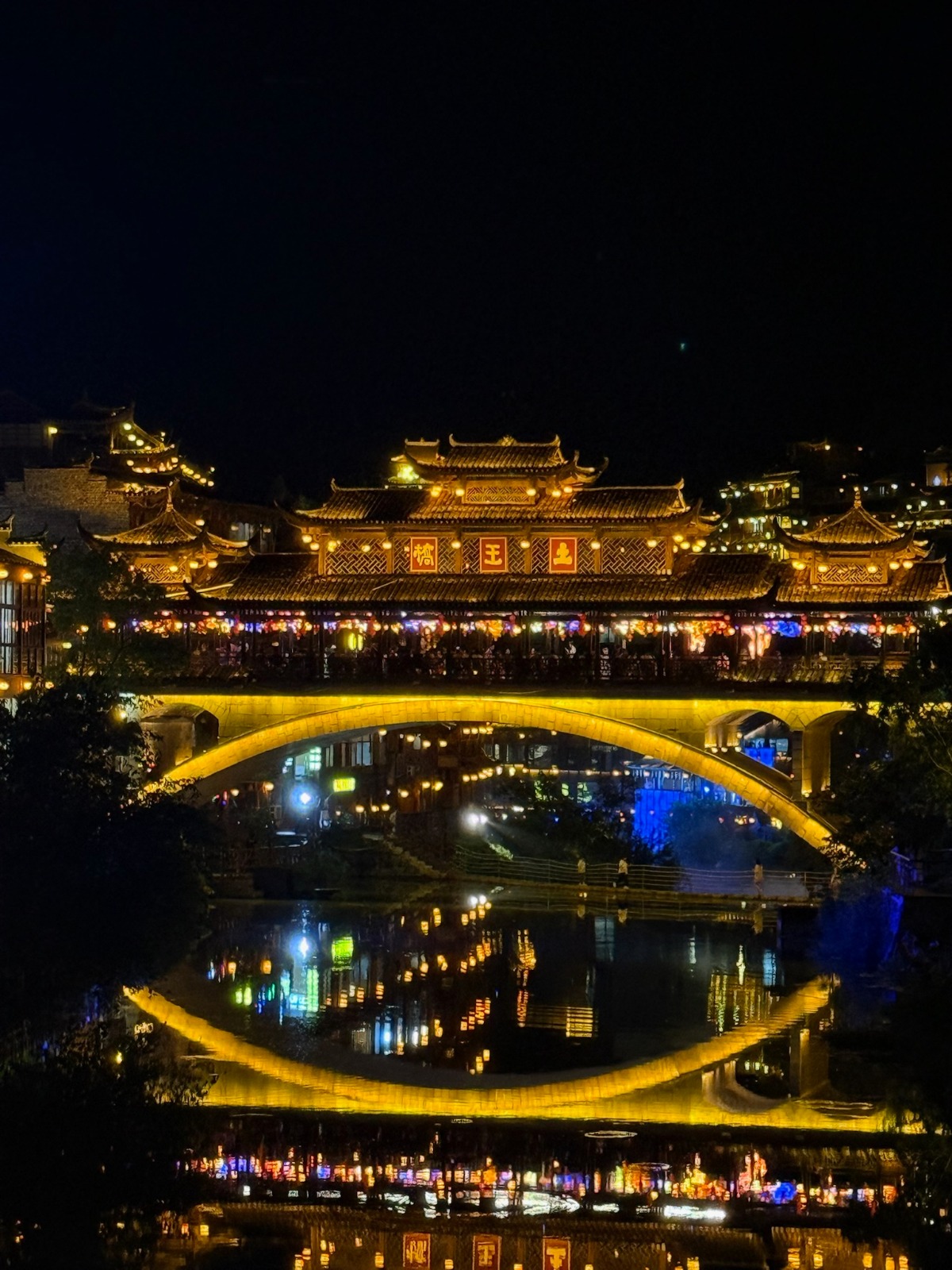
Day 9: HSR to Zhangjiajie, transfer to Furong Town. Board the HSR from Chongqing East, Asia's largest high-speed rail station, for the 2 to 4 hour journey into Hunan province, arriving Zhangjiajie West. From there, it's roughly a 2.5-hour drive by hired car or arranged transfer to Furong Ancient Town (苙蓉镇); there is no direct public transport for this leg, so pre-arrange a car through your hotel or a local operator.
⚠️ Aim to arrive at dusk: the waterfall running directly through the old street and the lantern-lit stone lanes are dramatically better after dark than in daylight. The town is compact enough to walk fully in two to three hours; this is a one-night stop, not a base for exploring further afield.
Day 10: Transfer to Zhangjiajie city centre, Tianmen Mountain. Check out and transfer back toward Zhangjiajie city centre, basing yourself near the Tianmen Mountain cable car lower station. The cable car itself runs 7.5 km up through the clouds to the summit plateau, the longest passenger cable car in the world; allow the better part of a full day for the mountain given queues at both the cable car and the subsequent walkways. The Coiling Dragon Cliff glass skywalk clings to the cliff face with a 1,400-metre drop below. The main event is the climb to Heaven's Gate (天门洞): 999 stone steps cut directly into the cliff, a natural arch 131 metres high at the top.
⚠️ This is physically demanding; steep and relentless rather than technical, but not for anyone with knee problems or limited mobility. The view looking back down through the arch from the top is one of the best in China. Cable car back down in the late afternoon.
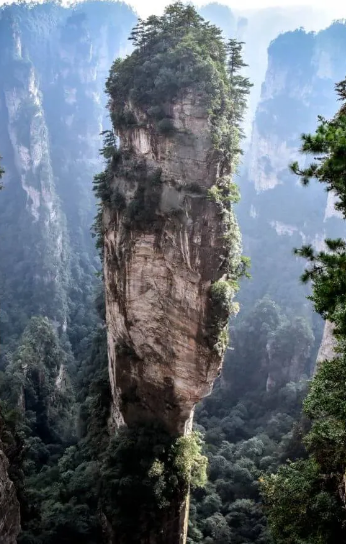
Day 11: Avatar Forest Park. A private guide with hotel pickup is strongly recommended for Zhangjiajie National Forest Park and Wulingyuan; the park is large, confusingly signed, and easy to burn a full day navigating badly without one. The Bailong Elevator, the world's tallest outdoor lift at 326 metres, is built directly into the cliff face and is worth the separate ticket. The Yuanjiajie plateau and the Southern Sky Column (Avatar Hallelujah Mountain, officially renamed after the film crew used it as reference) are the visual centrepiece of the whole park. Golden Whip Stream on the return route runs through the valley floor with wild monkeys often visible overhead. Plan to be out of the park and back at your hotel by mid-afternoon; the following morning's transfer to Yichang is a real travel day.
Day 12: Transfer to Yichang
The direct train from Zhangjiajie Railway Station to Yichang East takes approximately 4.5 to 6 hours; during peak season this specific route can sell out, and routing via Changsha or Wuhan is the standard fallback if it does. Book this leg as early as the booking window allows.
Day 13: Three Gorges Dam, then flight to Shanghai
Early wake up and drive to the dam : the dam wall itself, the ship lift (raises vessels 113 metres in under an hour, subject to periodic maintenance closures, confirm before booking), and the viewing platforms at Tanziling and the 185 Platform. From the Three Gorges Tourist Centre in Yichang, fly from Yichang Sanxia Airport direct to Shanghai Pudong or Hongqiao, roughly 2 hours and the better option if the train's total journey time feels too long after an already long touring day.
Days 14 to 15: Shanghai
Base yourself in Huangpu near the Bund, or in the Former French Concession if you'd rather trade Bund proximity for tree-lined streets and a slower pace; both are well connected by metro to everything on this leg.
Day 14: Arrival and the Bund at night. Check in and walk straight to the Bund promenade: the colonial-era waterfront facing the Lujiazui skyline across the Huangpu, Shanghai Tower, the Pearl Tower and the Jin Mao Building all lit after dark. Free, open 24 hours, no ticket or booking required. This alone is worth doing on arrival night rather than saving it.
Day 15: French Concession, Yu Garden, Shanghai Tower. Morning in the Former French Concession: plane-tree-lined streets around Wukang Road and Anfu Road, art deco buildings, independent cafés, best explored without a fixed route. After lunch, Yu Garden (豪园) in the old city: a classical Ming-dynasty garden of rockeries, ponds and pavilions, surrounded by a bazaar good for last-minute gifts. The Shanghai Museum, free entry, allow two hours, has one of the best Chinese art and ceramics collections anywhere. In the evening, Shanghai Tower's observation deck on floor 118 (632m, the tallest in the world): book online in advance and go at dusk for the best light transitioning to the night skyline.
Day 16: Departure
The Maglev from Longyang Road station to Pudong Airport covers the run in 8 minutes at up to 430 km/h; roughly ¥50 one way. A genuinely surreal final act before the flight home.
.png)

.jpeg)
.jpeg)
.jpeg)
.jpeg)
.jpeg)
.jpeg)
.jpeg)
.jpeg)
.jpeg)
.jpeg)
.jpeg)
.jpeg)
.jpeg)
.jpeg)
.jpeg)
.jpeg)
.jpeg)
.jpeg)

