image of popular travel destinations

Costa Rica

A classic Costa Rica route moving from Caribbean jungle waterways to volcanic landscapes, cloud forests, and the Pacific coast.

From jungle canals and volcanoes to cloud forest bridges and Pacific wildlife beaches.

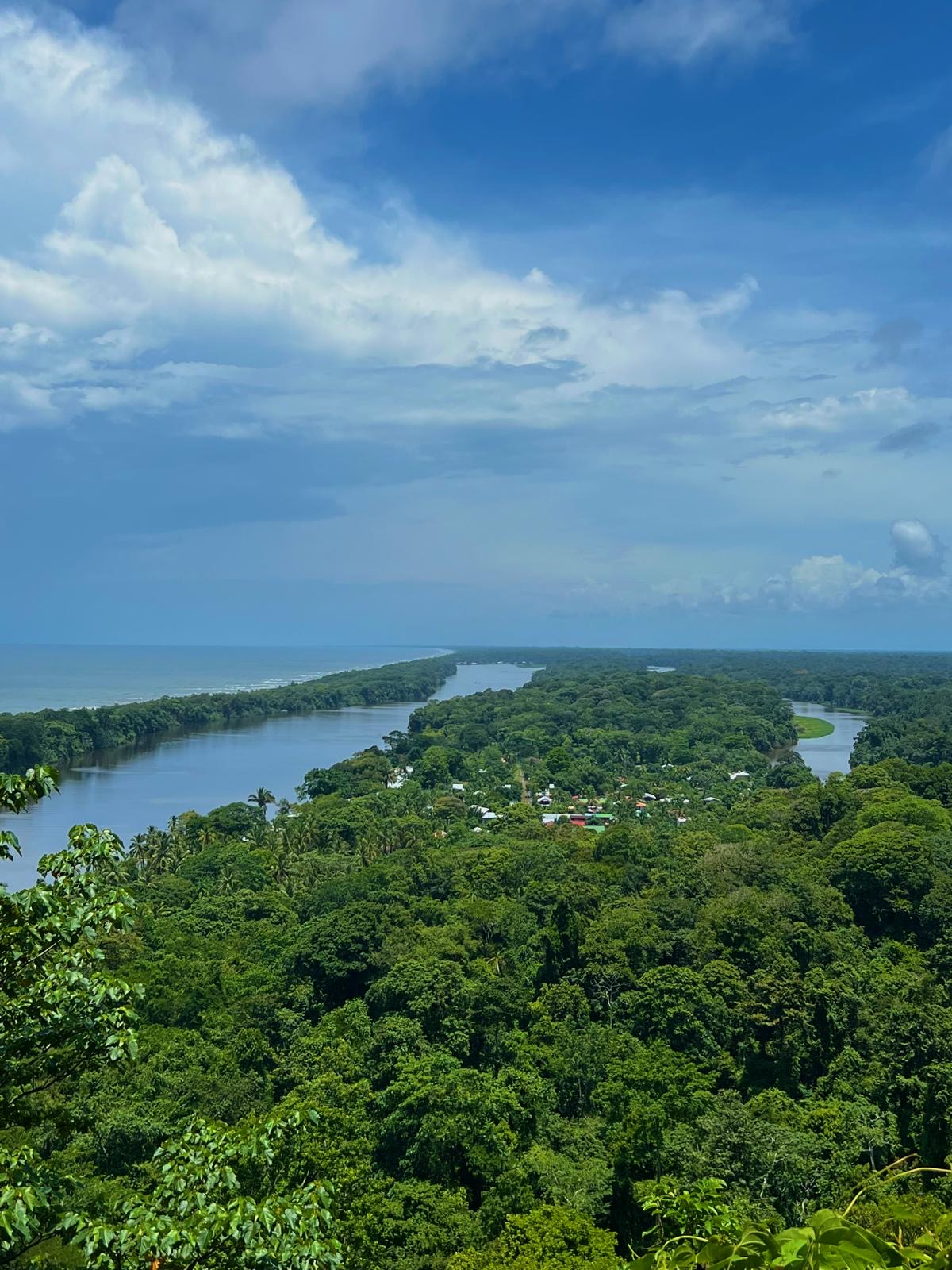
Costa Rica packs an extraordinary range of ecosystems into a small country. This route moves logically through four of its most iconic natural regions. You begin in the remote waterways of Tortuguero on the Caribbean coast, where wildlife replaces roads and movement happens by boat.

From there you travel inland to La Fortuna beneath Arenal Volcano, one of the most studied volcanoes in Central America. Next comes Monteverde, a cloud forest suspended in mist and famous for biodiversity research. Finally, the journey ends on the Pacific coast at Manuel Antonio, where rainforest meets white sand beaches and marine life thrives just offshore.This itinerary balances guided nature experiences with free exploration and is suitable for first time visitors who want maximum variety without rushing.

Highlights

image of vibrant dining space (for a mexican restaurant)

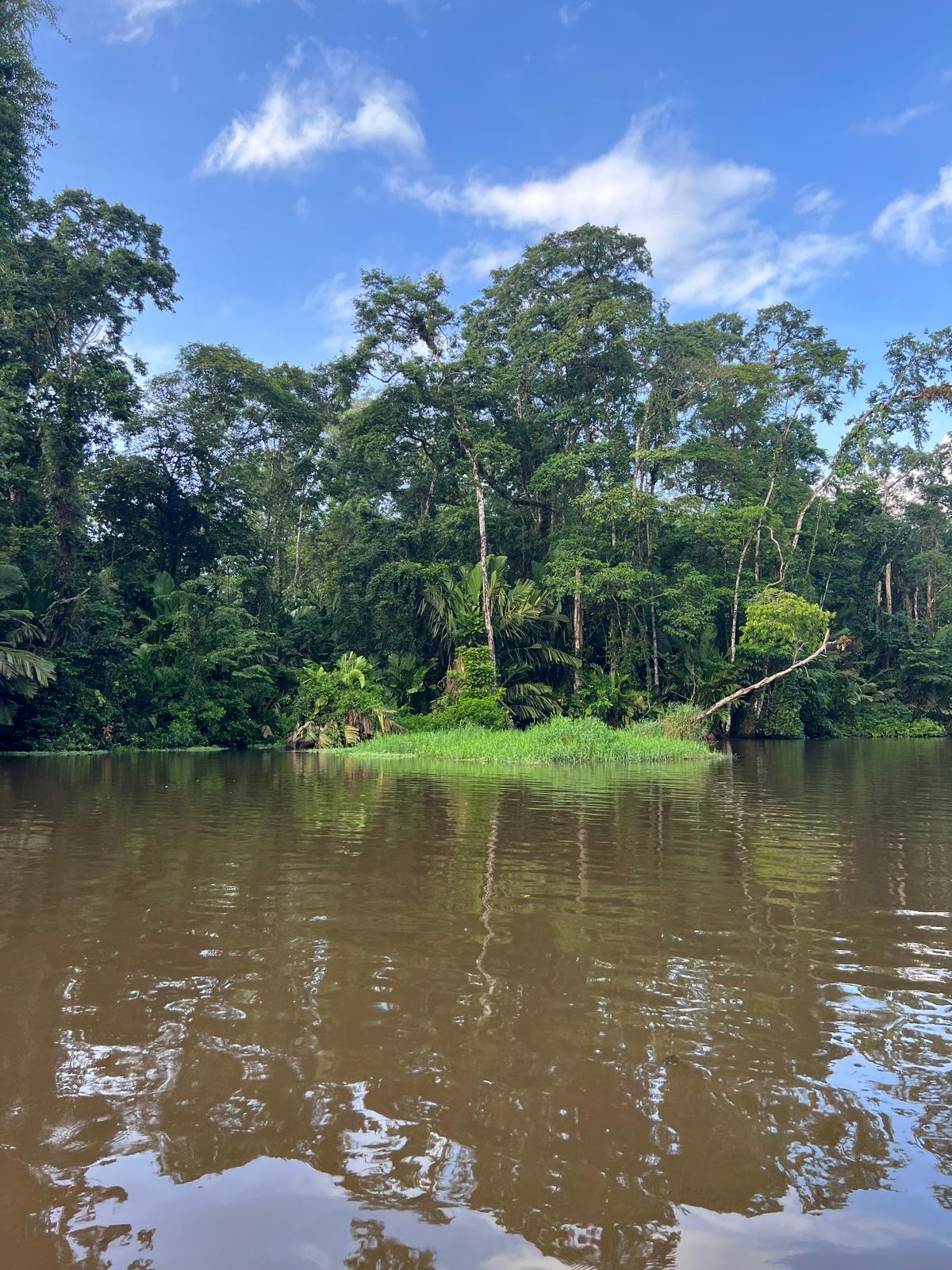
Tortuguero National Park Canals

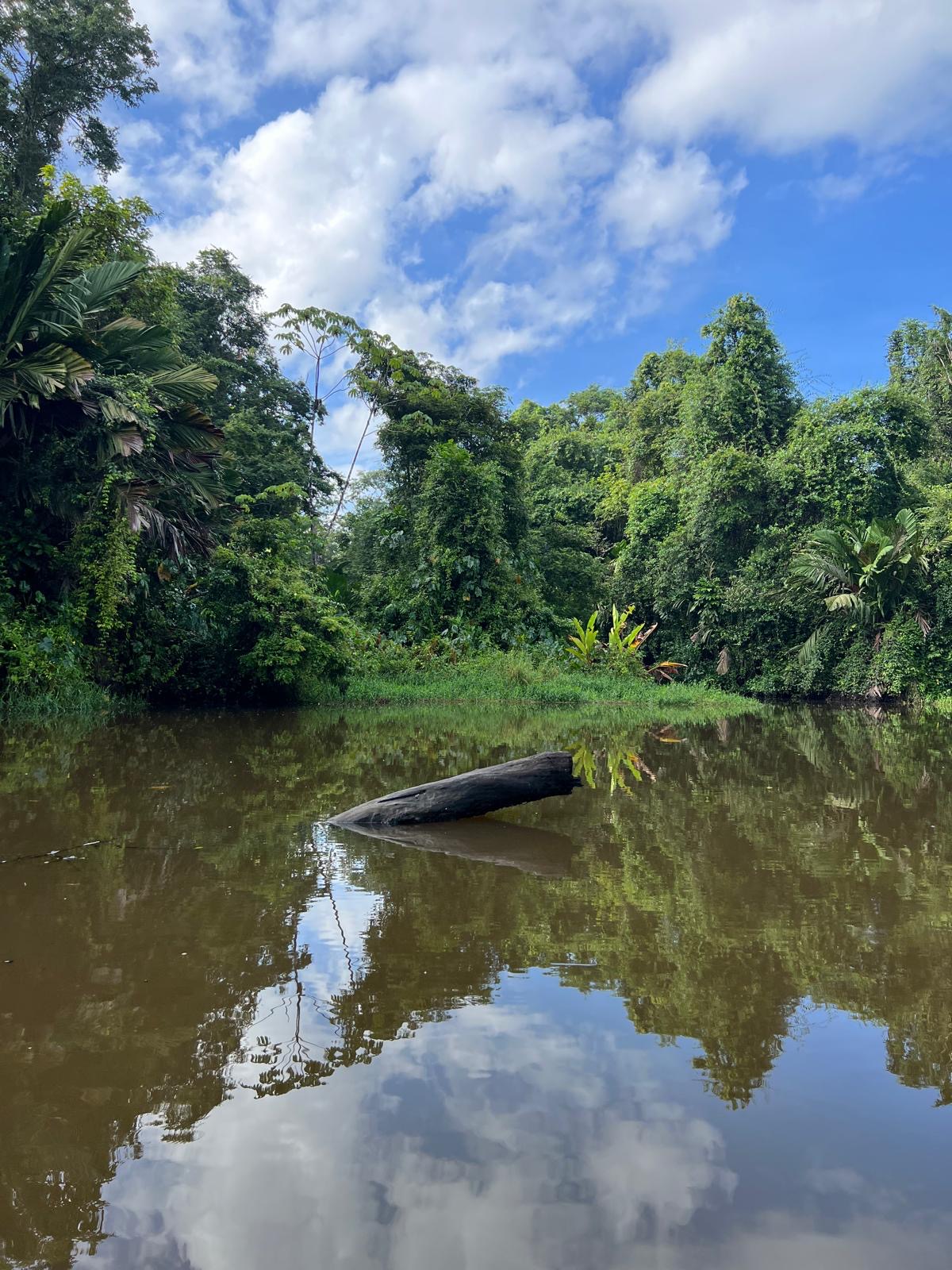
One of Costa Rica’s most important wildlife corridors where jungle rivers replace roads and crocodiles, sloths, monkeys, and tropical birds fill the waterways.

image of a guided tour group

Arenal Volcano and La Fortuna

A perfectly shaped stratovolcano rising above rainforest and hot springs, offering one of the country’s most dramatic geological landscapes.
image of a local tour guide (for a travel agency)

Monteverde Cloud Forest

A high-altitude ecosystem where mist, moss, orchids, and rare bird species thrive in constant moisture.
image of vibrant dining space (for a mexican restaurant)

Tortuguero National Park Canals

One of Costa Rica’s most important wildlife corridors where jungle rivers replace roads and crocodiles, sloths, monkeys, and tropical birds fill the waterways.

image of a guided tour group

Arenal Volcano and La Fortuna

A perfectly shaped stratovolcano rising above rainforest and hot springs, offering one of the country’s most dramatic geological landscapes.
image of a local tour guide (for a travel agency)

Monteverde Cloud Forest

A high-altitude ecosystem where mist, moss, orchids, and rare bird species thrive in constant moisture.

Journey itinerary

Itinerary overview
Detailed breakdown follows

Day 1: San José / early transfer through Braulio Carrillo, boat into Tortuguero canals and jungle lodge arrival

Day 2: Tortuguero National Park / dawn canal wildlife safari, village walk and optional turtle nesting night tour

Day 3: Tortuguero to La Fortuna / lake and river transfer, Arenal Volcano arrival and first hot springs evening

Day 4: La Fortuna / Arenal 1968 lava field hike, La Fortuna Waterfall and Místico Hanging Bridges

Day 5: La Fortuna to Monteverde / boat across Lake Arenal and mountain road into the cloud forest

Day 6: Monteverde / Cloud Forest Reserve quetzal walk, zipline and coffee cooperative visit

Day 7: Monteverde to Manuel Antonio / Pacific coast descent and arrival at the smallest park with the most wildlife

Day 8: Manuel Antonio National Park / coastal trail, capuchin monkeys, sloths and swimmable beaches

Day 9: Manuel Antonio / catamaran sunset cruise, Nauyaca Waterfalls or surf lessons on the Pacific

Day 10: Return to San José / Mercado Central and final evening in Barrio Escalante

Day 11: Departure from Juan Santamaría International Airport

Day-by-day itinerary
Day 1: San José to Tortuguero

San José's Juan Santamaría International Airport (SJO) is the standard entry point. If arriving the night before Day 1, stay near the airport in Alajuela rather than in San José city; the transfer to Tortuguero begins early and Alajuela saves 30 minutes. If arriving in San José on Day 1 morning and going directly, your shuttle operator should be confirmed in advance with a clear pickup time.

The transfer from San José to Tortuguero takes approximately four to five hours in total. The standard shared shuttle departs San José at around 6 to 7 am, travels east on the Guápiles Highway through Braulio Carrillo National Park, descends the Caribbean slope from the Central Valley's cool air into the lowland Caribbean heat, and arrives at the river port of La Pavona by mid-morning. Braulio Carrillo itself is significant: a protected swath of montane cloud forest that preserves the watershed for the entire Caribbean slope, with occasional views of Barva Volcano on clear mornings.

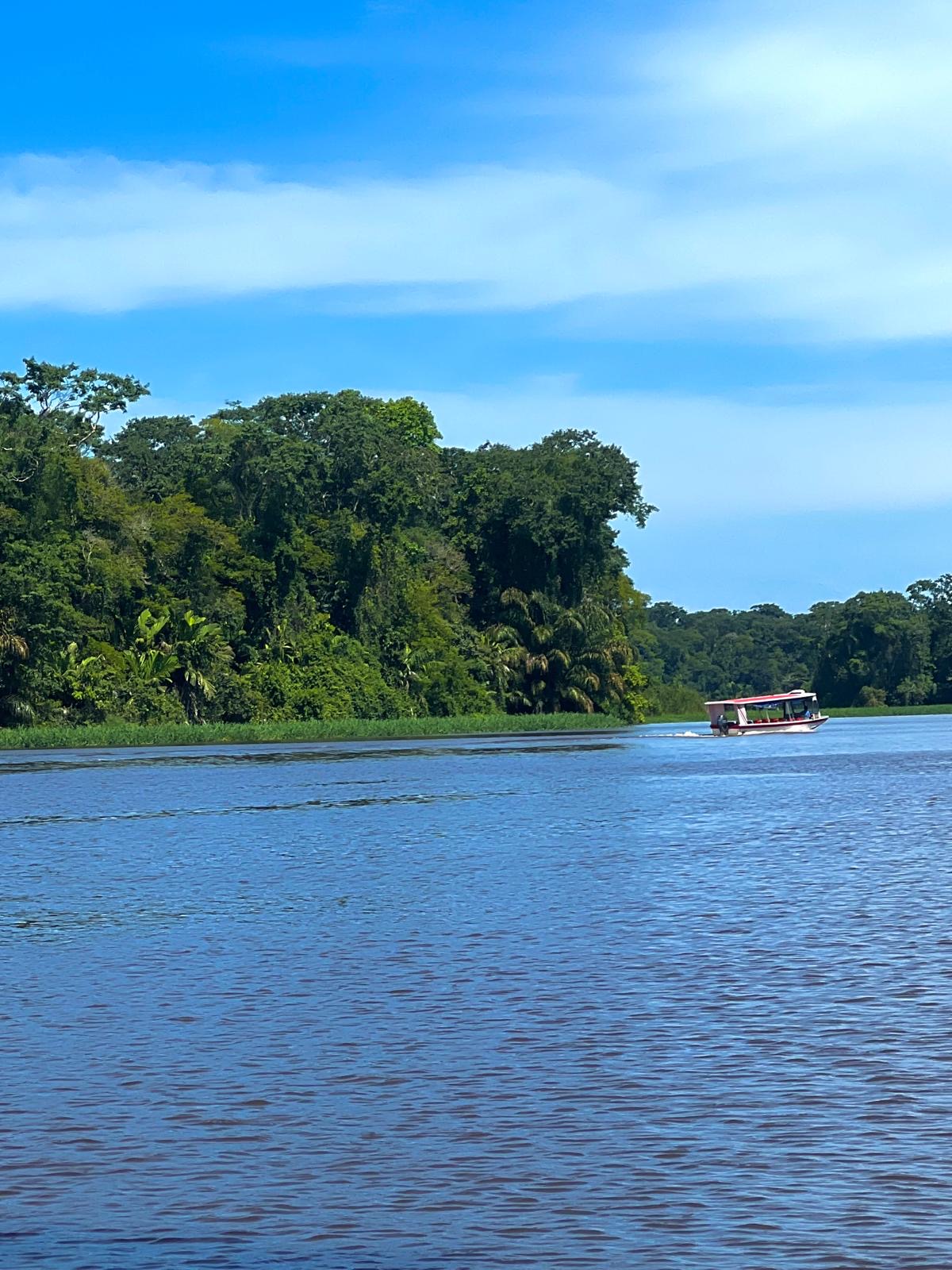
At La Pavona, you board a motorised wooden boat for the 60 to 90-minute journey through the canal system into Tortuguero National Park. There are no roads into Tortuguero. The canal journey is itself wildlife-rich; the transition from the working port to the protected waterway happens within minutes and the first wildlife sightings, typically herons, basilisk lizards and river turtles, appear before you have settled in.

Tortuguero National Park is the most important green sea turtle nesting site in the Western Hemisphere, with thousands of females returning to the same Caribbean coast beaches from July through October. Even outside turtle season the canal system is one of the most productive wildlife corridors in Central America. Secure parking is available at La Pavona for approximately $12 per day if you are driving rather than using a shuttle.

Park entry costs $17 USD, purchase online via SINAC before arrival as tickets are not sold at the gate. Buy these before leaving San José.

Arrival at your lodge is by boat directly to the dock; transfer boats from La Pavona go directly to each lodge or to the village. The evening at Tortuguero is for adjusting to the jungle rhythm: the howler monkeys at dusk, the frogs beginning after dark, and the complete absence of any light from outside the lodge compound.

Day 1: San José to Tortuguero

San José's Juan Santamaría International Airport (SJO) is the standard entry point. If arriving the night before Day 1, stay near the airport in Alajuela rather than in San José city; the transfer to Tortuguero begins early and Alajuela saves 30 minutes. If arriving in San José on Day 1 morning and going directly, your shuttle operator should be confirmed in advance with a clear pickup time.

The transfer from San José to Tortuguero takes approximately four to five hours in total. The standard shared shuttle departs San José at around 6 to 7 am, travels east on the Guápiles Highway through Braulio Carrillo National Park, descends the Caribbean slope from the Central Valley's cool air into the lowland Caribbean heat, and arrives at the river port of La Pavona by mid-morning. Braulio Carrillo itself is significant: a protected swath of montane cloud forest that preserves the watershed for the entire Caribbean slope, with occasional views of Barva Volcano on clear mornings.

At La Pavona, you board a motorised wooden boat for the 60 to 90-minute journey through the canal system into Tortuguero National Park. There are no roads into Tortuguero. The canal journey is itself wildlife-rich; the transition from the working port to the protected waterway happens within minutes and the first wildlife sightings, typically herons, basilisk lizards and river turtles, appear before you have settled in.

Tortuguero National Park is the most important green sea turtle nesting site in the Western Hemisphere, with thousands of females returning to the same Caribbean coast beaches from July through October. Even outside turtle season the canal system is one of the most productive wildlife corridors in Central America. Secure parking is available at La Pavona for approximately $12 per day if you are driving rather than using a shuttle.

Park entry costs $17 USD, purchase online via SINAC before arrival as tickets are not sold at the gate. Buy these before leaving San José.

Arrival at your lodge is by boat directly to the dock; transfer boats from La Pavona go directly to each lodge or to the village. The evening at Tortuguero is for adjusting to the jungle rhythm: the howler monkeys at dusk, the frogs beginning after dark, and the complete absence of any light from outside the lodge compound.

Button Text
Day 2: Tortuguero National Park

The best way to experience most of Tortuguero is from a boat. The marked trail along the beach is used mostly for observing turtle nesting, but the waterways reveal the majority of the park's wildlife.

Morning canal tour: Most lodges organise a guided boat safari departing at first light, typically 5:30 to 6 am, before the heat builds and while wildlife is most active. The standard canal tour covers the main park waterways for two to three hours. Species reliably encountered include all three resident monkey species (howler, spider and white-faced capuchin), spectacled caiman, river turtles (the largest basking on logs), boat-billed herons, green and rufous kingfishers, anhingas drying their wings on branches above the water, and, with good timing, river otters. The guides who know Tortuguero's canal system are skilled at finding wildlife invisible to an untrained eye; a good guide doubles the number of species you see in the same canal.

Turtle nesting (July to October only): Green sea turtle nesting season runs July 1 through October 15, with peak nesting activity in August and September. July sees the first arrivals with fewer turtles but also fewer crowds and lower lodge rates. By September and October, hundreds of turtles can nest on a single night during peak months. Leatherback turtle season runs March through June so the beach is never completely without turtle activity for most of the year.

Night turtle tours are carefully regulated to protect the animals; visitors must go with certified guides and follow strict conservation rules. Groups are assigned to beach sectors and movement is coordinated so that multiple groups do not converge on the same nesting female. No white light, no flash photography; guides carry red-filtered torches. The lottery element of whether a nesting female appears in your sector is real; arrivals are not guaranteed but guides position groups in the most productive sectors based on recent sightings. Book turtle tours through your lodge or the local guide association in Tortuguero village; they are required to be conducted with a certified Tortuguero guide.

Tortuguero village: The village of Tortuguero is accessible on foot along the beach or by canoe from the lodge side of the canal. The Sea Turtle Conservancy research station is in the village and runs a small museum explaining the turtle conservation history of the region, including the transformation of the local economy from turtle egg collection and poaching to conservation-based tourism over the last forty years. Worth an hour. The village itself has Afro-Caribbean roots tied to the banana plantation economy of the late 19th and early 20th centuries; the cooking, the music and the cultural character reflect this rather than the Spanish colonial tradition of the rest of Costa Rica.

Night walk: The night walk from your lodge or with a local guide through the jungle fringe is where the frog diversity of the Caribbean lowlands becomes visible. Red-eyed tree frogs, glass frogs, poison dart frogs and various hylids appear under torch light on vegetation near water. Caimans are spotted by the red reflection of their eyes from the torch beam. Bring closed shoes and insect repellent.

Day 3: Tortuguero to La Fortuna

The return to La Pavona by boat, then the drive northwest toward the Arenal region, takes most of the day. Shared shuttle services connect Tortuguero to La Fortuna directly via Puerto Viejo de Sarapiquí; this is the cleanest connection and avoids returning to San José. Book through your Tortuguero lodge in advance; the connection requires timing the canal boat departure with the shuttle.

The drive from the Caribbean lowlands to the Arenal region involves a complete landscape change: the road climbs from Caribbean-slope humidity and lowland forest into the volcanic foothills of the northern interior. The weather changes simultaneously; cloud and rain on the Caribbean side give way to the drier, more open landscape of the Arenal Valley.

La Fortuna sits at the base of Arenal Volcano in Costa Rica's northern lowlands. The volcano's near-perfect conical shape is visible from most parts of the town when skies are clear; the cloud that caps it most afternoons means clear views are most common in the early morning. Do not wait for a guaranteed view before doing activities; the volcano is often visible for 30 minutes at dawn and then obscured for the rest of the day.

Hot springs: La Fortuna is famous for its natural hot springs, heated by geothermal activity from Arenal Volcano. Several resorts offer beautiful thermal pools surrounded by rainforest. The main options: Tabacón is the most landscaped and expensive ($80 to $100+ for a day pass including meals), with multiple pools at different temperatures, waterfalls and a full-service restaurant. EcoTermales is smaller, quieter and more intimate with a capacity limit that keeps it genuinely peaceful; book in advance as it fills. Los Lagos is the most affordable option with access to pools, waterslides and small wildlife exhibits. For a genuinely free experience: the natural hot springs in the river below the road near the main resort area can be found by local knowledge; ask at your accommodation for the current accessible section of the Tabacón River.

Day 4: Arenal Volcano and La Fortuna

Arenal 1968 Private Park: The most established lava field hike in the Arenal region, taking its name from the 1968 eruption that killed 87 people and destroyed three villages in the area. The trails cross solidified lava flows from multiple eruptions and pass through secondary rainforest at different stages of recovery from volcanic destruction. The Arenal Volcano was considered dormant for hundreds of years before the 1968 eruption; it then remained in continuous low-level activity until 2010 when activity decreased significantly. The Las Coladas and El Ceibo trails within the reserve give different perspectives on both the geological history and the ecological recovery in progress. Entry approximately $16 per person. Private reserve adjoining the national park; walking the trails takes two to three hours.

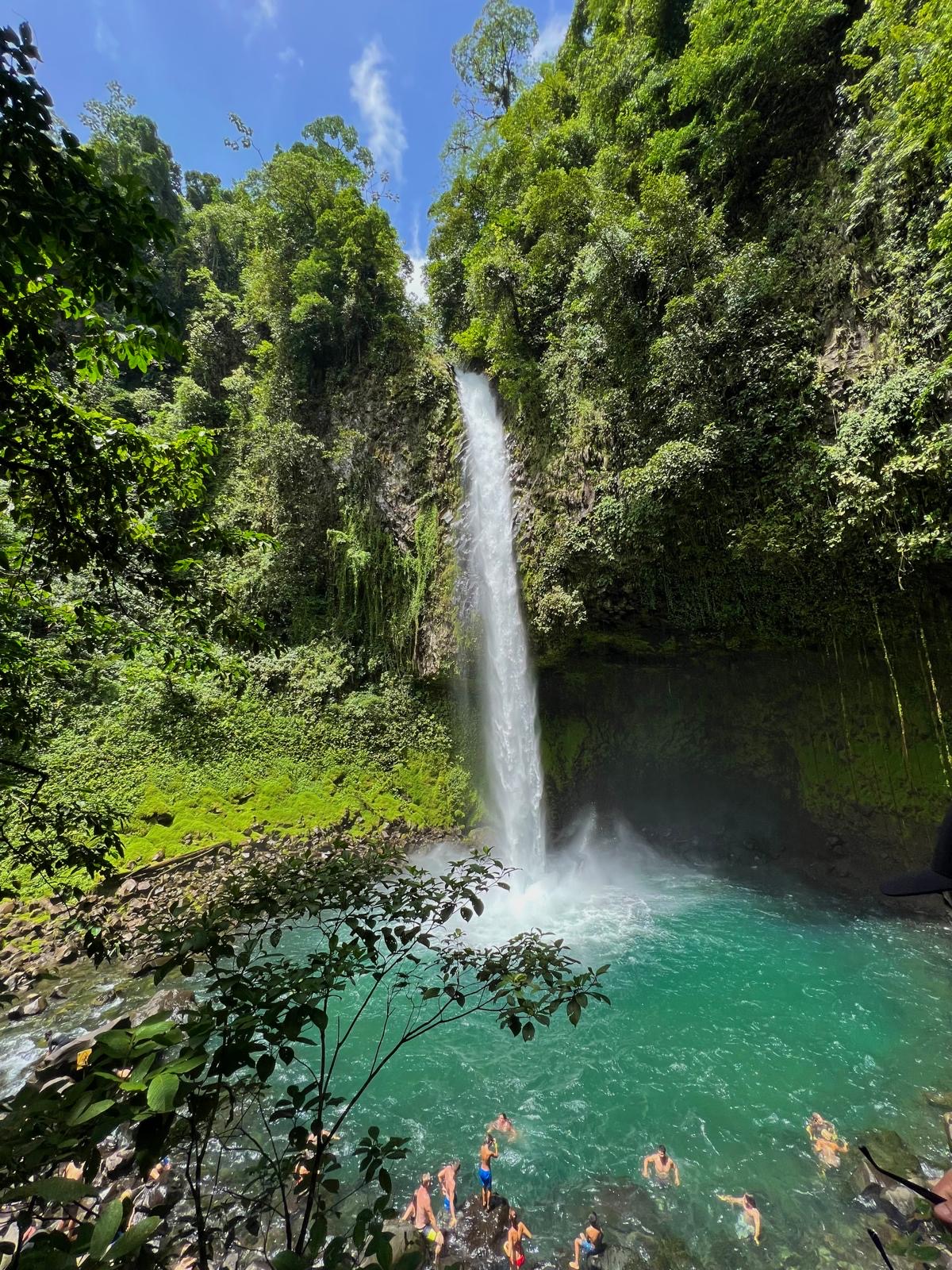
La Fortuna Waterfall: A 70-metre cascade in a volcanic canyon 5.5 km from the town centre. The access trail descends approximately 500 steps into the canyon; the ascent on the return requires fitness. The pool at the base of the falls is deep, cold and swimmable when the current is manageable. Entry approximately $18 per person. Go in the morning; afternoon clouds can mean the sun does not reach the canyon floor. The waterfall is one of the most visited attractions in the country; arrive before 9 am to experience it with fewer people.

Místico Hanging Bridges: A private reserve 17 km from La Fortuna with 16 bridges (6 suspension, 10 fixed) through primary rainforest canopy. The self-guided trail takes two to three hours and the elevated perspective on the forest floor below and the canopy above is the point; wildlife including spider monkeys, toucans and pit vipers are regularly reported. Guided tours significantly improve the wildlife encounter rate. Entry approximately $32 per person self-guided.

Day 5: La Fortuna to Monteverde

The Lake Arenal crossing is the standard La Fortuna to Monteverde transfer: a taxi-boat-taxi service across the lake that takes approximately two and a half hours door to door and is significantly faster than driving around the lake by road (four to five hours). The boat crosses the 85-square-kilometre artificial reservoir created by the Arenal Dam; the wind on the lake can be significant. The taxi on the far side climbs from the lake level to Monteverde at approximately 1,440 metres on unpaved mountain roads requiring high clearance; the last section of road is famously rough regardless of rainfall.

As elevation increases, temperatures cool and vegetation thickens with moss, bromeliads and orchids. The transition from the warm lowlands to the cool cloud forest is one of the most dramatic ecosystem changes on the route; bring a layer for the arrival evening as temperatures in Monteverde regularly drop to 14 to 16°C after dark.

Monteverde consists of two separate communities: Santa Elena (the backpacker and mid-range base, with hostels, tour operators and budget restaurants) and Monteverde proper (quieter, the original Quaker farming settlement, and adjacent to the most prestigious cloud forest reserve). Both are usable bases; Santa Elena is more social and has better budget accommodation.

Day 6: Monteverde Cloud Forest

Monteverde Cloud Forest Reserve: One of the most important private biological reserves in the Americas, protecting 10,500 hectares of cloud forest in the transition between the Pacific and Caribbean slopes. The constant mist results from warm Pacific air rising to altitude and cooling; the moisture sustains an extraordinary density of epiphytes, including over 500 orchid species, 400 bird species and 100 mammal species.

Entry is limited to 200 visitors per day; book online in advance through the reserve's website, particularly in December to April peak season. Entry approximately $25 per adult. A guide is strongly recommended for the quetzal search specifically; resplendent quetzals are resident in the reserve from approximately February to August when they are feeding on wild avocado. Without a guide, the probability of seeing a quetzal is close to zero; with an experienced guide who knows which trees are currently fruiting, it rises significantly. A two-hour guided walk costs approximately $20 additional.

The hanging bridges walk within or adjacent to the reserve gives an elevated perspective on the cloud forest structure: multiple layers from the forest floor to the epiphyte-covered canopy above are visible from the bridge height. Listen for the three-wattled bellbird, whose resonant call carries hundreds of metres through the cloud.

Ziplining: Selvatura Park and Sky Adventures both operate zipline circuits through the Monteverde cloud forest canopy. Sky Adventures' zipline is approximately 3 km in total across multiple lines, including a Superman-style line over the cloud forest. Prices approximately $75 to $95 per person. Book in advance; groups fill the morning slots.

Coffee cooperative: COOPELDOS and the Don Juan Coffee Tour operate guided visits to working coffee farms near Santa Elena. The tour covers the full bean-to-cup process using farms at cloud forest altitude; Monteverde's cooler temperatures and volcanic soil produce a notably different cup from the lower-altitude farms of Boquete or the Central Valley. A useful afternoon counterpoint to the morning wildlife focus.

Night walk: The Santa Elena Cloud Forest Reserve or guided walks from lodges offer access to the nocturnal cloud forest: kinkajous, olingo, white-nosed coati, various tree frogs and, with luck, the bare-necked umbrellabird. Dress in layers; cloud forest night temperatures are cold.

Day 7: Monteverde to Manuel Antonio

The descent from Monteverde to the Pacific coast is a four to five-hour drive via Puntarenas and the Costanera Sur (Pacific coastal highway). Shared shuttles make this connection daily; book through your Monteverde accommodation. The road descends from cloud forest temperature to full tropical heat within an hour; by the time you reach the coast the temperature has risen 15 degrees.

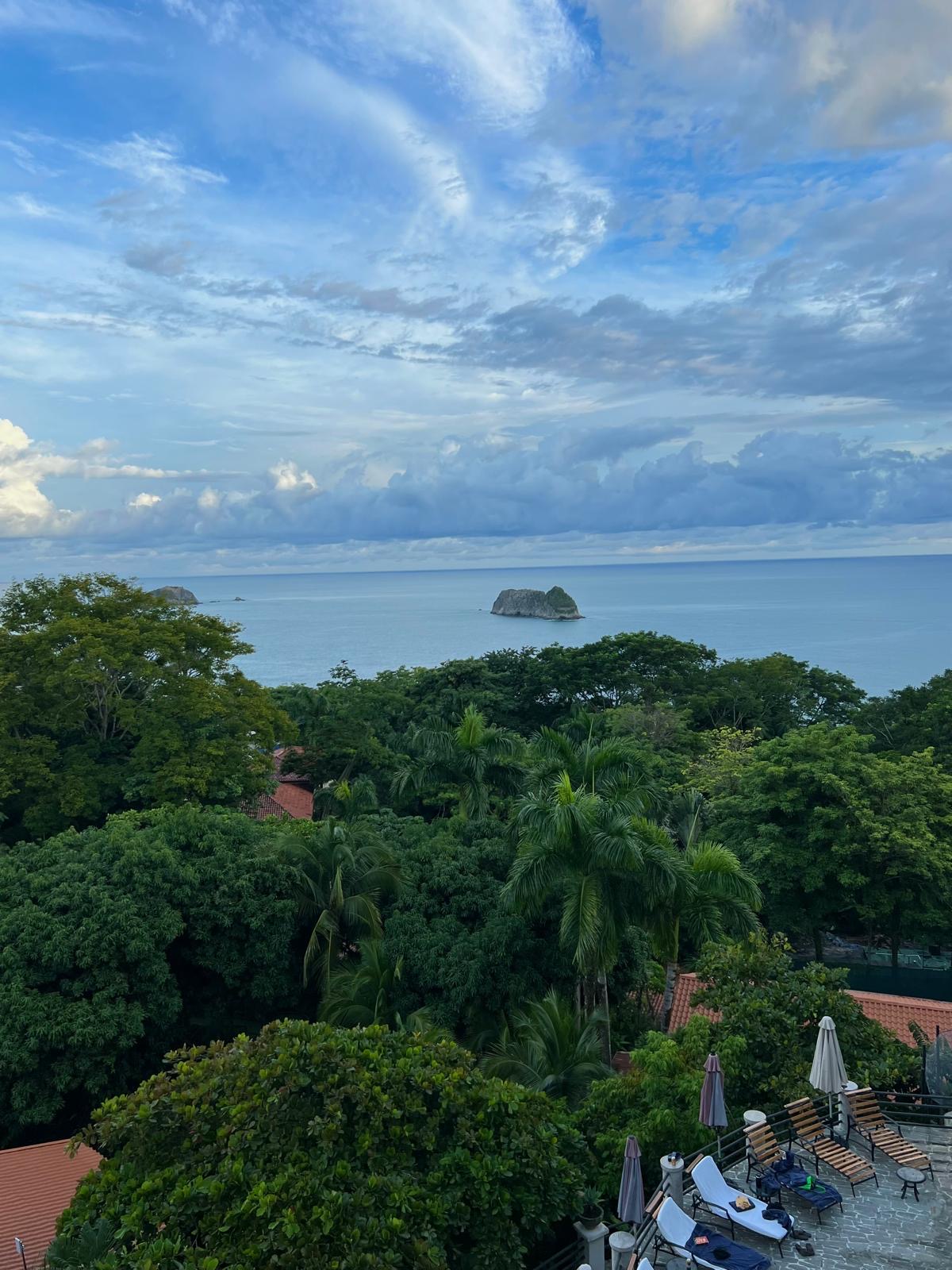
Manuel Antonio is a small town adjacent to the national park of the same name on the central Pacific coast. It has the infrastructure for tourism (hotels, restaurants, tour operators) without the scale of more developed resort towns. The park entrance is walkable from most accommodation in Manuel Antonio.

Day 8: Manuel Antonio National Park

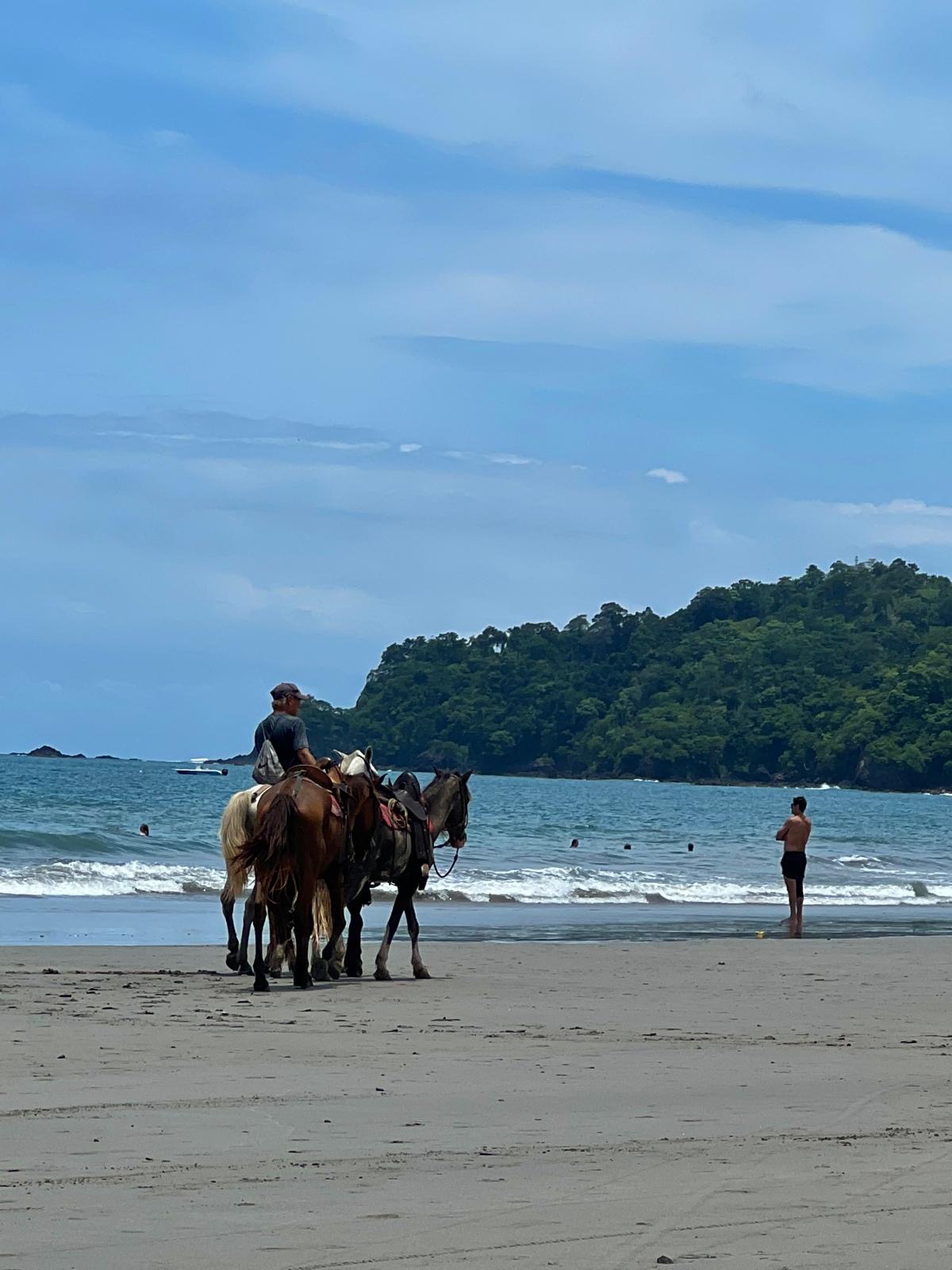
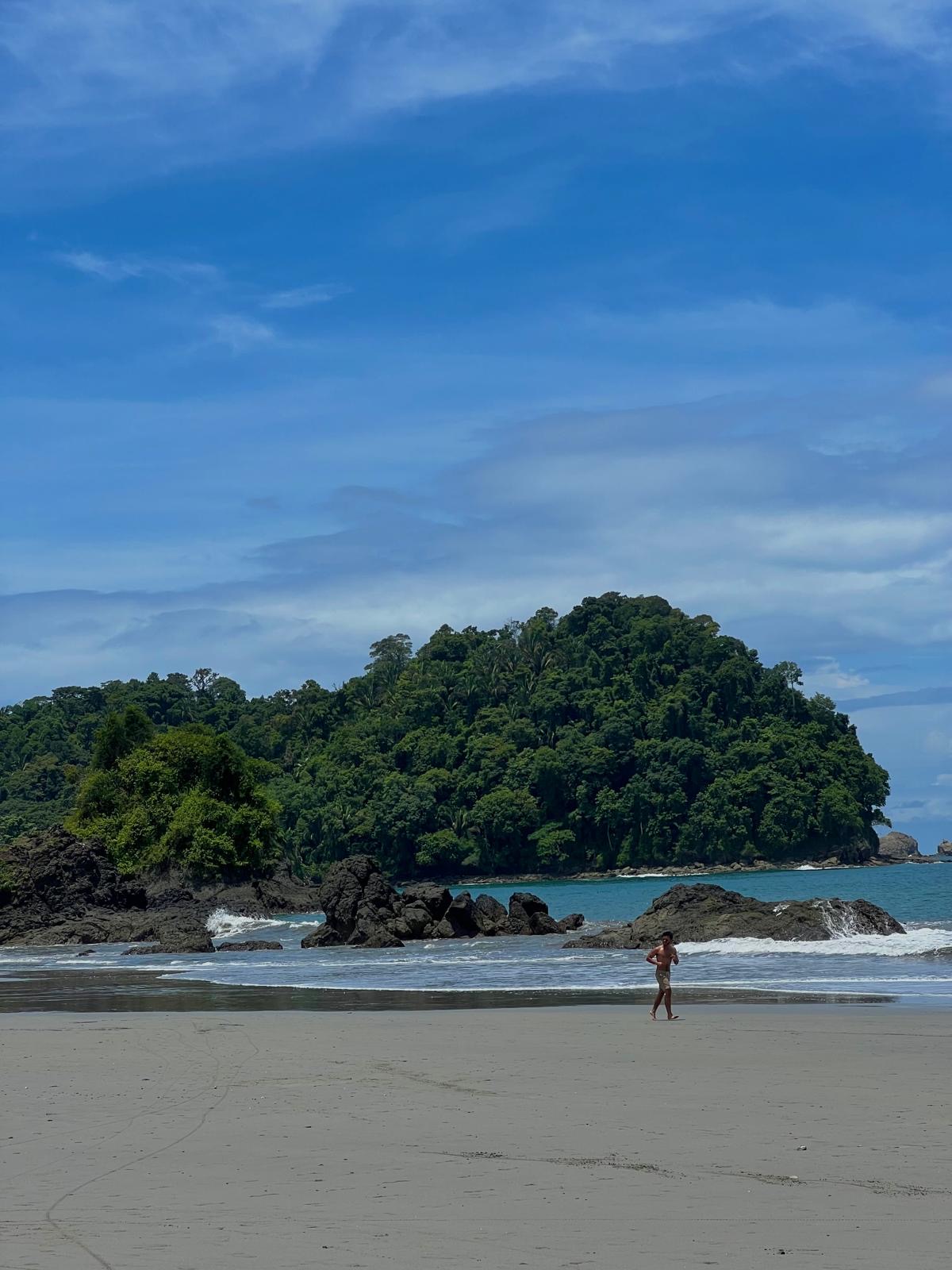
Manuel Antonio is the smallest but most wildlife-dense national park in the country. Sloths, capuchin monkeys, squirrel monkeys, iguanas and coastal birds are visible along short trails that connect the park's beaches and forest interior.

Park entry is limited; buy tickets online in advance at sinac.go.cr. Entry costs approximately $21 per adult for international visitors. The park closes on Tuesdays. The park closes on Tuesdays. Go early; the morning is when the wildlife is most active and the beaches least crowded.

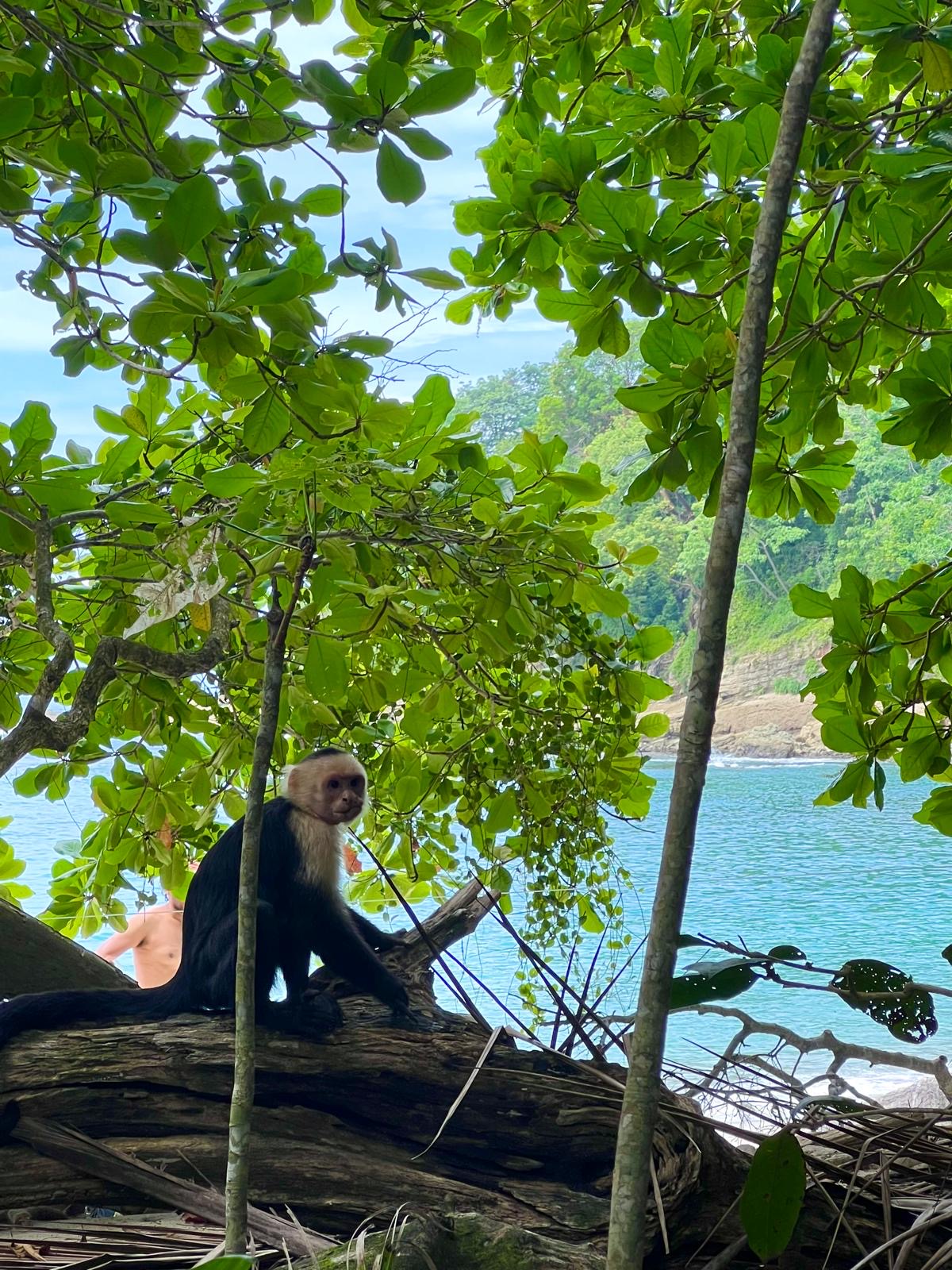
The main trail circuit of the park is approximately 7 km, connecting Playa Espadilla Sur, Playa Manuel Antonio and Punta Catedral, the rocky peninsula that separates the two main beaches. The white-faced capuchin monkeys in the park are fully habituated to humans and come very close; do not feed them and keep food inside sealed bags, as they will take anything accessible. Three-toed sloths hang in the Cecropia trees along the forest edge and are easy to spot once you know the search image; a guide dramatically increases the number of species seen on any given morning, particularly for the smaller animals (frogs, stick insects, caterpillars) invisible without direction.

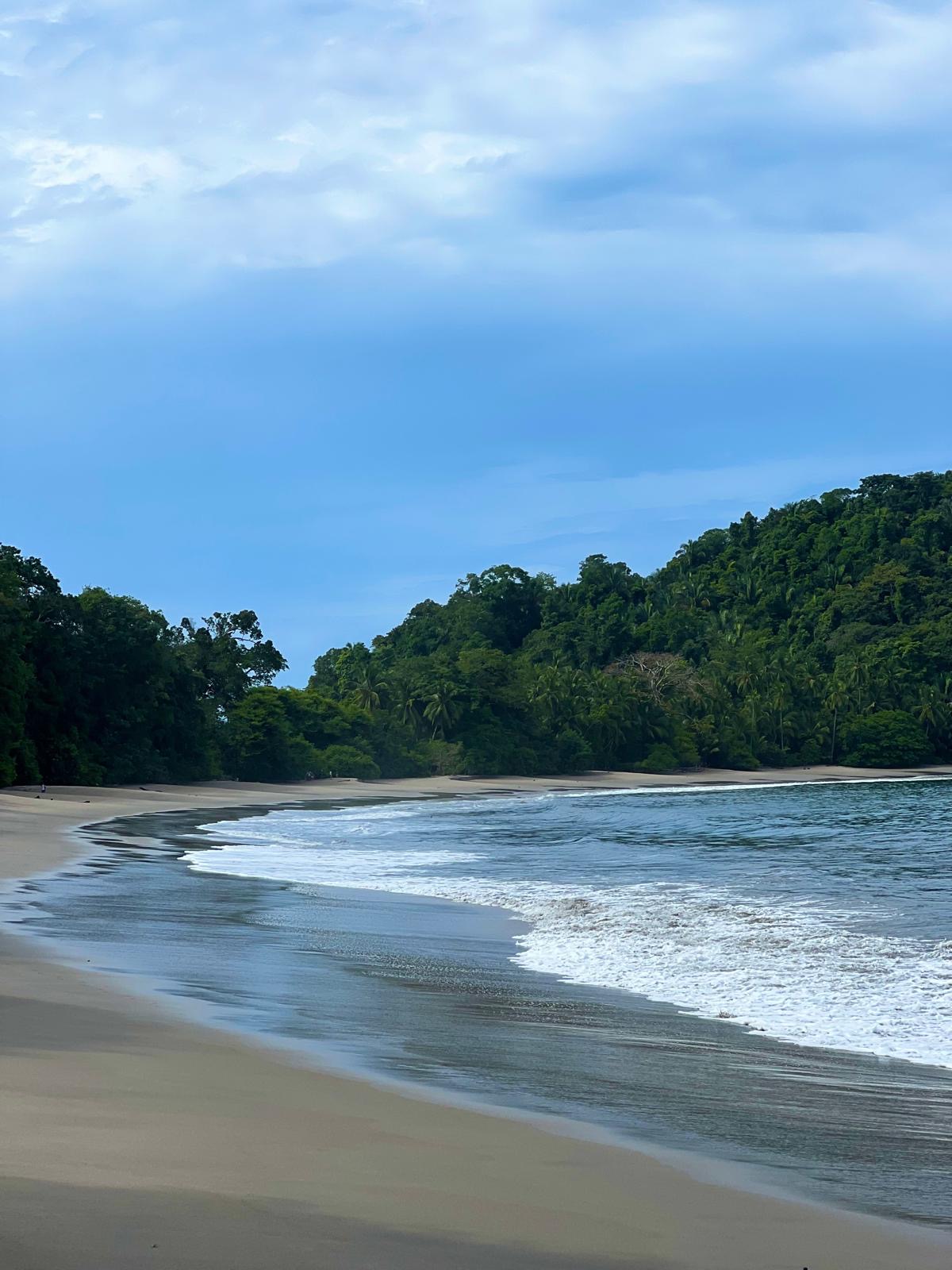
The park beaches are protected from the open Pacific swell by Punta Catedral; they are swimmable on most days, with occasional rip current warnings posted at the park entrance. Follow the posted flags and swim only in designated areas.

Day 9: Manuel Antonio coastal day

The Pacific coast around Manuel Antonio has activities beyond the park that use the second full day well.

Catamaran sunset cruise: Multiple operators (Planet Dolphin, Oceans Unlimited) run afternoon and sunset catamaran tours from Quepos marina, typically three to four hours, including snorkelling, dolphin watching and sunset viewing from offshore. Spinner dolphins are a near-guarantee in the bay. Cost approximately $75 to $95 per person. Book in advance.

Nauyaca Waterfalls: A full-day excursion 17 km south of Manuel Antonio to one of Costa Rica's most dramatic waterfalls, a two-tier cascade dropping over 45 metres into a deep swimming pool. The standard approach involves a horseback ride or hike through private farm land (8 km each way) followed by a swim at the falls. The combination of riding, swimming and jungle scenery makes it one of the better full-day experiences on the Pacific coast. Book through Don Lulo's tour office in Dominical or through your accommodation. Full-day approximately $80 to $100 per person including horse.

Quepos market: The working town of Quepos, 7 km north of Manuel Antonio, has a waterfront mercado with fresh Pacific seafood, fruit stalls and local restaurants at prices significantly lower than the tourist strip. Worth the taxi for a lunch that is not aimed at the resort crowd.

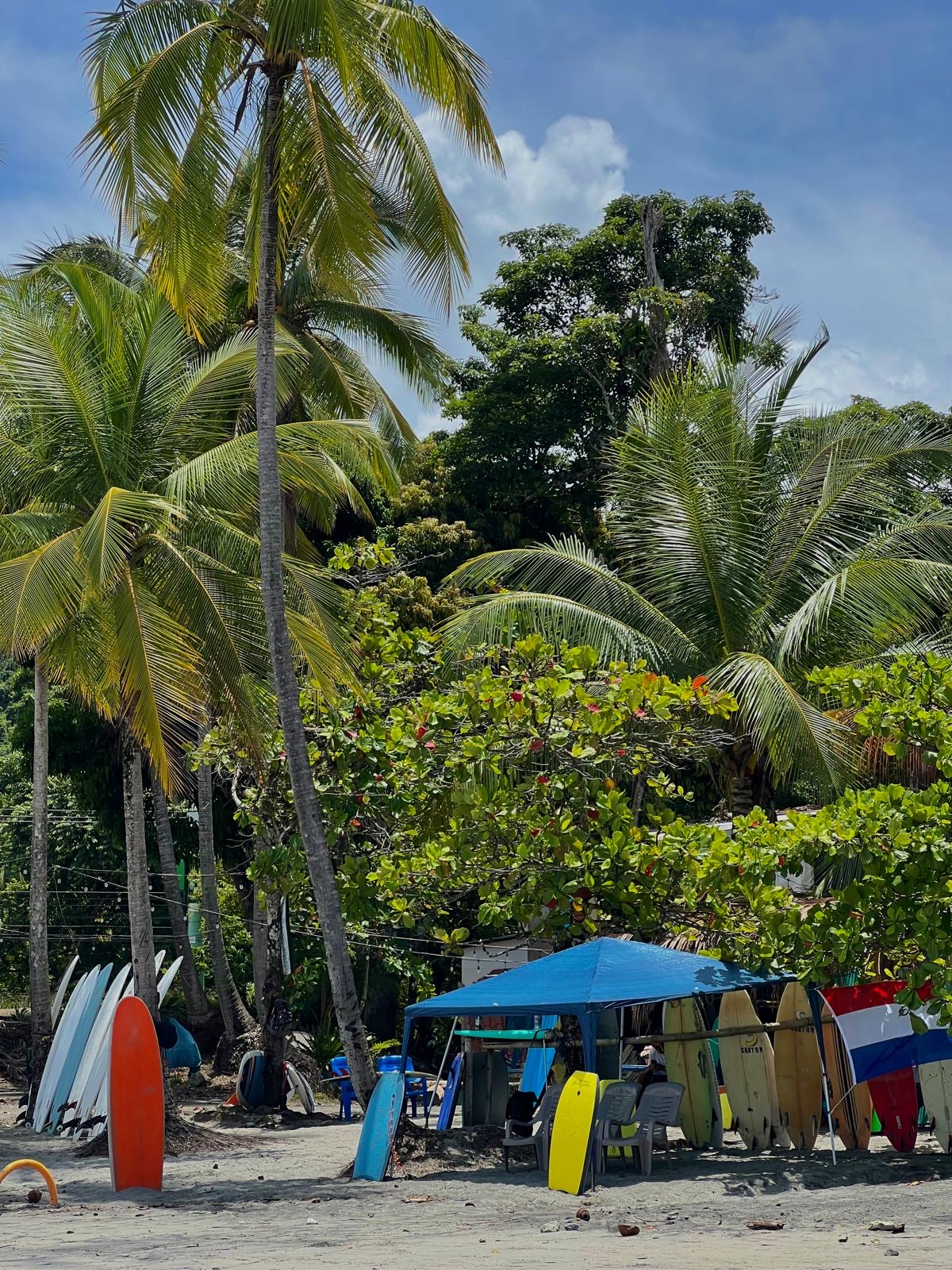
Surf lessons: Playa Biesanz, reachable by a short hike from the park entrance road, is a calmer bay with gentler surf suitable for beginner lessons. Several operators work this beach; lessons cost approximately $50 to $65 per person for two hours including board.

Day 10: Manuel Antonio to San José

The drive from Manuel Antonio to San José on the Costanera Sur and then the mountain highway through Atenas takes approximately three and a half to four hours. Shared shuttle services run daily and are the cleanest option for the return without a rental car.

San José on the final evening: the Mercado Central in the city centre is the most honest food market experience in the capital, a grid of covered stalls selling typical Costa Rican food (casado, gallo pinto, chifrijo) at very low prices. The neighbourhood of Barrio Escalante has the most interesting restaurant cluster in San José, with independent kitchens and cafés worth a final evening dinner. Stay near the airport in Alajuela for an early departure.

Day 11: Departure

Juan Santamaría International Airport (SJO) in Alajuela. International check-in typically opens three hours before departure for long-haul flights; the airport has one main terminal building with clear signage. If departing before 7 am, leave your accommodation at least two hours before your report time.

In pictures

No items found.

Traveller suggestions

Accomodation

San José / Alajuela

Mid-tier : Hotel Bougainvillea (garden setting, reliable), Wyndham San José Herradura (near airport, convenient for early departures)

Budget : Costa Rica Backpackers (central, pool), Hostel Urbano (continental breakfast, social)

Stay in Alajuela rather than San José city if departing early for Tortuguero; the airport is there and it saves 30 minutes of morning traffic.

Tortuguero

Premium : Tortuga Lodge (guided canal tours included, excellent food), Mawamba Lodge (all-inclusive, jungle setting)

Mid-tier : Casa Marbella (boutique, small, personalised service), Laguna Lodge (canal-side, good wildlife access)

Budget : Aracari Garden Hostel (tours offered, most recommended for backpackers), Hostel Tortuguero 7BackPackers (basic dorms, communal kitchen, cheapest reliable option)

La Fortuna

Premium : Tabacón Grand Spa Thermal Resort (unlimited hot springs from your room), Nayara Springs (adult-only, private pool per villa)

Mid-tier : Hotel Magic Mountain (pool, volcano views), Lost Iguana Resort (jungle-edge, quieter)

Budget : Arenal Backpackers Resort (pool, hot tub, volcano views, best reviewed hostel in La Fortuna), Viajero La Fortuna Hostel (social, tours well-organised)

Monteverde

Premium : Monteverde Lodge and Gardens (guided walks, bird watching from property)

Mid-tier : Hotel Belmar (biodynamic farm, mountain views)

Budget : Hostel Cattleya (car parking, well-located for reserves), Sloth Backpackers (pool, social), Pensión Santa Elena (no frills, reliable and welcoming)

Manuel Antonio

Premium : Arenas del Mar (two beaches, top eco-credentials), Gaia Hotel and Reserve (adults-only, pool)

Mid-tier : Hotel Si Como No (butterfly garden, two pools, eco-focused), Shana by the Beach (pool bar, happy hour 3 to 7 pm)

Budget : Selina Manuel Antonio (bar, coworking, pool), Backpackers Manuel Antonio (cheap, close to park entrance), Hotel Vela Bar (Quepos waterfront, budget-friendly)

Food & Drink

San José

Mid-tier : Sikwa (indigenous Costa Rican cuisine), Nuema (farm-to-table tasting menu), La Esquina de Buenos Aires (Argentine parrilla, best steak in the city)

Budget : Mercado Central (casado and gallo pinto stalls), Barrio Escalante sodas (local independent kitchens)

Tortuguero

Mid-tier : Buddha Café (seafood, outdoor setting), La Casona (Afro-Caribbean cooking, coconut rice and beans)

Budget : Soda Miss Junie (Caribbean home cooking, very cheap), village sodas along the main path

La Fortuna

Mid-tier : SelvaRustica (modern Costa Rican, rainforest setting), Don Rufino (fine dining, reserve ahead), El Novillo del Arenal (grilled meats)

Budget : Soda y Restaurante Rodríguez (classic casado, very local), Jalapas (tacos and local plates), La Choza de Laurel (traditional Costa Rican)

Cafes : Red Frog Coffee Roasters (specialty espresso)

Monteverde

Mid-tier : Trio (international and local, lively), Sabor Tico (traditional Costa Rican, generous portions)

Budget : Soda La Parada (casado, $6 to $8)

Manuel Antonio

Premium : El Avión (inside a 1954 cargo plane, Pacific views, seafood), Barba Roja (clifftop, sunset views)

Mid-tier : Café Milagro (coffee roasters, breakfast and lunch), Restaurante Los Congos (Caribbean-Costa Rican, good breakfast)

Budget : Quepos market sodas (casado for $5 to $7, where locals eat)

Reminders & Cautions

Shuttle services vs public buses: Public buses in Costa Rica are cheap, reliable and slow. The key routes on this itinerary (San José to Tortuguero, Tortuguero to La Fortuna, La Fortuna to Monteverde by lake crossing, Monteverde to Manuel Antonio) are all possible by public bus but require multiple changes, local knowledge and significantly more time. Shared shuttle services (Interbus, Greyhound Costa Rica, Ride CR, Tropical Tours) are the most practical option for most independent travellers: they run door to door, handle the connections, and cost approximately $25 to $55 per person per leg. Book shuttles in advance through your accommodation or the operator's website; popular routes like Monteverde to Manuel Antonio fill in high season.

Tortuguero logistics: No roads reach Tortuguero. The standard access is a shared shuttle from San José to La Pavona (bus and van, approximately 3.5 hours), then a motorised boat from La Pavona to Tortuguero (60 to 90 minutes). Alternatively, a 25-minute domestic flight from San José's Tobías Bolaños Airport (SYQ) to the Tortuguero airstrip is available through Nature Air or chartered light aircraft. Park entry costs $17 USD and must be purchased online via sinac.go.cr before arrival; it is not sold at the gate. Tickets sell out for peak season; buy as soon as your dates are confirmed.

Monteverde road: The final section of road into Monteverde from Santa Elena is famously rough regardless of what season or how recently it was graded. High clearance vehicles handle it significantly better than standard cars. The taxi-boat-taxi from La Fortuna is two to two and a half hours and avoids the long road alternative entirely; it is the standard route for this leg.

Monteverde Cloud Forest Reserve: Entry limited to 200 visitors per day. Buy tickets in advance through the reserve's website, particularly December to April. Entry $25 per adult. Guides can be added at the reserve entrance for approximately $20 additional; for the quetzal search specifically, a guide is the difference between seeing one and not.

Manuel Antonio National Park: Entry must be purchased online via sinac.go.cr before arrival, approximately $21 per adult for international visitors. The park closes on Tuesdays; this is enforced. Visit in the morning, arrive at the gate by 7 am for the best wildlife activity and cooler temperatures. The park closes for the day when it reaches capacity; do not plan to arrive after 10 am in high season without a confirmed reservation.

Rental car: A rental car is optional on this itinerary but significantly increases flexibility, particularly for the Arenal and Monteverde sections where independent timing for hot springs, waterfalls and highland drives is constrained by shared shuttle schedules. 4x4 is recommended for Monteverde (for the rough final road) and is essential for any off-the-main-route detours. International Driving Permit is technically required alongside your national licence. Road conditions vary significantly by season; check current reports before any highland driving in the rainy season.

Season: December to April is the dry season and the peak travel window. Sunshine, lower humidity, and the most reliable conditions for Pacific coast activities, cloud forest walks and volcanic region hiking. May to November is the green season: the country is genuinely beautiful in the rain, prices are lower and crowds thinner, but afternoon rains are daily and some activities (catamaran tours, certain waterfalls) become inaccessible in heavy weather. The Caribbean side (including Tortuguero) operates on an inverse pattern; September and October can bring relatively dry conditions to the Caribbean while the Pacific is still wet. Turtle nesting season at Tortuguero runs July to October; visiting during this window requires booking the night tour and accommodation significantly in advance.

Money: Costa Rica uses the Costa Rican Colón (CRC), but US Dollars are widely accepted everywhere on this route. Cards are accepted at hotels, tour operators and most mid-range and premium restaurants; cash is useful for local sodas, market stalls, small transport connections and tips. ATMs are available in all towns on this route; bring some smaller USD bills specifically for market purchases and tips.

Health: No mandatory vaccinations but hepatitis A and typhoid are recommended. Dengue and Zika are present; use DEET insect repellent consistently throughout the trip, particularly in Tortuguero and La Fortuna. Tap water is safe to drink throughout Costa Rica, one of the few Central American countries where this is consistently true. Basic first aid for sun exposure, insect bites and minor trail injuries covers most scenarios; the tour operators and lodges on this route all have first aid protocols.

Wildlife behaviour: Do not feed monkeys anywhere on this route; the capuchin monkeys in Manuel Antonio are highly intelligent and will bite. Do not approach nesting turtles at Tortuguero independently; the guided tour format is the only legal and ethical way to observe nesting. The sloths along the roadside and park trails are wild animals; do not attempt to touch or photograph with a flash.

image of vibrant dining space (for a mexican restaurant)

Tortuguero National Park Canals

One of Costa Rica’s most important wildlife corridors where jungle rivers replace roads and crocodiles, sloths, monkeys, and tropical birds fill the waterways.

image of a guided tour group

Arenal Volcano and La Fortuna

A perfectly shaped stratovolcano rising above rainforest and hot springs, offering one of the country’s most dramatic geological landscapes.
image of a local tour guide (for a travel agency)

Monteverde Cloud Forest

A high-altitude ecosystem where mist, moss, orchids, and rare bird species thrive in constant moisture.

Reminders from Collective travellers

Shuttle services vs public buses: Public buses in Costa Rica are cheap, reliable and slow. The key routes on this itinerary (San José to Tortuguero, Tortuguero to La Fortuna, La Fortuna to Monteverde by lake crossing, Monteverde to Manuel Antonio) are all possible by public bus but require multiple changes, local knowledge and significantly more time. Shared shuttle services (Interbus, Greyhound Costa Rica, Ride CR, Tropical Tours) are the most practical option for most independent travellers: they run door to door, handle the connections, and cost approximately $25 to $55 per person per leg. Book shuttles in advance through your accommodation or the operator's website; popular routes like Monteverde to Manuel Antonio fill in high season.

Tortuguero logistics: No roads reach Tortuguero. The standard access is a shared shuttle from San José to La Pavona (bus and van, approximately 3.5 hours), then a motorised boat from La Pavona to Tortuguero (60 to 90 minutes). Alternatively, a 25-minute domestic flight from San José's Tobías Bolaños Airport (SYQ) to the Tortuguero airstrip is available through Nature Air or chartered light aircraft. Park entry costs $17 USD and must be purchased online via sinac.go.cr before arrival; it is not sold at the gate. Tickets sell out for peak season; buy as soon as your dates are confirmed.

Monteverde road: The final section of road into Monteverde from Santa Elena is famously rough regardless of what season or how recently it was graded. High clearance vehicles handle it significantly better than standard cars. The taxi-boat-taxi from La Fortuna is two to two and a half hours and avoids the long road alternative entirely; it is the standard route for this leg.

Monteverde Cloud Forest Reserve: Entry limited to 200 visitors per day. Buy tickets in advance through the reserve's website, particularly December to April. Entry $25 per adult. Guides can be added at the reserve entrance for approximately $20 additional; for the quetzal search specifically, a guide is the difference between seeing one and not.

Manuel Antonio National Park: Entry must be purchased online via sinac.go.cr before arrival, approximately $21 per adult for international visitors. The park closes on Tuesdays; this is enforced. Visit in the morning, arrive at the gate by 7 am for the best wildlife activity and cooler temperatures. The park closes for the day when it reaches capacity; do not plan to arrive after 10 am in high season without a confirmed reservation.

Rental car: A rental car is optional on this itinerary but significantly increases flexibility, particularly for the Arenal and Monteverde sections where independent timing for hot springs, waterfalls and highland drives is constrained by shared shuttle schedules. 4x4 is recommended for Monteverde (for the rough final road) and is essential for any off-the-main-route detours. International Driving Permit is technically required alongside your national licence. Road conditions vary significantly by season; check current reports before any highland driving in the rainy season.

Season: December to April is the dry season and the peak travel window. Sunshine, lower humidity, and the most reliable conditions for Pacific coast activities, cloud forest walks and volcanic region hiking. May to November is the green season: the country is genuinely beautiful in the rain, prices are lower and crowds thinner, but afternoon rains are daily and some activities (catamaran tours, certain waterfalls) become inaccessible in heavy weather. The Caribbean side (including Tortuguero) operates on an inverse pattern; September and October can bring relatively dry conditions to the Caribbean while the Pacific is still wet. Turtle nesting season at Tortuguero runs July to October; visiting during this window requires booking the night tour and accommodation significantly in advance.

Money: Costa Rica uses the Costa Rican Colón (CRC), but US Dollars are widely accepted everywhere on this route. Cards are accepted at hotels, tour operators and most mid-range and premium restaurants; cash is useful for local sodas, market stalls, small transport connections and tips. ATMs are available in all towns on this route; bring some smaller USD bills specifically for market purchases and tips.

Health: No mandatory vaccinations but hepatitis A and typhoid are recommended. Dengue and Zika are present; use DEET insect repellent consistently throughout the trip, particularly in Tortuguero and La Fortuna. Tap water is safe to drink throughout Costa Rica, one of the few Central American countries where this is consistently true. Basic first aid for sun exposure, insect bites and minor trail injuries covers most scenarios; the tour operators and lodges on this route all have first aid protocols.

Wildlife behaviour: Do not feed monkeys anywhere on this route; the capuchin monkeys in Manuel Antonio are highly intelligent and will bite. Do not approach nesting turtles at Tortuguero independently; the guided tour format is the only legal and ethical way to observe nesting. The sloths along the roadside and park trails are wild animals; do not attempt to touch or photograph with a flash.

Reminders from Collective travellers

Shuttle services vs public buses: Public buses in Costa Rica are cheap, reliable and slow. The key routes on this itinerary (San José to Tortuguero, Tortuguero to La Fortuna, La Fortuna to Monteverde by lake crossing, Monteverde to Manuel Antonio) are all possible by public bus but require multiple changes, local knowledge and significantly more time. Shared shuttle services (Interbus, Greyhound Costa Rica, Ride CR, Tropical Tours) are the most practical option for most independent travellers: they run door to door, handle the connections, and cost approximately $25 to $55 per person per leg. Book shuttles in advance through your accommodation or the operator's website; popular routes like Monteverde to Manuel Antonio fill in high season.

Tortuguero logistics: No roads reach Tortuguero. The standard access is a shared shuttle from San José to La Pavona (bus and van, approximately 3.5 hours), then a motorised boat from La Pavona to Tortuguero (60 to 90 minutes). Alternatively, a 25-minute domestic flight from San José's Tobías Bolaños Airport (SYQ) to the Tortuguero airstrip is available through Nature Air or chartered light aircraft. Park entry costs $17 USD and must be purchased online via sinac.go.cr before arrival; it is not sold at the gate. Tickets sell out for peak season; buy as soon as your dates are confirmed.

Monteverde road: The final section of road into Monteverde from Santa Elena is famously rough regardless of what season or how recently it was graded. High clearance vehicles handle it significantly better than standard cars. The taxi-boat-taxi from La Fortuna is two to two and a half hours and avoids the long road alternative entirely; it is the standard route for this leg.

Monteverde Cloud Forest Reserve: Entry limited to 200 visitors per day. Buy tickets in advance through the reserve's website, particularly December to April. Entry $25 per adult. Guides can be added at the reserve entrance for approximately $20 additional; for the quetzal search specifically, a guide is the difference between seeing one and not.

Manuel Antonio National Park: Entry must be purchased online via sinac.go.cr before arrival, approximately $21 per adult for international visitors. The park closes on Tuesdays; this is enforced. Visit in the morning, arrive at the gate by 7 am for the best wildlife activity and cooler temperatures. The park closes for the day when it reaches capacity; do not plan to arrive after 10 am in high season without a confirmed reservation.

Rental car: A rental car is optional on this itinerary but significantly increases flexibility, particularly for the Arenal and Monteverde sections where independent timing for hot springs, waterfalls and highland drives is constrained by shared shuttle schedules. 4x4 is recommended for Monteverde (for the rough final road) and is essential for any off-the-main-route detours. International Driving Permit is technically required alongside your national licence. Road conditions vary significantly by season; check current reports before any highland driving in the rainy season.

Season: December to April is the dry season and the peak travel window. Sunshine, lower humidity, and the most reliable conditions for Pacific coast activities, cloud forest walks and volcanic region hiking. May to November is the green season: the country is genuinely beautiful in the rain, prices are lower and crowds thinner, but afternoon rains are daily and some activities (catamaran tours, certain waterfalls) become inaccessible in heavy weather. The Caribbean side (including Tortuguero) operates on an inverse pattern; September and October can bring relatively dry conditions to the Caribbean while the Pacific is still wet. Turtle nesting season at Tortuguero runs July to October; visiting during this window requires booking the night tour and accommodation significantly in advance.

Money: Costa Rica uses the Costa Rican Colón (CRC), but US Dollars are widely accepted everywhere on this route. Cards are accepted at hotels, tour operators and most mid-range and premium restaurants; cash is useful for local sodas, market stalls, small transport connections and tips. ATMs are available in all towns on this route; bring some smaller USD bills specifically for market purchases and tips.

Health: No mandatory vaccinations but hepatitis A and typhoid are recommended. Dengue and Zika are present; use DEET insect repellent consistently throughout the trip, particularly in Tortuguero and La Fortuna. Tap water is safe to drink throughout Costa Rica, one of the few Central American countries where this is consistently true. Basic first aid for sun exposure, insect bites and minor trail injuries covers most scenarios; the tour operators and lodges on this route all have first aid protocols.

Wildlife behaviour: Do not feed monkeys anywhere on this route; the capuchin monkeys in Manuel Antonio are highly intelligent and will bite. Do not approach nesting turtles at Tortuguero independently; the guided tour format is the only legal and ethical way to observe nesting. The sloths along the roadside and park trails are wild animals; do not attempt to touch or photograph with a flash.

Reminders from Collective travellers

Shuttle services vs public buses: Public buses in Costa Rica are cheap, reliable and slow. The key routes on this itinerary (San José to Tortuguero, Tortuguero to La Fortuna, La Fortuna to Monteverde by lake crossing, Monteverde to Manuel Antonio) are all possible by public bus but require multiple changes, local knowledge and significantly more time. Shared shuttle services (Interbus, Greyhound Costa Rica, Ride CR, Tropical Tours) are the most practical option for most independent travellers: they run door to door, handle the connections, and cost approximately $25 to $55 per person per leg. Book shuttles in advance through your accommodation or the operator's website; popular routes like Monteverde to Manuel Antonio fill in high season.

Tortuguero logistics: No roads reach Tortuguero. The standard access is a shared shuttle from San José to La Pavona (bus and van, approximately 3.5 hours), then a motorised boat from La Pavona to Tortuguero (60 to 90 minutes). Alternatively, a 25-minute domestic flight from San José's Tobías Bolaños Airport (SYQ) to the Tortuguero airstrip is available through Nature Air or chartered light aircraft. Park entry costs $17 USD and must be purchased online via sinac.go.cr before arrival; it is not sold at the gate. Tickets sell out for peak season; buy as soon as your dates are confirmed.

Monteverde road: The final section of road into Monteverde from Santa Elena is famously rough regardless of what season or how recently it was graded. High clearance vehicles handle it significantly better than standard cars. The taxi-boat-taxi from La Fortuna is two to two and a half hours and avoids the long road alternative entirely; it is the standard route for this leg.

Monteverde Cloud Forest Reserve: Entry limited to 200 visitors per day. Buy tickets in advance through the reserve's website, particularly December to April. Entry $25 per adult. Guides can be added at the reserve entrance for approximately $20 additional; for the quetzal search specifically, a guide is the difference between seeing one and not.

Manuel Antonio National Park: Entry must be purchased online via sinac.go.cr before arrival, approximately $21 per adult for international visitors. The park closes on Tuesdays; this is enforced. Visit in the morning, arrive at the gate by 7 am for the best wildlife activity and cooler temperatures. The park closes for the day when it reaches capacity; do not plan to arrive after 10 am in high season without a confirmed reservation.

Rental car: A rental car is optional on this itinerary but significantly increases flexibility, particularly for the Arenal and Monteverde sections where independent timing for hot springs, waterfalls and highland drives is constrained by shared shuttle schedules. 4x4 is recommended for Monteverde (for the rough final road) and is essential for any off-the-main-route detours. International Driving Permit is technically required alongside your national licence. Road conditions vary significantly by season; check current reports before any highland driving in the rainy season.

Season: December to April is the dry season and the peak travel window. Sunshine, lower humidity, and the most reliable conditions for Pacific coast activities, cloud forest walks and volcanic region hiking. May to November is the green season: the country is genuinely beautiful in the rain, prices are lower and crowds thinner, but afternoon rains are daily and some activities (catamaran tours, certain waterfalls) become inaccessible in heavy weather. The Caribbean side (including Tortuguero) operates on an inverse pattern; September and October can bring relatively dry conditions to the Caribbean while the Pacific is still wet. Turtle nesting season at Tortuguero runs July to October; visiting during this window requires booking the night tour and accommodation significantly in advance.

Money: Costa Rica uses the Costa Rican Colón (CRC), but US Dollars are widely accepted everywhere on this route. Cards are accepted at hotels, tour operators and most mid-range and premium restaurants; cash is useful for local sodas, market stalls, small transport connections and tips. ATMs are available in all towns on this route; bring some smaller USD bills specifically for market purchases and tips.

Health: No mandatory vaccinations but hepatitis A and typhoid are recommended. Dengue and Zika are present; use DEET insect repellent consistently throughout the trip, particularly in Tortuguero and La Fortuna. Tap water is safe to drink throughout Costa Rica, one of the few Central American countries where this is consistently true. Basic first aid for sun exposure, insect bites and minor trail injuries covers most scenarios; the tour operators and lodges on this route all have first aid protocols.

Wildlife behaviour: Do not feed monkeys anywhere on this route; the capuchin monkeys in Manuel Antonio are highly intelligent and will bite. Do not approach nesting turtles at Tortuguero independently; the guided tour format is the only legal and ethical way to observe nesting. The sloths along the roadside and park trails are wild animals; do not attempt to touch or photograph with a flash.

Journey adjustments

If you have less time, remove Tortuguero and begin at La Fortuna.

Tortuguero requires the most logistical overhead of any stop on this route: early start, multi-stage transfer, boat journey and then the reverse. Removing it reduces the trip to eight or nine days and focuses on the volcanic highlands, cloud forest and Pacific coast. The trade-off is losing the Caribbean canal wildlife experience, which is genuinely distinct from anything on the Pacific route, and the turtle nesting (if timing aligns). If Tortuguero is the primary motivation for the trip, keep it and cut a day elsewhere instead.

If you want to slow down, add a second night at Tortuguero.

Two nights at Tortuguero is the practical minimum; a third night means you can do the canal tour, the night walk, a kayak or canoe session through the smaller channels, and a proper morning in the village without feeling rushed. The turtle nesting tour specifically is weather and timing dependent; a third night increases the probability of a successful sighting significantly. Book the extra night through your lodge and add the night turtle tour to the second evening.

If you want a more adventurous Arenal section, add white-water rafting on the Balsa or Toro rivers.

Class III and IV rapids are available on both rivers near La Fortuna, with professional operators including Arenal Rafting running full-day and half-day trips. The Balsa River is the most accessible and suitable for most fitness levels; the Toro River has more technical sections for experienced paddlers. Cost approximately $75 to $95 per person. Slot it into Day 4 as an alternative to the hanging bridges.

If you want to add the Caribbean coast, extend via Puerto Viejo de Talamanca after Tortuguero.

Puerto Viejo on the southern Caribbean coast is three to four hours south of Tortuguero along the coast road and the Limón highway. The town has a strong Afro-Caribbean and Rastafarian cultural character very different from the Pacific coast resorts: reggae, Caribbean cooking (rice and beans with coconut milk, jerk chicken, patties), surf breaks for all levels and the Gandoca-Manzanillo Wildlife Refuge with good snorkelling and howler monkeys. Adding two nights in Puerto Viejo after Tortuguero, then crossing to San José via Limón, turns the Tortuguero section into a full Caribbean coast arc. This adds two to three days.

If you want to connect to Panama, exit via the southern border.

From Manuel Antonio, shuttles run south to Uvita, Dominical and then the Paso Canoas or Sixaola border crossings into Panama. Adding Bocas del Toro (see the Panama itinerary) as a natural extension turns this into a two-country Central America trip ending in Bocas or Panama City. The routing is clean and requires only shuttle connections, no flights.

If you want to skip Monteverde and add the Nicoya Peninsula instead.

The Pacific surf towns of Nosara, Tamarindo or Santa Teresa offer a completely different register from the cloud forest: surf culture, yoga and beach life. The routing from La Fortuna to Nicoya requires a ferry crossing from Puntarenas across the Gulf of Nicoya (one and a half hours) or a longer road route. This works well for travellers whose priority is coast and surf over cloud forest; it does not work well as an addition to Monteverde in the same 11-day window.

Collective travellers' testimonials

Maria - Barcelona, Spain

"Arenal and the hot springs were the perfect balance after long jungle travel days. Watching mist rise off the water at night was unreal."

Beatriz - Barcelona, Spain

"I could not believe how many animals we saw in Tortuguero in just one morning. It felt like entering a wildlife documentary."

Celine - Buenos Aires, Argentina

"Costa Rica was expensive but you can still find a lot of local spots with local pricing. I would still reccommend it but just avoid the commercial traps!"