image of popular travel destinations

Ethiopia

A two-week circuit through northern Ethiopia covering the alien landscapes of the Danakil Depression, the medieval rock-hewn churches of Lalibela, the royal castles of Gondar and the escarpments of the Simien Mountains.

Isolated civilizations living amongst lunar landscapes.

Ethiopia is one of the oldest continuous civilisations on Earth and one of the least visited countries for its size and density of extraordinary things. It is the only African country never colonised. It has its own calendar, its own alphabet, its own strand of Christianity that predates Rome's conversion, and a geological rift that is actively splitting the African continent in two. The landscapes range from the highest peaks in sub-Saharan Africa to a depression sitting 125 metres below sea level that is also one of the hottest places on Earth.

This 14-day route covers the four experiences that define northern Ethiopia as a travel destination. The Danakil Depression in the Afar region is a volcanic wilderness of neon sulphur pools, active lava lakes, camel salt caravans and salt flats where temperatures regularly exceed 50°C; it is among the most visually surreal places on the planet and one of the few destinations that photographs genuinely fail to prepare you for. Lalibela is where the medieval Christian kingdom of Ethiopia carved eleven churches directly from solid red rock in the 12th century, each one a complete monolithic structure connected to the others by tunnels and trenches; it remains an active place of pilgrimage and the most important religious site in Ethiopian Orthodox Christianity. Gondar, the 17th-century royal capital, holds six stone castles inside a single fortified compound in a city that was once the administrative heart of an African empire. The Simien Mountains, a day trip from Gondar, offer escarpment walks above 1,000-metre drops where gelada baboon troops of several hundred animals graze on the cliff edges.

The route uses Addis Ababa as its hub, flying domestic legs to each northern destination with Ethiopian Airlines. It is organised, fast-paced and logistics-heavy in a way that rewards preparation. It also carries significant security considerations that are non-negotiable reading before booking.

⚠️ SECURITY ADVISORY: This itinerary includes destinations in the Afar, Tigray and Amhara regions of Ethiopia. As of mid-2026, the US State Department, UK FCDO, and Australian and Canadian governments all maintain Do Not Travel or equivalent advisories for these regions due to armed conflict, kidnapping, civil unrest and landmines. The Danakil Depression sits in the Afar region. Gondar and the Simien Mountains sit in the Amhara region. Abuna Yemata Guh sits in the Tigray region. Lalibela sits in the Amhara region. Tour operators continue to run these routes and travellers continue to go; this itinerary is designed to help you understand the route if you choose to take it. But the security situation is serious, actively evolving and cannot be summarised as manageable in all conditions. Check your own government's current advisory immediately before booking any element of this trip, and again in the week before departure. Buy comprehensive travel insurance including medical evacuation before travelling to Ethiopia.

Highlights

image of vibrant dining space (for a mexican restaurant)

The Danakil Depression

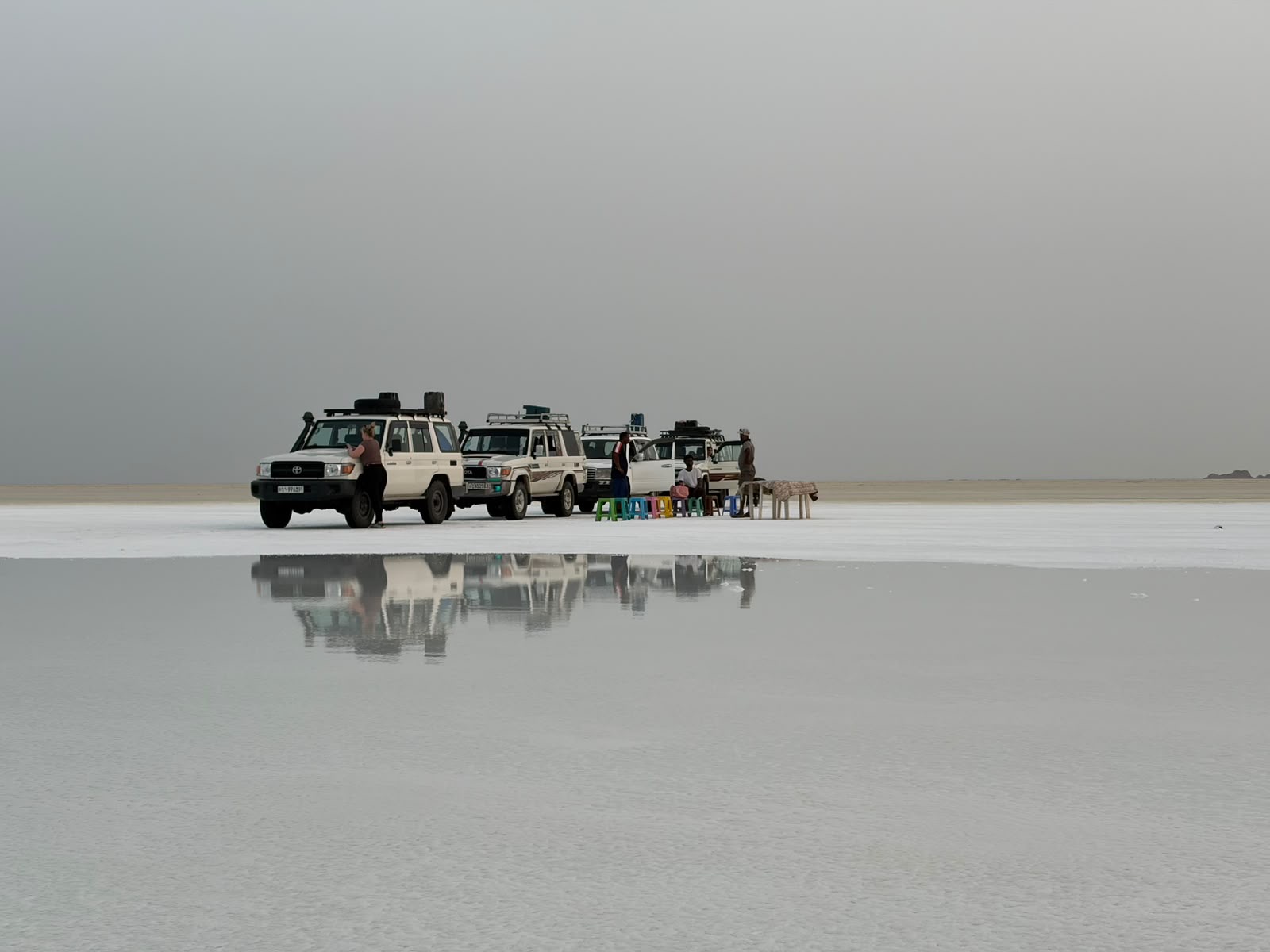
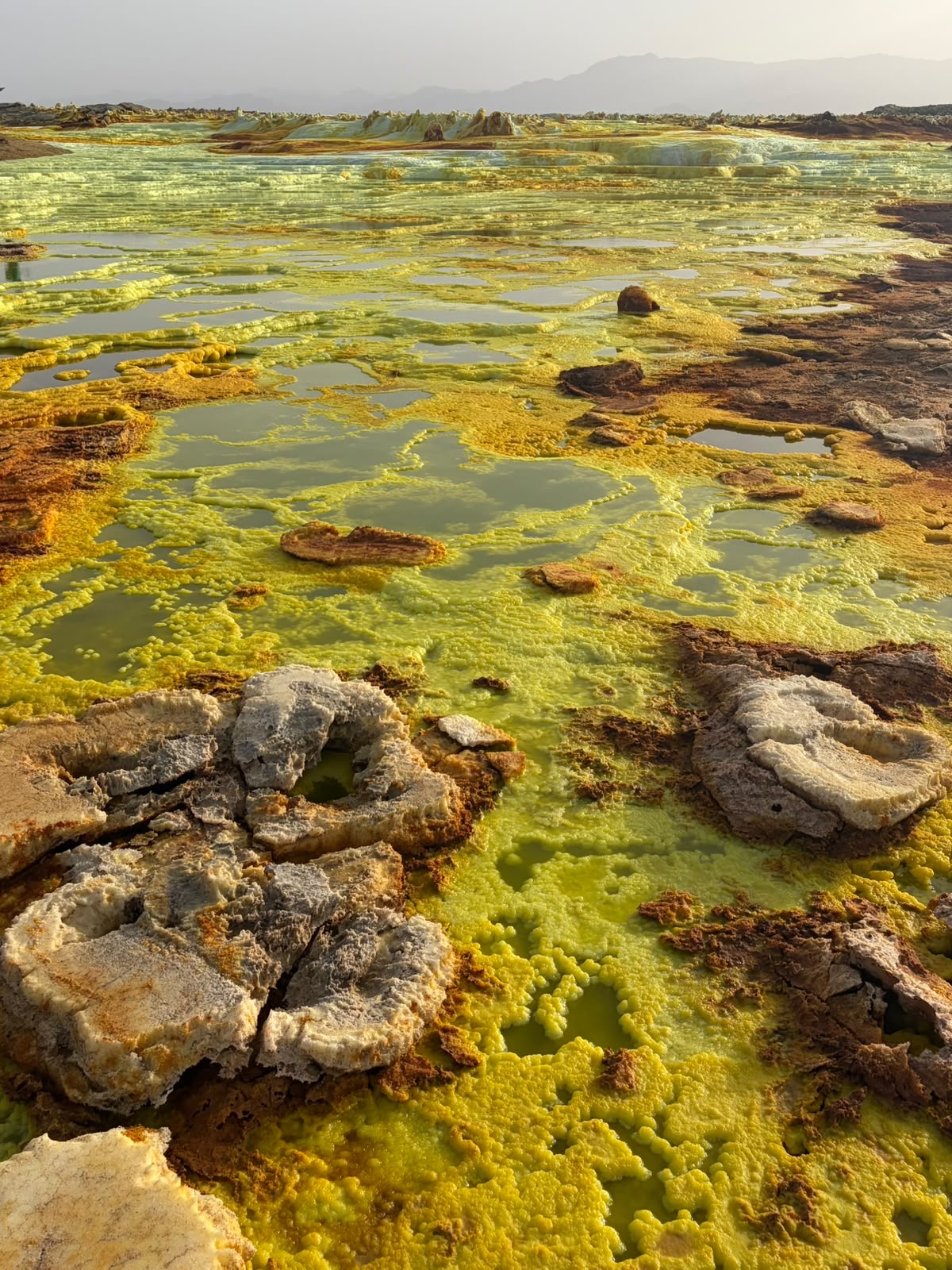
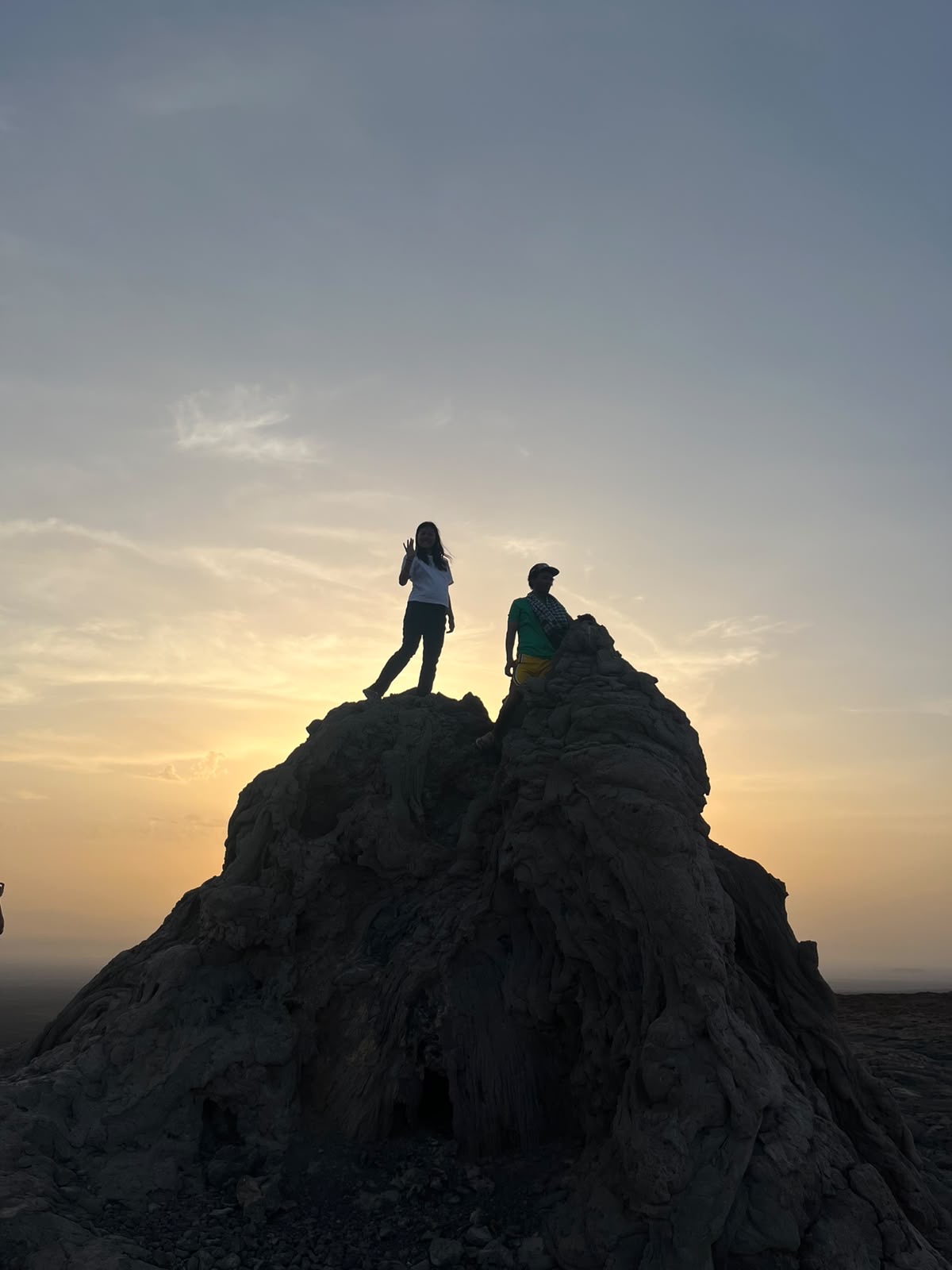
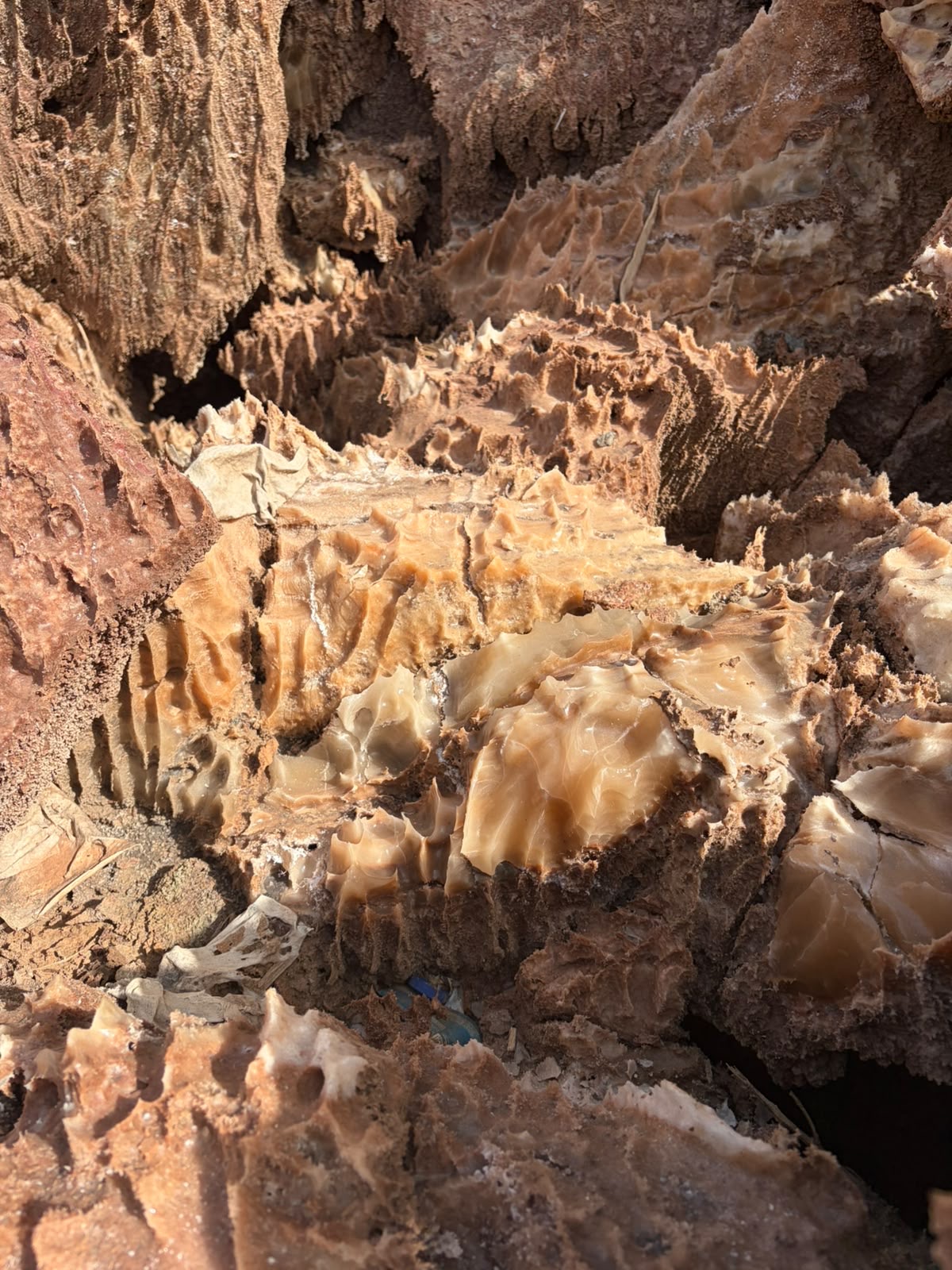
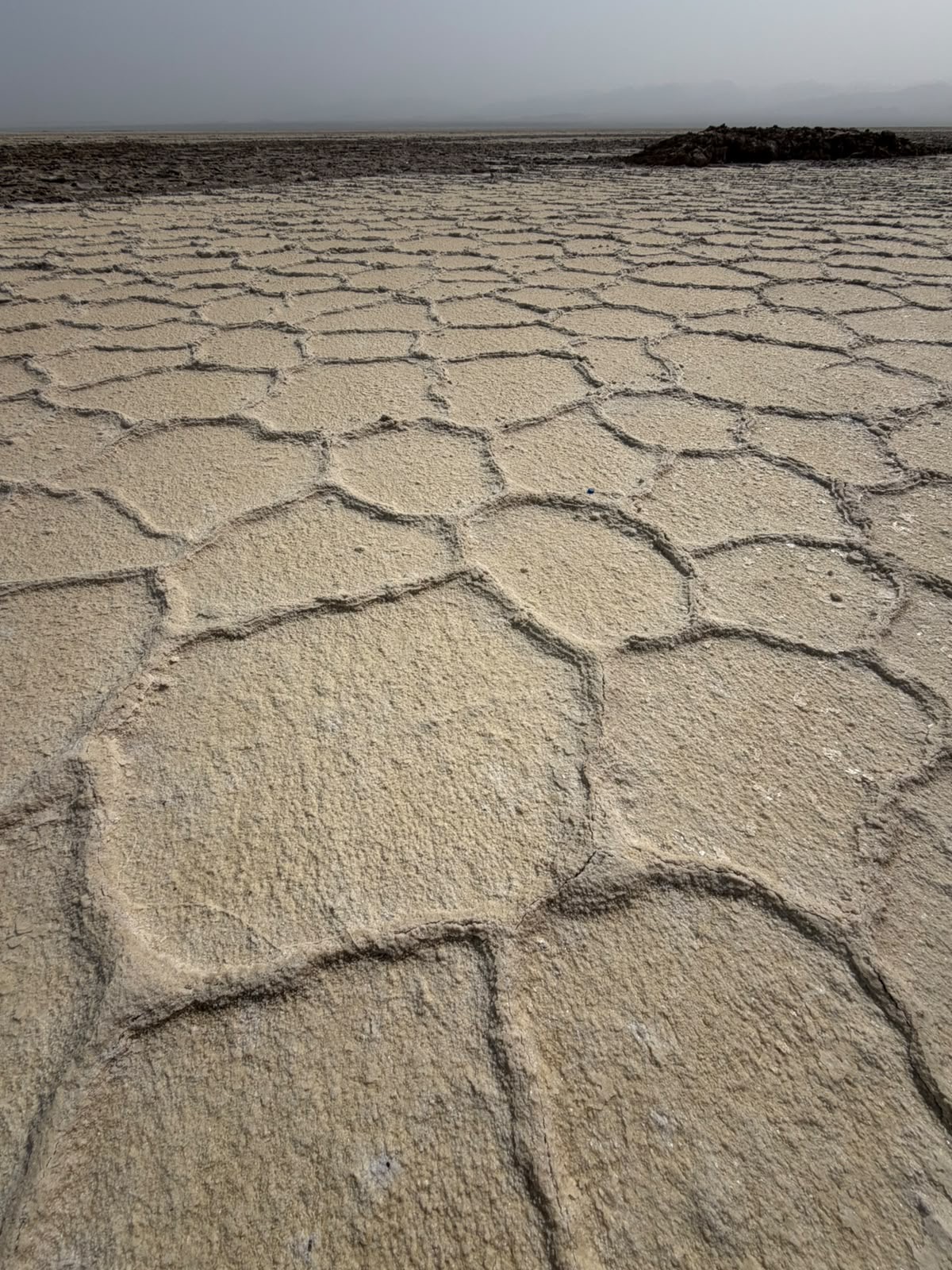
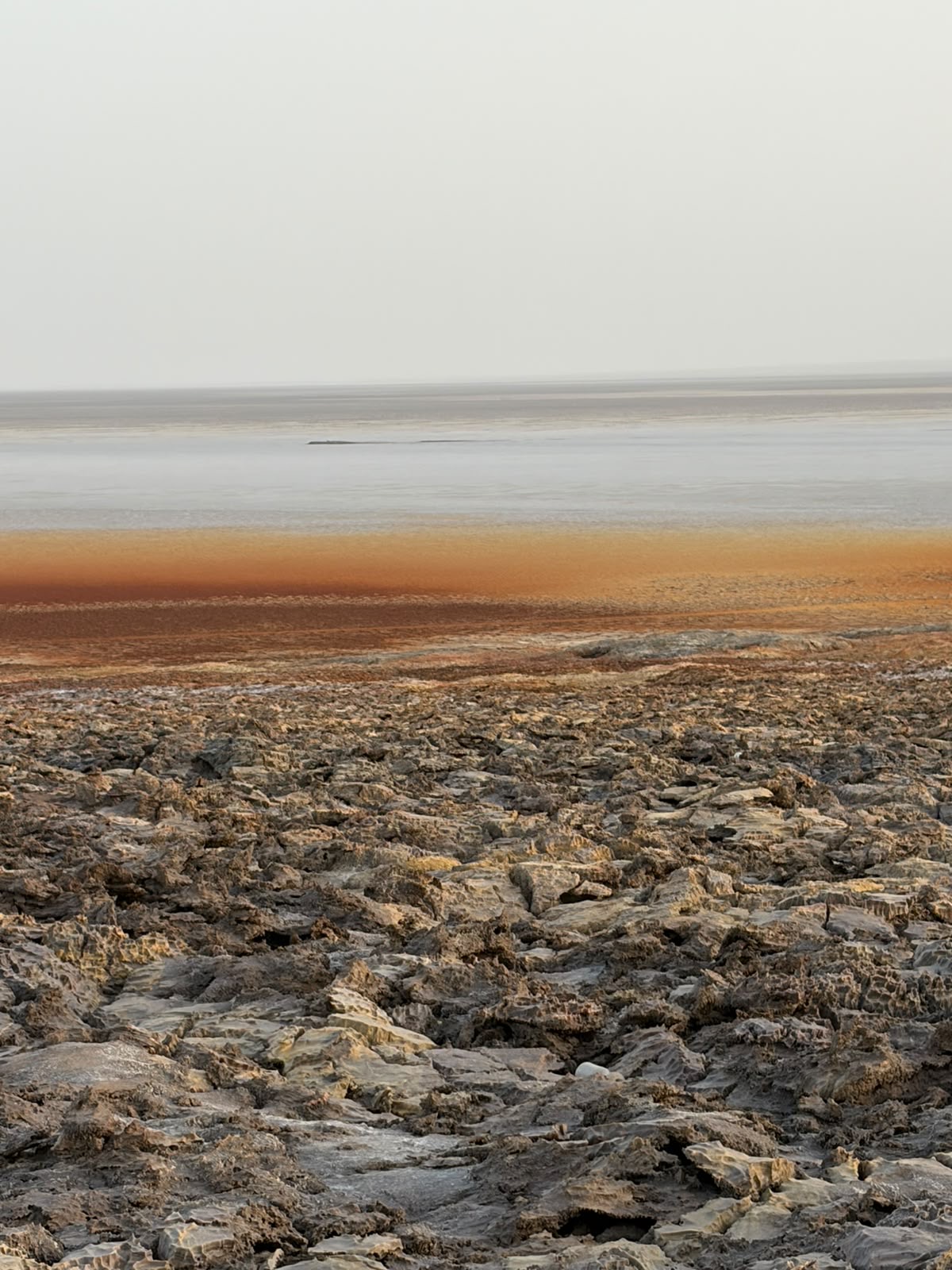
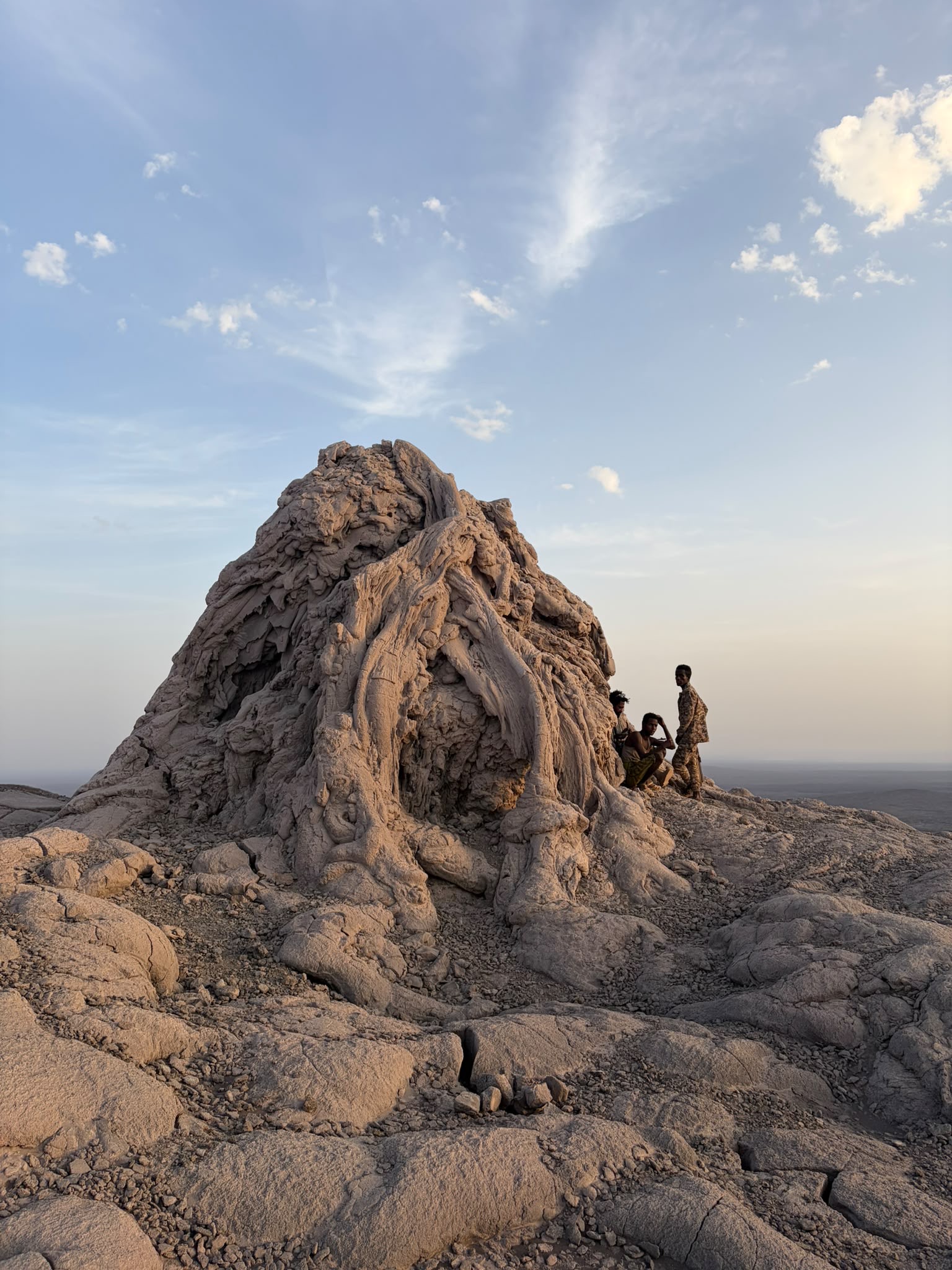
Sitting 125 metres below sea level in the Afar Triangle where three tectonic plates are pulling apart, the Danakil Depression is one of the most geologically extreme places accessible to travellers anywhere on Earth. The Dallol hydrothermal field produces neon yellow and green sulphur pools and salt crystalline formations that look designed rather than natural. The Erta Ale volcano, reached by night hike over basalt desert, contains a permanent lava lake, one of only six on the planet. Salt caravans of hundreds of camels cross the vast white salt flats each morning, moving slabs of hand-cut salt back to the highlands as they have done for centuries.

image of a guided tour group

The rock-hewn churches of Lalibela

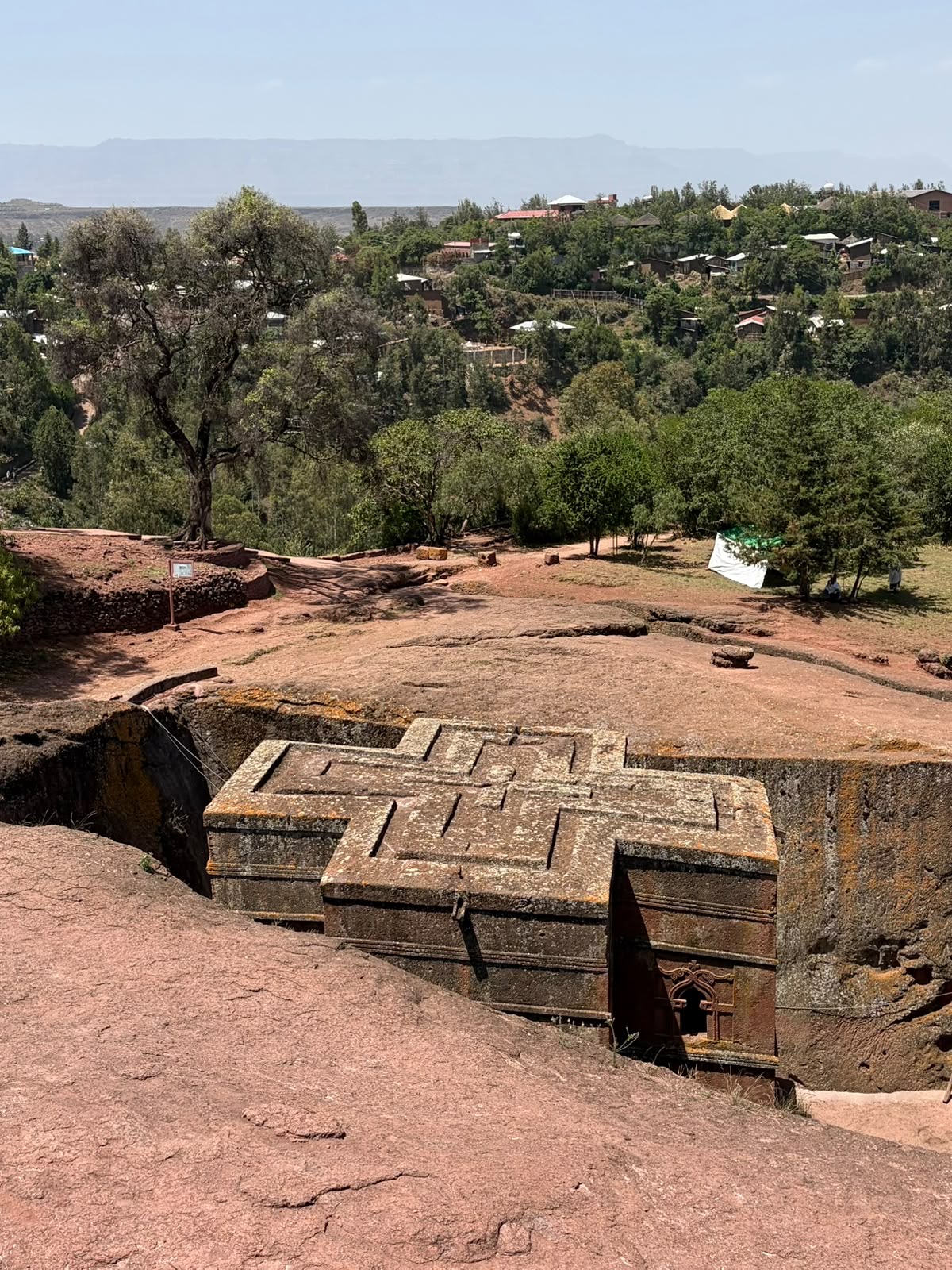
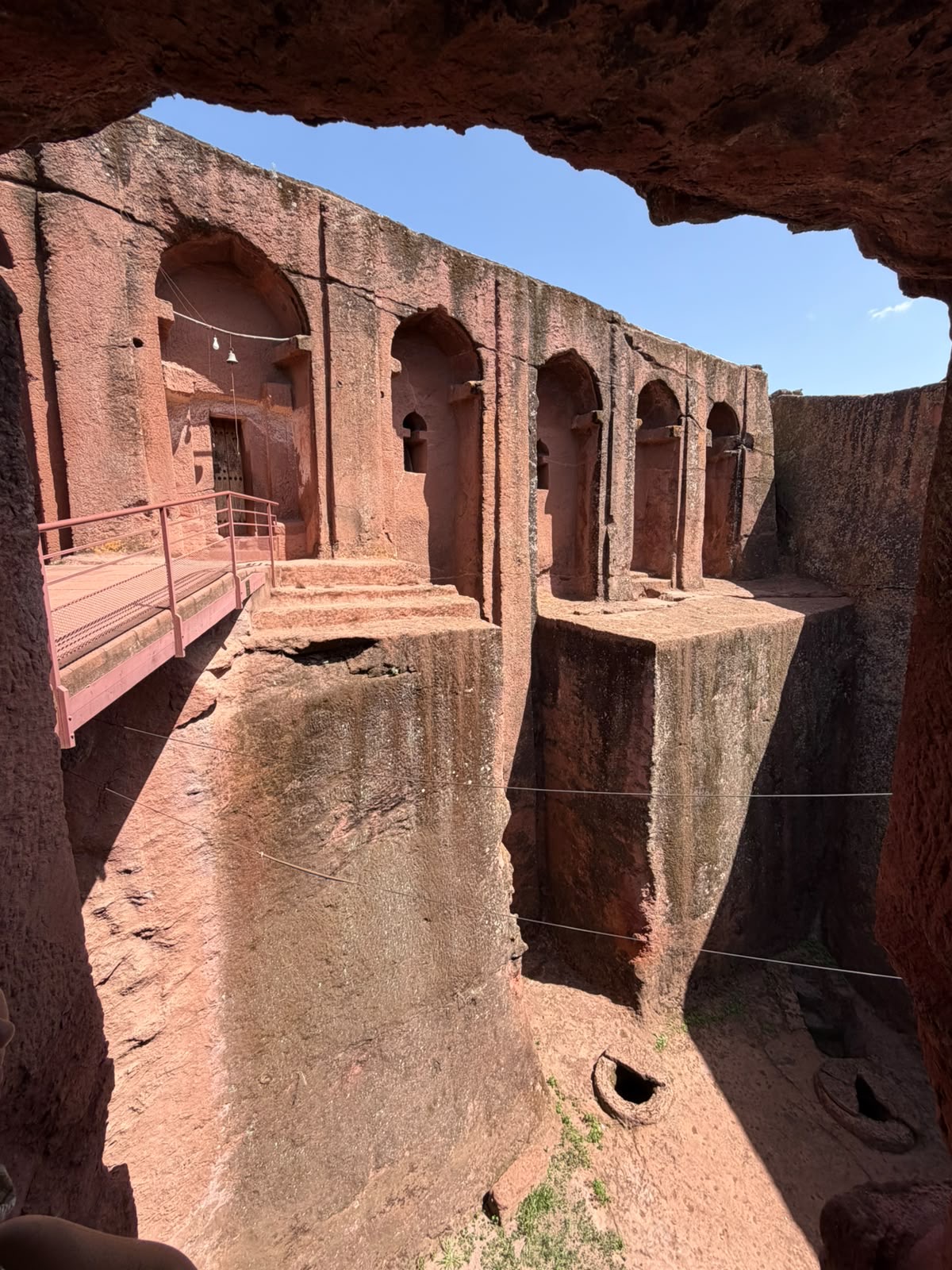
In the 12th century, the Ethiopian king Lalibela ordered the construction of a new Jerusalem in the Ethiopian highlands. The result was eleven churches carved from single pieces of solid red volcanic rock, each sunk into trenches cut from the surrounding plateau, connected by tunnels and passageways also carved from the rock. They are not buildings; they are subtractions from the earth. The largest, Bete Medhane Alem, is the biggest monolithic church in the world. The most photographed, Bete Giyorgis, is a perfect cross cut into a pit 12 metres deep. Every one of the eleven is still in daily use as an active house of worship, and arriving before dawn on any morning to find priests chanting by oil lamp, pilgrims prostrate on the stone, and incense rising in the cold highland air is to understand what a living religious monument actually means.
image of a local tour guide (for a travel agency)

Gondar's castles

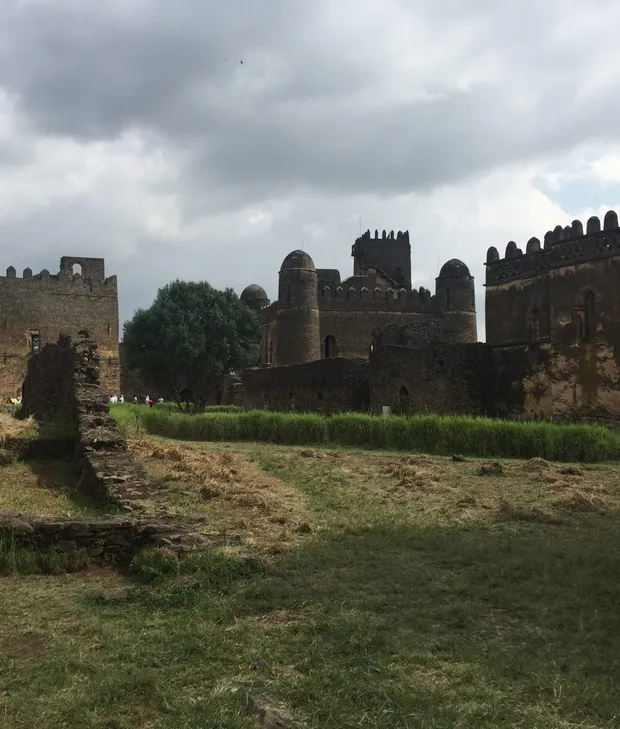
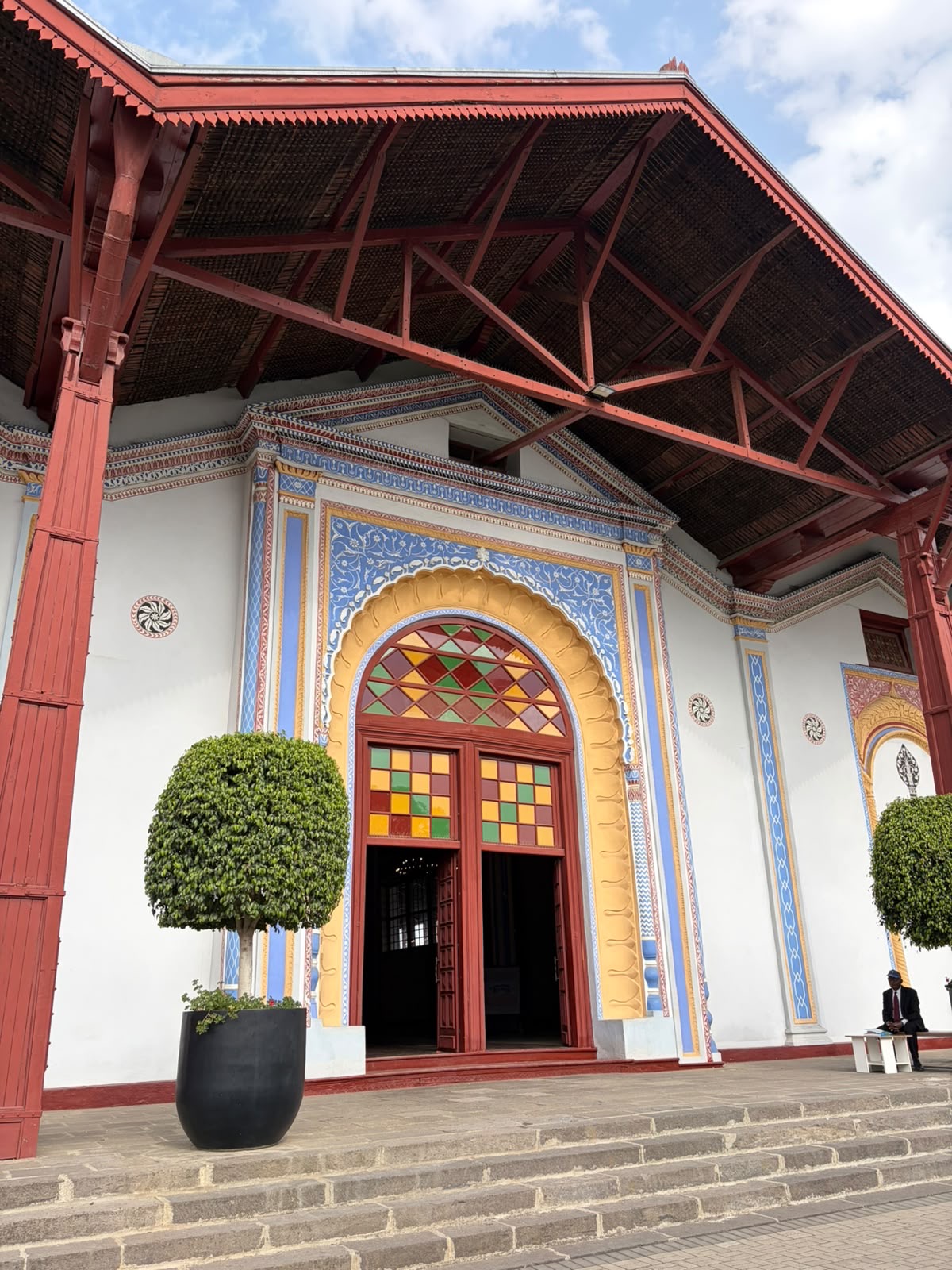
The Fasil Ghebbi in Gondar is the most improbable thing in sub-Saharan African architecture: a compound of six stone castles built over successive reigns of the Gondarine emperors in the 17th and 18th centuries, blending Ethiopian, Portuguese, Indian and Moorish influences into something that has no obvious precedent or parallel. The adjacent Debre Birhan Selassie church has a ceiling painted entirely with rows of cherub faces, the most reproduced image in Ethiopian religious art.
image of vibrant dining space (for a mexican restaurant)

The Danakil Depression

Sitting 125 metres below sea level in the Afar Triangle where three tectonic plates are pulling apart, the Danakil Depression is one of the most geologically extreme places accessible to travellers anywhere on Earth. The Dallol hydrothermal field produces neon yellow and green sulphur pools and salt crystalline formations that look designed rather than natural. The Erta Ale volcano, reached by night hike over basalt desert, contains a permanent lava lake, one of only six on the planet. Salt caravans of hundreds of camels cross the vast white salt flats each morning, moving slabs of hand-cut salt back to the highlands as they have done for centuries.

image of a guided tour group

The rock-hewn churches of Lalibela

In the 12th century, the Ethiopian king Lalibela ordered the construction of a new Jerusalem in the Ethiopian highlands. The result was eleven churches carved from single pieces of solid red volcanic rock, each sunk into trenches cut from the surrounding plateau, connected by tunnels and passageways also carved from the rock. They are not buildings; they are subtractions from the earth. The largest, Bete Medhane Alem, is the biggest monolithic church in the world. The most photographed, Bete Giyorgis, is a perfect cross cut into a pit 12 metres deep. Every one of the eleven is still in daily use as an active house of worship, and arriving before dawn on any morning to find priests chanting by oil lamp, pilgrims prostrate on the stone, and incense rising in the cold highland air is to understand what a living religious monument actually means.
image of a local tour guide (for a travel agency)

Gondar's castles

The Fasil Ghebbi in Gondar is the most improbable thing in sub-Saharan African architecture: a compound of six stone castles built over successive reigns of the Gondarine emperors in the 17th and 18th centuries, blending Ethiopian, Portuguese, Indian and Moorish influences into something that has no obvious precedent or parallel. The adjacent Debre Birhan Selassie church has a ceiling painted entirely with rows of cherub faces, the most reproduced image in Ethiopian religious art.

Journey itinerary

Itinerary overview
Detailed breakdown follows

Day 1: Arrive Addis Ababa / Bole area hotel, first evening on foot in the neighbourhood

Day 2: Addis Ababa / National Museum, Shiro Meda market, coffee ceremony and live music dinner

Day 3: Fly to Mekelle or Semera / join 3-day Danakil Depression tour, drive into the depression

Day 4: Danakil Depression / Dallol sulphur pools, salt lakes, salt flats and camel caravans

Day 5: Danakil Depression / sunrise at the salt lake, Erta Ale volcano hike, fly back to Addis

Day 6: Fly Addis to Gondar / Fasil Ghebbi royal compound and Debre Birhan Selassie church

Day 7: Gondar / day trip into the Simien Mountains, gelada baboon trekking and escarpment views

Day 8: Fly Gondar to Lalibela / arrive and explore the northern church cluster

Day 9: Lalibela / full day across both church clusters, Bete Giyorgis at golden hour

Day 10: Lalibela / outlying churches, Yemrehanna Kristos cave church and local market

Day 11: Fly Lalibela to Addis / recovery day, Entoto Hill, Mercato or Palace MuseumDays 12 to 14: Buffer days for flexibility, delays or optional extensions

Day-by-day itinerary
Day 1: Arrive Addis Ababa

Addis Ababa Bole International Airport (ADD) is one of the busiest aviation hubs in Africa and the main Ethiopian Airlines hub; almost every international arrival into Ethiopia comes through here. The airport is modern and efficient; arrivals take around 30 to 45 minutes from touchdown to being outside. Ethiopian Airlines operates most international routes into Addis; if you book your international flight with Ethiopian Airlines, you receive a 10 to 15% discount on all domestic flights, which is a meaningful saving given the number of domestic legs on this route.

Bole area as your base: The Bole neighbourhood, immediately surrounding the airport, is the right base for this itinerary. You will fly in and out of Addis multiple times on domestic connections, and staying in Bole removes the need to negotiate traffic into the city centre before each early morning departure. Look for a hotel with a confirmed 24-hour airport shuttle and secure luggage storage; both are essential features given that you will be leaving bags behind while on multi-day tours. Bole has walkable restaurant strips, reliable RIDE and Yango app coverage, and is a short rideshare into central Addis for the Day 2 activities.

Transport in Addis: Uber does not operate in Ethiopia. The two reliable rideshare apps are RIDE (no local number required to sign up, the more traveller-friendly option) and Yango (faster according to local reports but requires a local number to register). Download RIDE before you land and set it up in the airport arrivals hall. Avoid unmarked taxis; agree fares with registered taxis before getting in if you use them.

Connectivity: eSIMs work in Addis but become unreliable outside the city. Getting a local physical SIM on arrival from Ethio Telecom at the airport is the more reliable solution for the full route; signal on the Danakil tour and in Lalibela is limited regardless of SIM type, but having local data for Addis and Gondar makes the logistics of the city sections significantly easier.

Ethiopian Airlines domestic discount: When you purchase your international ticket with Ethiopian Airlines, keep the booking reference; the domestic discount is applied to bookings made through the same channel or directly with the airline at the domestic terminal. Book all domestic legs in advance, not on arrival; the Lalibela and Gondar routes in particular fill ahead.

Spend the first evening close to the hotel. Bole's main commercial strip has cafés and restaurants within walking distance of most hotels in the area. Eat something simple, get the jet lag calculation right, and sleep early; Day 3 begins with an early morning flight.

Day 1: Arrive Addis Ababa

Addis Ababa Bole International Airport (ADD) is one of the busiest aviation hubs in Africa and the main Ethiopian Airlines hub; almost every international arrival into Ethiopia comes through here. The airport is modern and efficient; arrivals take around 30 to 45 minutes from touchdown to being outside. Ethiopian Airlines operates most international routes into Addis; if you book your international flight with Ethiopian Airlines, you receive a 10 to 15% discount on all domestic flights, which is a meaningful saving given the number of domestic legs on this route.

Bole area as your base: The Bole neighbourhood, immediately surrounding the airport, is the right base for this itinerary. You will fly in and out of Addis multiple times on domestic connections, and staying in Bole removes the need to negotiate traffic into the city centre before each early morning departure. Look for a hotel with a confirmed 24-hour airport shuttle and secure luggage storage; both are essential features given that you will be leaving bags behind while on multi-day tours. Bole has walkable restaurant strips, reliable RIDE and Yango app coverage, and is a short rideshare into central Addis for the Day 2 activities.

Transport in Addis: Uber does not operate in Ethiopia. The two reliable rideshare apps are RIDE (no local number required to sign up, the more traveller-friendly option) and Yango (faster according to local reports but requires a local number to register). Download RIDE before you land and set it up in the airport arrivals hall. Avoid unmarked taxis; agree fares with registered taxis before getting in if you use them.

Connectivity: eSIMs work in Addis but become unreliable outside the city. Getting a local physical SIM on arrival from Ethio Telecom at the airport is the more reliable solution for the full route; signal on the Danakil tour and in Lalibela is limited regardless of SIM type, but having local data for Addis and Gondar makes the logistics of the city sections significantly easier.

Ethiopian Airlines domestic discount: When you purchase your international ticket with Ethiopian Airlines, keep the booking reference; the domestic discount is applied to bookings made through the same channel or directly with the airline at the domestic terminal. Book all domestic legs in advance, not on arrival; the Lalibela and Gondar routes in particular fill ahead.

Spend the first evening close to the hotel. Bole's main commercial strip has cafés and restaurants within walking distance of most hotels in the area. Eat something simple, get the jet lag calculation right, and sleep early; Day 3 begins with an early morning flight.

Button Text
Day 2: Addis Ababa

Use the day for the city's strongest sites. A rideshare from Bole to the National Museum takes 20 to 30 minutes depending on traffic; Addis traffic is genuinely difficult and mornings from 7:30 to 9:30 am are the worst window. Leave by 9 am or wait until 10 am.

National Museum of Ethiopia: Contains Lucy (Australopithecus afarensis, 3.2 million years old), the most complete hominid skeleton found to that date and one of the most significant paleoanthropological finds in history. The fossil is in a basement gallery; the museum above it covers Ethiopian history from prehistoric times through the imperial era. The ethnographic collection on the upper floors includes royal regalia, religious art and material culture from across Ethiopia's ethnic groups. Allow two hours. Entry is very cheap by international standards.

Shiro Meda market: A better alternative to the Mercato (which is enormous, overwhelming and best visited with a guide) for travellers who want to browse traditional goods at genuine prices. Shiro Meda specialises in traditional Ethiopian clothing, handwoven textiles, jewellery and household goods. It is a proper neighbourhood market rather than a tourist market; prices are real. Take a rideshare from the museum; the market is in the northern part of the city.

Merkato note: If you want to see Merkato, the largest open-air market in Africa, go with a guide. The scale is genuinely disorienting and pickpocketing is common; a local guide significantly reduces both the navigation stress and the security risk. Your hotel can arrange a reputable guide for a half-day visit.

Coffee ceremony: Ethiopia is the birthplace of coffee; the ceremony of roasting green beans, grinding by hand and brewing in a clay jebena pot before pouring into small cups over three successive rounds is the central social ritual of the country. Every traditional restaurant and many cafés in Addis offer this. Sit through all three rounds; the first cup (abol) is the strongest, the third (bereka, meaning blessing) the weakest.

Evening: traditional restaurant with live music. Yod Abyssinia in Bole is the most established cultural restaurant in the city: a full menu of Ethiopian dishes (both fasting and non-fasting versions, as Ethiopia's Orthodox Christian calendar involves over 200 fasting days per year when meat and dairy are excluded), a live cultural show featuring regional dances and music, and a warm atmosphere that is tourist-facing without being hollow. 2000 Habesha Cultural Restaurant (Bole Atlas location) is the other well-reviewed option in the same area, with generous portions and a similarly lively cultural show. Book ahead for either, particularly at weekends.

Day 3: Fly to Danakil Depression tour base

⚠️ SECURITY: The Afar region, which contains the Danakil Depression, is listed as Do Not Travel by the US State Department, UK FCDO, Canadian and Australian governments as of mid-2026. Armed groups have previously targeted foreigners in this area. Check your government's current advisory before booking this section.

Fly from Addis to Semera (SZE), the Afar regional capital, or to Mekelle (MQX) in Tigray depending on which tour operator you book with; the access point to the Danakil varies by operator and changes with the security situation in the surrounding regions. Confirm your departure airport with your tour operator before booking the domestic flight. The flight takes approximately one hour.

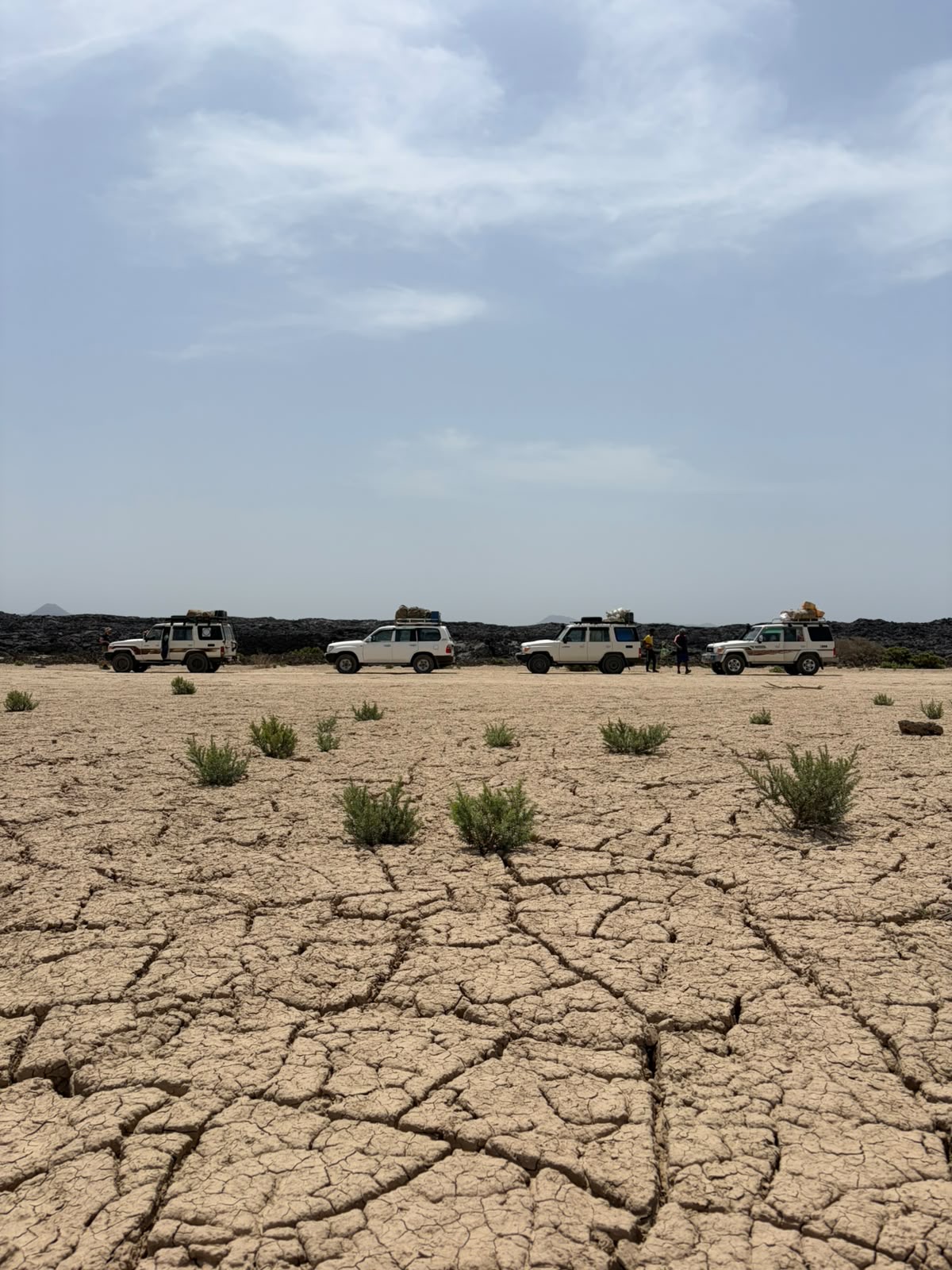
Your tour operator meets you at the airport and transfers you directly to the 4x4 convoy that serves as both transport and base for the next three days. The drive from the access point to the Danakil takes approximately three hours on increasingly rough desert tracks, descending through scrub and volcanic rock into the depression floor.

Book your operator before you travel, not on arrival. Reputable operators with strong recent reviews: Ethio Travel and Tours (ETT), Danakil Depression Tours and Travel, and Brilliant Ethiopia all organise the 3-day tour. Group tours (typically six to eight people per vehicle) keep costs manageable; private tours are significantly more expensive. Book directly with the operator and confirm current access routes, as these change with the political situation in the Afar and Tigray regions.

What the 3-day tour covers:
Day 1: Drive into the depression, overnight camp at the Danakil floor.
Day 2: Dallol hydrothermal field, Yellow Lake, Black Lake, salt flats. Evening departure for Erta Ale.
Day 3: Sunrise at the salt lake, return drive to the access point, fly back to Addis.

What to bring: A buff or face mask (the sulphur smell and ash smoke are significant at Dallol and near the volcano), at least two litres of water per day beyond what the tour provides (the heat is genuinely dangerous), lightweight layers for the cold Erta Ale summit night (temperatures drop significantly despite the desert heat below), a headtorch for the volcano hike, and closed shoes for the salt flats. Leave non-essential luggage at your Addis hotel in secure storage; you need almost nothing beyond the basics for three days in the desert.

Day 4: Danakil Depression

Dallol: The hydrothermal field sits at -45 metres below sea level and contains one of the most visually extraordinary landscapes on Earth. Sulphur, iron oxide and potassium salt formations create neon yellows, vivid greens, deep reds and white salt crystalline structures across a field approximately one kilometre across. Acidic pools bubble between the formations; the smell of sulphur is intense and persistent. Your buff is useful here. The temperature at ground level routinely exceeds 50°C between 10 am and 4 pm; tours are timed to arrive at Dallol in the early morning before the heat peaks.

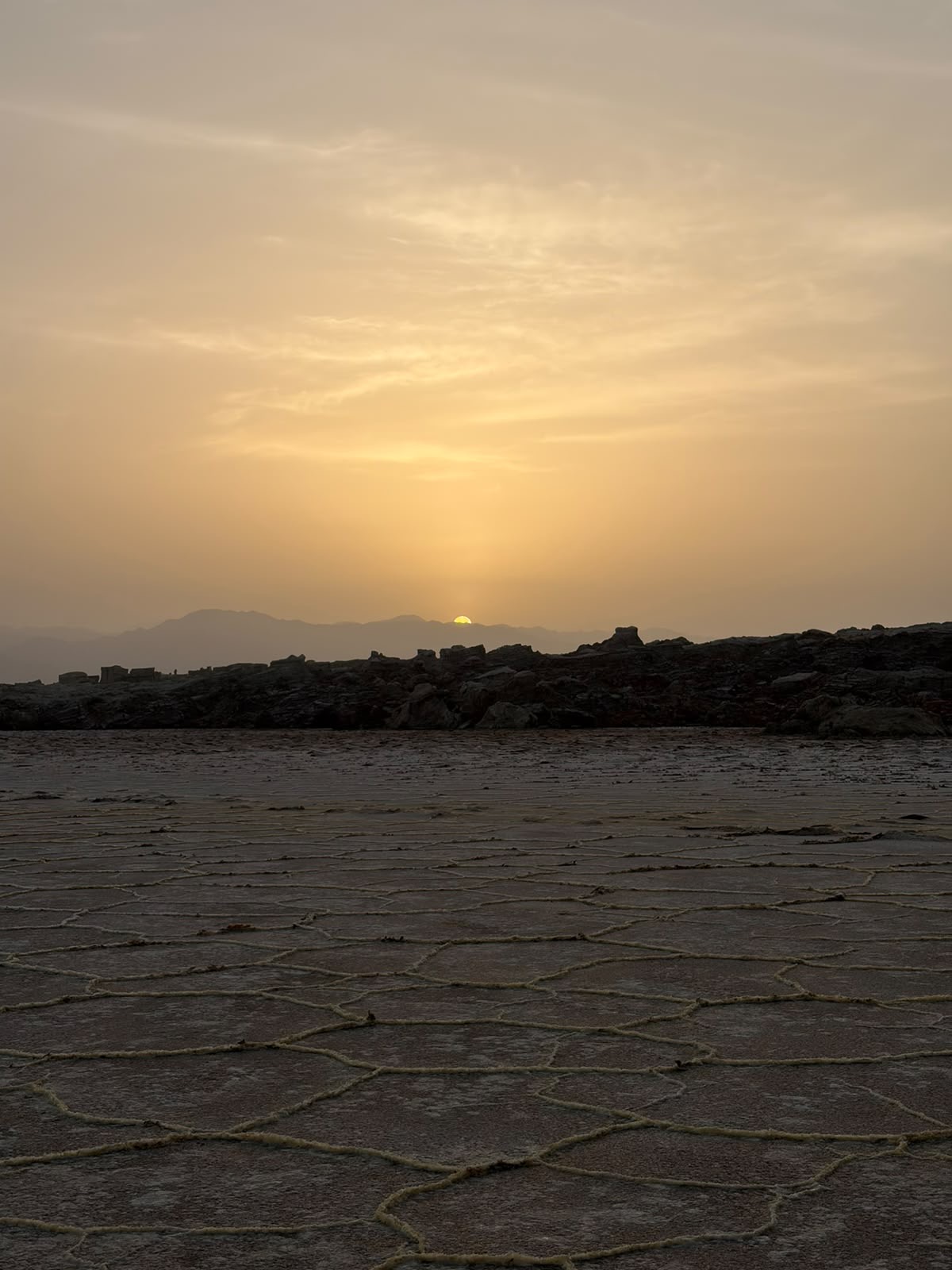
Salt lakes: Two salt lakes feature on the tour. Lake Afrera (also called Giulietti) is warm and hypersaline enough to float in without effort; floating on your back on a turquoise salt lake in the middle of the Danakil Desert while camels pass on the shore behind you is one of those experiences that requires sitting with for a moment before it fully registers. The second lake, Lake Asale, produces the sunrise reflection your notes describe: the vast white salt flat mirrors the sky so completely at first light that the horizon disappears. Time the sunrise stop accordingly.

Salt caravans: Afar men and their camel trains cross the salt flats each morning from the surrounding highlands to cut and load salt slabs by hand, then carry them back across the desert to be sold in the markets of Mekelle and beyond. This trade has operated continuously for centuries and the scale of the caravans (sometimes hundreds of camels in a single convoy) makes the economic logic of the Danakil comprehensible in a way that the landscape alone does not.

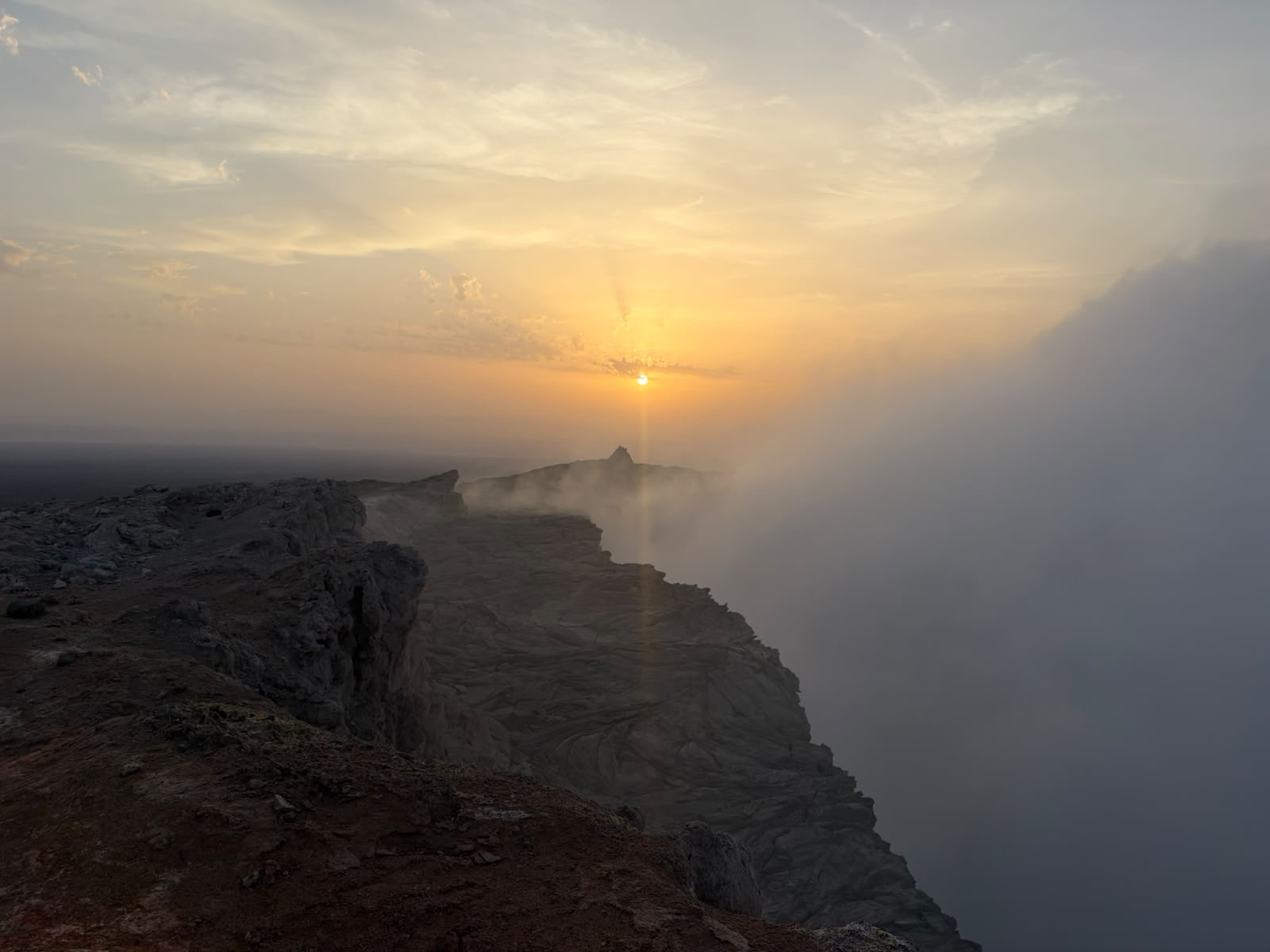
Night hike to Erta Ale: The drive to the Erta Ale base camp takes place in the late afternoon; the hike up the volcano (approximately 1.5 hours on rough basalt) departs at night to avoid the heat. The summit crater rim is where you camp or wait for sunrise; the lava lake (when visible through the sulphur smoke) is inside one of the two craters. Seeing lava is not guaranteed: smoke density and volcanic activity vary day by day, and a 2025 eruption destroyed the main lava lake temporarily. Confirm current activity levels with your operator before the tour. Regardless of lava visibility, camping on the rim of an active African volcano under the Milky Way in total desert darkness is the defining night of the trip.

Day 5: Sunrise at the salt lake, return to Addis

Watch the salt lake sunrise, return by 4x4 to the airport access point, fly back to Addis. The return flight takes approximately one hour. Use the Addis evening to shower thoroughly, do laundry if needed and sleep; the Danakil is physically demanding and the next day involves an early morning flight north.

Day 6: Fly Addis to Gondar

⚠️ SECURITY: Gondar sits in the Amhara region, listed as Do Not Travel by US, UK, Canadian and Australian governments as of mid-2026. The Simien Mountains also fall within this advisory. The city and tourist sites have continued to function and receive visitors in 2025 to 2026, but the regional security situation is unstable. Verify current conditions with your operator and your government's advisory before booking this leg.

Fly from Addis to Gondar (GDQ), approximately one hour. Gondar is Ethiopia's most historically layered city: a royal capital built from the early 17th century by successive emperors of the Gondarine dynasty who combined Ethiopian building traditions with Portuguese, Indian and later British architectural influences to produce a castle compound that has no close parallel in Africa.

Fasil Ghebbi (Royal Enclosure): A walled compound containing six complete castles, royal baths, stables, storehouses and churches built between 1636 and the early 19th century. Begin with the castle of Fasilides (the founder, who built the compound's first and most architecturally pure structure), then move through the successive castles of later emperors to trace the changing architectural influences. The compound is UNESCO listed and the information boards are in English; allow two hours. Entry is charged separately from the city tour; your hotel can arrange a guide, which adds significant depth to the history of each building.

Debre Birhan Selassie: A church 20 minutes' walk north of the compound. The interior ceiling is covered in a grid of approximately 80 painted faces of cherubim, each face slightly different from the others, that together form one of the most unusual and celebrated pieces of Ethiopian religious art. The walls carry murals of biblical narratives. The ceiling is the reason to go. Allow 30 minutes.

Evening in Gondar: The city has a functioning small restaurant and bar scene. Café Terrace above the old town gives views over the compound; Four Sisters Restaurant (Addis Alem) is consistently cited as the best sit-down meal in the city for Ethiopian food.

Day 7: Simien Mountains day trip

⚠️ SECURITY: The Simien Mountains National Park sits in the Amhara region. Same Do Not Travel advisory as Gondar applies. The park continues to operate and the gelada trekking continues to run; verify current access with your guide or operator before the day trip.

Drive north from Gondar into the Simien Mountains, approximately 100 km on paved road to the Sankaber park entrance, two to two and a half hours. A day trip gives you access to the Imet Gogo viewpoint (3,926 metres, one of the most dramatic viewpoint walks in Africa, a 90-minute return hike from the park road) and the escarpment walks where gelada baboon troops are reliably encountered.

Gelada baboons: Found only in the Ethiopian highlands and the most numerous large primate in Africa, geladas live in troops that can number several hundred individuals. They graze on grass and spend their days on the escarpment edges where cliff faces provide protection from predators. They have no particular fear of humans and will continue grazing, grooming and socialising within three to four metres of a stationary observer. The males' distinctive bright red chest patches flush more intensely during social interactions; watching a large male perform a display toward a rival while a valley drops away behind him is one of the more spectacular primate encounters available in Africa.

Ethiopian wolves: The Simiens hold a population of Ethiopian wolves, the world's rarest canid and Africa's most endangered carnivore. Sightings are not guaranteed on a day trip but the park is the correct habitat. Your guide knows the areas most frequented by the local pack.

Arrange a licensed Simien Mountains guide through your Gondar hotel or tour operator the evening before; the park requires guides for all visitors and the best guides know exactly where the gelada troops are on any given morning. Return to Gondar for the night.

Day 8: Fly Gondar to Lalibela

Fly from Gondar to Lalibela (LLI), approximately 45 minutes. Lalibela airport sits at 2,500 metres above sea level and the approach through mountain terrain is one of the more dramatic domestic arrivals in Africa.

Lalibela town sits at around 2,630 metres. The altitude is noticeable if you have come from sea level; drink water, move slowly on the first afternoon and resist the temptation to immediately walk the full church circuit. Acclimatisation takes a day.

Check in and spend the late afternoon exploring the northern church cluster at your own pace, without a guide. The northern group contains six churches including Bete Medhane Alem, the world's largest monolithic church. Walking the trenches and tunnels connecting them without a specific programme is the right first encounter; save the full guided circuit for Day 9 when you have recovered from the flight and the altitude.

Try Tej in the evening. Tej is an Ethiopian honey wine, slightly sweet, slightly fermented, served in a berele (a flask-shaped bottle); Lalibela honey is famous throughout Ethiopia and the local Tej is produced from it. Every local restaurant in town serves it. Order a berele and drink it with whatever you are eating.

Day 9: Lalibela full day

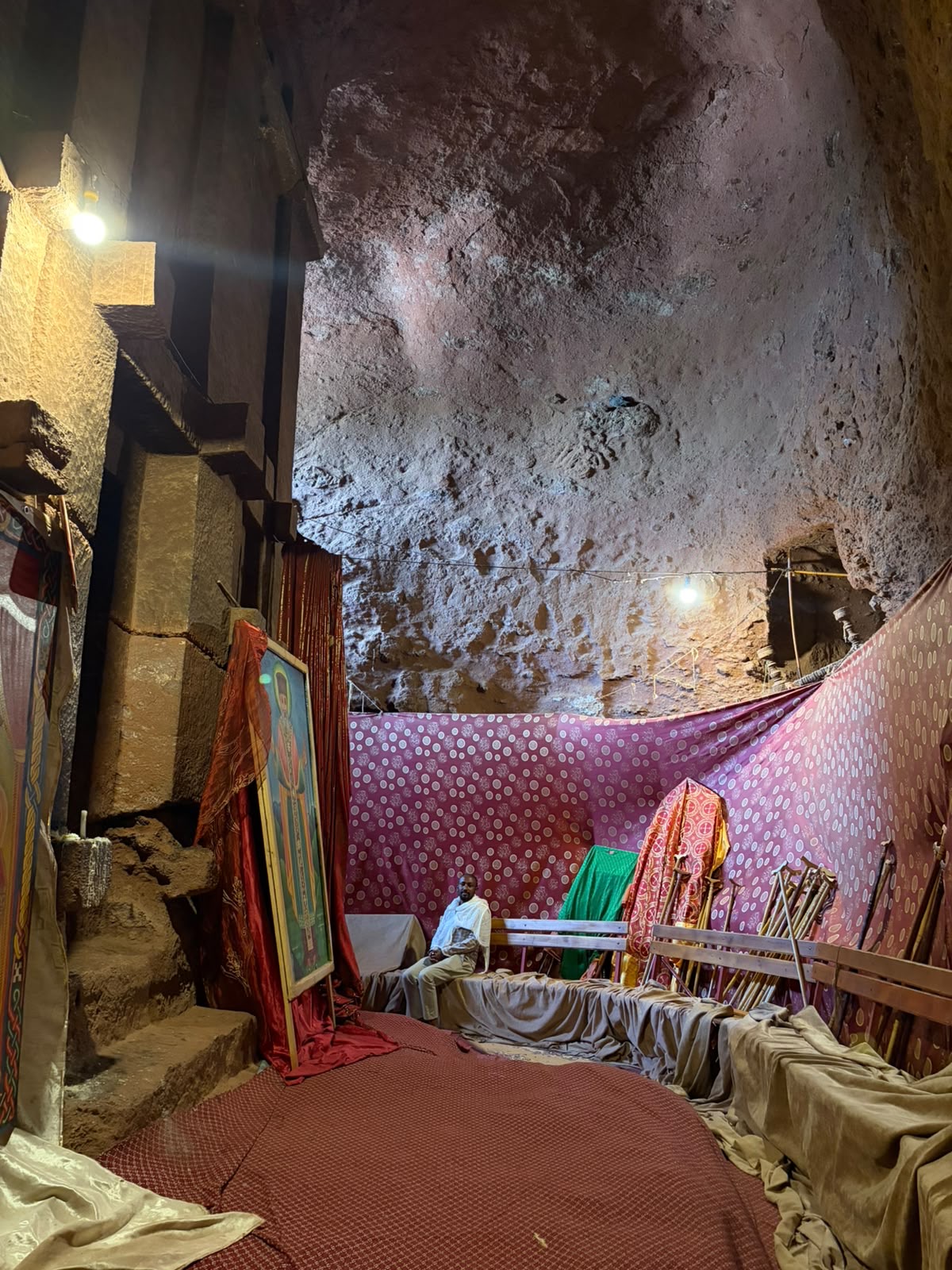
Start before dawn if you are willing to set an alarm for 5:30 am. The morning service begins in the churches before first light; priests in white robes and embroidered vestments chant in the old liturgical language of Ge'ez while pilgrims prostrate themselves on the stone, prayer staffs held at their sides. The oil lamps and incense in the narrow church interiors at this hour create an atmosphere that the daytime tourist version, however spectacular, does not replicate. You do not need a guide to attend; dress modestly, remove shoes at the entrance and follow the lead of the people around you.

Guided circuit: Book a licensed guide through your hotel for a half-day morning circuit of both the northern and southeastern church clusters. The guide's value is specific historical and religious context: who King Lalibela was, which crusading ideas influenced the construction of a New Jerusalem in the highlands, the symbolism of specific architectural elements, and the distinctions between the churches' decorative programmes. Without a guide, the churches are visually extraordinary. With a good one, they are also comprehensible.

Bete Giyorgis: The most photographed church in Ethiopia and the finale of the southern cluster. It stands at the bottom of a 12-metre pit, a perfect Greek cross in plan cut from a single piece of reddish rock, the cross motif repeated on the roof surface in three concentric raised reliefs. Visit in the late afternoon when the light enters the pit from the west and the shadows deepen the cross geometry on the walls. There is a small viewing platform at the rim of the pit; stand there for ten minutes before going down.

Day 10: Outlying churches and Yemrehanna Kristos

Abuna Yemata Guh (flagged as route tweak only, not main itinerary): The cliffside church in Tigray is referenced in your notes and is one of the most extraordinary religious sites in Africa, but it sits in the Tigray region which carries a Do Not Travel advisory. See Route Tweaks for when and how to consider it.

Yemrehanna Kristos: A cave church approximately 42 km north of Lalibela, built inside a natural cave in the 11th century and predating the rock-hewn churches. Unlike the carved churches, this one is constructed: beautifully made alternating layers of wood and stone in the Aksumite style, with carved ceilings and original painted decorations. It sits at the end of a 30-minute walk uphill from the road; the walk through highland forest with views of the surrounding mountains is part of the experience. Inside the cave behind the church, the preserved remains of thousands of pilgrims who travelled from across Ethiopia and the Christian world to die near the holy site are visible behind a partition. The atmosphere is unlike anything in Lalibela itself.

Local honey market: Lalibela's covered market in the town centre sells local honey at prices a fraction of what it costs elsewhere in Ethiopia. Buy it here if you want to take some home; it is genuinely excellent.

Fly to Addis in the evening. Book an afternoon or early evening departure; the Lalibela to Addis flight is approximately one hour.

Day 11: Addis Ababa

A recovery and overflow day. Use it for any of the following depending on energy and what Day 2 left undone.

Entoto Hill: The mountain ridge immediately north of Addis at approximately 3,100 metres where Emperor Menelik II built his first capital in the 1880s before descending to found modern Addis Ababa. The Menelik Palace (now a museum) and Entoto Maryam Church sit at the summit with views over the full city. The Entoto Natural Park around the summit is a eucalyptus forest popular with local joggers at dawn. Take a rideshare up and walk sections of the descent if energy allows.

Mercato with a guide: If you want to see the largest open-air market in Africa, today is the day. Your hotel can arrange a reputable English-speaking guide for a two-hour Mercato visit; the market covers several square kilometres of covered and open-air trading in everything from spices and textiles to electronics and livestock. Go with the guide rather than alone; the scale and the crowd both benefit from someone who knows how to navigate it.

Palace and grounds: The National Palace grounds in the city centre include the Lion Park (Menelik's lions) and are open to visitors; the ceremonial palace itself hosts occasional exhibitions. Worth an hour alongside the Merkato if you have time.

Final coffee ceremony and dinner: Ethiopia does coffee better than anywhere else in the world; the country is the genetic origin of Coffea arabica and the diversity of flavour across different regional varieties is extraordinary. Your last evening meal in Addis is the right moment for a full injera spread: the sourdough flatbread that serves as both plate and cutlery, topped with various stews (wat), vegetables, lentils and cheese, eaten communally with the hands. Yod Abyssinia or 2000 Habesha for the cultural experience again, or ask your hotel to recommend a less tourist-facing local restaurant for something more everyday.

Days 12 to 14: Buffer and extension days

These days are built into the itinerary deliberately for three reasons. First, the Danakil tour is weather and logistics dependent; tours are occasionally delayed by a day due to access road conditions or vehicle issues, and having two or three flexible days absorbs this without collapsing the rest of the route. Second, Ethiopia's domestic flight network has delays; a missed connection is not unusual. Third, Addis Ababa is a more interesting city than a one-day stop suggests; the extra days can be used to go deeper into the city, arrange a cooking class, visit the Red Terror Martyrs Memorial Museum (covering the Derg military junta's 1974 to 1991 rule and its enormous human cost, a necessary companion to understanding modern Ethiopia), or simply rest.

Optional extension: Harar

Fly east from Addis to Dire Dawa (DIR), then transfer to Harar (approximately one hour by road). Harar is one of the four holy cities of Islam and the most complete walled Islamic city in East Africa: 82 mosques, 110 shrines and a labyrinthine old town of narrow lanes, painted houses and spice markets inside 16th-century walls. The defining evening experience is the hyena feeding: two men outside the Fallana Gate feed wild spotted hyenas by hand and from their mouth using meat on a stick, an ancient practice that maintains a relationship between the city and the hyena packs that has historically prevented hyenas from attacking livestock. It is one of the more extraordinary things you can watch anywhere in Africa. Harar is not under a security advisory as of mid-2026 and makes an excellent final extension for travellers with time.

In pictures

No items found.

Traveller suggestions

Accomodation

Addis Ababa

Premium : Radisson Blu Hotel Addis Ababa, Golden Tulip Addis Ababa

Mid-tier : The HUB Hotel, Best Western Plus Pearl Addis, Cassiopeia Hotel

Budget : Bole Ambassador Hotel, Jupiter International Hotel Bole

Gondar

Mid-tier : Goha Hotel (perched on a hill above the city with views over the royal compound), Unique Park Hotel

Budget : Circle Hotel, Quara Hotel (budget guesthouse, walking distance to the compound)

Lalibela

Mid-tier : Sora Lodge (mountain views, fire pit, sunset bar), Top Twelve Hotel (highest-rated guesthouse in Lalibela), Ben Abeba Guesthouse (views across the highland landscape, boutique feel)

Budget : Ancient Hotel (central, two minutes' walk from the churches), Panoramic View Hotel

Stay close to the churches rather than out in the town periphery; the early morning dawn service access on Day 9 is significantly easier if you are within a five-minute walk.

Food & Drink

Addis Ababa

Premium : Yod Abyssinia Traditional Restaurant (cultural restaurant, 40-plus Ethiopian dishes including full fasting menus, nightly live music and dance; book ahead), 2000 Habesha Cultural Restaurant (atmospheric live show, slightly more local)

Mid-tier : Kategna (Ethiopian food without the cultural show format), Addis Ababa Restaurant (oldest restaurant in city), Romina Restaurant (Ethiopian and international)

Budget : Bekelech Kitfo ( city's most famous kitfo specialist, Haya Hulet institution), .Tobiya Tej House (traditional tej bar, honey wine, casual and local)

Coffee : Tomoca (historic café), Kaldi's Coffee (main specialty coffee chain)

Essential Ethiopian dishes to eat in Addis before the tour: Injera with various wats (the staple, always order the combination for maximum variety), kitfo (the raw beef version if you are confident about it, the local test of adventurousness), tibs (sautéed beef or lamb, the reliable meat option), shiro (chickpea flour stew, excellent fasting food), gomen (Ethiopian collard greens, always a side dish), and Tej (honey wine) at least once.

Gondar

Four Sisters Restaurant / Addis Alem (traditional Ethiopian food in a pleasant setting)

Café Terrace (views over the royal compound, sunset drink spot),

Unique Park Hotel restaurant

Lalibela

Mid-tier : Ben Abeba (architecturally distinctive, sculptural building on a hillside above the town with sweeping views across the highland landscape), 7 Olives Hotel restaurant

Reminders & Cautions

SECURITY: CRITICAL READING BEFORE BOOKING ⚠️⚠️⚠️ As of mid-2026, Ethiopia carries a US State Department Level 3: Reconsider Travel advisory for the country overall. Three of the four main non-Addis destinations on this route sit in regions with Do Not Travel sub-advisories: (1) The Afar region (Danakil Depression): Do Not Travel. Armed conflict, kidnapping, civil unrest. Armed groups have previously targeted foreigners in the Danakil specifically. Tours continue to operate and travellers continue to go, but this is a genuine Do Not Travel designation, not a precautionary one. (2) The Amhara region (Gondar, Simien Mountains, Lalibela): Do Not Travel. Armed conflict and civil unrest. In January 2026 armed clashes occurred between armed groups and the Ethiopian military in the Amhara region. The security situation is uncertain and can escalate with little warning. (3) The Tigray region (Mekelle access point for some Danakil tours, Abuna Yemata Guh): Do Not Travel. Ongoing armed conflict, sporadic violence, unexploded ordnance. This itinerary covers destinations where tour operators still run, travellers still go, and travellers consistently report positive experiences. It also covers destinations that multiple Western governments specifically advise their citizens not to travel to. Both of these things are simultaneously true. Before booking anything on this itinerary, you must, (1) check your own government's current travel advisory for Ethiopia and the specific regions, (2) do this again in the week before departure, (3) purchase comprehensive travel insurance that includes medical evacuation cover for Ethiopia specifically; confirm that your policy is valid in Do Not Travel regions before purchasing, (4) register with your embassy or consulate in Addis Ababa, (5) book all tours through operators with strong current reviews, a clear safety record and who monitor the situation daily and adjust routes accordingly

Flights: Ethiopian Airlines is the dominant domestic carrier and connects all destinations on this route. Book domestic legs at the same time as your international ticket to get the 10 to 15% discount. All flights in and out of each destination route through Addis Ababa; there are no direct connections between Lalibela and Gondar, or between Gondar and Mekelle. The hub-and-spoke model means every leg involves returning to Addis first.

Danakil tour logistics: The 3-day tour departs from Mekelle or Semera depending on the operator and current access conditions. The tour includes all ground transport (Toyota Land Cruisers in convoy with armed escort, which is mandatory), accommodation, food, guides and cooks. An armed escort is a legal requirement for entry to the Danakil; do not attempt to visit independently. Book at least two weeks ahead and confirm departure logistics and current access route the week before travel.

Money: Ethiopia uses the Ethiopian Birr (ETB). Cash is essential throughout; card acceptance is improving in Addis but remains limited in Gondar and Lalibela and essentially non-existent in the Danakil. ATMs are available in Addis and in Gondar; there are no reliable ATMs in Lalibela. Withdraw sufficient cash before leaving Addis for each trip. US Dollars are widely accepted at hotels and tour operators; bring clean, undamaged notes in $50 and $100 denominations for best exchange rates.

Season: October to March is the dry season and the optimal window for all destinations on this route. December to February is the best window for Lalibela (clear skies, cool temperatures) and the Simien Mountains (dry trails, best gelada sightings). The Danakil is technically accessible year-round but the dry season slightly reduces the extreme heat of summer months; it is never cold in the depression regardless of season. April to June is shoulder season with some rain but fewer tourists. July to September is the rainy season: highland trails become muddy, Danakil access deteriorates, and Lalibela's dawn services during Meskel (late September, the Ethiopian Orthodox feast of the True Cross) are exceptional if you can time it.

Visa: Most Western nationalities (UK, EU, USA, Australia, Canada) can obtain an Ethiopian e-Visa online at evisa.et before arrival. Cost is approximately $52 USD. Processing is usually within 24 hours but apply at least a week before departure. The visa is valid for 90 days single entry. Keep the approval print or digital copy accessible throughout the trip.

Health: Altitude is the immediate health consideration; Addis is at 2,350 metres, Lalibela at 2,630 metres, and the Simien Mountains day trip reaches nearly 4,000 metres. Acclimatise gently on Day 1 rather than immediately attempting vigorous activity. Malaria is present in some lowland areas including the Danakil; consult a travel health clinic for current prophylaxis recommendations before departure. Yellow fever vaccination is recommended. Carry a comprehensive first aid kit; medical facilities outside Addis are very limited. The Danakil heat is a genuine health risk; dehydration and heat stroke are real possibilities if you do not drink consistently throughout the day.

Exit bans: The US State Department's April 2026 advisory specifically flagged the risk of exit bans for foreign nationals in Ethiopia; authorities have arbitrarily restricted departures without warning or clear legal justification in specific circumstances. This is an unusual and serious risk; register with your embassy and maintain regular check-in contact during the trip.

Communication: Internet connectivity is good in Addis and reasonable in Gondar; patchy in Lalibela and essentially absent in the Danakil Depression. Internet shutdowns occur during periods of civil unrest. Download offline maps for all destinations, save booking confirmations and emergency contacts to your phone, and plan for periods without connectivity. A local physical SIM from Ethio Telecom gives more reliable data than an eSIM outside Addis.

image of vibrant dining space (for a mexican restaurant)

The Danakil Depression

Sitting 125 metres below sea level in the Afar Triangle where three tectonic plates are pulling apart, the Danakil Depression is one of the most geologically extreme places accessible to travellers anywhere on Earth. The Dallol hydrothermal field produces neon yellow and green sulphur pools and salt crystalline formations that look designed rather than natural. The Erta Ale volcano, reached by night hike over basalt desert, contains a permanent lava lake, one of only six on the planet. Salt caravans of hundreds of camels cross the vast white salt flats each morning, moving slabs of hand-cut salt back to the highlands as they have done for centuries.

image of a guided tour group

The rock-hewn churches of Lalibela

In the 12th century, the Ethiopian king Lalibela ordered the construction of a new Jerusalem in the Ethiopian highlands. The result was eleven churches carved from single pieces of solid red volcanic rock, each sunk into trenches cut from the surrounding plateau, connected by tunnels and passageways also carved from the rock. They are not buildings; they are subtractions from the earth. The largest, Bete Medhane Alem, is the biggest monolithic church in the world. The most photographed, Bete Giyorgis, is a perfect cross cut into a pit 12 metres deep. Every one of the eleven is still in daily use as an active house of worship, and arriving before dawn on any morning to find priests chanting by oil lamp, pilgrims prostrate on the stone, and incense rising in the cold highland air is to understand what a living religious monument actually means.
image of a local tour guide (for a travel agency)

Gondar's castles

The Fasil Ghebbi in Gondar is the most improbable thing in sub-Saharan African architecture: a compound of six stone castles built over successive reigns of the Gondarine emperors in the 17th and 18th centuries, blending Ethiopian, Portuguese, Indian and Moorish influences into something that has no obvious precedent or parallel. The adjacent Debre Birhan Selassie church has a ceiling painted entirely with rows of cherub faces, the most reproduced image in Ethiopian religious art.

Reminders from Collective travellers

SECURITY: CRITICAL READING BEFORE BOOKING ⚠️⚠️⚠️ As of mid-2026, Ethiopia carries a US State Department Level 3: Reconsider Travel advisory for the country overall. Three of the four main non-Addis destinations on this route sit in regions with Do Not Travel sub-advisories: (1) The Afar region (Danakil Depression): Do Not Travel. Armed conflict, kidnapping, civil unrest. Armed groups have previously targeted foreigners in the Danakil specifically. Tours continue to operate and travellers continue to go, but this is a genuine Do Not Travel designation, not a precautionary one. (2) The Amhara region (Gondar, Simien Mountains, Lalibela): Do Not Travel. Armed conflict and civil unrest. In January 2026 armed clashes occurred between armed groups and the Ethiopian military in the Amhara region. The security situation is uncertain and can escalate with little warning. (3) The Tigray region (Mekelle access point for some Danakil tours, Abuna Yemata Guh): Do Not Travel. Ongoing armed conflict, sporadic violence, unexploded ordnance. This itinerary covers destinations where tour operators still run, travellers still go, and travellers consistently report positive experiences. It also covers destinations that multiple Western governments specifically advise their citizens not to travel to. Both of these things are simultaneously true. Before booking anything on this itinerary, you must, (1) check your own government's current travel advisory for Ethiopia and the specific regions, (2) do this again in the week before departure, (3) purchase comprehensive travel insurance that includes medical evacuation cover for Ethiopia specifically; confirm that your policy is valid in Do Not Travel regions before purchasing, (4) register with your embassy or consulate in Addis Ababa, (5) book all tours through operators with strong current reviews, a clear safety record and who monitor the situation daily and adjust routes accordingly

Flights: Ethiopian Airlines is the dominant domestic carrier and connects all destinations on this route. Book domestic legs at the same time as your international ticket to get the 10 to 15% discount. All flights in and out of each destination route through Addis Ababa; there are no direct connections between Lalibela and Gondar, or between Gondar and Mekelle. The hub-and-spoke model means every leg involves returning to Addis first.

Danakil tour logistics: The 3-day tour departs from Mekelle or Semera depending on the operator and current access conditions. The tour includes all ground transport (Toyota Land Cruisers in convoy with armed escort, which is mandatory), accommodation, food, guides and cooks. An armed escort is a legal requirement for entry to the Danakil; do not attempt to visit independently. Book at least two weeks ahead and confirm departure logistics and current access route the week before travel.

Money: Ethiopia uses the Ethiopian Birr (ETB). Cash is essential throughout; card acceptance is improving in Addis but remains limited in Gondar and Lalibela and essentially non-existent in the Danakil. ATMs are available in Addis and in Gondar; there are no reliable ATMs in Lalibela. Withdraw sufficient cash before leaving Addis for each trip. US Dollars are widely accepted at hotels and tour operators; bring clean, undamaged notes in $50 and $100 denominations for best exchange rates.

Season: October to March is the dry season and the optimal window for all destinations on this route. December to February is the best window for Lalibela (clear skies, cool temperatures) and the Simien Mountains (dry trails, best gelada sightings). The Danakil is technically accessible year-round but the dry season slightly reduces the extreme heat of summer months; it is never cold in the depression regardless of season. April to June is shoulder season with some rain but fewer tourists. July to September is the rainy season: highland trails become muddy, Danakil access deteriorates, and Lalibela's dawn services during Meskel (late September, the Ethiopian Orthodox feast of the True Cross) are exceptional if you can time it.

Visa: Most Western nationalities (UK, EU, USA, Australia, Canada) can obtain an Ethiopian e-Visa online at evisa.et before arrival. Cost is approximately $52 USD. Processing is usually within 24 hours but apply at least a week before departure. The visa is valid for 90 days single entry. Keep the approval print or digital copy accessible throughout the trip.

Health: Altitude is the immediate health consideration; Addis is at 2,350 metres, Lalibela at 2,630 metres, and the Simien Mountains day trip reaches nearly 4,000 metres. Acclimatise gently on Day 1 rather than immediately attempting vigorous activity. Malaria is present in some lowland areas including the Danakil; consult a travel health clinic for current prophylaxis recommendations before departure. Yellow fever vaccination is recommended. Carry a comprehensive first aid kit; medical facilities outside Addis are very limited. The Danakil heat is a genuine health risk; dehydration and heat stroke are real possibilities if you do not drink consistently throughout the day.

Exit bans: The US State Department's April 2026 advisory specifically flagged the risk of exit bans for foreign nationals in Ethiopia; authorities have arbitrarily restricted departures without warning or clear legal justification in specific circumstances. This is an unusual and serious risk; register with your embassy and maintain regular check-in contact during the trip.

Communication: Internet connectivity is good in Addis and reasonable in Gondar; patchy in Lalibela and essentially absent in the Danakil Depression. Internet shutdowns occur during periods of civil unrest. Download offline maps for all destinations, save booking confirmations and emergency contacts to your phone, and plan for periods without connectivity. A local physical SIM from Ethio Telecom gives more reliable data than an eSIM outside Addis.

Reminders from Collective travellers

SECURITY: CRITICAL READING BEFORE BOOKING ⚠️⚠️⚠️ As of mid-2026, Ethiopia carries a US State Department Level 3: Reconsider Travel advisory for the country overall. Three of the four main non-Addis destinations on this route sit in regions with Do Not Travel sub-advisories: (1) The Afar region (Danakil Depression): Do Not Travel. Armed conflict, kidnapping, civil unrest. Armed groups have previously targeted foreigners in the Danakil specifically. Tours continue to operate and travellers continue to go, but this is a genuine Do Not Travel designation, not a precautionary one. (2) The Amhara region (Gondar, Simien Mountains, Lalibela): Do Not Travel. Armed conflict and civil unrest. In January 2026 armed clashes occurred between armed groups and the Ethiopian military in the Amhara region. The security situation is uncertain and can escalate with little warning. (3) The Tigray region (Mekelle access point for some Danakil tours, Abuna Yemata Guh): Do Not Travel. Ongoing armed conflict, sporadic violence, unexploded ordnance. This itinerary covers destinations where tour operators still run, travellers still go, and travellers consistently report positive experiences. It also covers destinations that multiple Western governments specifically advise their citizens not to travel to. Both of these things are simultaneously true. Before booking anything on this itinerary, you must, (1) check your own government's current travel advisory for Ethiopia and the specific regions, (2) do this again in the week before departure, (3) purchase comprehensive travel insurance that includes medical evacuation cover for Ethiopia specifically; confirm that your policy is valid in Do Not Travel regions before purchasing, (4) register with your embassy or consulate in Addis Ababa, (5) book all tours through operators with strong current reviews, a clear safety record and who monitor the situation daily and adjust routes accordingly

Flights: Ethiopian Airlines is the dominant domestic carrier and connects all destinations on this route. Book domestic legs at the same time as your international ticket to get the 10 to 15% discount. All flights in and out of each destination route through Addis Ababa; there are no direct connections between Lalibela and Gondar, or between Gondar and Mekelle. The hub-and-spoke model means every leg involves returning to Addis first.

Danakil tour logistics: The 3-day tour departs from Mekelle or Semera depending on the operator and current access conditions. The tour includes all ground transport (Toyota Land Cruisers in convoy with armed escort, which is mandatory), accommodation, food, guides and cooks. An armed escort is a legal requirement for entry to the Danakil; do not attempt to visit independently. Book at least two weeks ahead and confirm departure logistics and current access route the week before travel.

Money: Ethiopia uses the Ethiopian Birr (ETB). Cash is essential throughout; card acceptance is improving in Addis but remains limited in Gondar and Lalibela and essentially non-existent in the Danakil. ATMs are available in Addis and in Gondar; there are no reliable ATMs in Lalibela. Withdraw sufficient cash before leaving Addis for each trip. US Dollars are widely accepted at hotels and tour operators; bring clean, undamaged notes in $50 and $100 denominations for best exchange rates.

Season: October to March is the dry season and the optimal window for all destinations on this route. December to February is the best window for Lalibela (clear skies, cool temperatures) and the Simien Mountains (dry trails, best gelada sightings). The Danakil is technically accessible year-round but the dry season slightly reduces the extreme heat of summer months; it is never cold in the depression regardless of season. April to June is shoulder season with some rain but fewer tourists. July to September is the rainy season: highland trails become muddy, Danakil access deteriorates, and Lalibela's dawn services during Meskel (late September, the Ethiopian Orthodox feast of the True Cross) are exceptional if you can time it.

Visa: Most Western nationalities (UK, EU, USA, Australia, Canada) can obtain an Ethiopian e-Visa online at evisa.et before arrival. Cost is approximately $52 USD. Processing is usually within 24 hours but apply at least a week before departure. The visa is valid for 90 days single entry. Keep the approval print or digital copy accessible throughout the trip.

Health: Altitude is the immediate health consideration; Addis is at 2,350 metres, Lalibela at 2,630 metres, and the Simien Mountains day trip reaches nearly 4,000 metres. Acclimatise gently on Day 1 rather than immediately attempting vigorous activity. Malaria is present in some lowland areas including the Danakil; consult a travel health clinic for current prophylaxis recommendations before departure. Yellow fever vaccination is recommended. Carry a comprehensive first aid kit; medical facilities outside Addis are very limited. The Danakil heat is a genuine health risk; dehydration and heat stroke are real possibilities if you do not drink consistently throughout the day.

Exit bans: The US State Department's April 2026 advisory specifically flagged the risk of exit bans for foreign nationals in Ethiopia; authorities have arbitrarily restricted departures without warning or clear legal justification in specific circumstances. This is an unusual and serious risk; register with your embassy and maintain regular check-in contact during the trip.

Communication: Internet connectivity is good in Addis and reasonable in Gondar; patchy in Lalibela and essentially absent in the Danakil Depression. Internet shutdowns occur during periods of civil unrest. Download offline maps for all destinations, save booking confirmations and emergency contacts to your phone, and plan for periods without connectivity. A local physical SIM from Ethio Telecom gives more reliable data than an eSIM outside Addis.

Reminders from Collective travellers

SECURITY: CRITICAL READING BEFORE BOOKING ⚠️⚠️⚠️ As of mid-2026, Ethiopia carries a US State Department Level 3: Reconsider Travel advisory for the country overall. Three of the four main non-Addis destinations on this route sit in regions with Do Not Travel sub-advisories: (1) The Afar region (Danakil Depression): Do Not Travel. Armed conflict, kidnapping, civil unrest. Armed groups have previously targeted foreigners in the Danakil specifically. Tours continue to operate and travellers continue to go, but this is a genuine Do Not Travel designation, not a precautionary one. (2) The Amhara region (Gondar, Simien Mountains, Lalibela): Do Not Travel. Armed conflict and civil unrest. In January 2026 armed clashes occurred between armed groups and the Ethiopian military in the Amhara region. The security situation is uncertain and can escalate with little warning. (3) The Tigray region (Mekelle access point for some Danakil tours, Abuna Yemata Guh): Do Not Travel. Ongoing armed conflict, sporadic violence, unexploded ordnance. This itinerary covers destinations where tour operators still run, travellers still go, and travellers consistently report positive experiences. It also covers destinations that multiple Western governments specifically advise their citizens not to travel to. Both of these things are simultaneously true. Before booking anything on this itinerary, you must, (1) check your own government's current travel advisory for Ethiopia and the specific regions, (2) do this again in the week before departure, (3) purchase comprehensive travel insurance that includes medical evacuation cover for Ethiopia specifically; confirm that your policy is valid in Do Not Travel regions before purchasing, (4) register with your embassy or consulate in Addis Ababa, (5) book all tours through operators with strong current reviews, a clear safety record and who monitor the situation daily and adjust routes accordingly

Flights: Ethiopian Airlines is the dominant domestic carrier and connects all destinations on this route. Book domestic legs at the same time as your international ticket to get the 10 to 15% discount. All flights in and out of each destination route through Addis Ababa; there are no direct connections between Lalibela and Gondar, or between Gondar and Mekelle. The hub-and-spoke model means every leg involves returning to Addis first.

Danakil tour logistics: The 3-day tour departs from Mekelle or Semera depending on the operator and current access conditions. The tour includes all ground transport (Toyota Land Cruisers in convoy with armed escort, which is mandatory), accommodation, food, guides and cooks. An armed escort is a legal requirement for entry to the Danakil; do not attempt to visit independently. Book at least two weeks ahead and confirm departure logistics and current access route the week before travel.

Money: Ethiopia uses the Ethiopian Birr (ETB). Cash is essential throughout; card acceptance is improving in Addis but remains limited in Gondar and Lalibela and essentially non-existent in the Danakil. ATMs are available in Addis and in Gondar; there are no reliable ATMs in Lalibela. Withdraw sufficient cash before leaving Addis for each trip. US Dollars are widely accepted at hotels and tour operators; bring clean, undamaged notes in $50 and $100 denominations for best exchange rates.

Season: October to March is the dry season and the optimal window for all destinations on this route. December to February is the best window for Lalibela (clear skies, cool temperatures) and the Simien Mountains (dry trails, best gelada sightings). The Danakil is technically accessible year-round but the dry season slightly reduces the extreme heat of summer months; it is never cold in the depression regardless of season. April to June is shoulder season with some rain but fewer tourists. July to September is the rainy season: highland trails become muddy, Danakil access deteriorates, and Lalibela's dawn services during Meskel (late September, the Ethiopian Orthodox feast of the True Cross) are exceptional if you can time it.

Visa: Most Western nationalities (UK, EU, USA, Australia, Canada) can obtain an Ethiopian e-Visa online at evisa.et before arrival. Cost is approximately $52 USD. Processing is usually within 24 hours but apply at least a week before departure. The visa is valid for 90 days single entry. Keep the approval print or digital copy accessible throughout the trip.

Health: Altitude is the immediate health consideration; Addis is at 2,350 metres, Lalibela at 2,630 metres, and the Simien Mountains day trip reaches nearly 4,000 metres. Acclimatise gently on Day 1 rather than immediately attempting vigorous activity. Malaria is present in some lowland areas including the Danakil; consult a travel health clinic for current prophylaxis recommendations before departure. Yellow fever vaccination is recommended. Carry a comprehensive first aid kit; medical facilities outside Addis are very limited. The Danakil heat is a genuine health risk; dehydration and heat stroke are real possibilities if you do not drink consistently throughout the day.

Exit bans: The US State Department's April 2026 advisory specifically flagged the risk of exit bans for foreign nationals in Ethiopia; authorities have arbitrarily restricted departures without warning or clear legal justification in specific circumstances. This is an unusual and serious risk; register with your embassy and maintain regular check-in contact during the trip.

Communication: Internet connectivity is good in Addis and reasonable in Gondar; patchy in Lalibela and essentially absent in the Danakil Depression. Internet shutdowns occur during periods of civil unrest. Download offline maps for all destinations, save booking confirmations and emergency contacts to your phone, and plan for periods without connectivity. A local physical SIM from Ethio Telecom gives more reliable data than an eSIM outside Addis.

Journey adjustments

If you have less time, remove Gondar and the Simien day trip.

The Lalibela and Danakil combination is the core of this itinerary and both can be done in 10 days total including Addis days and buffer. Gondar is extraordinary but it is also the stop most travellers can live without if time is tight; the Simien Mountains day trip does not do the mountains justice anyway. Removing Gondar saves two days without losing the experiences that make Ethiopia irreplaceable.

If you want to add Abuna Yemata Guh, monitor the Tigray security situation.

The cliffside church in the Gheralta Mountains of Tigray is one of the most extraordinary religious sites in Africa: a 6th-century monolithic church carved into a sandstone spire at 2,580 metres, reachable only by a barefoot climb up sheer cliff ledges and narrow 50-centimetre paths with no safety equipment, done in the same way by everyone from elderly pilgrims to children. The source notes describe it correctly; regular non-hikers do it fine, the exposure is more psychological than technical, and the interior ceiling and wall paintings are exceptional. It sits in the Tigray region, currently under a Do Not Travel advisory. When the security situation in Tigray improves sufficiently for your government's advisory to change, add this as a day from Mekelle at the end of or before the Danakil tour. It is worth building an itinerary around on its own merits.

If you want more time in the Simiens, base in the park rather than day-tripping.

A day trip from Gondar gives you the Imet Gogo viewpoint and gelada baboons but scratches the surface of what the Simien Mountains offer over multiple days: higher escarpment walks, Ethiopian wolf territory at altitude, the multi-day trek toward Ras Dashen (Ethiopia's highest peak at 4,533 metres), and the extraordinary experience of camping on the escarpment rim with nothing visible in any direction except highland plateau and valley. Add two to three nights at Limalimo Lodge or Simien Lodge (both within the park) for a serious highland trekking experience. This adds days and requires adjusting the Gondar section from a base to a transit.

If you want to add Harar, use one of the three buffer days.

Fly from Addis to Dire Dawa (DIR), road transfer to Harar, one night, hyena feeding in the evening, old town walk the following morning, return to Addis. Harar is not under a current Do Not Travel advisory and the experience, the hyena feeding most of all, is one of the most unusual evenings available anywhere in Africa. Two days comfortably fits into the buffer window without compromising the main route.

If you want a more culturally immersive Lalibela experience, add a third night.

Two nights in Lalibela covers the churches well but the third day allows the Yemrehanna Kristos cave church, a longer engagement with the local community and highland scenery, and most importantly the possibility of attending the dawn service on two separate mornings, which gives you a better chance of timing a significant religious ceremony (baptism, funeral rites, feast day services) that transforms the experience of the churches from sightseeing to witnessing. The town is small and moves slowly; a third day there is not wasted.

If you want to skip the Danakil given the current security advisory, substitute Lake Langano.

Lake Langano in the Rift Valley, two to three hours south of Addis by road, is the only lake in Ethiopia safe to swim in (it is bilharzia-free) and offers a completely different physical register from the rest of the northern route: warm, shallow, birdlife-rich water surrounded by acacia woodland with a resort atmosphere and very few international tourists. It does not replace the Danakil as a destination; nothing does. But for travellers who are not comfortable travelling in a Do Not Travel advisory region, it provides a natural stop and contrast that uses the three days productively without exposing them to the same level of risk. Add a hippo and bird boat trip on the lake and a walk in Abiata-Shala National Park nearby for the flamingo concentrations on the soda lakes.

Collective travellers' testimonials

Kelly - Ottawa, Canada

"Standing in the middle of those neon yellow sulphur pools in 45-degree heat at Dallol, I kept thinking the same thing: no photograph has ever come close to what this actually looks like. The Danakil was the most surreal place I have ever been in my life."

Susan - Toronto, Canada

"What nobody tells you about Lalibela is that it is still alive. I arrived before dawn on the second morning and found priests chanting in the dark by oil lamp with pilgrims prostrate on the stone around them. These are not ruins. They are the most active religious buildings."

Michał - Warsaw, Poland

"The gelada baboons in the Simiens were completely indifferent to us. A troop of maybe three hundred animals, grazing along the escarpment edge with a thousand-metre drop behind them, and they just carried on. We sat with them for two hours."