Day 2: Meiji Jingu, Harajuku, Shibuya, Shinjuku
Meiji Jingu, the Shinto shrine built to enshrine Emperor Meiji and Empress Shoken, is entered through a massive torii gate on the southern edge of Harajuku and a ten-minute walk through old-growth cedar forest before the main shrine complex appears. The forest was planted entirely after 1920 and is now mature enough that it genuinely feels ancient. Arrive before 9 am for the quietest atmosphere. The inner garden adjacent to the shrine requires a separate entry fee (500 yen) and is worth it in iris season (June).
Harajuku's Takeshita Street, two minutes south of the shrine, is the youth fashion and street food strip. Crepes, cotton candy, rainbow-coloured everything. The transition from ancient cedar forest to this is one of Tokyo's great urban jolts. Omotesando, parallel to Takeshita and two streets south, is the fashion-architecture street: Herzog & de Meuron's Prada building, SANAA's Christian Dior building, Kengo Kuma's One Omotesando, all on the same tree-lined boulevard.
Shibuya Crossing: walk from Omotesando via the Bunkamura street. The crossing is at L-crossing pedestrian junction in front of Shibuya Station; when the lights change, six crossings open simultaneously and roughly 500 to 3,000 people cross at once depending on time and day. Stand on the corner, do not try to stop and photograph; the flow carries you. Sit upstairs in the Mag's Park building or the Shibuya Sky observation deck (approximately 2,000 yen) above the station for the aerial view.
Shinjuku in the afternoon and evening: Shinjuku Gyoen National Garden (500 yen, closes 6 pm) for the formal garden and greenhouse, then the Golden Gai alley network after dark. Golden Gai is a cluster of approximately 200 tiny bars occupying two-storey wooden buildings in six lanes behind Kabukicho; each bar seats six to eight people and has its own personality, clientele and door charge (typically 500 to 1,000 yen cover). The view from the Tokyo Metropolitan Government Building observatory is free and gives a clear night panorama.
Day 3: Hakone
Take the Romancecar from Shinjuku to Hakone-Yumoto (90 minutes, approximately 2,500 yen, seat reservation required, not covered by JR Pass) or the JR Odoriko service to Odawara and then local connections. The Hakone Free Pass (5,700 yen from Odawara, 6,100 yen from Shinjuku) covers the Romancecar, all Hakone transport including the Tozan Railway, Ropeway, cable car and pirate ships on Lake Ashi, and the ferry; it is the most economical option for a full day.
Hakone sits in the foothills of the Hakone volcanic region, and from Odawara you continue toward Gora through a network of narrow mountain railway and cable car connections.
Owakudani: The volcanic valley at 1,044 metres is the most visually dramatic geothermal site accessible without specialist equipment in the Kanto region. Sulphur clouds rise from dozens of vents across a grey-white moonscape; the cable car passes directly over the main active area. The black eggs (kuro tamago) boiled in the volcanic springs and said to extend lifespan by seven years each are available at the summit restaurant. The cable car between Sounzan and Togendai stations passes over Owakudani; this section is occasionally suspended due to volcanic activity, confirmed at hakoneropeway.co.jp before visiting.
Lake Ashi cruise: The lake sits in the ancient Hakone caldera and on clear days reflects a perfect view of Fuji. The cruise takes 30 minutes between Togendai and Moto-Hakone. The Hakone-en aquarium is at Togendai for a brief stop. The Shinkansen-era red torii gate at Moto-Hakone sits in the lake near the shore and is the most reproduced Hakone image.
Ryokan and onsen: A ryokan stay in Hakone is worth building the route around. Traditional ryokan include futon beds on tatami mats, a multi-course kaiseki dinner served in the room, a kimono to wear, and access to rotenburo (outdoor hot spring baths). The outdoor baths in particular, often positioned above the volcanic valley with mountain views, are one of the more specific pleasures available in Japan. Gora Kadan, Arcana Izu and Hyatt Regency Hakone are all well-regarded higher-end options; Fujiya Hotel (the oldest Western-style hotel in Japan, dating from 1878, recently restored) is the most historically significant mid-range option.
Day 4: Hakone to Kyoto
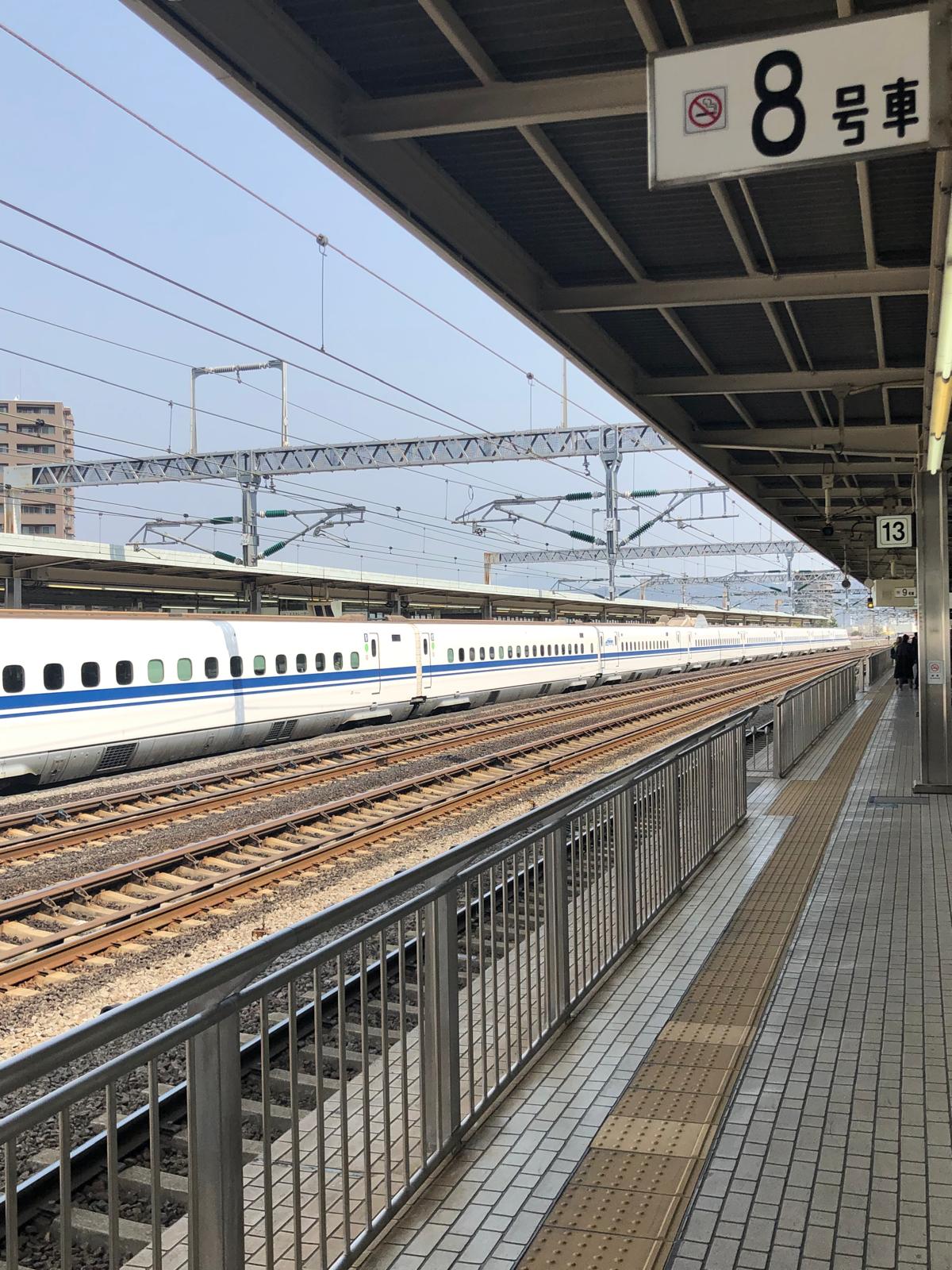
The JR Pass covers the Shinkansen Hikari service from Odawara to Kyoto (approximately 2 hours and 20 minutes). The faster Nozomi service is not covered by the standard JR Pass; book the Hikari in advance on the JR Pass app or at the station. If arriving with luggage, use the Yamato Transport or Sagawa Express baggage forwarding service (takkyubin) from your Hakone hotel to your Kyoto hotel; bags arrive the following morning and the journey without luggage is significantly more comfortable.
Kyoto is 1,200 years old and contains 17 UNESCO World Heritage Sites within the city limits. It is Japan's cultural heartland: the preserved imperial city, the centre of Zen Buddhism, the origin of the kaiseki cuisine tradition, and the last city in Japan with a functioning geisha district. The key spatial fact for orientation: the grid of Kyoto's streets follows the Tang Dynasty Chinese capital of Chang'an, with streets running perfectly north-south and east-west. The major sites are spread across this grid; a map is essential.
Gion evening: Check into your hotel (ideally near Gion or in the old city centre for the first nights) and walk directly to the Gion district. Ishibei Koji, a private lane south of Ninenzaka, is the most atmospheric preserved street in Kyoto: stone-paved, lantern-lit, geisha ochaya (teahouses) on both sides. You will see the lane photographed everywhere; the photographs do not convey how quiet it is.
Ninenzaka (Ninen-zaka) and Sannenzaka (Sannen-zaka) are the preserved stone-stepped shopping streets south of Kiyomizu-dera. Evening here, when the lanterns are lit and the crowds from the cable car have mostly departed, is one of the best times to walk them.
Day 5: Kyoto's major temples
Kinkaku-ji (the Golden Pavilion): A 14th-century Zen temple whose top two floors are covered in gold leaf, reflected in the Mirror Pond in front of it. Entry 500 yen. This is one of the most photographed buildings in Japan; arrive at 9 am (opening) to experience it before tour groups arrive. The pavilion itself cannot be entered; the circuit around the pond takes 20 to 30 minutes.
Arashiyama: 40 minutes from central Kyoto by bus or Randen tram. The bamboo grove behind Tenryu-ji is the photograph that appears on every Japan tourism poster: a path through dense, tall bamboo with no visible sky, the stalks green and close on both sides. The grove is approximately 200 metres long; the best photographs are taken early morning (before 8 am) before the path fills. Tenryu-ji itself (entry 500 yen for garden, 1,000 yen for interior) has one of the finest Zen gardens in Kyoto, with Mt Arashiyama as its borrowed landscape backdrop. Monkeys at Iwatayama Monkey Park (entry 550 yen) are above the river and can be reached by a 20-minute uphill walk.
Kiyomizu-dera: One of the most visited temples in Japan, founded in 778 and rebuilt in the 1630s, perched on a hillside east of the city with a wooden stage projecting over the valley. The view from the stage back toward the city is one of the most reproduced Kyoto images. Entry 500 yen. Best visited in the late afternoon when the crowds from the morning tour buses have reduced and the light on the valley below is golden. The walk up through Ninenzaka and Sannenzaka to the temple is itself an experience.
Pontocho: A narrow covered alley running between the Kamo River and Nishiki Market, filled with restaurants from traditional kappo to yakitori to French bistros. Tables extend over the river on wooden platforms (yuka decks) from May to September, one of the more pleasant ways to eat in Japan in warm weather.
Day 6: Fushimi Inari and Nishiki Market
Set your alarm for 5 am. Fushimi Inari Taisha is the most dramatic shrine in Japan: 10,000 vermilion torii gates donated by businesses over the centuries winding up the full length of Mount Inari (233 metres). The gates are dense enough at the base that you walk through a continuous orange-red tunnel with cedar forest glimpsed through the gaps. Higher up the mountain, the path thins, the gates become less continuous, and the forest becomes the dominant element. The shrine grounds are open 24 hours. Arrive by 6 am to walk the lower half in near-silence before the day's first train arrivals; by 9 am the main gate areas are crowded.
The summit takes 2 to 3 hours from the base at a comfortable pace. Fox statues (kitsune, the shrine's messengers) appear throughout the route; fox symbolism is associated with Inari, the rice and agriculture deity, across all 30,000 Inari shrines in Japan.
Nishiki Market runs through a covered arcade near the centre of the city: 130 metres long, five blocks of vendors selling fresh tofu, pickled vegetables, dried seafood, dashi, grilled skewers, matcha sweets and kitchenware. It is called Kyoto's kitchen. Go at lunchtime when the hot food vendors are at their busiest. Entry is free and the market opens from approximately 9 am to 6 pm depending on the stall.
Afternoon: A traditional tea ceremony (chado) in Gion. Multiple tea houses offer introductory ceremonies for approximately 1,500 to 3,000 yen including matcha and wagashi (seasonal sweets). En tea ceremony near Nijo Castle and Ippodo Tea near Teramachi are both well-regarded. The ceremony teaches the specific movements and philosophy of the way of tea; the wagashi served beforehand balances the bitterness of the matcha.
Day 7: Nara day trip
Nara is 45 minutes from Kyoto by the Kintetsu Nara Line (570 yen) or the JR Nara Line (750 yen, covered by JR Pass). The Kintetsu is faster and drops you directly in the city centre.
Nara was Japan's first permanent capital (710 to 784 AD) and the Nara Basin contains the oldest wooden buildings in the world. Nara Park covers 660 hectares around the main temple complex and is home to approximately 1,300 freely roaming sika deer, considered sacred messengers of the Kasuga Taisha shrine. The deer are completely habituated to humans and will approach, bow their heads (having learned this gesture solicits crackers) and occasionally snatch maps. Shika senbei crackers sold at park stalls for 200 yen are the appropriate offering; feed from an open hand with palm facing upward and be prepared to be surrounded.
Todai-ji: The Great Buddha Hall is one of the largest wooden structures in the world, rebuilt in 1709 to approximately two-thirds of the original 743 scale. Inside, the bronze Daibutsu (Great Buddha) is 15 metres tall and weighs approximately 500 tonnes; it took eight castings before the statue was successfully completed. Entry 600 yen.
Kasuga Taisha: The shrine at the eastern edge of the park has over 3,000 stone and bronze lanterns donated over the centuries; they are lit twice a year (early February and mid-August) in a ceremony that illuminates the entire stone approach. The forest behind the shrine is a primeval mixed forest, entirely protected since the Nara period.
Return to Kyoto for the final night before the Hiroshima move.
Day 8: Travel to Hiroshima, Peace Memorial and evening
Take the Shinkansen from Kyoto to Hiroshima. The Hikari service takes approximately 1 hour 45 minutes; the Nozomi (not JR Pass covered) takes 1 hour 15 minutes.
Drop bags at your hotel and go directly to the Peace Memorial Park. Walk it before the museum.
The Atomic Bomb Dome (Genbaku Dome): The ruined frame of the Hiroshima Prefectural Industrial Promotion Hall, preserved exactly as it was left after the bomb detonated approximately 600 metres above it on August 6, 1945. The building was at the hypocenter periphery; the people inside were killed instantly. The dome, structurally compromised but upright, was designated a UNESCO World Heritage Site in 1996 over American and Chinese objections. It stands on the bend of the Ota River exactly as it looks in photographs; the scale and the stillness around it are the things photographs do not convey.
Peace Memorial Museum (entry 200 yen, audio guide 400 yen available in 14 languages): Allow a minimum of two hours, three if you read the personal testimonies carefully. The museum was renovated in 2019 and the East Building reopened with programming refreshed for the bombing's 80th anniversary in 2025. The exhibits move from pre-war Hiroshima through the bombing itself to the human testimonies and the ongoing nuclear disarmament movement. The personal objects, shadows burned into stone, and survivor accounts in the central gallery are among the most significant displays in any museum in Japan. Do not rush this.
Children's Peace Monument: The statue of Sadako Sasaki, the 12-year-old leukemia victim who folded paper cranes in the belief that she would recover if she reached 1,000. Paper cranes sent from schools around the world are displayed continuously around the monument.
Evening: Hiroshima-style okonomiyaki is the city's defining dish, distinct from the Osaka version: layers are built separately rather than mixed, with cabbage, bean sprouts, noodles (soba or udon) and protein stacked in sequence on the griddle. Okonomimura building near the central shopping arcade has 25 vendors on three floors, each with their own style and customer base. Order at a counter, watch it made, eat it immediately. The squid and scallop version or the pork and cheese version are both reliable. A plate costs approximately 800 to 1,200 yen.
Day 9: Miyajima Island
Miyajima (officially Itsukushima) is 30 minutes from Hiroshima by the JR Sanyo Line to Miyajimaguchi (28 minutes, 420 yen, JR Pass covered) and then the JR ferry (10 minutes, 200 yen, also JR Pass covered). The ferry crossing from Miyajimaguchi gives the first view of the floating torii gate as you approach; it appears to float when the tide is high, standing in the water with the red gate reflected in the still sea.
A visitor tax of JPY 100 per person is collected at Miyajimaguchi ferry terminals; budget for it.
Itsukushima Shrine: The shrine complex dates from the 6th century in its earliest form; the current structure was built in the 12th century by the Taira clan. At high tide, the wooden walkways appear to float directly on the sea, the same optical illusion that makes the torii gate famous. Entry 300 yen. Check tide times before visiting (searchable at tide-forecast.com/locations/Miyajima-Japan) and time the ferry to arrive at or near high tide for the floating effect.
From downtown Hiroshima, the Hiroden tram Line 2 (Miyajima-guchi line) offers a slower but scenic route taking about 70 minutes from Hondori, or there is a direct ferry from Hiroshima Peace Memorial Park via Aqua Net Hiroshima taking approximately 45 minutes, bypassing Miyajimaguchi entirely.
Mount Misen: The ropeway from Momijidani Station to Shishiiwa Station (round trip approximately 2,000 yen) takes 20 minutes with a transfer at the mid-station. From the upper station it is a 30-minute walk to the summit at 535 metres with views over the Seto Inland Sea and the islands of the Hiroshima bay. At the summit, Reikado Hall contains an Eternal Flame said to have burned for 1,200 years, the same fire used to light the Flame of Peace in Hiroshima Peace Memorial Park.
The Omotesando shopping street between the ferry pier and the shrine sells momiji manju (maple-leaf-shaped cakes filled with bean paste, the island's defining souvenir) freshly baked rather than pre-packaged; buy from the stalls where they are baked in front of you rather than the sealed boxes.
Deer roam freely on Miyajima as they do in Nara, but the Miyajima deer are smaller and bolder. Do not feed them; they will eat maps, paper bags and the contents of open bags given the opportunity.
Return to Hiroshima for the night.
Day 10: Travel to Naoshima
From Hiroshima, take the Shinkansen to Okayama (approximately 30 minutes on the Hikari, JR Pass covered), then the JR Uno Line to Uno Station (approximately 1 hour), then the ferry to Miyanoura Port on Naoshima (approximately 20 minutes). Total travel time from Hiroshima: approximately 2 to 2.5 hours.
Naoshima is a small island in the Seto Inland Sea, 8 square kilometres, where the Benesse Art Site project has placed world-class contemporary art and architecture across the island since the 1990s. Museums are built into hillsides. Traditional village houses have been transformed into immersive art spaces. Yayoi Kusama's pumpkin sculptures sit at the water's edge. The experience is not about walking through galleries; it is about moving through a landscape where art, architecture, and nature are deliberately interwoven.
Rent an electric bike at Miyanoura Port on arrival. The hills between Honmura and the Benesse area are deceptively steep, and the electric bike makes the full circuit significantly more manageable. Regular bikes cost 300 to 500 yen per day; e-bikes 1,000 to 1,500 yen. The island bus (100 yen per ride, roughly hourly) is the backup if you prefer not to cycle.
Art House Project in Honmura village: Seven abandoned houses in Honmura village transformed by artists including James Turrell, Hiroshi Sugimoto, and Shinro Ohtake. Tickets for individual houses cost approximately 520 yen each or 1,050 yen for a combined ticket covering multiple houses. Minamidera by Turrell is a disorienting darkness experience; you enter a completely dark room and wait for your eyes to adjust until an illuminated rectangle gradually resolves from the darkness. It is more disorienting and more affecting than it sounds; allow 15 minutes inside. Book this specific house in advance at benesse-artsite.jp as timed entry is required.
Chichu Art Museum: Tadao Ando's underground museum with Monet, Turrell, and De Maria. The natural-light-only Monet room is unforgettable. Admission 2,500 yen online (weekdays). Book tickets in advance through the official Benesse Art Site Naoshima website at benesse-artsite.jp. Spring (April to May) and autumn (October to November) sell out weeks in advance. The museum is built entirely underground to preserve the landscape; natural light enters through skylights at calculated angles that change the appearance of the works throughout the day. The Monet room contains five large-scale Water Lilies paintings in a room where the light comes only from a single overhead opening; the works look different at every hour of the day.
Yayoi Kusama's iconic polka-dotted pumpkin sculpture on the pier (the original was washed away by a typhoon in 2021 and has been replaced). The yellow pumpkin is at the southern end of the Benesse coastal area and is free to view.
Stay overnight on Naoshima: Benesse House offers accommodation in an actual museum with stunning views of the Seto Inland Sea, though it is often difficult to book. Naoshima Ryokan Roka is a stylish modern ryokan with scenic island views. If you cannot find a room on Naoshima itself, staying overnight in Takamatsu or Okayama is a practical alternative.
Day 11: Naoshima continued and return to Tokyo
Morning: The Lee Ufan Museum is a serene collaboration between the Korean artist and Tadao Ando, with minimal sculptures in concrete spaces, a five-minute walk from Benesse House. The Benesse House Museum (open only to hotel guests in the evening and early morning; day visitors during regular hours) houses works by Pollock, Hockney, Basquiat and others in Ando's hillside building above the Seto Inland Sea. The Naoshima New Museum of Art opened in May 2025 on Naoshima's east coast, featuring three floors showcasing contemporary works from artists in Japan and other parts of Asia, designed by Ando and his tenth project for Benesse Art Site Naoshima.
Return by ferry to Uno, Shinkansen to Tokyo via Okayama. The Shinkansen from Okayama to Tokyo Shinagawa takes approximately 3 hours 15 minutes on the Hikari (JR Pass covered). Arrive in Tokyo by mid-evening.
Day 12: Toyosu, teamLab and Tokyo by night
Toyosu Fish Market opened in 2018 as the replacement for the famous Tsukiji outer market. The tuna auction is viewable from glass-enclosed observation galleries (free, lottery system for auction viewing, register at the market website in advance). The outer market at Toyosu has fresh seafood stalls and sushi restaurants; a 7 am tuna sashimi breakfast at one of the market counters is one of the better early mornings available in Tokyo.
TeamLab Planets in Toyosu is a different order of experience from a conventional art museum: light, colour and sound respond to your movement like a living ecosystem. The museum has four rooms of immersive digital installation, including a mirrored room of floating lights, a shallow pool walk through projections, and a room where flowers bloom and decay in real time across the walls. Entry approximately 3,200 yen, book in advance. TeamLab Borderless in Azabudai is the larger sister venue; both are worth knowing about.
Evening in Akihabara: the electronics, anime and gaming district north of the Imperial Palace. Arcades on multiple floors, a density of figurine and merchandise shops, and the Yodobashi Camera electronics store occupying a full city block. Retro Game Camp in Akihabara sells vintage games and consoles; Don Quijote Akihabara has the most overwhelming retail experience available in Japan.
Day 13: Final Tokyo day
Yanaka: The neighbourhood northeast of Ueno survived the 1923 earthquake and the 1945 fire-bombing and retains the narrow lanes and traditional shophouses of pre-war Tokyo more completely than almost anywhere else in the city. Walk from Yanaka-Ginza shopping street through the cemetery to the Nezu Shrine and back toward Ueno. The area has no single landmark attraction; it works as a slow walk through what Tokyo was before.
Sumida Park and Edo-Tokyo Museum: Sumida Park along the river contains cherry trees and views of the Skytree; the Edo-Tokyo Museum in nearby Ryogoku reopened after renovation in 2024 and covers the full history of the city from the Edo period fishing village through the Meiji industrial period to the post-war economic rise. If you have been to any of Tokyo's more obvious museums, this one rewards the detour.
Shinjuku final evening: The Golden Gai for a last small-bar experience; Omoide Yokocho (Memory Lane) behind the station's west exit for grilled yakitori skewers under low outdoor roofs with smoke and paper lanterns; the observation floor of the Tokyo Metropolitan Government Building for the final city panorama. One last bowl of ramen at any Fuunji or Ichiran branch.
Day 14: Departure
Narita Express to Narita or monorail to Haneda depending on your terminal. Allow 90 minutes to Narita in normal conditions; more during peak periods and school holidays. International departures at both airports require clearing immigration and security before the gate; large airports, allow three hours minimum for long-haul.
.png)
.jpeg)

.jpeg)
.jpeg)
.jpeg)
.jpeg)
.jpeg)
.jpeg)
.jpeg)
.jpeg)
.jpeg)
.jpeg)
.jpeg)
.jpeg)
.jpeg)
.jpeg)
.jpeg)
.jpeg)
.jpeg)
.jpeg)
.jpeg)
.jpeg)
.jpeg)
.jpeg)
.jpeg)
.jpeg)
.jpeg)
.jpeg)