Day 2: Laguna de los Tres and Fitz Roy
Set your alarm for first light. The trail to Laguna de los Tres starts at the north end of Avenida San Martín, at the edge of town; from any hostel you are walking to the trailhead in five to fifteen minutes. No vehicle, no taxi. The route is 24 to 25 km round trip with around 800 to 900 m of elevation gain and takes between eight and ten hours for most hikers in good condition.
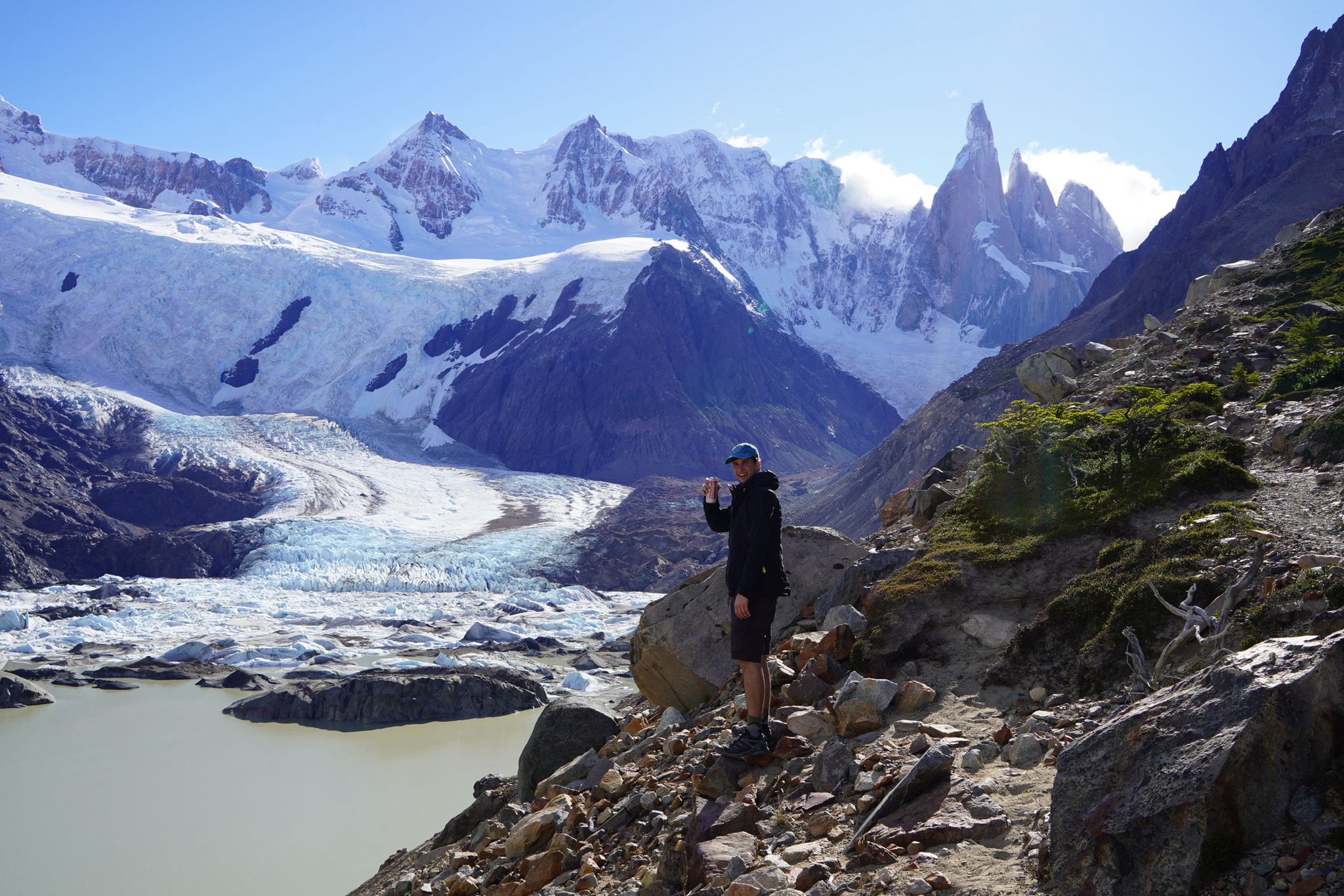
The first ten kilometres through lenga forest and along the Río de las Vueltas valley are gradual and pleasant. At around the eight-kilometre mark you reach Campamento Poincenot, the main campsite and a useful turnaround point for anyone losing time or energy. From there, the final two kilometres to the lagoon include the crux of the hike: a 400 m vertical scramble up loose moraine that requires hands in places and is slow going on the descent. Take it seriously. Trekking poles make the moraine descent significantly less punishing on the knees; rent a pair in El Chaltén the evening you arrive if you do not have your own.
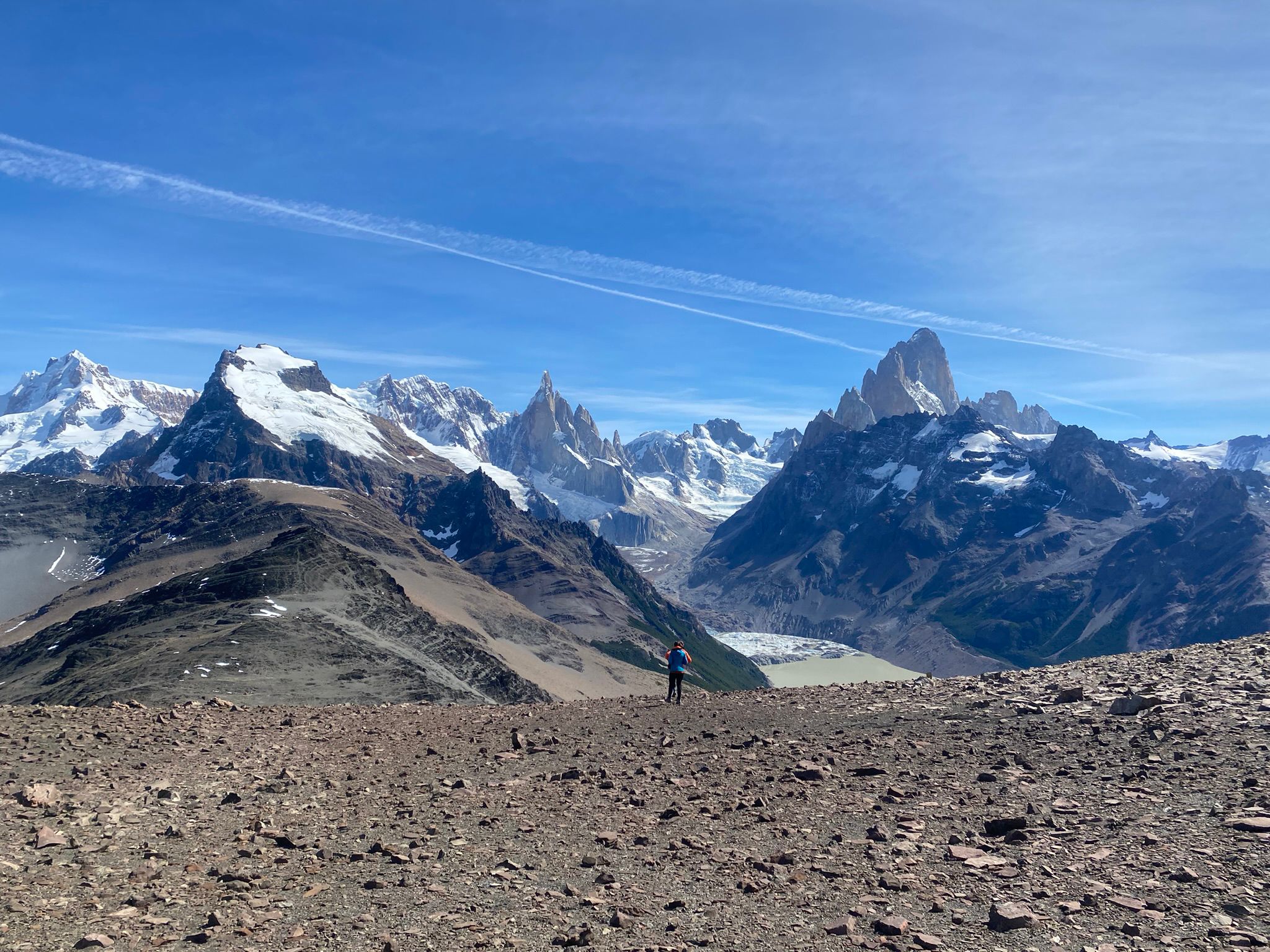
At the top, the lagoon sits at the foot of the Fitz Roy massif: Fitz Roy (3,405 m), Poincenot and Saint-Exupéry rising directly above a turquoise lake formed by glacial melt. From there you can follow the unmarked scramble over the moraine ridge to Laguna Sucia on the far side for a second spectacular view; allow an extra 30 to 45 minutes.
The alternative start point at El Pilar, 14 km north of town, shortens the approach by skipping the first valley section and gives a different angle on the massif, but requires a taxi or transfer to reach. Most independent travellers go from town.
There is no water on the moraine section. Fill up at the stream near Campamento Poincenot and carry at least two litres. Carry a full lunch: there are no facilities anywhere on trail. Return to El Chaltén by late afternoon for the evening restaurants.
Day 3: Loma del Pliegue Tumbado, then bus to El Calafate
Loma del Pliegue Tumbado is the better-kept secret in El Chaltén: a 22 km round trip with around 1,000 m of gain and a steady eight-hour effort that puts you on a ridge above the treeline with a panoramic view stretching across Fitz Roy, Cerro Torre, Lago Viedma and the ice fields beyond. The route is quieter than Laguna de los Tres and the perspective on the massif is wider and more photographic. The entrance portal for this trail is the Ceferino Fonzo Visitor Centre, at the southern end of town.
The day combines a full hike with a bus departure, which requires planning. Start before 6 am. The trail runs roughly eight hours at a moderate pace. To catch a bus to El Calafate in early to mid afternoon, you need to be back in town by 1 pm, which is possible if you start early and move at a consistent pace. Buses from El Chaltén to El Calafate depart at multiple times: roughly 8 am, 11:30 am, 1 pm, 2 pm and later. The 1 pm or 2 pm buses are the target; they arrive in El Calafate between 4 pm and 6 pm. Book your seat the evening before at the bus company offices or hostels in town, and confirm the departure time. On a tight day like this, eat a proper breakfast before setting out and carry everything you need on trail so you are not back-and-forthing in town.
Pack up your accommodation the evening before; many hostels will hold luggage for a small fee so you can leave bags at reception and pick them up after the hike. Arriving in El Calafate in the late afternoon gives you time to check in, eat a good dinner and rest before the glacier day.
Day 4: Perito Moreno Glacier
The Perito Moreno Glacier is 80 km from El Calafate inside Los Glaciares National Park. Do not attempt to visit independently without a car or organised tour; the glacier is accessible only by road and the final section requires a vehicle.
All tours depart from El Calafate town or airport between 7 am and 9 am. The most common option is a standard day visit (transfer included, around USD 50 to 80): you are driven to the glacier, spend two to three hours on the walkway network, and return. The walkway system is a multi-level circuit of metal catwalks extending about 4 to 5.5 km across the face of the glacier, roughly 300 m from the calving face. Walking the full circuit takes two to three hours. The glacier is 5 km wide and 74 m tall at its face; calving events happen every ten to fifteen minutes with a thunderclap that carries across the lake. Arrive before 10 am for the best light and quieter catwalks.
For the ice hike, there are two options booked separately from the standard walkway visit:
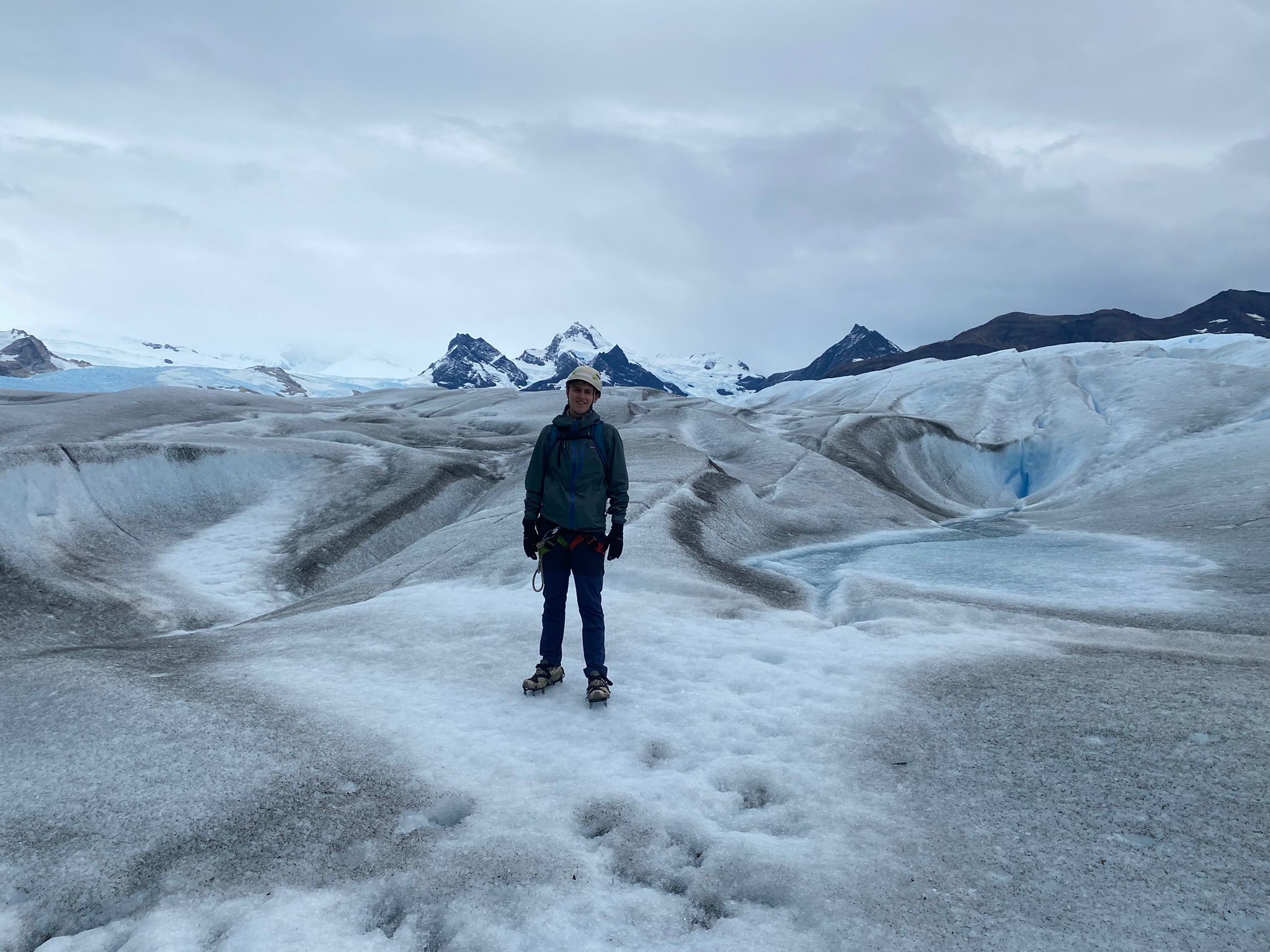
Minitrekking: one and a half hours on the glacier using crampons, preceded by a boat crossing and a forest walk, followed by a champagne toast on the ice. Total tour duration roughly six hours. Suitable for ages eight to sixty-five. Moderate difficulty. Book at least one to two weeks ahead in peak season (December to February); it sells out. Cost roughly USD 270 per person.
Big Ice: three and a half hours on the glacier including deeper crevasses, blue lagoons and occasional ice caves; preceded by a two-hour forest hike. Eight to nine hours total. Highly physical. Ages eighteen to fifty only. More expensive and significantly more demanding. Book several weeks ahead.
The national park entry fee (Los Glaciares) is paid separately, either online or on the day. Bring layers: the face of the glacier generates its own cold air and temperatures at the viewing platforms are noticeably colder than in El Calafate town even on warm days. Sunglasses are essential; the ice reflects UV strongly.
Day 5: El Calafate to Puerto Natales
This is a long travel day. The bus from El Calafate to Puerto Natales is operated by Bus-Sur, Marga Taqsa and Turismo Zaahj. Buses depart from El Calafate's bus terminal at Avenida Antoine de Saint-Exupéry 87, roughly eight to ten minutes on foot from the town centre. The earliest departure is around 7 am to 8 am; arrive at the terminal at least 45 minutes before departure. Pay the separate terminal usage fee (around 3,000 ARS as of late 2025) at the designated counter before checking in at the bus company's window, and exchange your e-ticket for a physical ticket. Both steps are required before boarding and are easy to miss if you arrive late.
The journey to Puerto Natales takes five to seven hours including the Argentina-Chile border crossing at Paso Río Don Guillermo. The border involves disembarking the bus, walking through the Argentine exit control, reboarding, driving 500 metres, and repeating the process on the Chilean side. Your luggage stays on the bus but can be inspected by customs. Do not carry fresh fruit, vegetables, dairy or meat across the border; Chilean customs are strict. Commercially packaged snacks are generally fine. Keep your passport and any migration cards accessible throughout.
The scenery changes gradually from flat Argentine steppe to more dramatic Chilean grasslands as the Paine massif appears on the horizon roughly an hour before Puerto Natales. Buses arrive between 1 pm and 3 pm depending on the border.
Puerto Natales is the last real town before the park. Use the afternoon to buy food for the refugios (trail snacks, anything you want beyond the included dinners and breakfasts), rent trekking poles if you haven't already, and pick up any gear you are missing. Outdoor shops on Calle Bulnes and Calle Baquedano cover most needs. Confirm your refugio reservations and the morning bus schedule to the park. Book your return bus from the park before you enter; seats sell out in peak season and you do not want to be stranded at Pudeto.
Day 6: W Trek, Ascensio Valley and the Torres
Take the earliest bus from Puerto Natales to Torres del Paine. Bus-Sur departs at around 6:45 am; the ride to Laguna Amarga, the main park entrance, takes roughly two hours. All buses stop at Laguna Amarga regardless of final destination, and you must check in with CONAF (the Chilean park administration) here. Have your park entry ticket; it can be bought online in advance or paid in cash on arrival. The current rate for foreign adults is around 21,000 Chilean pesos.
From Laguna Amarga, a shuttle bus operates to the Welcome Centre (Centro de Bienvenida) near Las Torres hotel, approximately seven kilometres away. Tickets are bought in cash on site or online through Las Torres Patagonia. The shuttle leaves when it fills, aligned with bus arrivals. This gets you to the trailhead by around 9:30 am to 10 am.
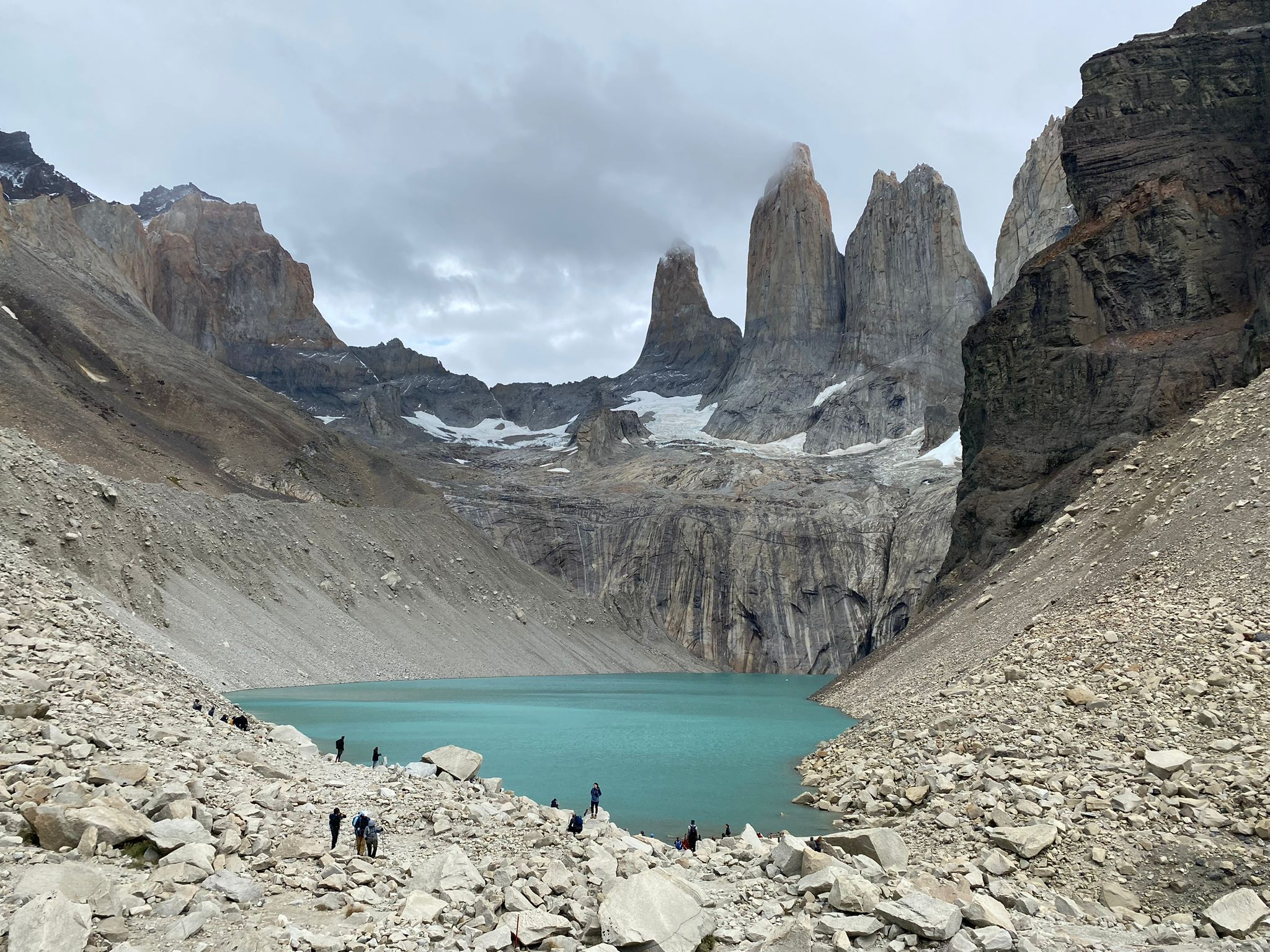
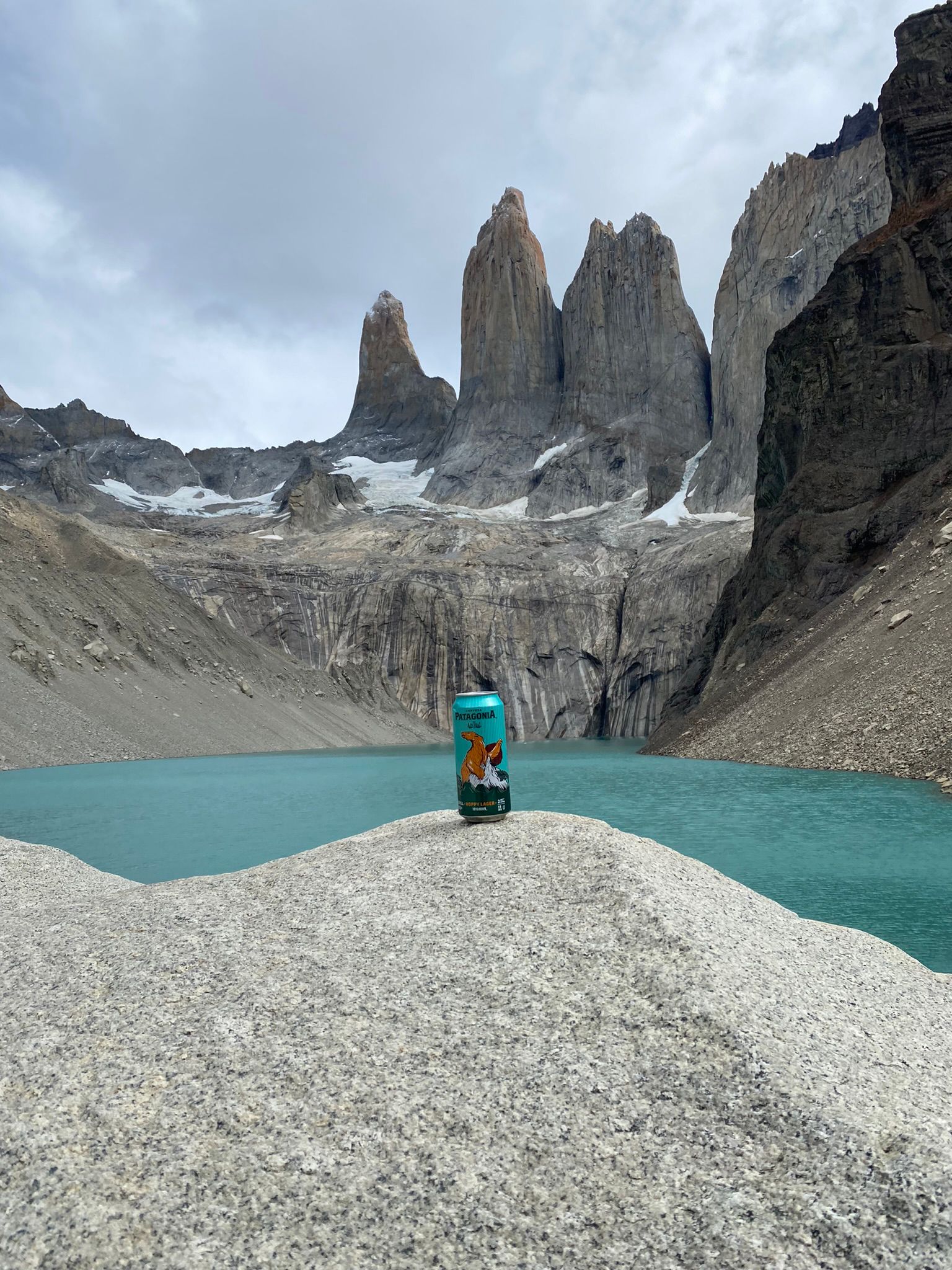
The Ascensio Valley trail starts just behind the Welcome Centre and follows a forested valley through lenga and ñire trees. The walking is steady rather than flat; the valley is enclosed by stone walls rising above the canopy on both sides. At roughly ten kilometres in, you reach Campamento Chileno. This is your night's base, but do not stop here yet. Continue up the steep moraine above Chileno for another forty-five minutes to reach the Base de las Torres viewpoint. This is the image that defines the park: three granite monoliths, the Torres del Paine, rising vertically above a glacial lake whose green colour comes from rock flour suspended in the melt. The final moraine scramble is steep and loose; take your time both up and down.
Return to Chileno for dinner. Refugio meals are communal and included in the package if you booked a refugio package; dinner and breakfast are cooked in the refugio kitchen. The atmosphere in the huts in the evening, everyone damp and tired and fed, is one of the best parts of the W.
Critical booking note: refugio beds along the W must be reserved months in advance for December and January through Las Torres Patagonia (lastorres.com) and Vértice Patagonia (vpatagonia.com), the two operators. There is no walk-in option during peak season. If you have not booked the full sequence of five nights in advance, this itinerary cannot proceed as described.
Day 7: Sunrise at the Torres, then Los Cuernos
If the sky is clear, set an alarm for 5 am and hike back up to the base of the Torres for sunrise. The towers are oriented to catch the first light from the east; they turn from grey to gold to orange to white over about forty minutes as the sun rises. In summer, this happens before 6 am. Carry a warm jacket and a head torch.
Return to Chileno, collect your gear and pack out. The trail continues west along the northern shore of Lago Nordenskjöld toward Los Cuernos. The lake is a deep shimmering green on a clear day; its colour comes from glacial flour in suspension, the same process that turns the Torres lagoon turquoise. The walk to Los Cuernos refugio takes roughly six hours from Chileno, passing the distinctive Cuernos massif, whose dramatic striped rock formations are the result of dark sedimentary rock capping lighter granite below. The refuge sits directly above the lake with views back toward the Torres.
Day 8: French Valley and Paine Grande
Today is the most physically demanding section of the W. From Los Cuernos, the trail continues west to Camp Italiano at the entrance of the French Valley. Drop your pack here at the designated storage area; this is the one place on the W where you hike light. No refugio: just a campsite and a drop-bag area.
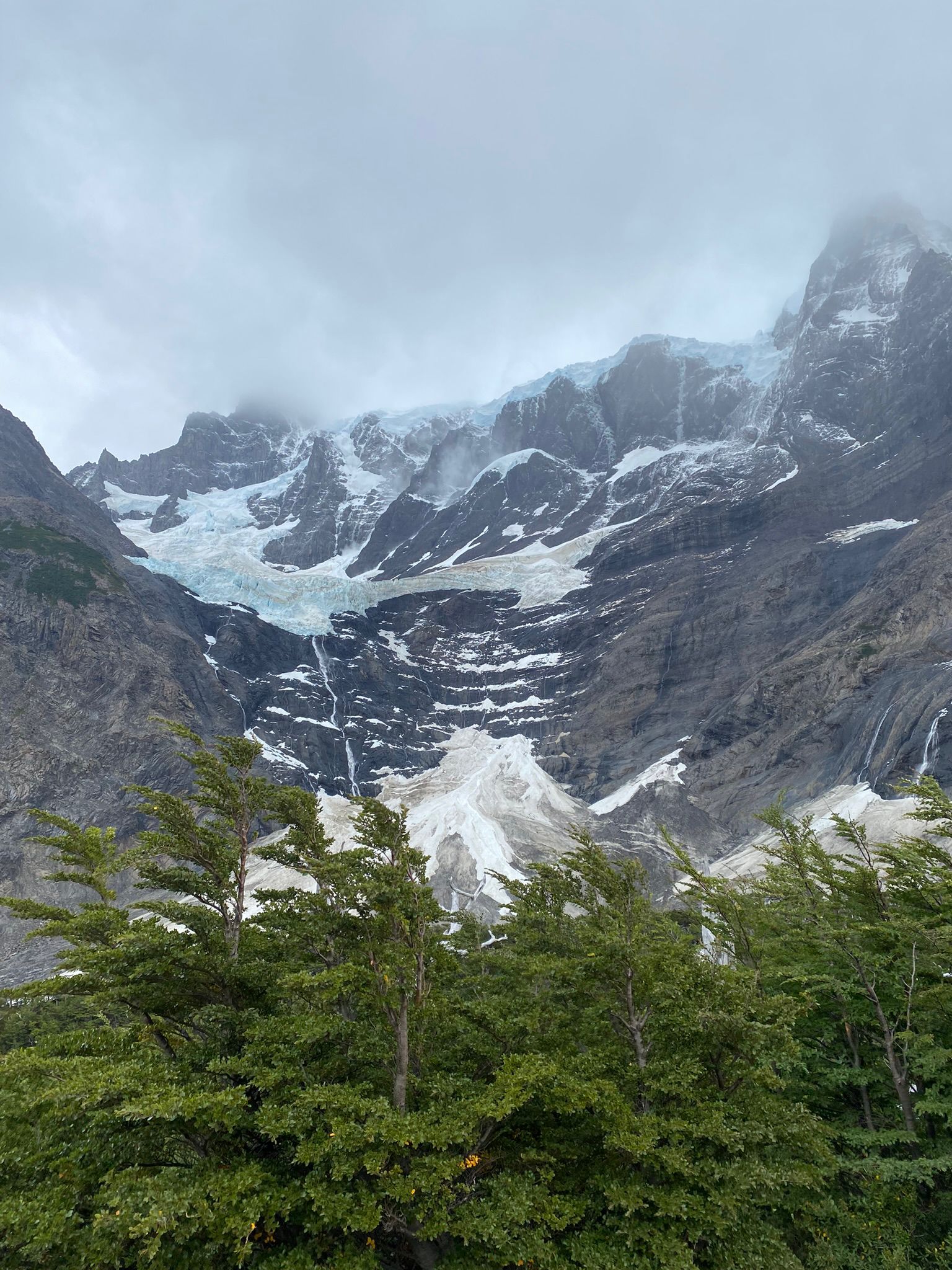
The French Valley hike is six to ten kilometres round trip depending on how far you go. Mirador Francés takes around forty-five minutes from Camp Italiano and gives the first clear views up the valley: hanging glaciers clinging to walls that rise vertically above you, with avalanche dust visible in the air on clear days. Mirador Británico, a further hour and a half, puts you deeper in the valley with the walls closing around you. The sounds are extraordinary: glaciers cracking, occasional roars of ice releasing, the wind through the high passes. Go as far as conditions and energy allow.
Return to Camp Italiano, collect your pack and continue west to Paine Grande. This is the longest walking day of the trek in terms of total distance, typically eleven to fourteen kilometres from Los Cuernos including the French Valley detour. Arrive at Paine Grande refugio on the south shore of Lago Pehoé in late afternoon.
Day 9: Grey Glacier and kayaking
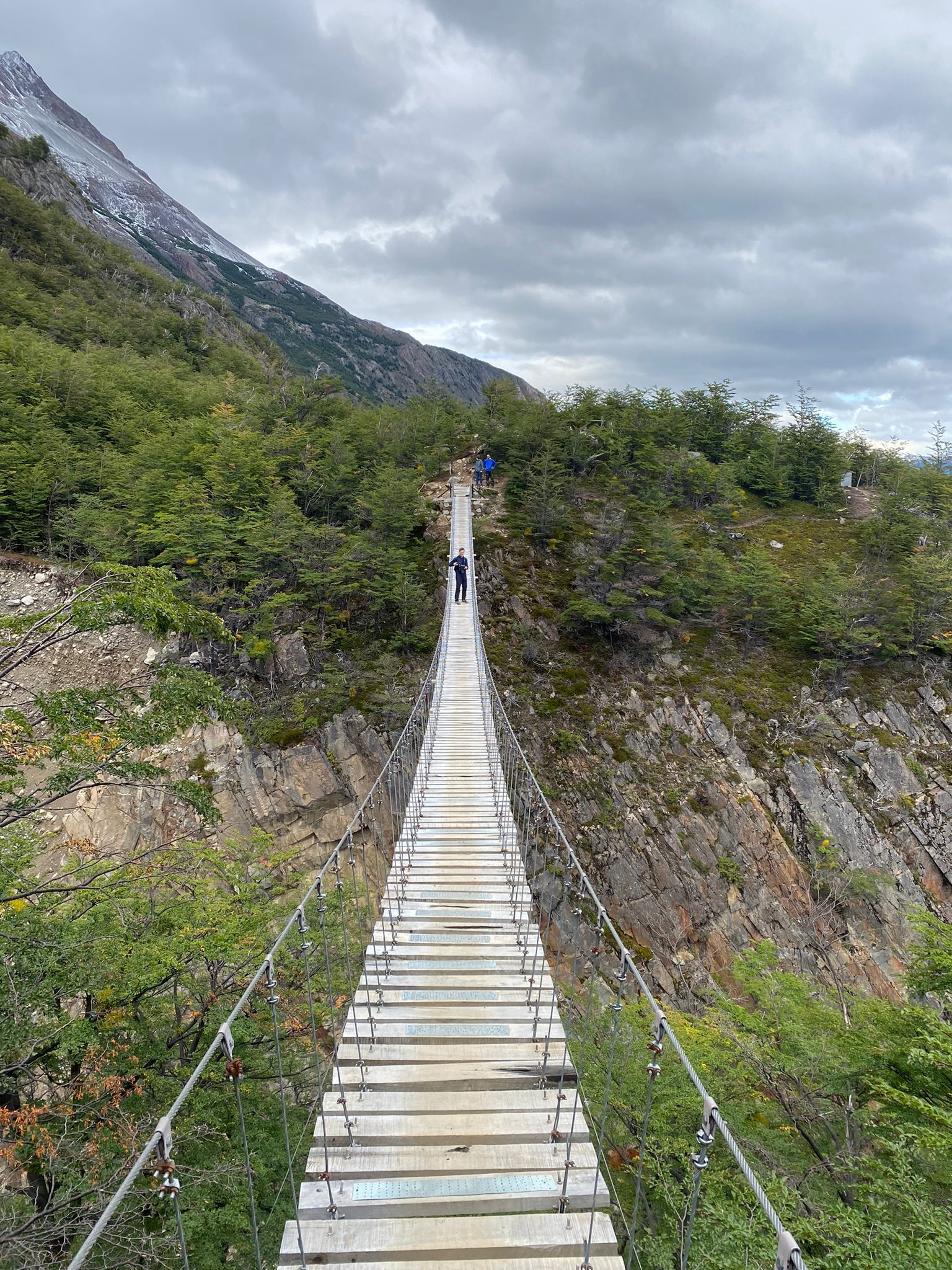
From Paine Grande, the trail heads northwest following the shore of Lago Grey. This is the most remote-feeling section of the W; the path crosses suspension bridges over ravines and rounds exposed headlands where the Patagonian wind hits at full force with nothing to break it. Dress accordingly.
Grey Glacier descends from the Southern Patagonian Ice Field and calves directly into the lake; blocks of blue ice of varying sizes drift offshore. The colour of deep glacier ice, a dense electric blue that comes from the compression of centuries of snowfall, is more vivid and strange in person than photographs suggest.
Kayaking among the icebergs at the face of the glacier is operated by Kayak Grey, bookable separately and in advance through their website (kayakgrey.com). Prices are around USD 80 to 120 per person. Groups paddle inflatable kayaks among the floating ice, coming within fifty metres of the glacier face. It is not technical; guides lead the session. Kayak Grey typically runs morning sessions; book before your trek starts.
Spend the night in Refugio Grey, the westernmost point of the W. It feels genuinely remote: cold, quiet, surrounded by ice and stone.
Day 10: Suspension bridges, catamaran and return to Puerto Natales
In the morning before departing Grey, hike the short path behind the refugio to the series of suspension bridges above the glacier. These cross a series of ravines with the glacier directly below and to the side; the perspective from above shows how the ice flows down the valley and how the crevasse system opens up near the calving face. Allow one to two hours.
Return from Grey to Paine Grande along the same path you came in on. The catamaran across Lago Pehoé departs from the Paine Grande dock. Schedules vary but a standard departure is around 11:35 am or 12:35 pm; verify the current time when you arrive in the park. The catamaran crosses to Pudeto on the far shore in roughly thirty-five minutes; it is a spectacular crossing with the Cuernos reflected in the lake and the Torres visible to the east. Pay the fare in cash on board.
From Pudeto the Bus-Sur bus back to Puerto Natales departs around 12:30 pm to 1 pm. If you are coordinating the catamaran and the bus, you need to know both departure times before you leave Grey that morning. The bus reaches Puerto Natales in roughly two hours.
The pisco sour after the hot shower is genuinely deserved.
Day 11: Puerto Natales to El Calafate
Take the morning bus back to El Calafate. Same operators as the outbound (Bus-Sur, Turismo Zaahj); departs around 7 am to 8 am and arrives in El Calafate around 1 pm to 2 pm after the border crossing. This is a full travel day; treat it as recovery. Book a comfortable night in El Calafate town; you will want a proper bed and a hot shower. This is also the best opportunity to use the few decent restaurants in El Calafate (La Tablita, La Zaina) before flying south the next morning.
Day 12: Fly to Ushuaia; Beagle Channel
Aerolíneas Argentinas operates direct flights from El Calafate (FTE) to Ushuaia (USH) taking one hour and twenty minutes. Flights run most days; the earliest is around 8 am, with several other options throughout the morning and afternoon. Book early; this route has limited capacity and fills in peak season. Ushuaia's airport is Malvinas Argentinas, ten minutes from the city centre by taxi.
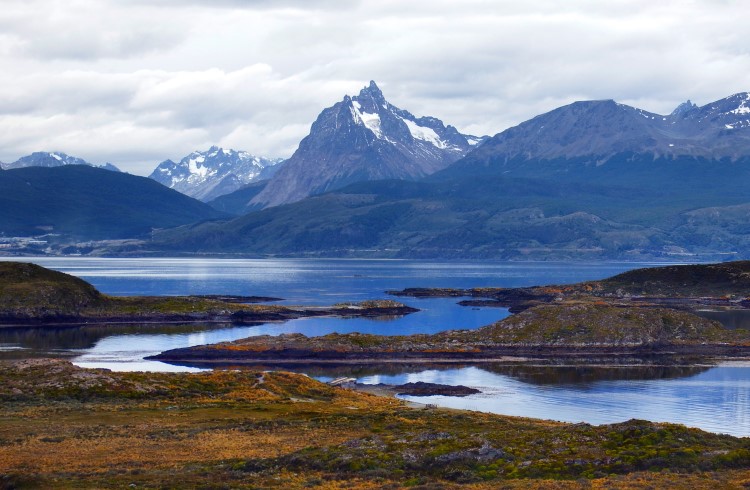
Ushuaia sits in a bowl between the Beagle Channel to the south and the Martial Range to the north; mountains descend to water in every direction. The city is compact and walkable, built on a steep slope with the port at the bottom.
In the afternoon, join a boat trip on the Beagle Channel. Tours depart from the Muelle Turístico (tourist pier) on Avenida Prefectura Naval Argentina, a few blocks from the city centre. Most operators sell tickets at the pier itself; for popular longer tours (especially the penguin colony trip) book a day ahead online or at the pier in the morning. The standard three to four-hour catamaran or yacht tour goes east to Isla de los Lobos (a haul-out colony of South American sea lions; the smell arrives before the sight), Isla de los Pájaros (imperial and rock cormorants nesting in dense vertical colonies), and Les Éclaireurs lighthouse, a red-and-white tower built in 1919 on a small islet. This lighthouse is often called the End of the World lighthouse though that name technically applies to a different one; the guides will clarify and most do. Cost is roughly USD 40 to 60 per person for the standard tour.
The longer tour to Martillo Island (six to seven hours, available November to March) adds a Magellanic penguin colony viewed from the boat or, on certain boats via Estancia Harberton, on foot. This requires more advance planning and is a different-category experience; decide based on your interest in penguins and your energy after the W trek.
Return to town for dinner at one of the waterfront restaurants. Centolla (king crab) is the local speciality and one of the better things to eat on this entire route.
Day 13: Tierra del Fuego National Park; Cerro Guanaco
Tierra del Fuego National Park begins at the western edge of Ushuaia. Taxis and remises (private cars used as taxis) make the fifteen-minute drive; agree a price in advance, roughly USD 15 to 25 one way. Alternatively, a park bus runs in summer from the city centre near the tourist office.
The park entry fee for foreign visitors is around 5,000 ARS (verify current price on arrival). The park contains the southern terminus of Route 3, the highway that runs the entire length of Argentina from La Quiaca on the Bolivian border; a small sign marks the "Fin de la Ruta Nacional 3", which is the actual end of the pan-American road system and the start of the Antarctic. Most visitors photograph it.
Cerro Guanaco is a six to eight-hour trail, eight kilometres each way with roughly 900 m of gain. The path climbs through lenga forest into open scree and wind-exposed moorland before the final push to the summit ridge at around 970 m. Views from the top: the full span of the Beagle Channel, the Chilean islands to the south, Lago Roca below and Ushuaia to the east. The weather changes without warning at this altitude. Bring full waterproofs, warm layers, and be prepared to turn back if cloud, wind or visibility deteriorates.
Back in Ushuaia for a final dinner. The Beagle Channel waterfront is at its most atmospheric in the evening: the mountains on the Chilean side turn pink, the light stays late in summer, and the city settles into its End of the World routine. Laguna Negra for dessert and a submarino, a bar of dark chocolate plunged into a mug of hot milk, is a good final note.
Day 14: Fly to Buenos Aires; Palermo
Ushuaia to Buenos Aires (Jorge Newbery, AEP) takes approximately three hours. Book a morning flight to maximise the afternoon. Buenos Aires is a three to four-hour time zone adjustment back into full city life; the contrast with the Patagonian silence is immediate and total.
Palermo is the right base for the final night. The neighbourhood runs roughly from Parque Tres de Febrero in the north to the railway tracks in the south, divided into Palermo Viejo (Soho and Hollywood), Palermo Chico and Las Cañitas. The streets are lined with jacaranda trees, the cafés open late, and the parrilla scene is the densest in the city.
The Plaza de Mayo, Recoleta Cemetery, Caminito in La Boca and the San Telmo market are worth visiting but require taxis or the subte; they are not walking distance from Palermo. San Telmo is the better evening choice: cobbled streets, tango in the doorways, and the city's oldest neighbourhood bars. If you want to feel Buenos Aires at its most Porteño, San Telmo on a weekday evening is where it lives.
Book a parrilla in advance. Don Julio on Guatemala and Gurruchaga in Palermo Soho was ranked the world's best steak restaurant three consecutive years before being retired from competition; it requires a reservation several days ahead and remains the benchmark. For a more spontaneous evening, La Cabrera nearby accepts walk-ins with a wait and hands out complimentary champagne while you stand outside. Either way: bife de chorizo with chimichurri, a glass of Malbec from Mendoza, and a plate of provoleta grilled cheese to start.
The bars of Palermo do not fill until midnight. If you are staying until departure, the late Porteño rhythm is the experience: dinner at 9 pm, wine until midnight, then bars.
Day 15: Buenos Aires; departure
Argentine football stadiums are worth visiting even outside match days for the scale and intensity of the club presence, but catching a match requires matching your travel dates to the Superliga calendar. Vélez Sársfield plays at Estadio José Amalfitani in Liniers (about 30 minutes from Palermo by taxi); Boca Juniors at La Bombonera in La Boca; River Plate at El Monumental in Núñez. Tickets are sold through club websites and through authorised resellers; security requirements have tightened significantly and walk-up purchases at the gate are now restricted.
If no match is scheduled, spend the morning in the city at your own pace. Heladería Cadore on Corrientes, open since 1957, is the most argued-about ice cream in Buenos Aires; the dulce de leche and crema de chocolate are the things to order.
International departures from Ezeiza (EZE), the main international airport, require two to three hours before flight time minimum; the airport is 35 km from the city and the journey takes 40 to 60 minutes depending on traffic. Aeroparque (AEP) handles some regional international departures (Uruguay, Brazil, Chile) and is only 15 minutes from Palermo.
.png)