image of popular travel destinations

Saudi Arabia

A 10 day overland journey from Saudi Arabia’s northern frontier down through bedouin valleys and Nabataean ruins to the Red Sea, finishing with Medina’s night glow and Riyadh’s heritage heart.

Northern deserts to ancient kingdoms, Red Sea reset, and Arabia’s cultural heart.

Saudi Arabia is built for road trips. The scale is huge, the roads are smooth, and every day feels like crossing into a different chapter of history.

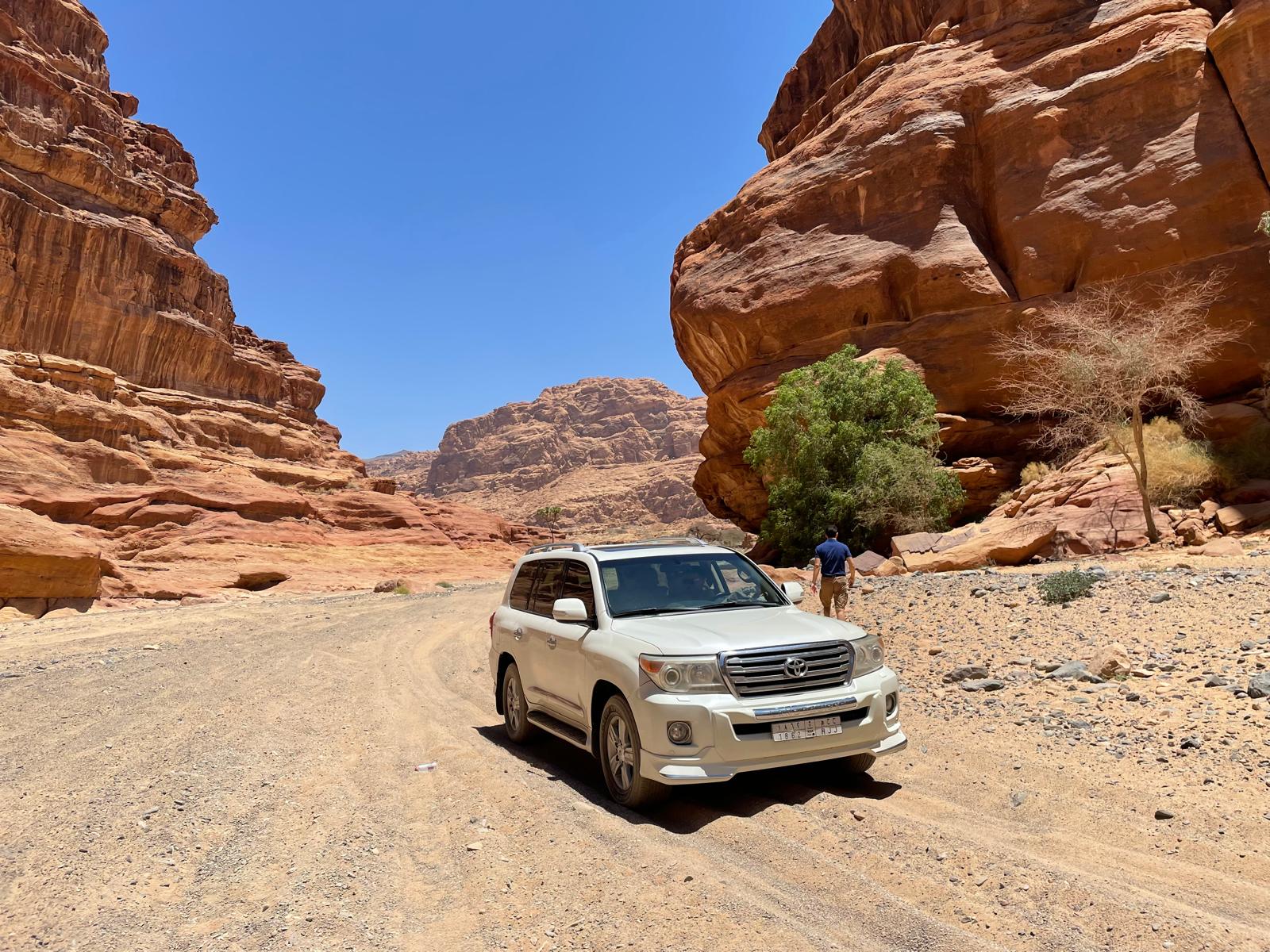
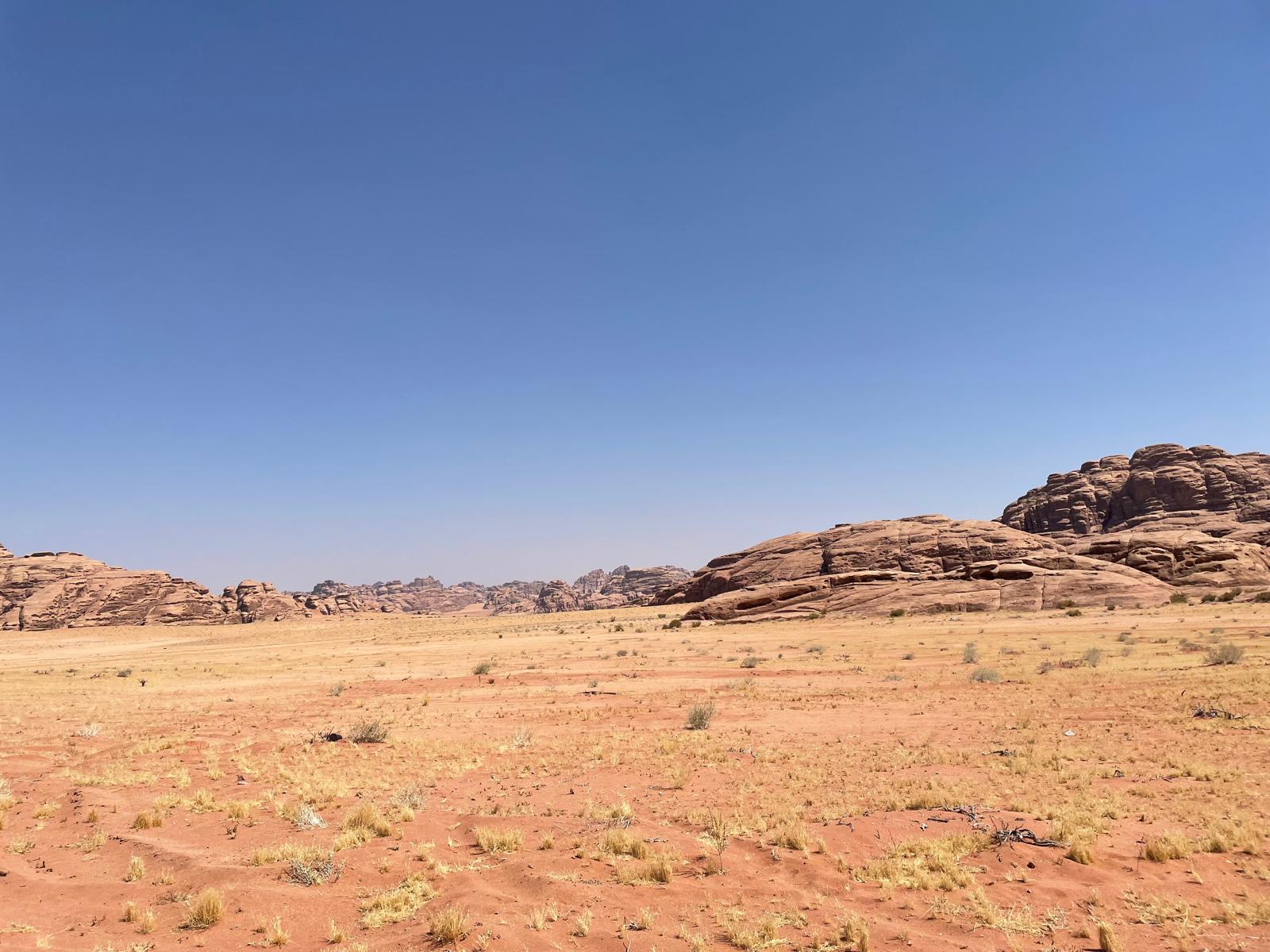
You start in Riyadh only briefly, using it as a gateway, then fly north to Tabuk and begin moving south by car through landscapes that shift from red sand plateaus to granite mountains, then into palm filled valleys that look like mirages. The north is all raw desert and silence. NEOM’s fringe territories and the Bajda reserve feel like a future frontier laid on top of a prehistoric canvas, with forgotten rock inscriptions and slot canyons that hide sudden shade. Then the road opens into Disah Valley, a ribbon of green threading through a wasteland of cliffs.

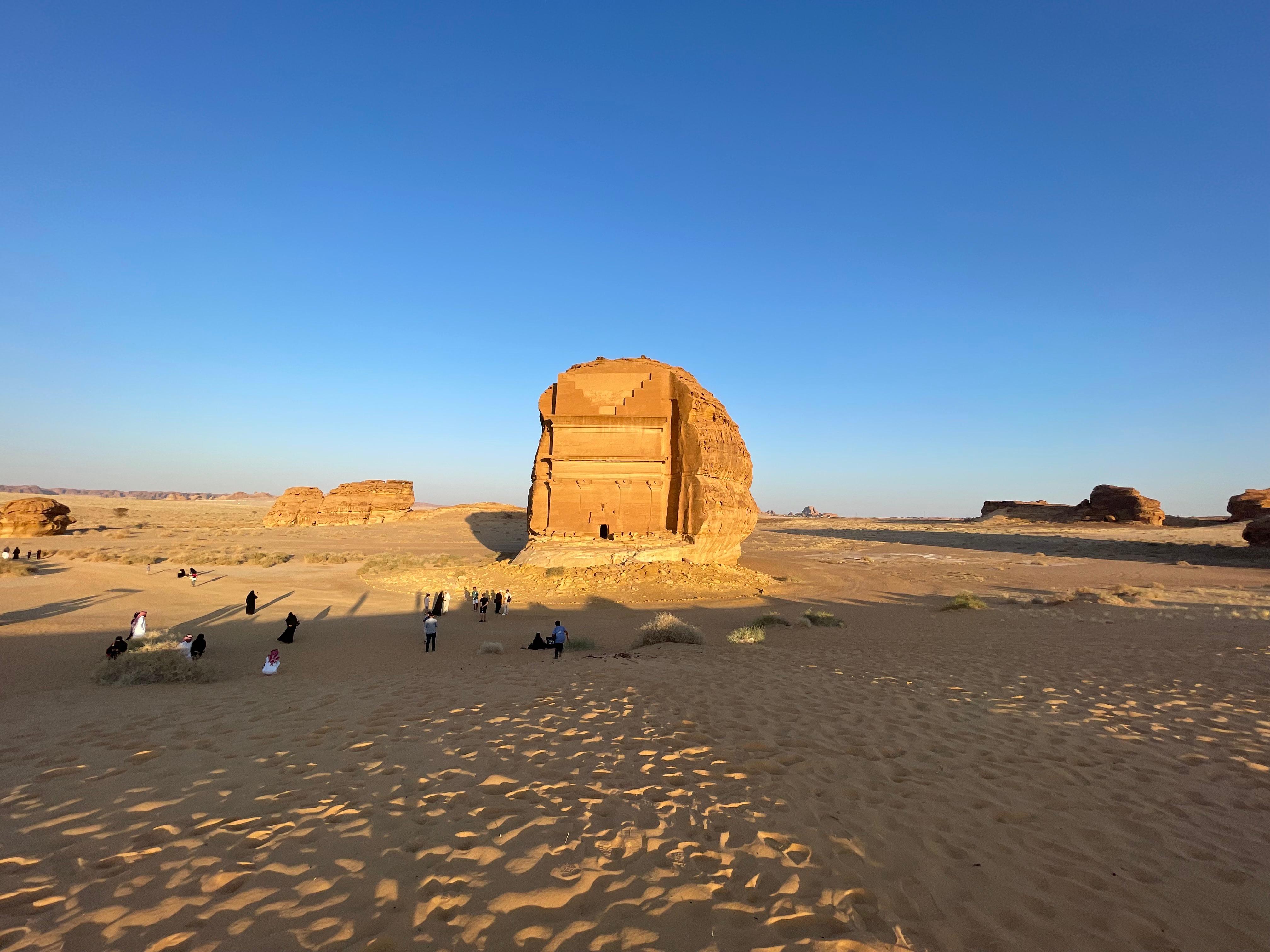
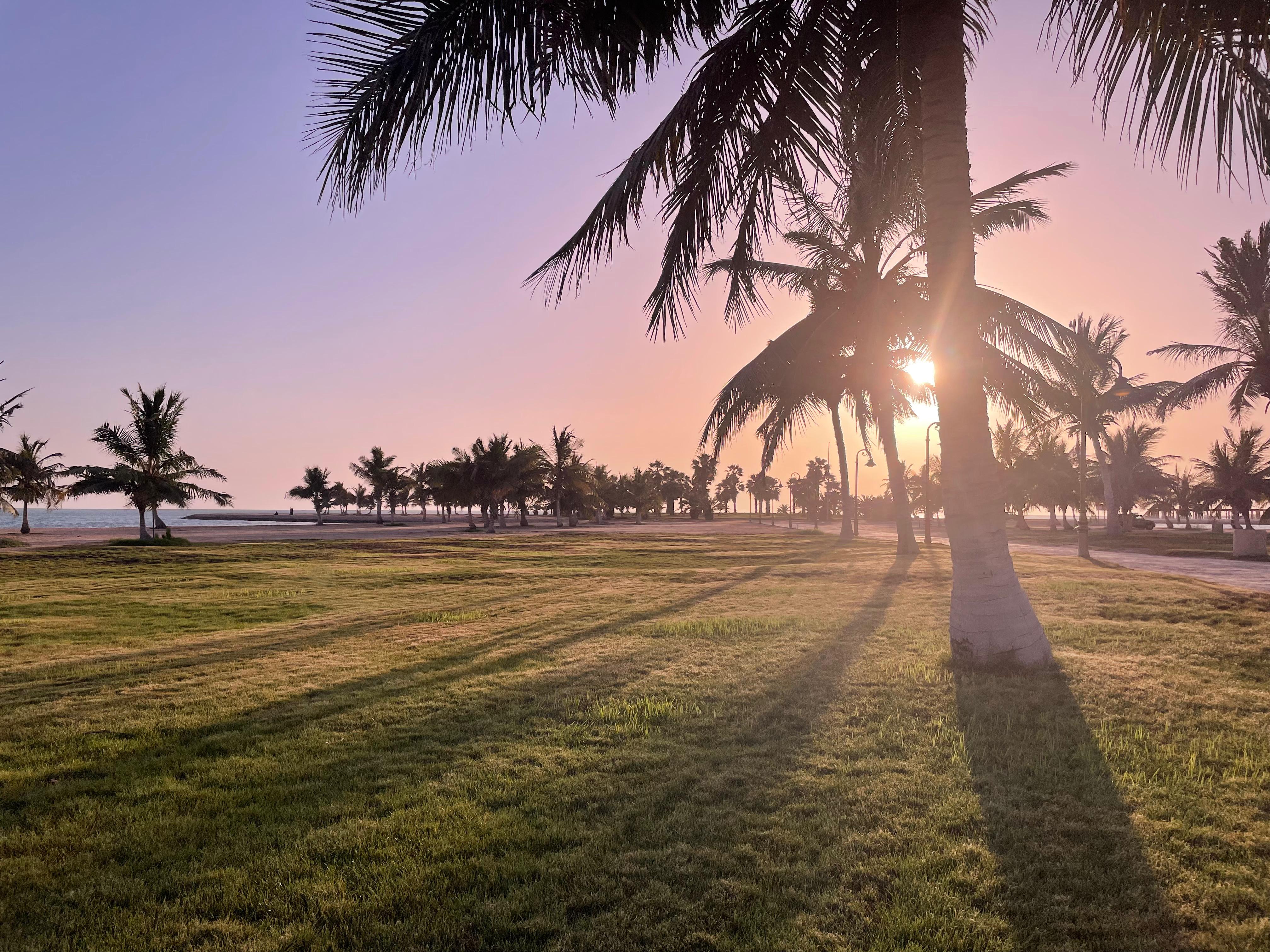
AlUla is the centrepiece. It is a living museum of sandstone giants, oases, spice markets and Nabataean cities frozen mid story. Hegra is the highlight, best experienced at sunset when the tombs glow honey gold and the heat finally softens. After AlUla, you drift to the Red Sea for a slower day in Yanbu, then turn inland to Medina for a night of quiet awe in the Prophet Mosque square.

Riyadh closes the loop, modern and polished, but with an old soul in Diriyah. It is one of the easiest adventurous trips you can do in the region. No chaos, no crowds, and a country that surprises you with how generous and open people are once you arrive.

Expect big open desert roads, hidden canyon walks, pre Islamic rock inscriptions, and a rare chance to see the Kingdom with almost no tourists around.

Highlights

image of vibrant dining space (for a mexican restaurant)

NEOM and the Bajda Reserve

Hike through narrow canyons, find pre-Islamic stone carvings, and drive between red sand plains and monumental rock formations. The desert feels ancient and untouched.

image of a guided tour group

Hegra at Golden Hour

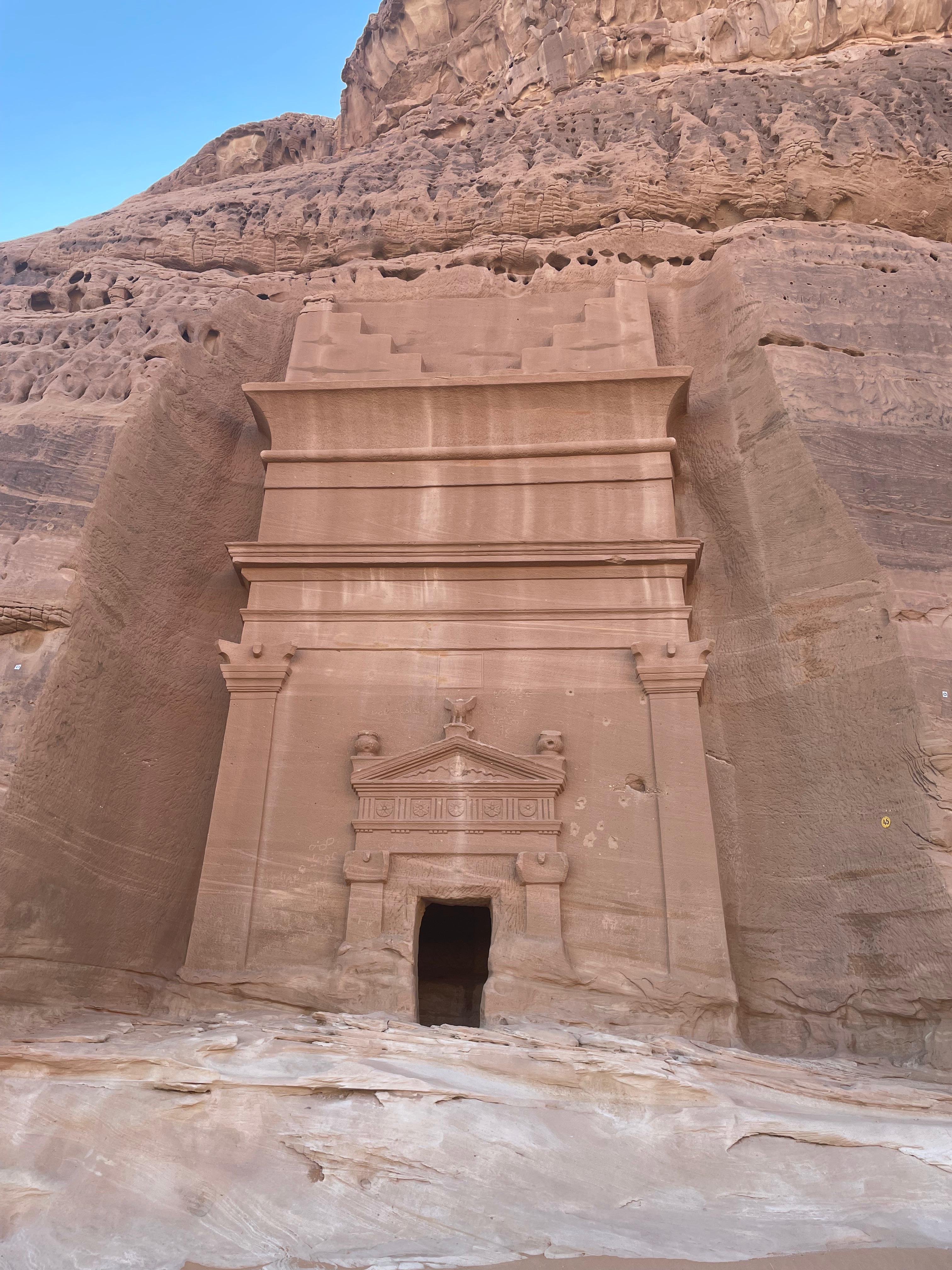
Saudi Arabia’s crown jewel. A sunset walk through hundreds of Nabataean tombs carved directly into sandstone, quieter and more atmospheric than Petra (Jordan), and one of the most powerful archaeological landscapes in the Middle East.
image of a local tour guide (for a travel agency)

Medina at Night and Diriyah by Day

Two very different faces of the Kingdom. Medina’s Prophet Mosque square glows with a sacred quiet energy after dark, while Diriyah outside Riyadh tells the story of the Al Saud dynasty in mudbrick lanes and heritage courtyards.
image of vibrant dining space (for a mexican restaurant)

NEOM and the Bajda Reserve

Hike through narrow canyons, find pre-Islamic stone carvings, and drive between red sand plains and monumental rock formations. The desert feels ancient and untouched.

image of a guided tour group

Hegra at Golden Hour

Saudi Arabia’s crown jewel. A sunset walk through hundreds of Nabataean tombs carved directly into sandstone, quieter and more atmospheric than Petra (Jordan), and one of the most powerful archaeological landscapes in the Middle East.
image of a local tour guide (for a travel agency)

Medina at Night and Diriyah by Day

Two very different faces of the Kingdom. Medina’s Prophet Mosque square glows with a sacred quiet energy after dark, while Diriyah outside Riyadh tells the story of the Al Saud dynasty in mudbrick lanes and heritage courtyards.

Journey itinerary

Itinerary overview
Detailed breakdown follows

Day 1: Arrive in Riyadh / airport hotel, early night

Day 2: Fly to Tabuk / Hejaz Railway Museum, market and first evening at Feiruz

Day 3: NEOM and Bajda reserve desert expedition / slot canyon and pre-Islamic inscriptions

Day 4: Disah Valley road trip to AlUla / wadi floor, date farm lunch, sunset arrival

Day 5: AlUla / Harrat viewpoint at dawn, Hegra at golden hour

Day 6: AlUla / bedouin farm morning, spice market, old town and slow evening

Day 7: Drive to Yanbu / Hejaz Mountains crossing, Red Sea arrival and grilled fish

Day 8: Yanbu / beach day, waterfront fish market lunch, coral-stone old quarter

Day 9: Drive to Medina / Prophet's Mosque outer courtyard at night, fly to RiyadhDay 10: Diriyah and At-Turaif / departure from Riyadh

Day-by-day itinerary
Day 1: Riyadh arrival

King Khalid International Airport (RUH) is 35 km north of central Riyadh. The journey into the city takes 30 to 45 minutes by taxi or Uber depending on traffic. Uber operates reliably throughout Riyadh and is generally cheaper and more straightforward than negotiating with airport taxis; the app works as it does anywhere. If arriving late at night, the hotel area around the airport is straightforward; there is no need to go into central Riyadh on the first night.

Keep tonight simple. Riyadh is the start and end of the route, not the destination. The city's main sites, Diriyah, the AlMasmak Fortress, Riyadh Boulevard, sit neatly on the final day.

Dinner at the hotel or any restaurant within walking distance. Kabsa (slow-cooked spiced rice with meat) or mandi (meat roasted in an underground oven) are the national dishes and are available in any local restaurant at low prices. Saudi fast food chains like Kudu or Herfy are also reliable late-night options.

Day 1: Riyadh arrival

King Khalid International Airport (RUH) is 35 km north of central Riyadh. The journey into the city takes 30 to 45 minutes by taxi or Uber depending on traffic. Uber operates reliably throughout Riyadh and is generally cheaper and more straightforward than negotiating with airport taxis; the app works as it does anywhere. If arriving late at night, the hotel area around the airport is straightforward; there is no need to go into central Riyadh on the first night.

Keep tonight simple. Riyadh is the start and end of the route, not the destination. The city's main sites, Diriyah, the AlMasmak Fortress, Riyadh Boulevard, sit neatly on the final day.

Dinner at the hotel or any restaurant within walking distance. Kabsa (slow-cooked spiced rice with meat) or mandi (meat roasted in an underground oven) are the national dishes and are available in any local restaurant at low prices. Saudi fast food chains like Kudu or Herfy are also reliable late-night options.

Button Text
Day 2: Fly to Tabuk and first northern taste

Domestic flights from Riyadh to Tabuk are operated by Saudia, flynas and flyadeal. The flight takes approximately two hours. Tabuk's Prince Sultan bin Abdulaziz Airport (TUU) is a small modern terminal that handles the city's growing tourism traffic; arrivals are fast and luggage is quick.

The descent into Tabuk gives you an early read on the northwest: granite escarpments, red sandstone plains and a dusty plateau at an altitude noticeably cooler and drier than Riyadh. The city sits at approximately 770 metres above sea level.

The Hejaz Railway station: The former Tabuk station of the Hejaz Railway is now a restored museum complex covering 80,000 square metres and containing 13 buildings, making it one of the most extensive preserved railway heritage sites in the Arabian Peninsula. The railway was built by the Ottoman Empire between 1900 and 1908 to connect Damascus to Medina, replacing the 40-day camel caravan journey from Damascus with a three-day train ride. At its peak before World War One it carried 300,000 pilgrims annually. T.E. Lawrence and the Arab Revolt systematically sabotaged the line between 1916 and 1918, targeting bridges, tracks and stations to paralyse Ottoman troop movements; much of the destruction was permanent and the railway never fully recovered. The Tabuk complex was a major logistics station with accommodation for passengers and troops; the stone locomotive sheds, water towers and original rolling stock that survive here are a direct product of that military-strategic significance. The museum has information boards in Arabic and English, and the scale of the complex rewards a slow hour of wandering rather than a rushed 20 minutes. Entry is free or very low cost; verify on arrival.

The city and market: Tabuk's old market area and commercial centre are worth a few hours in the afternoon. The city has a practical, working character rather than a heritage-centre atmosphere, which makes it useful rather than impressive. If you have not bought a thobe (the ankle-length white robe worn by Saudi men) or an equivalent modest covering by now, do it here. Wearing local dress from Tabuk onwards makes interactions smoother, particularly in more conservative areas and absolutely in Medina. Traditional clothing shops near the market centre have wide selections at reasonable prices; a thobe costs between SAR 50 and SAR 200 depending on quality.

Dinner at Feiruz coffee shop and café on the Medina Road: garden seating, outdoor fountains, tea culture at its best, and a reliably social atmosphere that gives a first clear sense of Saudi evening life outside hotels. Book or arrive early at weekends. On quiet weekday evenings, walk in is usually fine.

Confirm your guide or desert tour operator booking for the following morning before sleeping. Most accommodation in Tabuk can make introductions if you have not already arranged this from home.

Day 3: NEOM region and Bajda reserve expedition

This day requires a local guide and a 4x4. The Bajda reserve sits within the NEOM development zone and independent access is restricted; this is not a drive-in site. Arrange your guide through your Tabuk hotel, a local operator such as Tabuk Tours (+966 50 706 0222), or Desert Paths, who run desert expeditions from Tabuk into this area. The guide handles entry permissions and knows the terrain. Do not attempt to access the NEOM boundary independently.

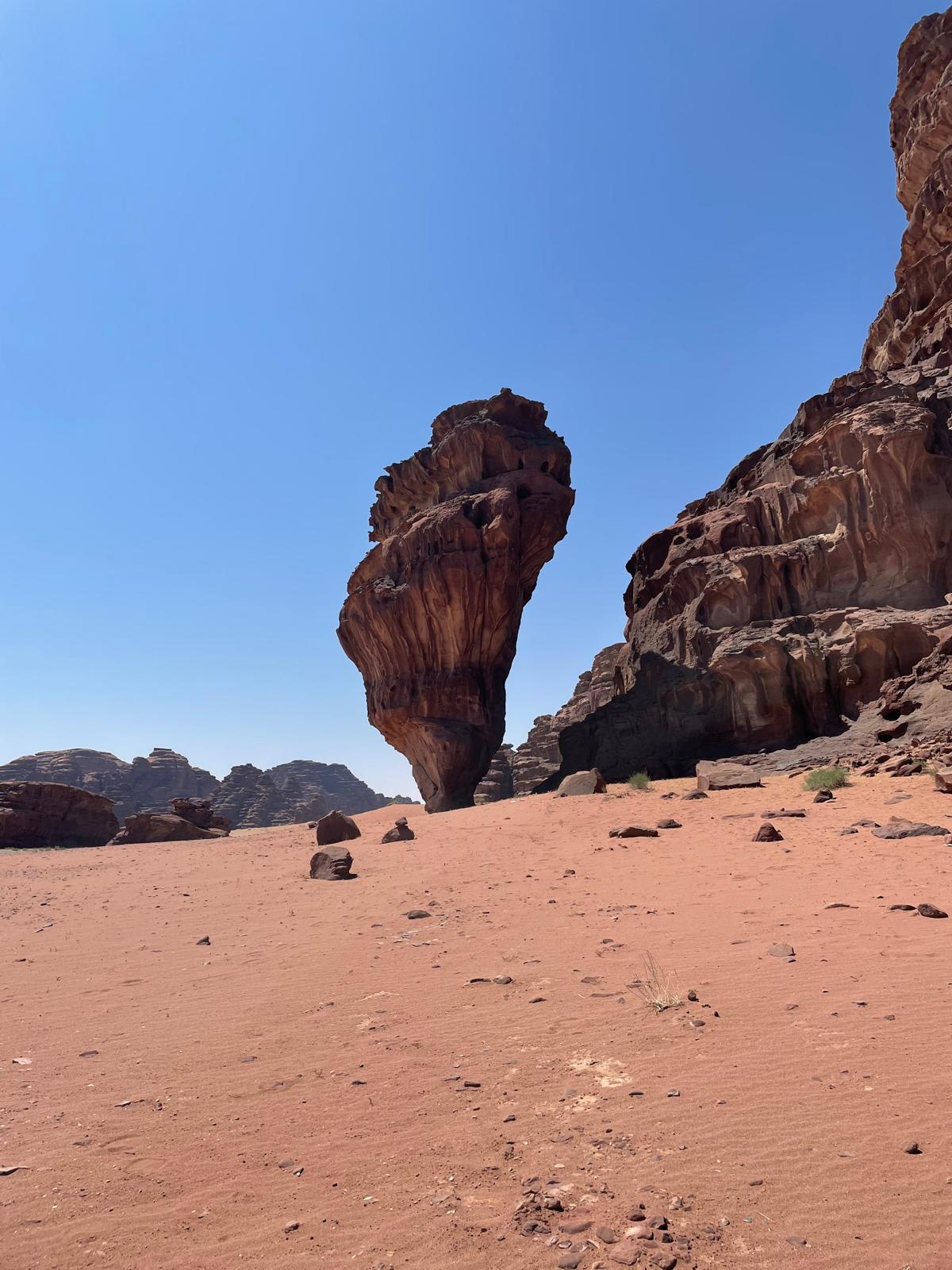
The route out of Tabuk crosses the Hisma Desert, one of the most geologically dramatic landscapes in northwest Arabia: wide red sand plains interrupted by black basalt formations that rise without warning from the flat ground. The basalt is the remnant of ancient volcanic activity across the region, and the contrast between the deep red of the sand and the black of the rock is unlike anything on the rest of this route.

The first substantial stop is at pre-Islamic rock inscription sites, stone faces and cliff sections covered in pictograms, tribal route markers, hunting scenes and caravanning indicators carved over multiple periods between roughly 7,000 and 1,500 years ago. These are not signposted tourist attractions; your guide takes you directly to them. The context matters: these carvings were functional as well as ceremonial, a communication system left by people crossing one of the most demanding desert corridors in the world. The guide can distinguish between the different periods and styles; without that narration, the images are interesting but not fully readable.

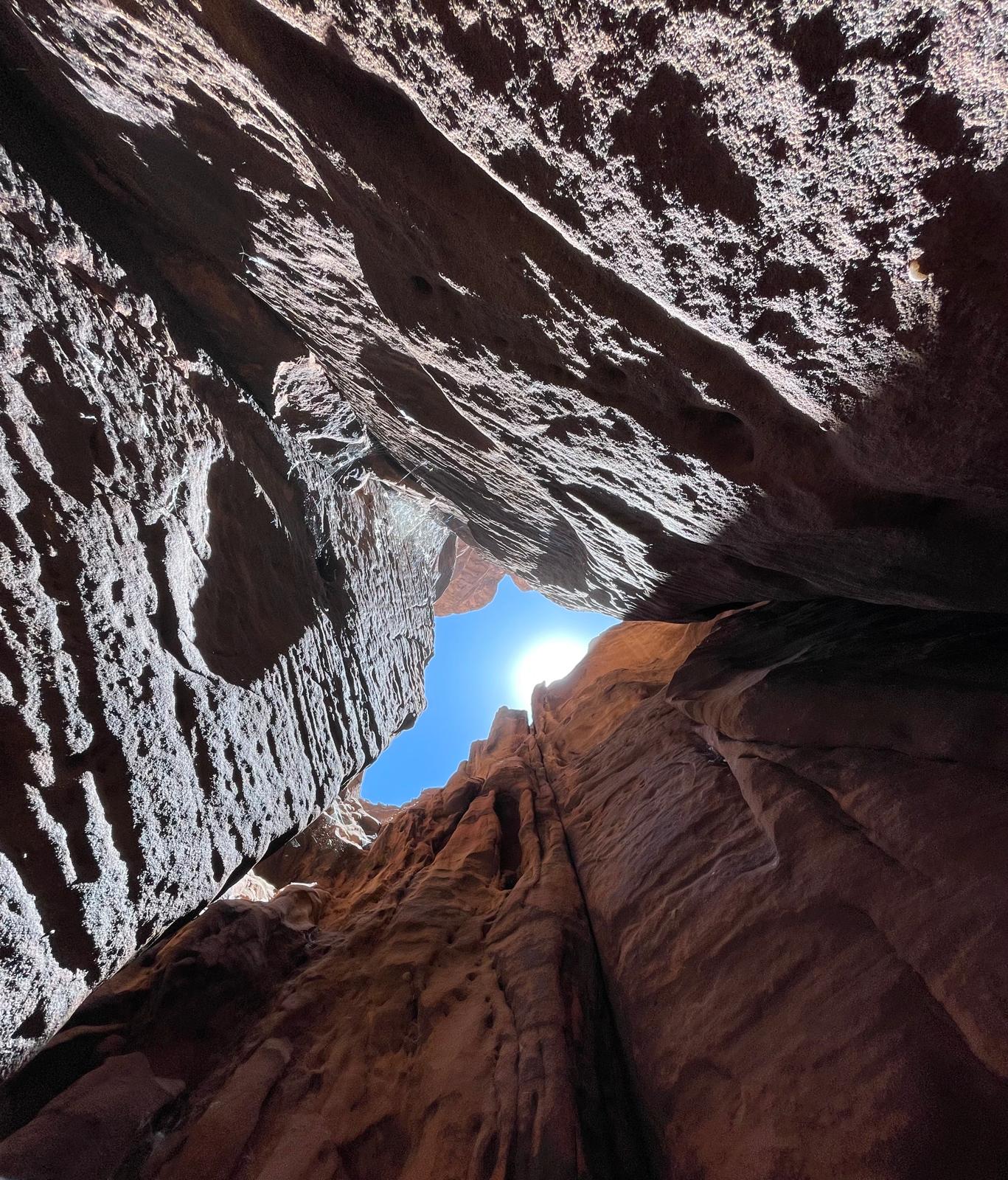
The landscape transitions from open plain into wind-eroded sandstone pillars before the route drops into a narrow slot canyon carved over millennia by flash floods. The canyon walls are approximately ten to fifteen metres high and in places barely two metres apart; direct sun does not reach the floor for most of the day. The temperature in the canyon is noticeably cooler than the open desert, sometimes by five to eight degrees. Stop here for lunch: dates, bread, tea, and whatever your guide or operator has brought. The canyon walk from one end to the other at a relaxed pace takes around 40 minutes.

The return covers different terrain, rust dunes and sculpted sandstone, arriving in Tabuk by early evening. Dinner again at Feiruz or at your hotel.

Day 4: Disah Valley road trip to AlUla

Leave Tabuk no later than 7 am. The drive to AlUla takes between four and five hours depending on stops, and starting early captures the best light on the desert plateau section and avoids arriving after dark.

The first 90 minutes cross a high, open plateau with very little infrastructure. Fill your fuel tank before leaving Tabuk and carry at least six litres of water per person in the car; the stretch between Tabuk and the Disah Valley has minimal services.

As the road approaches the Hejaz Mountains the terrain changes significantly. The plateau gives way to narrower roads with sharp gradients and rock formations that shift from red sandstone to grey granite as the geology changes. The light on these formations in the morning is the best argument for an early departure.

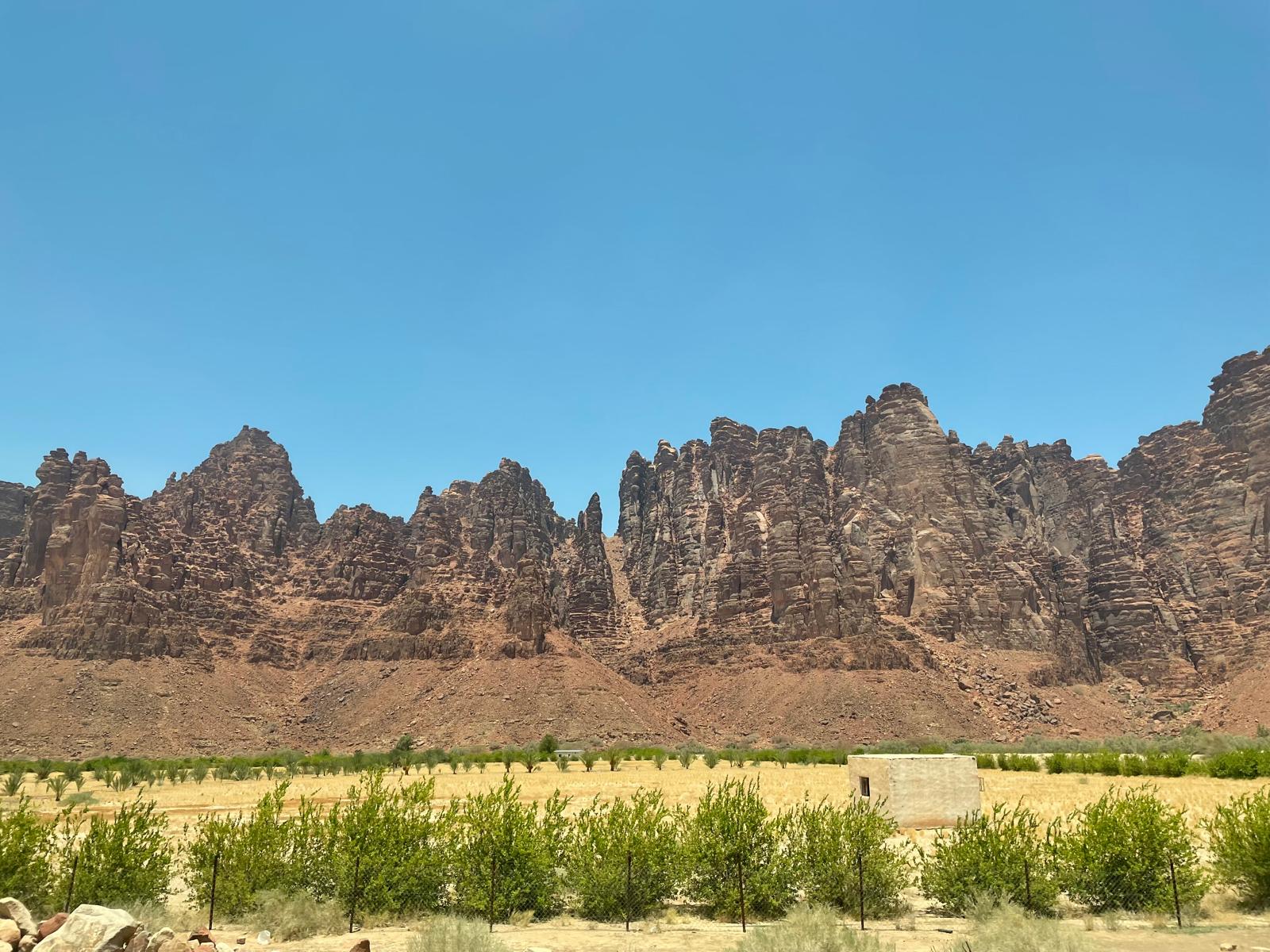
Disah Valley: a several-kilometre wadi corridor where the desert floor suddenly supports date palms, water channels and small bedouin farms. The contrast with the surrounding rock landscape is stark and immediate; life here is organised entirely around the underground water that surfaces in this particular valley rather than anywhere around it. Drive through slowly and stop to walk sections of the wadi floor. Some cliff walls carry Nabataean and pre-Islamic carvings, less concentrated than the Bajda reserve but present throughout. Look at the cliff faces rather than only the floor.

Lunch at a bedouin date farm on or just off the main route through the valley. These are informal operations: a family or small producer offering dates at various stages of ripeness, tea, and simple food in shaded outdoor seating. Ask your accommodation in Tabuk to recommend a specific stop in advance, as the most welcoming farms change seasonally and are not signposted. Eating dates with cardamom tea in a palm garden in the middle of the Arabian desert is one of those meals that is mostly about context.

The final hour of the drive into AlUla is the most dramatic section of the whole route. Sandstone monoliths stack on the horizon in formations that grow taller and more vertical as you approach. The scale becomes clear only gradually; what looks like a low ridgeline from distance resolves into individual towers 40 to 80 metres high as you close in. Arrive before sunset, check in to your accommodation, and walk a short section of the AlUla heritage district on foot to orientate before the following day.

Day 5: AlUla viewpoints and Hegra at sunset

Start at Harrat viewpoint in the morning. The drive from the town centre to the viewpoint takes 10 to 15 minutes; the road ascends an ancient lava field, the black basalt surface that gives the viewpoint its name. From the top, the full AlUla oasis is visible: the geometry of the date farm grids below, the old mudbrick town, the orange sandstone towers on every horizon, the desert plateau beyond. On a clear morning the light is outstanding. Arrive before the first tour buses, typically before 8:30 am. Allow 45 minutes to an hour.

Spend the midday at your accommodation or in the old town. AlUla's summer temperatures exceed 40°C at midday and Hegra requires sustained walking in direct sun; resting from noon to 3 pm is not optional in the warmer months, and even in winter the midday sun at this latitude is significant. Plan accordingly.

Hegra: Book tickets in advance through experiencealula.com or the Experience AlUla app. The standard day tour starts from SAR 95 per person and includes transport around the site, which is mandatory: self-driving inside Hegra is not permitted. The site covers a large area and the official tour bus moves you between the main tomb clusters. A premium tour starting from SAR 1,000 per vehicle (up to seven passengers) offers more flexibility. Cancellation is allowed up to three days before your booked date; changes up to one day before. Arrive at the Hegra Visitor Centre at the time shown on your ticket; the exact check-in window is specified during booking so follow that rather than assuming a standard time. Free parking is available on site.

For timing: aim for an afternoon slot that puts you at the main tomb facades in the hour before sunset. This is not negotiable if photography is important to you; the golden light on the Nabataean sandstone between 4 and 5:30 pm (varying by season) is what distinguishes a visit from a photograph. The morning slot works well for cooler temperatures and better walking conditions but the light on the stone is flat and front-lit rather than raking. If possible, book the latest slot available and factor in that the tour runs two to three hours including transfers.

Hegra was the southern capital of the Nabataean Empire during the first century BCE to first century CE, contemporaneous with Petra in Jordan but never fully rediscovered by the outside world until the 20th century. The site contains over 110 carved tombs, each built directly into sandstone cliff faces with facades ranging from simple openings to elaborate multi-storey compositions with stepped crowns, eagles, rosettes, and dedicatory inscriptions in Nabataean script. The inscriptions name the tomb owners, their occupations, family members, dates of construction, and the specific curses invoked against anyone who violated the burial. These are not anonymous ruins; they are named individuals. The most famous single tomb, Qasr al-Farid (the Lonely Castle), stands isolated from the main cliff groupings on a free-standing boulder; it was never completed, and the unfinished carving at the lower levels shows clearly how the Nabataeans worked from the top of the facade downward. A licensed guide adds significant depth; arrange one through Experience AlUla when booking if you want structured historical context.

Day 6: AlUla old town, spice market and bedouin rhythm

A slower day, structured around the valley rather than the archaeological sites.

Morning: Drive out to the Al Jadedah area, roughly 20 minutes from the town centre through agricultural land and small villages. The route passes through the working parts of the valley: date palm plots, irrigation channels, small concrete houses and the everyday infrastructure of a community that has farmed this desert oasis for centuries. A bedouin farm visit here is informal and typically involves sitting under shade for tea, walking a short section of the date palms, and a conversation via your guide about seasonal rhythms, water management, and the economics of heritage-zone agriculture. The date harvest runs August to October; outside those months the palms are still productive and the farm atmosphere is essentially unchanged. Ask your accommodation to arrange this specifically; the better operators know which farms are genuinely welcoming rather than staged.

The spice market: Located in the AlUla Old Town area along covered market lanes. The stock is consistent and the quality is good: Iranian dried limes (essential in Gulf cooking), bulk saffron at considerably lower prices than in Europe, whole green and black cardamom, loose oud resin, frankincense in multiple grades, regional attar perfumes and blended incense. The vendors are accustomed to visitors and will explain what things are and how they are used if you ask; many speak some English. Prices are not fixed; polite negotiation is normal. Budget two hours and resist the impulse to rush.

The Old Town: The AlUla Old Town is a mudbrick settlement of around 400 houses built between the 12th and 20th centuries, abandoned by its last inhabitants in the 1980s when the modern town was built nearby. The houses are stacked vertically up a rocky outcrop with a central mosque at the highest point. UNESCO conservation work is ongoing. The ground-floor lanes are fully walkable; upper sections require care on uneven stone paths. The visitor centre at the entrance provides context for the town's history and its relationship to the wider caravan economy. Allow two hours.

Afternoon: The main valley viewpoints are accessible by car from the town centre and give different angles on the landscape than either Harrat or Hegra. The Maraya concert hall, the mirrored cube visible from the main valley road, is the most photographed recent addition to AlUla; it is interesting from the exterior and visible without a tour, though interior access requires a booked event or restaurant reservation.

Evening: The old town area has a small cluster of shisha bars and outdoor cafés. This is where the slower Saudi evening rhythm makes most sense: tea, dates, shisha if you want it, and very little urgency.

Day 7: Drive to Yanbu on the Red Sea

Leave AlUla in the morning. The drive to Yanbu takes four to five hours and crosses three distinct landscape types in a logical progression from desert interior to coast.

The first section tracks back through the sandstone valley. After AlUla the road climbs onto the Hejaz plateau before beginning the ascent into the Hejaz Mountains proper, the granite spine running parallel to the Red Sea between Tabuk in the north and Mecca in the south. The mountain section involves significant elevation change: tight switchbacks, views east over the desert you have just crossed, and rock architecture that is markedly different from the sandstone of AlUla, darker and harder. Drive carefully on the descent toward the coast; the gradient is steep in places and the road surface quality varies. If roads are wet from overnight fog (common in winter months when the coastal humidity reaches the mountain passes), allow extra time and more braking distance.

The descent from the mountains to the coastal plain is fast and the climate change is immediate: humidity increases noticeably within 30 minutes of dropping below the ridge line, and by the time the Red Sea appears the air is soft and salt-heavy. Yanbu sits at sea level after 800 metres of altitude elsewhere in the route, and the atmospheric difference is one of the more distinctive sensory moments of the trip.

Yanbu is a working city: Saudi Arabia's largest petrochemical export hub, with a busy commercial port and a Red Sea waterfront that has been developed with promenades, parks and a proper seafront. It is not a tourist destination but it is a genuine one-night experience of coastal Saudi life. Check into your accommodation, walk the Corniche in the early evening, and eat at one of the waterfront fish restaurants. Ask what came in that morning rather than ordering from a fixed menu; the standard is hammour (grouper) or red snapper grilled simply with rice and salad. Prices are low relative to the rest of the trip.

Day 8: Yanbu beach day

Yanbu's public beach areas are clean, calm and significantly less crowded on weekday mornings than in the evening. The Red Sea here is warm year-round and exceptionally clear even close to shore; reef visibility begins at around five metres depth and improves quickly. If you want to explore offshore reef systems properly rather than just swimming from the beach, go with a local dive or snorkel operator who knows the sites; ask at your hotel for a recommendation, as the better spots are not accessible from the public beach.

The beach is used heavily by local families in the evening hours, which makes the later afternoon and early evening more social and the early morning significantly quieter. Both have merit.

Lunch: The waterfront market area where day boats sell their catch directly is the most honest and cheapest eating in Yanbu. The fish changes daily based on what was caught; do not expect a menu in the conventional sense. Point at what looks good, confirm it will be grilled rather than fried unless you prefer otherwise, and wait. This is exactly the kind of meal that cannot be replicated in a formal restaurant setting.

Afternoon: Yanbu's heritage quarter contains well-preserved coral-stone merchant houses from the Ottoman period, built using the same Red Sea coral blocks found throughout the Hejaz coastal towns. A 30-minute walk through the lanes gives a sense of the architectural tradition; the houses are not open to visitors but the streetscapes are intact and the scale is human. This is the most historically resonant part of Yanbu and takes less time than any comparable site on the route.

Saudi hospitality: Yanbu is a city where spontaneous encounters with local families are possible, particularly on the Corniche in the evening. If you receive a genuine invitation to share tea, a meal or a gathering, accepting is worthwhile; these are not staged encounters and they reflect how social life functions in the Kingdom outside the tourism circuit. The standard is warmth and generosity.

Day 9: Medina evening square and flight to Riyadh

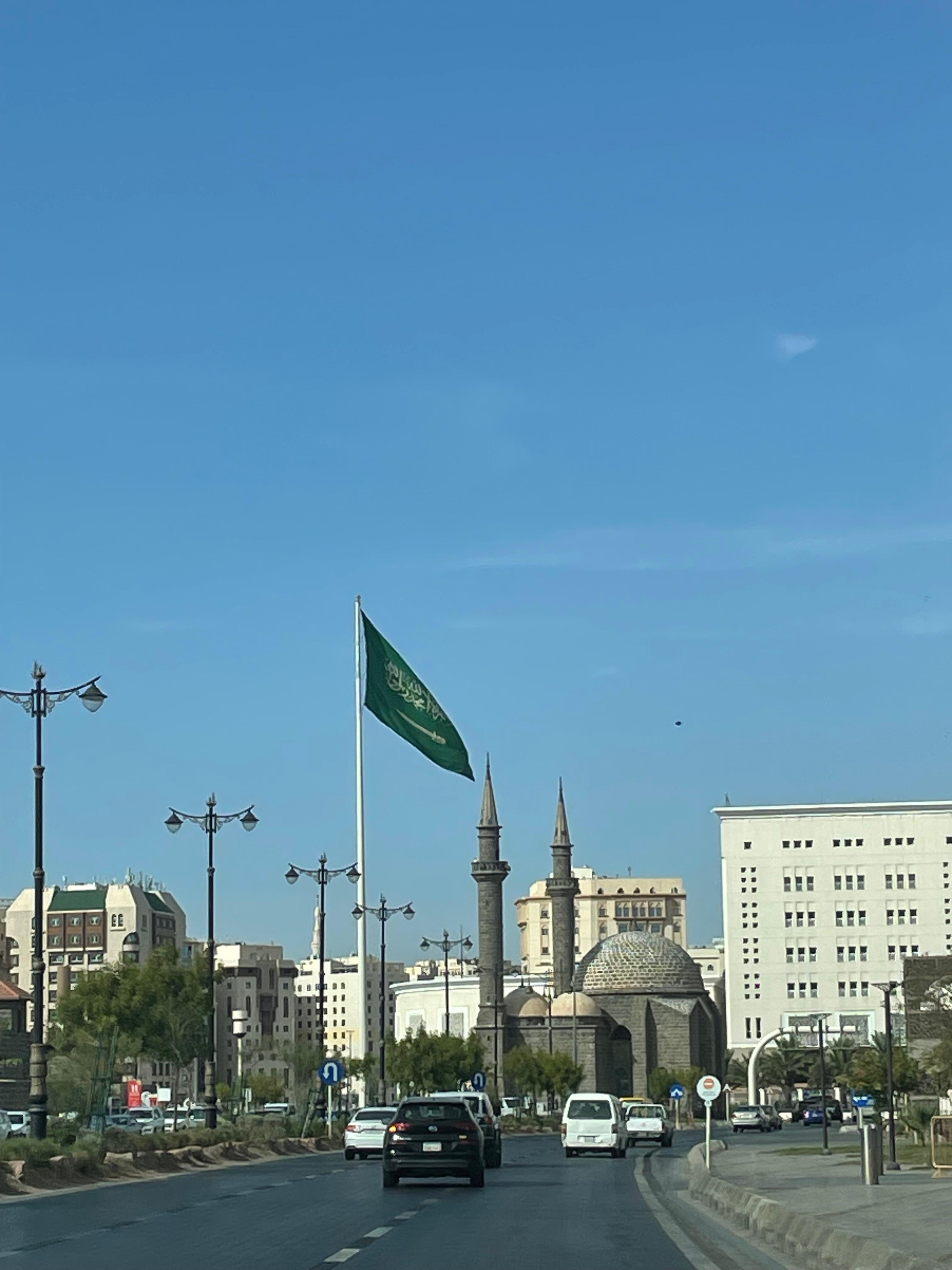
Drive from Yanbu to Medina, approximately two hours north along the coast road and then inland through the Hejaz foothills. The road is sealed, well-maintained and mostly empty; the approach to Medina is marked by increasing signs of pilgrimage infrastructure, directional gantries in Arabic, English and Urdu, pilgrim accommodation blocks, and the minarets of the Prophet's Mosque visible on the horizon long before you enter the city.

Non-Muslim access: The central zone immediately surrounding the Prophet's Mosque, the Haram area, is not accessible to non-Muslims. This is enforced and should be respected fully. Plan your accommodation in the outer districts and confirm with your hotel before booking that the location is outside the restricted zone; reputable hotels know this precisely and will not book non-Muslims into restricted accommodation. The outer courtyard areas of the mosque complex are publicly accessible; this is where you go.

Evening at the Prophet's Mosque complex: Walk to the outer courtyard in the evening. The complex is immense: the mosque itself covers 400,000 square metres with a capacity of approximately one million worshippers. The outdoor marble plaza extends the accessible area significantly further. The retractable umbrella canopies that shade the square during the day are one of the more remarkable pieces of structural engineering in contemporary Saudi Arabia: 182 hydraulically-operated canopies, each 18 metres across, that deploy in 3 minutes and retract fully in 3.5 minutes, covering 143,000 square metres of open courtyard. At night the plaza is fully lit and exceptionally atmospheric; the movement of worshippers is orderly and the atmosphere is quiet and focused despite tens of thousands of people present simultaneously. Spend two hours walking the outer areas and taking in the scale.

Wear your thobe or modest equivalent without exception here. This signals basic respect and removes any visual distinction between visitor and worshipper in a space where that distinction matters to the people around you.

Your flight to Riyadh departs either the same night or first thing the following morning depending on your schedule. Mohammed bin Abdulaziz Airport (MED) handles the domestic flight; the journey to Riyadh is approximately one hour.

Day 10: Diriyah and Riyadh departure

Diriyah is 15 to 20 minutes northwest of central Riyadh. Take Uber or a taxi; the route is straightforward on the main roads but some of the access roads near the site have been under construction and the app's navigation handles the current routing better than a map.

At-Turaif is open Saturday to Thursday from 10 am to midnight and Friday from 2 pm to midnight, with last entry at 11:30 pm. A Diriyah Pass is required for entry, currently SAR 50, and booking online in advance through diriyah.sa is recommended to avoid QR code issues at the gate. Guided tours of At-Turaif run 45 minutes with an official guide; independent exploration takes two to three hours depending on how thoroughly you walk the site. Paid parking is available at Bujairi and Samhan parking areas at SAR 30 for three hours.

At-Turaif was the seat of the First Saudi State from approximately 1727 to 1818, the alliance between Muhammad ibn Saud and Sheikh Muhammad ibn Abd al-Wahhab that established both the political authority of the Al Saud family and the theological framework of what became Saudi Arabia. The site was systematically destroyed by Egyptian forces under Ibrahim Pasha in 1818 and has been under sustained reconstruction since the 1990s. The mud-brick architecture that you walk through today is a combination of original structure and reconstruction; the overall spatial logic, the palaces, the mosque, the administrative quarter, the residential terraces above Wadi Hanifah, is archaeologically accurate. The visitor centre at the entrance handles the historical context in detail; spend 20 minutes here before walking the site itself, and the significance of what you are looking at changes considerably. Understanding the First Saudi State makes the rest of Saudi Arabia more legible: what happened in Medina, what you observed in Tabuk, and what Riyadh is doing now with its Vision 2030 infrastructure are all comprehensible in relation to this origin point.

The Wadi Hanifah walk between At-Turaif and the Bujairi Terrace on the opposite bank is one of the most pleasant short walks in the Riyadh metropolitan area: a landscaped valley path with the mud-brick walls of At-Turaif on one side and the restaurant terrace on the other, connected by a pedestrian bridge. The late afternoon light on the mud-brick is particularly good. For a final meal, Bujairi Terrace has a cluster of restaurants at different price points; the setting overlooking the wadi is the best outdoor dining environment in the city.

From Diriyah, head to King Khalid International Airport (RUH). Allow at least two hours before any international departure and three if your flight is in the morning rush hour when Riyadh's road traffic is at its most dense. Terminal 1 handles international departures on most airlines; confirm your terminal before leaving.

In pictures

No items found.

Traveller suggestions

Accomodation

Riyadh

Mid-tier : Crowne Plaza Riyadh RDC, Novotel Riyadh Al Anoud

Tabuk

Premium : Five Seasons Hotel

Mid-tier : Hilton Garden Inn Tabuk

AlUla

Premium : Our Habitas AlUla, Banyan Tree AlUla, Dar Tantora by The House Hotel (boutique, restored mudbrick houses inside the Old Town itself; the most characterful option if you want to sleep inside the heritage area)

Mid-tier : Sahary AlUla Resort (inside a U-shaped canyon, spectacular setting, Cloud7 Residence AlUla (studio-style rooms, pool, more central than Sahary)

Budget : Friday Suites (apartment-style, English-speaking owner, close to Old Town), Talal Hotel Apartments

Yanbu

Radisson Blu Yanbu, Holiday Inn Yanbu

Medina

Anwar Al Madinah Movenpick, Millennium Al Aqeeq Madinah

Food & Drink

Riyadh

Mid-tier : Najd Village (Najdi cuisine in a heritage mudbrick setting), The Globe at Al Faisaliah Tower (Michelin recommended, views over the city)

Budget : Kudu or Herfy (reliable Saudi fast food)

Tabuk

Feiruz café (garden seating, characterful evening spot)

Harrat restaurant (Arabic)

The market area near Tabuk Castle has local kabsa and mandi restaurants where working Saudis eat at lunchtime; these are cheap, fast, excellent, and require no reservation.

Disah Valley (en route Day 4)

Roadside restaurant in the valley at KJUA8349 on road between Duba and the valley entrance. Cash only.

AlUla

Premium : Maraya Social by Jason Atherton (rooftop restaurant, Mediterranean-European sharing plates, Josper-grilled cote de boeuf and honey-pistachio cake are signature dishes), Tama at Our Habitas (Middle Eastern)

Mid-tier : Tofareya (village house with rooftop tables, contact directly to book: +966 55 447 1254), Joontos (Spanish-inspired setting with Levantine mezze and Iberian tapas), AlNakheel Café (Hijazi and Lebanese, outdoor seating in mudbrick courtyard, t local atmosphere)

Cafes and quick meals : Wacafe, Al Hatab Bakery, SALT at Elephant Rock (burgers in a dramatic rock setting

Yanbu

Yanbu is a working port city and not a food destination in the way that AlUla or Riyadh is. The restaurant scene is functional rather than exciting. That said, the seafood here is genuinely excellent and significantly cheaper than anywhere else on the route.

The waterfront fish market area is the best meal in Yanbu. This is not a restaurant in the formal sense; it is a cluster of simple grill spots where the catch of the day is displayed on ice and cooked to order. Hammour (grouper) and red snapper grilled over coal with rice, salad and flatbread is the standard order. Go at lunchtime when the morning boats have come in and the fish is freshest.

Mid-tier sit-down : Al Falamanki (Lebanese casual dining, shisha terrace), Sushi Basha, Al Romansiah (Saudi chain, reliable kabsa and grilled meats)

Medina

Medina's restaurant scene outside the Haram zone is dense, cheap and built to serve an enormous pilgrim and resident population. The food is honest, prices are low, and variety is genuine.

The best local Saudi option is any kabsa and mandi restaurant near the Mohammed bin Abdulaziz Road accommodation district.

Al Baik (Saudi fried chicken chain), Kudu (Saudi burger chain).

Reminders & Cautions

Domestic flights: The backbone of this route is two domestic flights: Riyadh to Tabuk on Day 2 (approximately two hours) and Medina to Riyadh on Day 9 (approximately one hour). Both are operated by Saudia, flynas and flyadeal. Book at least two weeks ahead; prices rise sharply close to departure and the Tabuk route has limited daily capacity. Always book the morning flight to Tabuk to preserve the full Day 2 afternoon for the Hejaz Railway and market.

Rental car: A rental car is required from Day 4 (Tabuk to AlUla onwards) through to the Yanbu to Medina drive on Day 9. Collect from Tabuk Airport or arrange through your hotel before departure. A standard saloon or SUV handles all the sealed road sections comfortably. A 4x4 is only essential if you intend to drive independently into the Bajda reserve or Disah Valley wadi off the main road; for the Day 3 desert expedition, your guide provides the vehicle. International driving licence required alongside your national licence.

Desert tours from Tabuk: Tabuk Tours (+966 50 706 0222) specialises in desert camping, safaris and historical tours across the Tabuk, AlUla and NEOM fringes. Desert Paths is another well-reviewed operator running multi-day tours including Bajda, Disah Valley and the Hisma desert. The Bajda reserve sits within the NEOM development zone and independent access is restricted; do not attempt to self-drive this area. Book your guide at least a week ahead, longer if visiting between October and March when demand is highest. Confirm current NEOM access permit logistics directly with your operator before departure, as rules within the development zone change as construction phases advance.

Driving: Saudis drive on the right. Speed cameras are frequent and automated on all highways; fines are issued by post and can follow rental car hirers home. Stick to the posted limit, which feels conservative on long straight desert roads but prevents administrative problems weeks later. Headlights on at all times while driving is required by law. Petrol is extremely cheap by international standards; fill the tank before every long desert section. The Tabuk to AlUla road passes through areas with long gaps between fuel stations; ask your hotel in Tabuk to advise on where to stop.

Visa: Saudi tourist eVisas are available online through visitsaudi.com for over 60 nationalities. The cost is approximately SAR 535; approval typically comes within 24 hours but apply at least a week before departure to allow for any issues. The eVisa is valid for 12 months and allows multiple entries with stays up to 90 days per visit. Your passport must be valid for at least six months beyond your planned departure date. Some nationalities qualify for visa on arrival at major airports; check the current list on visitsaudi.com before applying. Health insurance must be confirmed as part of the visa process from 2025 onward.

Money: The Saudi Riyal (SAR), pegged 3.75:1 to the US Dollar. Card payments are widely accepted at hotels, restaurants, petrol stations and major shops throughout this route. Carry cash for market stalls, tips, small desert cafes like the Disah Valley restaurant, and bedouin farm visits where cards are never accepted. ATMs are available in Riyadh, Tabuk, AlUla and Yanbu; withdraw before heading into remote areas. Tipping is not obligatory but is appreciated; 10 to 15% in restaurants and SAR 20 to 50 per day for guides is standard.

Season: October to March is the optimal window for this route. Temperatures are manageable in the desert (15 to 25°C in the Tabuk region), Hegra is at its most atmospheric, and the Winter at Tantora festival in AlUla (typically December and January) brings concerts, cultural events and additional activities to the valley. April is warm but manageable. May to September is extremely hot in the desert interior; 40°C plus is typical in Tabuk and AlUla from June onwards. The itinerary structure of early starts and midday rest is not optional in summer.

Dress and etiquette: The itinerary notes the purchase of a thobe in Tabuk on Day 2. This is practical advice rather than a formality. Wearing local dress signals respect and improves day-to-day interactions, particularly in markets, historic areas and Medina. Women should cover shoulders and hair in and around the Prophet's Mosque and in conservative areas; in tourist-facing parts of Riyadh, AlUla and Yanbu the rules are less strictly applied but modest clothing (shoulders and knees covered) remains appropriate everywhere outside hotel premises. Public displays of affection are not appropriate.

Alcohol: Saudi Arabia is a completely dry country. No alcohol is sold, served or consumed anywhere on this route. This applies to all hotels, all restaurants and all private spaces. There is no workaround and attempting to import alcohol is a serious offence.

Medina non-Muslim access: The Haram zone immediately surrounding the Prophet's Mosque is not accessible to non-Muslims. This is enforced. The outer courtyards are publicly accessible and give a clear view of the mosque structure. Confirm your accommodation's location relative to the restricted zone before booking.

Hegra booking: Book through experiencealula.com before you travel. Standard day tours from SAR 95 per person; premium vehicle tours from SAR 1,000. Self-driving inside the Hegra site is not permitted; the tour provides transport between tomb clusters. Cancellation allowed up to three days before; changes up to one day before. In peak season (November to March) the afternoon slots fill fastest; book as soon as your dates are confirmed.

Diriyah: Book the Diriyah Pass (SAR 50) through diriyah.sa before arrival. At-Turaif is open Saturday to Thursday 10 am to midnight; Friday from 2 pm. Last entry 11:30 pm. Current access roads are partially subject to construction diversions; confirm current routing on the Diriyah website or via your hotel before departing.

Connectivity: Buy an STC or Mobily SIM at Riyadh Airport arrivals on Day 1. Both networks give strong coverage across all cities and main highways on this route. Mobile signal is adequate in the Tabuk desert area and on the main Tabuk to AlUla highway but drops in deep canyons and very remote terrain. Download offline maps (Google Maps allows offline download by area) for the Tabuk to AlUla section before departing and for Disah Valley specifically. Download Google Translate with the Arabic pack offline.

Safety: Saudi Arabia is among the safest countries for independent travellers on this route. Violent crime against tourists is virtually non-existent. The practical risks are heat (carry water always; the desert will kill you if you break down without it), driving fatigue on long featureless highways, and desert driving in off-road conditions without a guide. Standard urban precautions (keep valuables secure, use Uber or Careem rather than unmarked taxis in cities) apply but the threat level is very low compared to most destinations of comparable ambition.

image of vibrant dining space (for a mexican restaurant)

NEOM and the Bajda Reserve

Hike through narrow canyons, find pre-Islamic stone carvings, and drive between red sand plains and monumental rock formations. The desert feels ancient and untouched.

image of a guided tour group

Hegra at Golden Hour

Saudi Arabia’s crown jewel. A sunset walk through hundreds of Nabataean tombs carved directly into sandstone, quieter and more atmospheric than Petra (Jordan), and one of the most powerful archaeological landscapes in the Middle East.
image of a local tour guide (for a travel agency)

Medina at Night and Diriyah by Day

Two very different faces of the Kingdom. Medina’s Prophet Mosque square glows with a sacred quiet energy after dark, while Diriyah outside Riyadh tells the story of the Al Saud dynasty in mudbrick lanes and heritage courtyards.

Reminders from Collective travellers

Domestic flights: The backbone of this route is two domestic flights: Riyadh to Tabuk on Day 2 (approximately two hours) and Medina to Riyadh on Day 9 (approximately one hour). Both are operated by Saudia, flynas and flyadeal. Book at least two weeks ahead; prices rise sharply close to departure and the Tabuk route has limited daily capacity. Always book the morning flight to Tabuk to preserve the full Day 2 afternoon for the Hejaz Railway and market.

Rental car: A rental car is required from Day 4 (Tabuk to AlUla onwards) through to the Yanbu to Medina drive on Day 9. Collect from Tabuk Airport or arrange through your hotel before departure. A standard saloon or SUV handles all the sealed road sections comfortably. A 4x4 is only essential if you intend to drive independently into the Bajda reserve or Disah Valley wadi off the main road; for the Day 3 desert expedition, your guide provides the vehicle. International driving licence required alongside your national licence.

Desert tours from Tabuk: Tabuk Tours (+966 50 706 0222) specialises in desert camping, safaris and historical tours across the Tabuk, AlUla and NEOM fringes. Desert Paths is another well-reviewed operator running multi-day tours including Bajda, Disah Valley and the Hisma desert. The Bajda reserve sits within the NEOM development zone and independent access is restricted; do not attempt to self-drive this area. Book your guide at least a week ahead, longer if visiting between October and March when demand is highest. Confirm current NEOM access permit logistics directly with your operator before departure, as rules within the development zone change as construction phases advance.

Driving: Saudis drive on the right. Speed cameras are frequent and automated on all highways; fines are issued by post and can follow rental car hirers home. Stick to the posted limit, which feels conservative on long straight desert roads but prevents administrative problems weeks later. Headlights on at all times while driving is required by law. Petrol is extremely cheap by international standards; fill the tank before every long desert section. The Tabuk to AlUla road passes through areas with long gaps between fuel stations; ask your hotel in Tabuk to advise on where to stop.

Visa: Saudi tourist eVisas are available online through visitsaudi.com for over 60 nationalities. The cost is approximately SAR 535; approval typically comes within 24 hours but apply at least a week before departure to allow for any issues. The eVisa is valid for 12 months and allows multiple entries with stays up to 90 days per visit. Your passport must be valid for at least six months beyond your planned departure date. Some nationalities qualify for visa on arrival at major airports; check the current list on visitsaudi.com before applying. Health insurance must be confirmed as part of the visa process from 2025 onward.

Money: The Saudi Riyal (SAR), pegged 3.75:1 to the US Dollar. Card payments are widely accepted at hotels, restaurants, petrol stations and major shops throughout this route. Carry cash for market stalls, tips, small desert cafes like the Disah Valley restaurant, and bedouin farm visits where cards are never accepted. ATMs are available in Riyadh, Tabuk, AlUla and Yanbu; withdraw before heading into remote areas. Tipping is not obligatory but is appreciated; 10 to 15% in restaurants and SAR 20 to 50 per day for guides is standard.

Season: October to March is the optimal window for this route. Temperatures are manageable in the desert (15 to 25°C in the Tabuk region), Hegra is at its most atmospheric, and the Winter at Tantora festival in AlUla (typically December and January) brings concerts, cultural events and additional activities to the valley. April is warm but manageable. May to September is extremely hot in the desert interior; 40°C plus is typical in Tabuk and AlUla from June onwards. The itinerary structure of early starts and midday rest is not optional in summer.

Dress and etiquette: The itinerary notes the purchase of a thobe in Tabuk on Day 2. This is practical advice rather than a formality. Wearing local dress signals respect and improves day-to-day interactions, particularly in markets, historic areas and Medina. Women should cover shoulders and hair in and around the Prophet's Mosque and in conservative areas; in tourist-facing parts of Riyadh, AlUla and Yanbu the rules are less strictly applied but modest clothing (shoulders and knees covered) remains appropriate everywhere outside hotel premises. Public displays of affection are not appropriate.

Alcohol: Saudi Arabia is a completely dry country. No alcohol is sold, served or consumed anywhere on this route. This applies to all hotels, all restaurants and all private spaces. There is no workaround and attempting to import alcohol is a serious offence.

Medina non-Muslim access: The Haram zone immediately surrounding the Prophet's Mosque is not accessible to non-Muslims. This is enforced. The outer courtyards are publicly accessible and give a clear view of the mosque structure. Confirm your accommodation's location relative to the restricted zone before booking.

Hegra booking: Book through experiencealula.com before you travel. Standard day tours from SAR 95 per person; premium vehicle tours from SAR 1,000. Self-driving inside the Hegra site is not permitted; the tour provides transport between tomb clusters. Cancellation allowed up to three days before; changes up to one day before. In peak season (November to March) the afternoon slots fill fastest; book as soon as your dates are confirmed.

Diriyah: Book the Diriyah Pass (SAR 50) through diriyah.sa before arrival. At-Turaif is open Saturday to Thursday 10 am to midnight; Friday from 2 pm. Last entry 11:30 pm. Current access roads are partially subject to construction diversions; confirm current routing on the Diriyah website or via your hotel before departing.

Connectivity: Buy an STC or Mobily SIM at Riyadh Airport arrivals on Day 1. Both networks give strong coverage across all cities and main highways on this route. Mobile signal is adequate in the Tabuk desert area and on the main Tabuk to AlUla highway but drops in deep canyons and very remote terrain. Download offline maps (Google Maps allows offline download by area) for the Tabuk to AlUla section before departing and for Disah Valley specifically. Download Google Translate with the Arabic pack offline.

Safety: Saudi Arabia is among the safest countries for independent travellers on this route. Violent crime against tourists is virtually non-existent. The practical risks are heat (carry water always; the desert will kill you if you break down without it), driving fatigue on long featureless highways, and desert driving in off-road conditions without a guide. Standard urban precautions (keep valuables secure, use Uber or Careem rather than unmarked taxis in cities) apply but the threat level is very low compared to most destinations of comparable ambition.

Reminders from Collective travellers

Domestic flights: The backbone of this route is two domestic flights: Riyadh to Tabuk on Day 2 (approximately two hours) and Medina to Riyadh on Day 9 (approximately one hour). Both are operated by Saudia, flynas and flyadeal. Book at least two weeks ahead; prices rise sharply close to departure and the Tabuk route has limited daily capacity. Always book the morning flight to Tabuk to preserve the full Day 2 afternoon for the Hejaz Railway and market.

Rental car: A rental car is required from Day 4 (Tabuk to AlUla onwards) through to the Yanbu to Medina drive on Day 9. Collect from Tabuk Airport or arrange through your hotel before departure. A standard saloon or SUV handles all the sealed road sections comfortably. A 4x4 is only essential if you intend to drive independently into the Bajda reserve or Disah Valley wadi off the main road; for the Day 3 desert expedition, your guide provides the vehicle. International driving licence required alongside your national licence.

Desert tours from Tabuk: Tabuk Tours (+966 50 706 0222) specialises in desert camping, safaris and historical tours across the Tabuk, AlUla and NEOM fringes. Desert Paths is another well-reviewed operator running multi-day tours including Bajda, Disah Valley and the Hisma desert. The Bajda reserve sits within the NEOM development zone and independent access is restricted; do not attempt to self-drive this area. Book your guide at least a week ahead, longer if visiting between October and March when demand is highest. Confirm current NEOM access permit logistics directly with your operator before departure, as rules within the development zone change as construction phases advance.

Driving: Saudis drive on the right. Speed cameras are frequent and automated on all highways; fines are issued by post and can follow rental car hirers home. Stick to the posted limit, which feels conservative on long straight desert roads but prevents administrative problems weeks later. Headlights on at all times while driving is required by law. Petrol is extremely cheap by international standards; fill the tank before every long desert section. The Tabuk to AlUla road passes through areas with long gaps between fuel stations; ask your hotel in Tabuk to advise on where to stop.

Visa: Saudi tourist eVisas are available online through visitsaudi.com for over 60 nationalities. The cost is approximately SAR 535; approval typically comes within 24 hours but apply at least a week before departure to allow for any issues. The eVisa is valid for 12 months and allows multiple entries with stays up to 90 days per visit. Your passport must be valid for at least six months beyond your planned departure date. Some nationalities qualify for visa on arrival at major airports; check the current list on visitsaudi.com before applying. Health insurance must be confirmed as part of the visa process from 2025 onward.

Money: The Saudi Riyal (SAR), pegged 3.75:1 to the US Dollar. Card payments are widely accepted at hotels, restaurants, petrol stations and major shops throughout this route. Carry cash for market stalls, tips, small desert cafes like the Disah Valley restaurant, and bedouin farm visits where cards are never accepted. ATMs are available in Riyadh, Tabuk, AlUla and Yanbu; withdraw before heading into remote areas. Tipping is not obligatory but is appreciated; 10 to 15% in restaurants and SAR 20 to 50 per day for guides is standard.

Season: October to March is the optimal window for this route. Temperatures are manageable in the desert (15 to 25°C in the Tabuk region), Hegra is at its most atmospheric, and the Winter at Tantora festival in AlUla (typically December and January) brings concerts, cultural events and additional activities to the valley. April is warm but manageable. May to September is extremely hot in the desert interior; 40°C plus is typical in Tabuk and AlUla from June onwards. The itinerary structure of early starts and midday rest is not optional in summer.

Dress and etiquette: The itinerary notes the purchase of a thobe in Tabuk on Day 2. This is practical advice rather than a formality. Wearing local dress signals respect and improves day-to-day interactions, particularly in markets, historic areas and Medina. Women should cover shoulders and hair in and around the Prophet's Mosque and in conservative areas; in tourist-facing parts of Riyadh, AlUla and Yanbu the rules are less strictly applied but modest clothing (shoulders and knees covered) remains appropriate everywhere outside hotel premises. Public displays of affection are not appropriate.

Alcohol: Saudi Arabia is a completely dry country. No alcohol is sold, served or consumed anywhere on this route. This applies to all hotels, all restaurants and all private spaces. There is no workaround and attempting to import alcohol is a serious offence.

Medina non-Muslim access: The Haram zone immediately surrounding the Prophet's Mosque is not accessible to non-Muslims. This is enforced. The outer courtyards are publicly accessible and give a clear view of the mosque structure. Confirm your accommodation's location relative to the restricted zone before booking.

Hegra booking: Book through experiencealula.com before you travel. Standard day tours from SAR 95 per person; premium vehicle tours from SAR 1,000. Self-driving inside the Hegra site is not permitted; the tour provides transport between tomb clusters. Cancellation allowed up to three days before; changes up to one day before. In peak season (November to March) the afternoon slots fill fastest; book as soon as your dates are confirmed.

Diriyah: Book the Diriyah Pass (SAR 50) through diriyah.sa before arrival. At-Turaif is open Saturday to Thursday 10 am to midnight; Friday from 2 pm. Last entry 11:30 pm. Current access roads are partially subject to construction diversions; confirm current routing on the Diriyah website or via your hotel before departing.

Connectivity: Buy an STC or Mobily SIM at Riyadh Airport arrivals on Day 1. Both networks give strong coverage across all cities and main highways on this route. Mobile signal is adequate in the Tabuk desert area and on the main Tabuk to AlUla highway but drops in deep canyons and very remote terrain. Download offline maps (Google Maps allows offline download by area) for the Tabuk to AlUla section before departing and for Disah Valley specifically. Download Google Translate with the Arabic pack offline.

Safety: Saudi Arabia is among the safest countries for independent travellers on this route. Violent crime against tourists is virtually non-existent. The practical risks are heat (carry water always; the desert will kill you if you break down without it), driving fatigue on long featureless highways, and desert driving in off-road conditions without a guide. Standard urban precautions (keep valuables secure, use Uber or Careem rather than unmarked taxis in cities) apply but the threat level is very low compared to most destinations of comparable ambition.

Reminders from Collective travellers

Domestic flights: The backbone of this route is two domestic flights: Riyadh to Tabuk on Day 2 (approximately two hours) and Medina to Riyadh on Day 9 (approximately one hour). Both are operated by Saudia, flynas and flyadeal. Book at least two weeks ahead; prices rise sharply close to departure and the Tabuk route has limited daily capacity. Always book the morning flight to Tabuk to preserve the full Day 2 afternoon for the Hejaz Railway and market.

Rental car: A rental car is required from Day 4 (Tabuk to AlUla onwards) through to the Yanbu to Medina drive on Day 9. Collect from Tabuk Airport or arrange through your hotel before departure. A standard saloon or SUV handles all the sealed road sections comfortably. A 4x4 is only essential if you intend to drive independently into the Bajda reserve or Disah Valley wadi off the main road; for the Day 3 desert expedition, your guide provides the vehicle. International driving licence required alongside your national licence.

Desert tours from Tabuk: Tabuk Tours (+966 50 706 0222) specialises in desert camping, safaris and historical tours across the Tabuk, AlUla and NEOM fringes. Desert Paths is another well-reviewed operator running multi-day tours including Bajda, Disah Valley and the Hisma desert. The Bajda reserve sits within the NEOM development zone and independent access is restricted; do not attempt to self-drive this area. Book your guide at least a week ahead, longer if visiting between October and March when demand is highest. Confirm current NEOM access permit logistics directly with your operator before departure, as rules within the development zone change as construction phases advance.

Driving: Saudis drive on the right. Speed cameras are frequent and automated on all highways; fines are issued by post and can follow rental car hirers home. Stick to the posted limit, which feels conservative on long straight desert roads but prevents administrative problems weeks later. Headlights on at all times while driving is required by law. Petrol is extremely cheap by international standards; fill the tank before every long desert section. The Tabuk to AlUla road passes through areas with long gaps between fuel stations; ask your hotel in Tabuk to advise on where to stop.

Visa: Saudi tourist eVisas are available online through visitsaudi.com for over 60 nationalities. The cost is approximately SAR 535; approval typically comes within 24 hours but apply at least a week before departure to allow for any issues. The eVisa is valid for 12 months and allows multiple entries with stays up to 90 days per visit. Your passport must be valid for at least six months beyond your planned departure date. Some nationalities qualify for visa on arrival at major airports; check the current list on visitsaudi.com before applying. Health insurance must be confirmed as part of the visa process from 2025 onward.

Money: The Saudi Riyal (SAR), pegged 3.75:1 to the US Dollar. Card payments are widely accepted at hotels, restaurants, petrol stations and major shops throughout this route. Carry cash for market stalls, tips, small desert cafes like the Disah Valley restaurant, and bedouin farm visits where cards are never accepted. ATMs are available in Riyadh, Tabuk, AlUla and Yanbu; withdraw before heading into remote areas. Tipping is not obligatory but is appreciated; 10 to 15% in restaurants and SAR 20 to 50 per day for guides is standard.

Season: October to March is the optimal window for this route. Temperatures are manageable in the desert (15 to 25°C in the Tabuk region), Hegra is at its most atmospheric, and the Winter at Tantora festival in AlUla (typically December and January) brings concerts, cultural events and additional activities to the valley. April is warm but manageable. May to September is extremely hot in the desert interior; 40°C plus is typical in Tabuk and AlUla from June onwards. The itinerary structure of early starts and midday rest is not optional in summer.

Dress and etiquette: The itinerary notes the purchase of a thobe in Tabuk on Day 2. This is practical advice rather than a formality. Wearing local dress signals respect and improves day-to-day interactions, particularly in markets, historic areas and Medina. Women should cover shoulders and hair in and around the Prophet's Mosque and in conservative areas; in tourist-facing parts of Riyadh, AlUla and Yanbu the rules are less strictly applied but modest clothing (shoulders and knees covered) remains appropriate everywhere outside hotel premises. Public displays of affection are not appropriate.

Alcohol: Saudi Arabia is a completely dry country. No alcohol is sold, served or consumed anywhere on this route. This applies to all hotels, all restaurants and all private spaces. There is no workaround and attempting to import alcohol is a serious offence.

Medina non-Muslim access: The Haram zone immediately surrounding the Prophet's Mosque is not accessible to non-Muslims. This is enforced. The outer courtyards are publicly accessible and give a clear view of the mosque structure. Confirm your accommodation's location relative to the restricted zone before booking.

Hegra booking: Book through experiencealula.com before you travel. Standard day tours from SAR 95 per person; premium vehicle tours from SAR 1,000. Self-driving inside the Hegra site is not permitted; the tour provides transport between tomb clusters. Cancellation allowed up to three days before; changes up to one day before. In peak season (November to March) the afternoon slots fill fastest; book as soon as your dates are confirmed.

Diriyah: Book the Diriyah Pass (SAR 50) through diriyah.sa before arrival. At-Turaif is open Saturday to Thursday 10 am to midnight; Friday from 2 pm. Last entry 11:30 pm. Current access roads are partially subject to construction diversions; confirm current routing on the Diriyah website or via your hotel before departing.

Connectivity: Buy an STC or Mobily SIM at Riyadh Airport arrivals on Day 1. Both networks give strong coverage across all cities and main highways on this route. Mobile signal is adequate in the Tabuk desert area and on the main Tabuk to AlUla highway but drops in deep canyons and very remote terrain. Download offline maps (Google Maps allows offline download by area) for the Tabuk to AlUla section before departing and for Disah Valley specifically. Download Google Translate with the Arabic pack offline.

Safety: Saudi Arabia is among the safest countries for independent travellers on this route. Violent crime against tourists is virtually non-existent. The practical risks are heat (carry water always; the desert will kill you if you break down without it), driving fatigue on long featureless highways, and desert driving in off-road conditions without a guide. Standard urban precautions (keep valuables secure, use Uber or Careem rather than unmarked taxis in cities) apply but the threat level is very low compared to most destinations of comparable ambition.

Journey adjustments

If you have less time, cut Yanbu.

The Red Sea day is the route's natural cut. Removing it saves two days and allows you to drive directly from AlUla to Medina (approximately four hours inland), removing the mountain crossing and the coastal night. The trade-off is losing the landscape contrast that gives the route its rhythm: the Hejaz Mountains descent and the sudden shift to humid coastal air after days of desert is one of the more memorable sensory moments of the trip. But if the priority is desert and heritage over coastal contrast, this is the cleanest reduction.

If you want more time in AlUla, add a third night.

Two nights in AlUla covers Hegra and the Old Town but leaves limited time for Dadan (the pre-Nabataean site north of Hegra), Jabal Ikmah (an open-air library of Nabataean and Ancient North Arabian inscriptions on a rock face near the old town), and a hot air balloon at dawn. Three nights removes the feeling of rushing between heritage sites and allows a proper slow day in between. AlUla is the centrepiece of the route and the place where extra time is least wasted.

If you want a more adventurous version, extend the Tabuk desert section.

Book a two or three-day desert expedition with Tabuk Tours (+966 50 706 0222) or Desert Paths instead of a single day trip. This adds wild camping under the stars, deeper exploration of the Hisma desert landscape, the Wadi Rum-adjacent terrain north of Tabuk near Haql, and a slower immersion into the landscape. It shifts the trip from a road trip with desert highlights to a genuine desert journey. The trade-off is one or two fewer nights in AlUla.

If you want to combine this with Jordan, cross the border at Haql/Aqaba.

The northwest corner of Saudi Arabia borders Jordan near the town of Haql, 60 km north of Tabuk on the Gulf of Aqaba. A land border crossing links to Aqaba in Jordan, connecting naturally to Petra and Wadi Rum. This works particularly well if you have already visited Jordan and want to do the two countries as a single connected journey: the Saudi landscape around Tabuk and the Jordanian landscape around Wadi Rum are part of the same geological story, split by a border that is historically recent. Requires both a Saudi eVisa and a Jordanian visa, plus careful advance research on current border hours and entry conditions.

If you want to add Jeddah, slot it between Yanbu and Medina.

Yanbu to Jeddah is roughly four hours south by road. One or two nights in Jeddah gives you Al Balad (the UNESCO-listed coral-stone old town, the most characterful historic district in Saudi Arabia outside Diriyah), the waterfront Corniche, and one of the country's strongest restaurant scenes. From Jeddah, Medina is a further four hours north or a short domestic flight. The trade-off is a longer route and likely needing to cut the Riyadh bookend to avoid making the trip feel like a rush to cover ground.

If you want to skip Riyadh entirely, fly in and out of Tabuk or AlUla directly.

AlUla has its own airport (Prince Abdul Majeed bin Abdulaziz, code ULH) with domestic connections from Riyadh and Jeddah. Flying into Tabuk (TUU) and out of AlUla (ULH), or vice versa, removes both Riyadh nights and focuses the trip entirely on the northwestern desert and heritage circuit. The trade-off is losing Diriyah on Day 10, which genuinely adds something; it is the historical key to understanding everything else you have seen. If you cut Riyadh, consider at least reading about the First Saudi State before the trip so the context is not entirely absent.

Collective travellers' testimonials

Paolo - Milan, Italy

"Hegra felt like a private Petra. No people but a true account of Nabatean civilisation in an untouched setting. I spent hours looking at the details and carvings in the tombs."

Lorenzo - Milan, Italy

"Medina at night was one of the most powerful places I’ve ever stood. Even without entering the mosque you feel the scale and the importance of this site to a whole religion."

Roberto - Milan, Italy

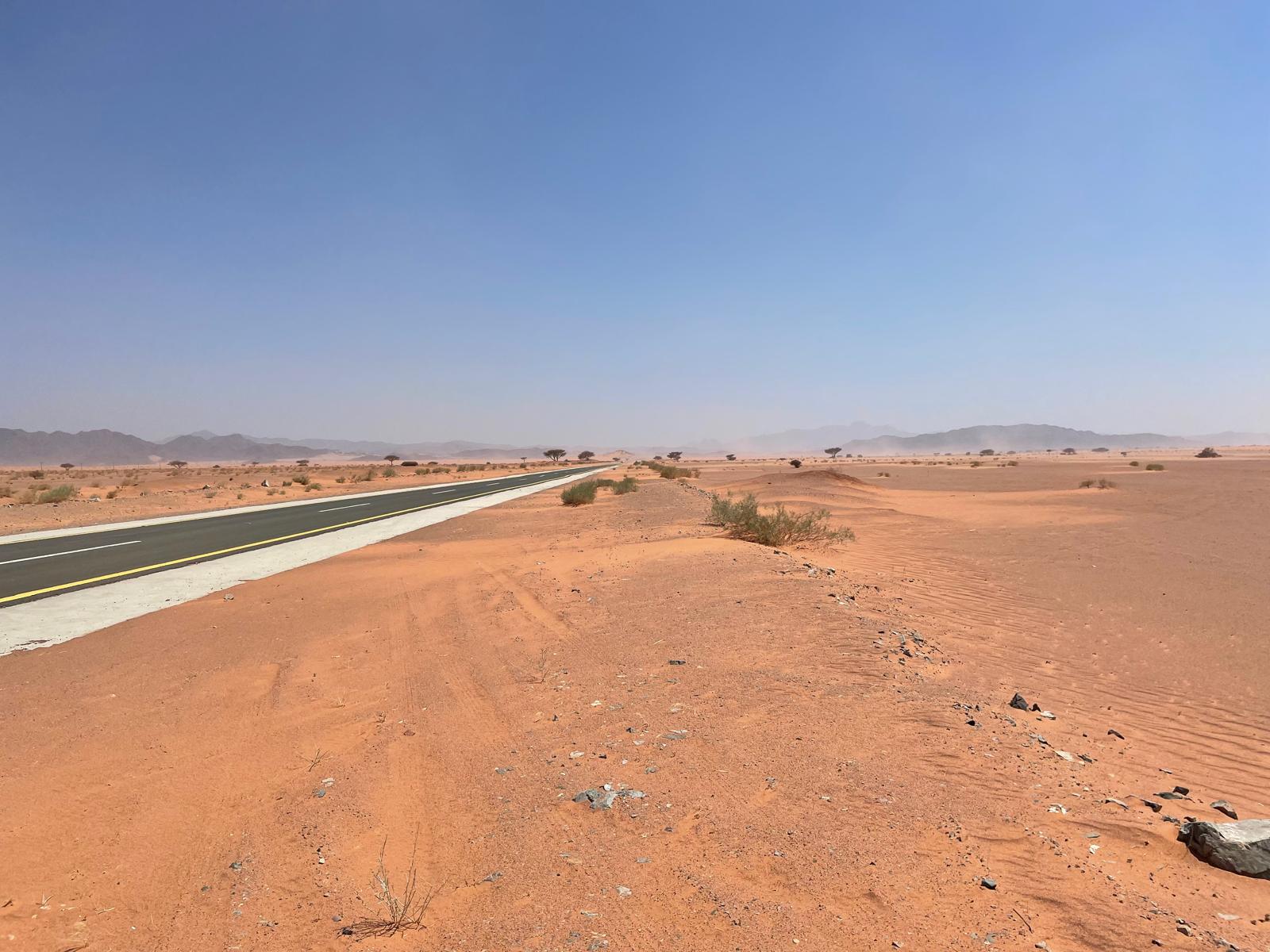
"Drive around was incredibly pleasant. Very high quality roads and the views across the desert were incredible as we were cruising."