image of popular travel destinations

Sri Lanka

A journey from the ancient rock fortresses of the Cultural Triangle to the cloud forests and tea fields of the hill country before heading south to surf towns along the Indian Ocean coast.

From ancient rock citadels and spice gardens to tea valleys and surfer towns.

A twelve-day loop covering Sri Lanka's four main zones in logical order. The Cultural Triangle opens the trip: Sigiriya rock fortress and the Dambulla cave temples are the centrepiece, with a spice garden stop en route to Kandy. Kandy is the country's religious and cultural hub; the Temple of the Tooth and the Bluefield tea plantation are the two days well spent here. From Kandy, the highland train route climbs into tea country and descends into Ella, a small, tourist-facing hill town that works well as a hiking base. The final section is the south coast: Weligama for surf, Ahangama for food and evenings, several days between the two. The route ends with a two-and-a-half-hour expressway drive back to Colombo airport. Note that as of 2026, Cyclone Ditwah has suspended the Kandy section of the highland railway; the train currently runs from Ambewela rather than Kandy, covering the most scenic part of the original route.

Highlights

image of vibrant dining space (for a mexican restaurant)

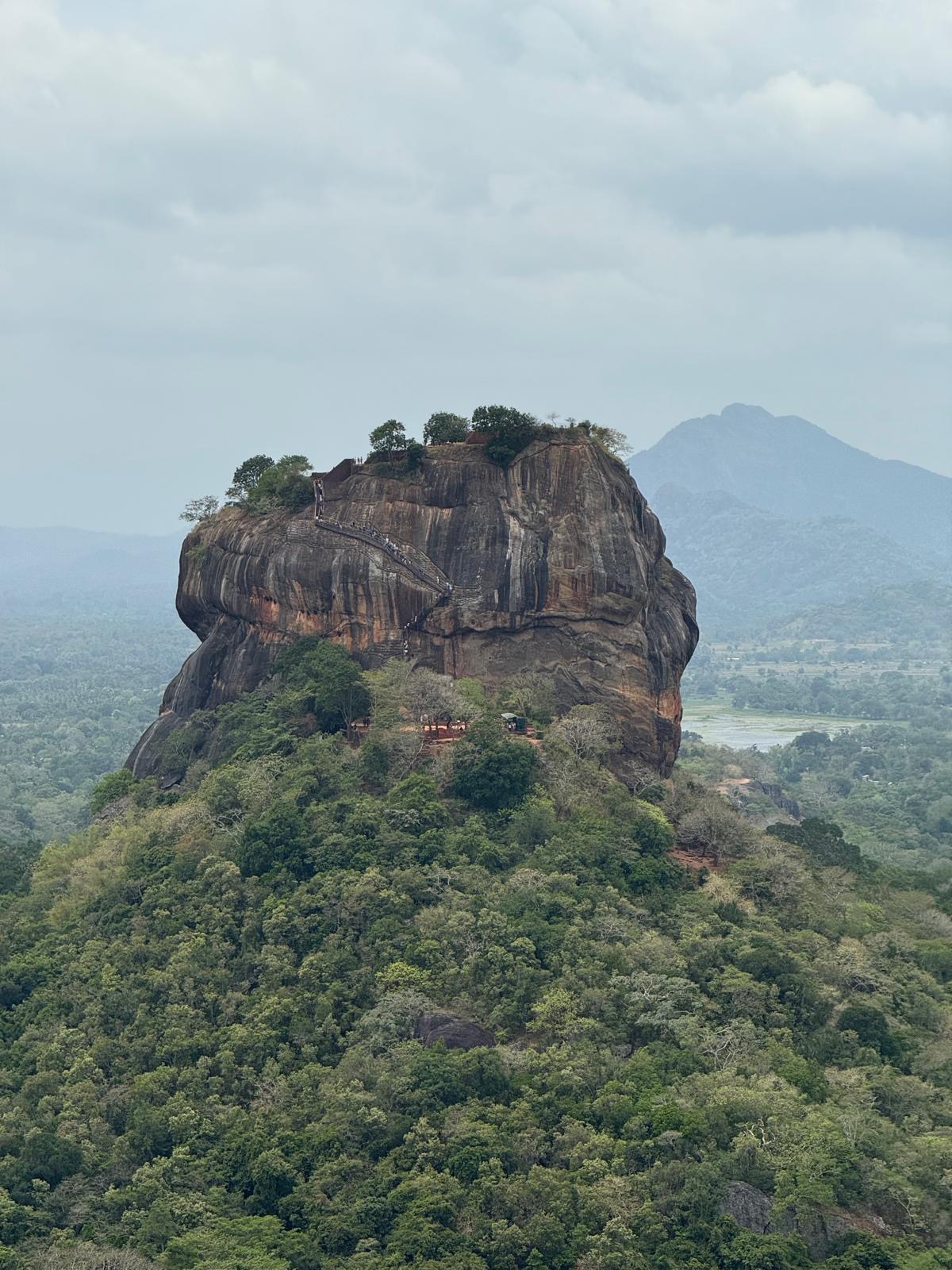
Sigiriya and Pidurangala at First Light

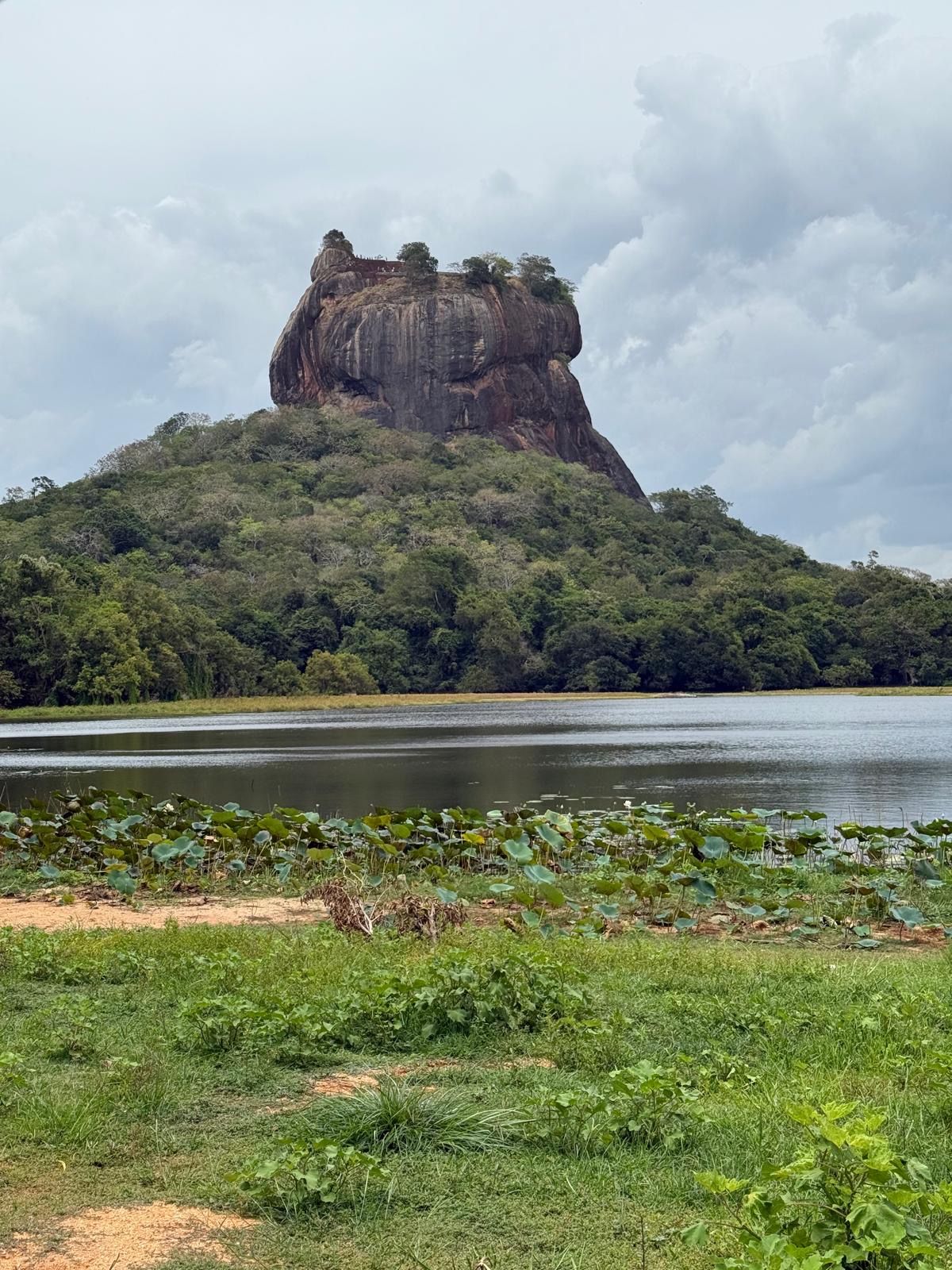
Climb the Sigiriya Rock at dawn and stand where the fifth century kings once ruled. Explore cave temples carved deep into boulders and wander markets filled with spices that still define the soul of Sri Lankan cuisine.

image of a guided tour group

Tea Country Trains and Ella’s Green Spine

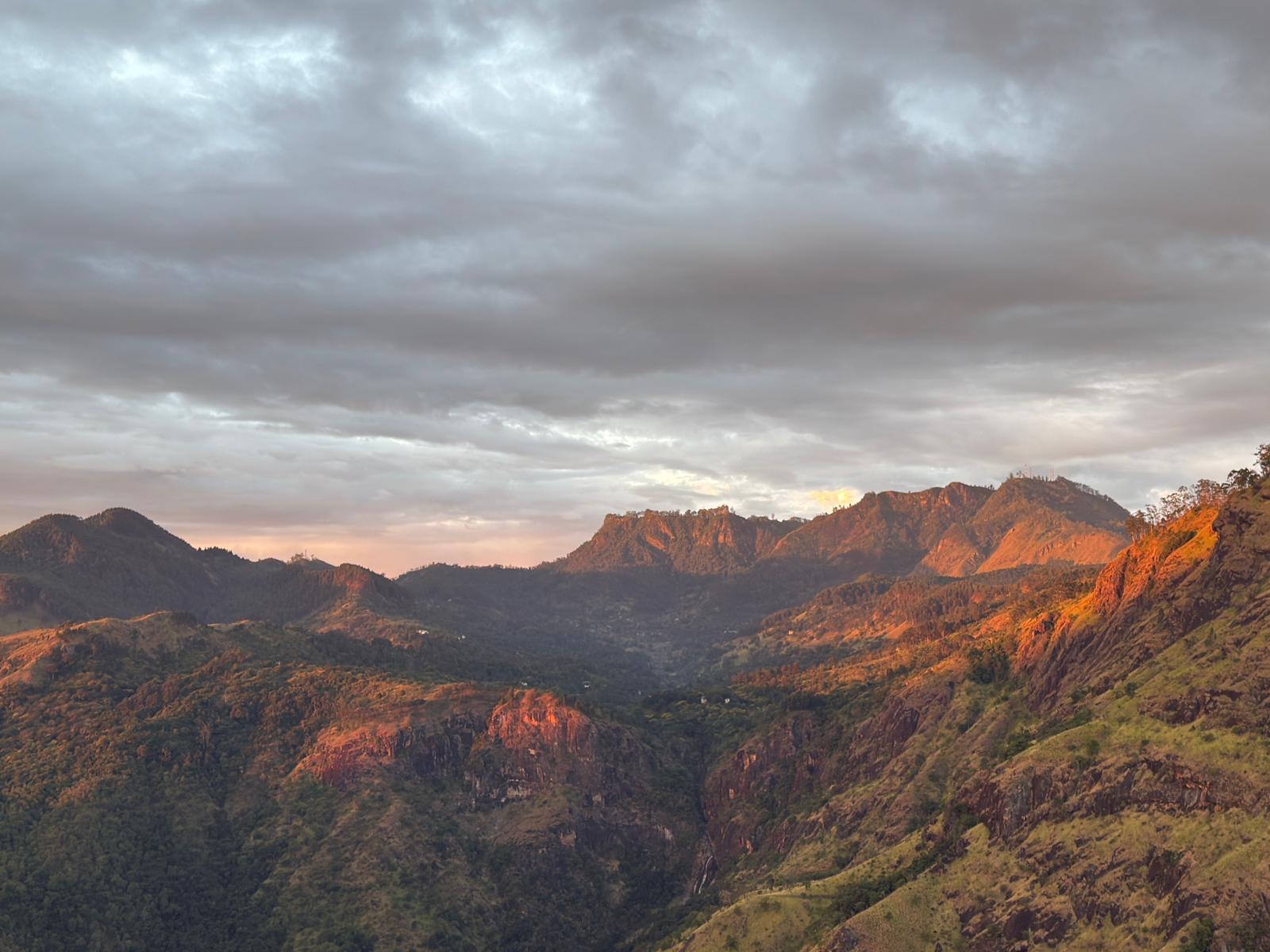
Ride the classic hill train into Ella, then spend two days on foot in the bright green interior, weaving between tea plantations, waterfalls, and ridge hikes with endless views.
image of a local tour guide (for a travel agency)

South Coast Surf

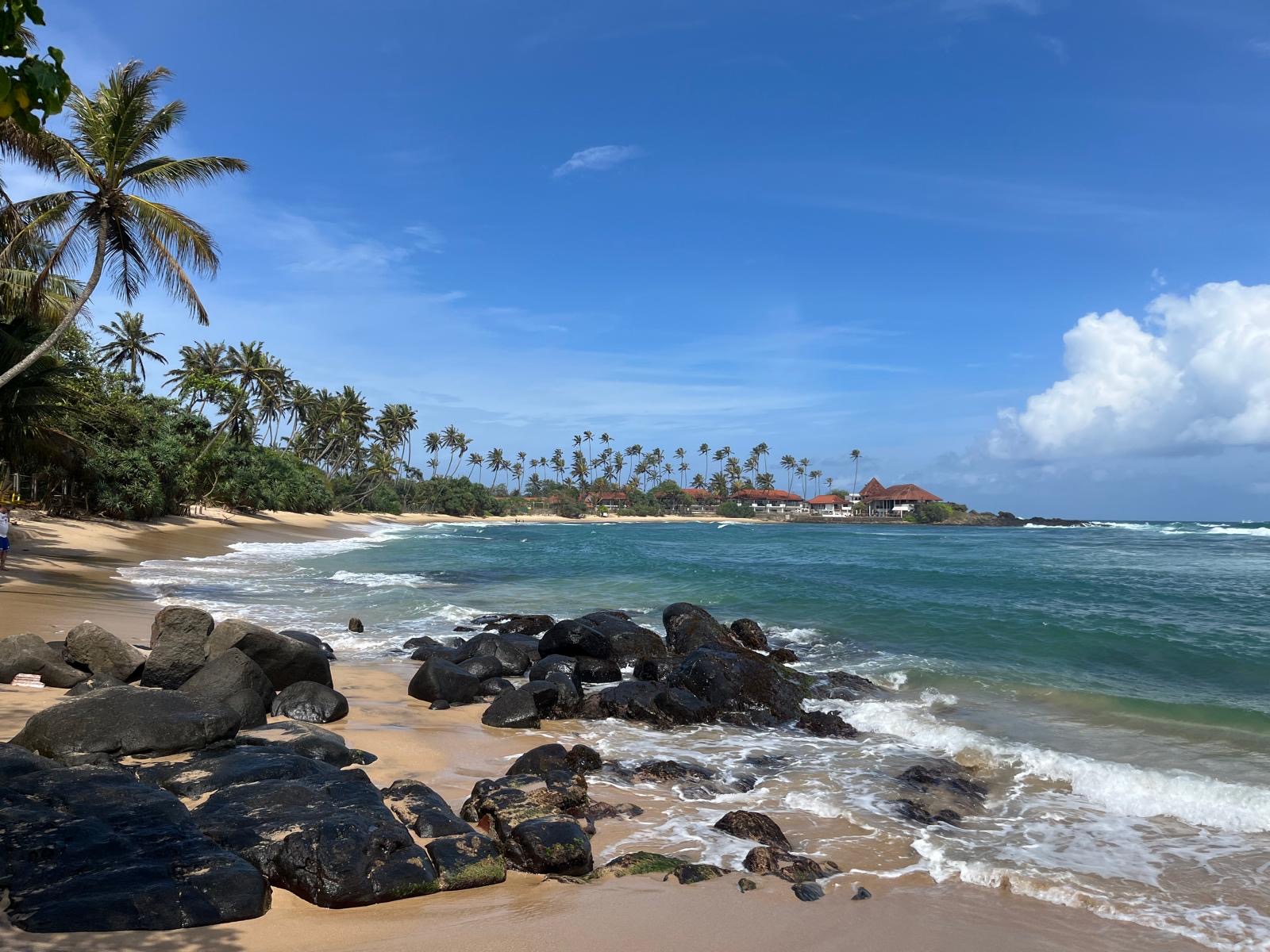
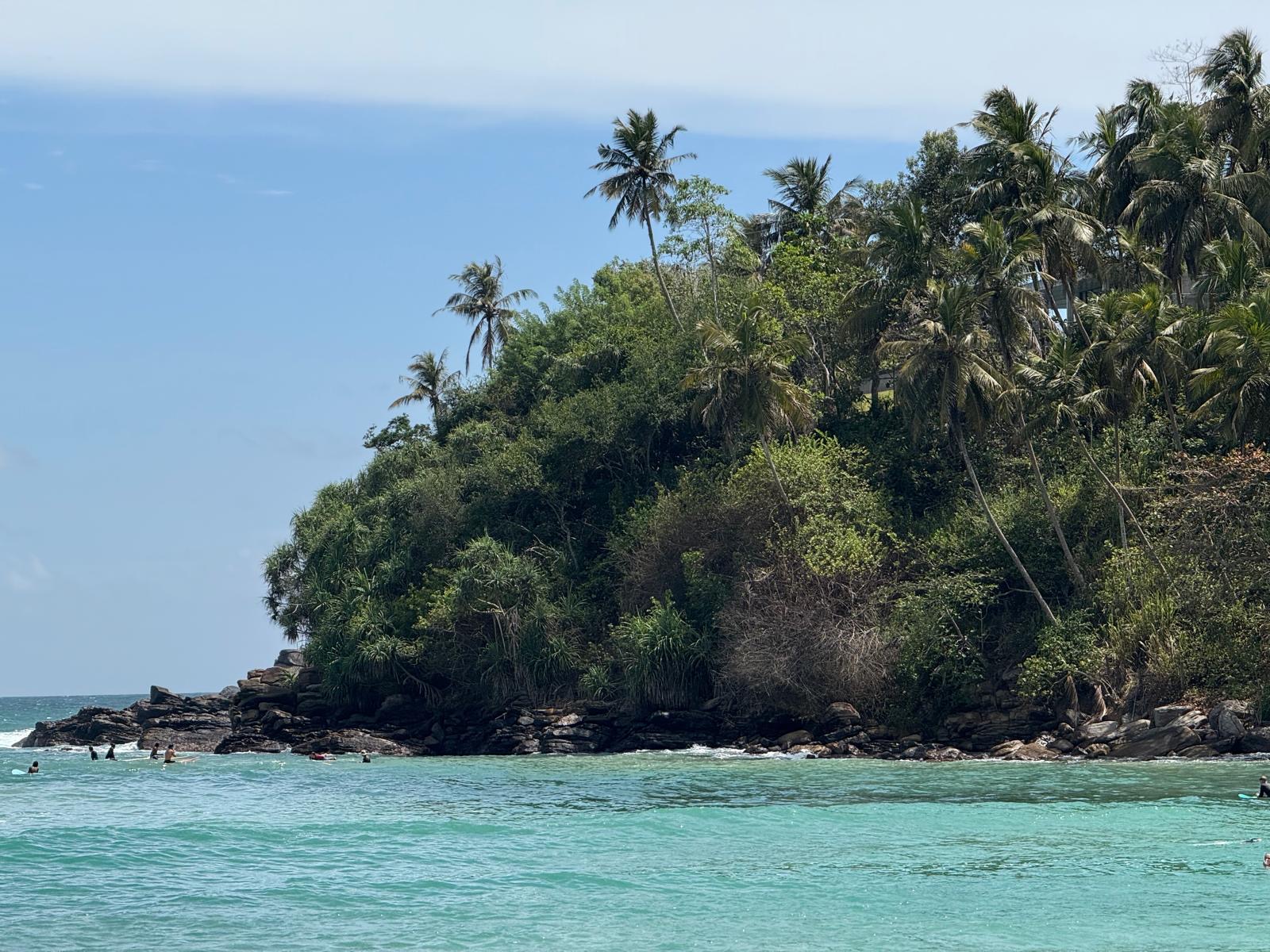
Sip coconut drinks in Weligama, ride waves in Ahangama, and find hidden beaches shaded by palm forests. End your days at clifftop bars that glow gold as the sun sinks into the Indian Ocean.
image of vibrant dining space (for a mexican restaurant)

Sigiriya and Pidurangala at First Light

Climb the Sigiriya Rock at dawn and stand where the fifth century kings once ruled. Explore cave temples carved deep into boulders and wander markets filled with spices that still define the soul of Sri Lankan cuisine.

image of a guided tour group

Tea Country Trains and Ella’s Green Spine

Ride the classic hill train into Ella, then spend two days on foot in the bright green interior, weaving between tea plantations, waterfalls, and ridge hikes with endless views.
image of a local tour guide (for a travel agency)

South Coast Surf

Sip coconut drinks in Weligama, ride waves in Ahangama, and find hidden beaches shaded by palm forests. End your days at clifftop bars that glow gold as the sun sinks into the Indian Ocean.

Journey itinerary

Itinerary overview
Detailed breakdown follows

Day 1: Arrival in Sigiriya

Day 2: Sigiriya Rock and the Caves of Dambulla

Day 3: Spice Gardens and the Road to Kandy

Day 4: Kandy Traditions and Bluefield Tea

Day 5: Into the Mountains of Ella

Day 6: Adam’s Peak and the Markets of Ella

Day 7: South to Weligama and the Coast

Day 8: Weligama Beaches and Local Life

Day 9: Food Trails and Coastal Villages

Day 10: Ahangama and Village Paths

Day 11: Final Day on the Coast

Day 12: Departure

Day-by-day itinerary
Day 1: Arrival in Sigiriya

Colombo's Bandaranaike International Airport (CMB) is near Negombo on the west coast. Sigiriya is roughly 170 km northeast, about three to three and a half hours by road. Arrange a driver in advance; expect to pay around 8,000 to 12,000 LKR for the transfer. If you arrive in the evening, the road is straightforward but poorly lit in stretches.

The Sigiriya area sits in Sri Lanka's dry zone. Check into your guesthouse or lodge, take a slow afternoon walk around the base of the rock or through the nearby village, and eat your first proper meal at whatever is closest and most local: a plate of white rice surrounded by small portions of different curries, dhal, coconut sambol, papadums and pickle.

The cicada noise after dark in the Sigiriya area is genuinely remarkable.

Day 1: Arrival in Sigiriya

Colombo's Bandaranaike International Airport (CMB) is near Negombo on the west coast. Sigiriya is roughly 170 km northeast, about three to three and a half hours by road. Arrange a driver in advance; expect to pay around 8,000 to 12,000 LKR for the transfer. If you arrive in the evening, the road is straightforward but poorly lit in stretches.

The Sigiriya area sits in Sri Lanka's dry zone. Check into your guesthouse or lodge, take a slow afternoon walk around the base of the rock or through the nearby village, and eat your first proper meal at whatever is closest and most local: a plate of white rice surrounded by small portions of different curries, dhal, coconut sambol, papadums and pickle.

The cicada noise after dark in the Sigiriya area is genuinely remarkable.

Button Text
Day 2: Sigiriya Rock and Dambulla Cave Temples

Sigiriya opens at 7 am and the ticket office closes at 5 pm. The entrance fee is USD 35 for foreign adults. Arrive as close to opening as you can manage. By 9 am the tour buses from Colombo and Kandy start arriving, and by mid-morning the rock is crowded and the sun is merciless. There is no shade on the upper sections.

The site is more than the climb. Walk the water gardens at the base before starting up; they are a feat of fifth-century hydraulic engineering, still symmetrical and still functioning after fifteen hundred years. The boulder gardens and cave shelters come next, then the Mirror Wall, a polished plaster surface on which visitors wrote poems to the women in the frescoes above from the sixth century onward. The frescoes themselves, eighteen of the original five hundred paintings of celestial figures, are reached by a spiral metal staircase from a sheltered platform partway up; they are roped off on the ascent and accessible on the descent as a crowd-management measure.

The Lion's Paw Terrace is the most iconic viewpoint on the climb: two enormous carved stone paws are all that remain of the lion's body that once formed the entrance to the summit. The final ascent is via steep metal staircases above the paws. The summit is the ruins of King Kasyapa's fifth-century palace, and the 360-degree view takes in the flat jungle canopy and the geometric reservoirs of the ancient irrigation system in every direction.

The whole visit takes two to three hours at a comfortable pace. Drink a litre of water before you start and carry more. There are no vendors inside the archaeological zone. The museum included in the ticket is worth spending twenty minutes in before the climb, not after.

After Sigiriya, the drive to Dambulla takes around thirty minutes. The Golden Cave Temple complex sits at the top of a rock with its own climb, shorter and less dramatic than Sigiriya but still worth doing. Five cave shrines, 153 Buddha statues and ceiling frescoes covering 2,100 square metres. Remove your shoes and hat at the entrance; dress with shoulders and knees covered. The caves are cool and dim after the open heat of Sigiriya. Allow an hour.

In the evening, consider climbing Pidurangala Rock. It is two kilometres from Sigiriya entrance, entrance fee roughly 1,000 LKR, and takes around forty-five minutes to the top. The view is Sigiriya itself silhouetted against the sky. It is where you understand the scale and drama of the fortress you climbed earlier in the day. Go for sunset; start the ascent by 4:30 pm.

Day 3: Spice Garden, then Kandy

The spice gardens dotted along the road between Sigiriya and Kandy vary widely in quality. The better ones are working farms where cinnamon, cardamom, clove, nutmeg and pepper are actually grown, and where the guide can show you how cinnamon is harvested and rolled. The worse ones are retail operations in disguise. Your driver will have a preferred stop; be aware that commissions are involved. If the tour finishes with a pressure-sell, you have ended up at the wrong kind. A good spice garden visit takes about forty-five minutes. Do not feel obligated to buy anything; the experience is in the smelling and the information, not the gift shop.

The drive from Sigiriya to Kandy takes two and a half to three hours depending on traffic, with the road winding into the hills in the final section. Kandy sits at around 500 metres in a bowl of green hills around a central lake; the air is noticeably cooler and the pace noticeably different from the dry zone.

Check in and go to the Temple of the Tooth (Sri Dalada Maligawa). The temple holds a relic said to be a tooth of the Buddha, which determines the legitimate authority of the Sri Lankan state in Sinhalese Buddhist tradition. The puja ceremonies happen at roughly 6 am, 9:30 am and 6:30 pm. The evening puja is the one to aim for: drumming begins outside before the inner shrine opens, incense fills the corridor, and the crowd presses forward with offerings of lotus flowers. This is an active place of worship, not a museum. Remove shoes, dress modestly, and follow the flow rather than trying to position for photographs.

Entry for foreign visitors costs 1,500 LKR. Queues form before puja; arrive twenty minutes early.

Walk the lake circuit afterwards. The artificial lake was constructed in 1807 by the last Kandyan king, and the moated royal palace complex faces it on the north side. It takes twenty to thirty minutes to walk the perimeter and the evening light on the water is very good.

Avoid your driver's Ayurvedic massage recommendation unless you have independently researched the specific centre. The itinerary description already flags this correctly.

Day 4: Kandy, Classical Dance and Tea

The Kandyan dance performance runs nightly at the Cultural Centre near the lake and at the YMBA Hall; both are reputable. Performances run for around one hour and include multiple dance forms and the low-country Kolam mask dances. Arrive fifteen minutes early for the fire-walking demonstration that precedes the main performance. Ticket prices for foreign visitors are around 1,500 LKR. It is explicitly a cultural performance for tourists rather than an active religious ceremony, but it is done well and the drumming is extraordinary.

Bluefield Tea Estate is roughly an hour's drive from Kandy into the hill country above the city, through increasingly steep and green terrain. The estate tour shows the plucking, withering, rolling, oxidation and drying process that turns fresh leaf into finished tea, and ends with a tasting. Allow two to three hours. Sri Lanka is one of the world's largest tea exporters; understanding how the industry works and seeing the Tamil estate workers in the fields puts the ubiquitous cups of tea in a different light for the rest of the trip. Buy tea directly from the estate if you want to bring some home; it is significantly fresher and cheaper than the airport.

Kandy's food scene is functional rather than exciting. Eat at a local rice and curry restaurant for lunch; the market area has several good options. For dinner, the hotel restaurants around the lake are reliable.

Day 5: Into the Hill Country and the Train to Ella

Critical note as of mid-2026: Cyclone Ditwah hit Sri Lanka in late November 2025 and severely damaged the highland railway. The Kandy end of the line remains suspended. The train to Ella is still running but now begins at Ambewela, roughly halfway along the original route. The government hopes to restore the full line by early 2027.

This changes the journey. The most straightforward option is a private car or taxi from Kandy to Ambewela, a roughly two-hour drive; expect to pay around 3,500 to 5,000 LKR. From Ambewela, you board the train for Ella, which covers the most dramatic section of the original journey: the descent from the highest point on the line at Pattipola through cloud forest, waterfalls and tea estates into the warmer valleys around Ella.

Alternatively, you can take a bus from Kandy to Nuwara Eliya, spend a night or two there exploring the hill town, and then take a tuk-tuk to Ambewela for the onward train. This works well if you want to add a Nuwara Eliya stop; the former British hill station has a colonial character quite different from anything else on this route, with horse racing, a golf club and a vegetable market in the cold air.

Train tickets from Ambewela to Ella: book online through the Sri Lanka Railways official site or 12Go Asia. Second class reserved seats are the best balance between comfort and authenticity; the observation car, available on some trains, has panoramic windows but does not allow open windows and faces backwards. Third class unreserved is perfectly doable in low season but risky in peak months. Book two to four weeks ahead during high season (December to March and July to August); in shoulder season a week is usually enough. Sit on the left side of the train travelling toward Ella for the best valley views.

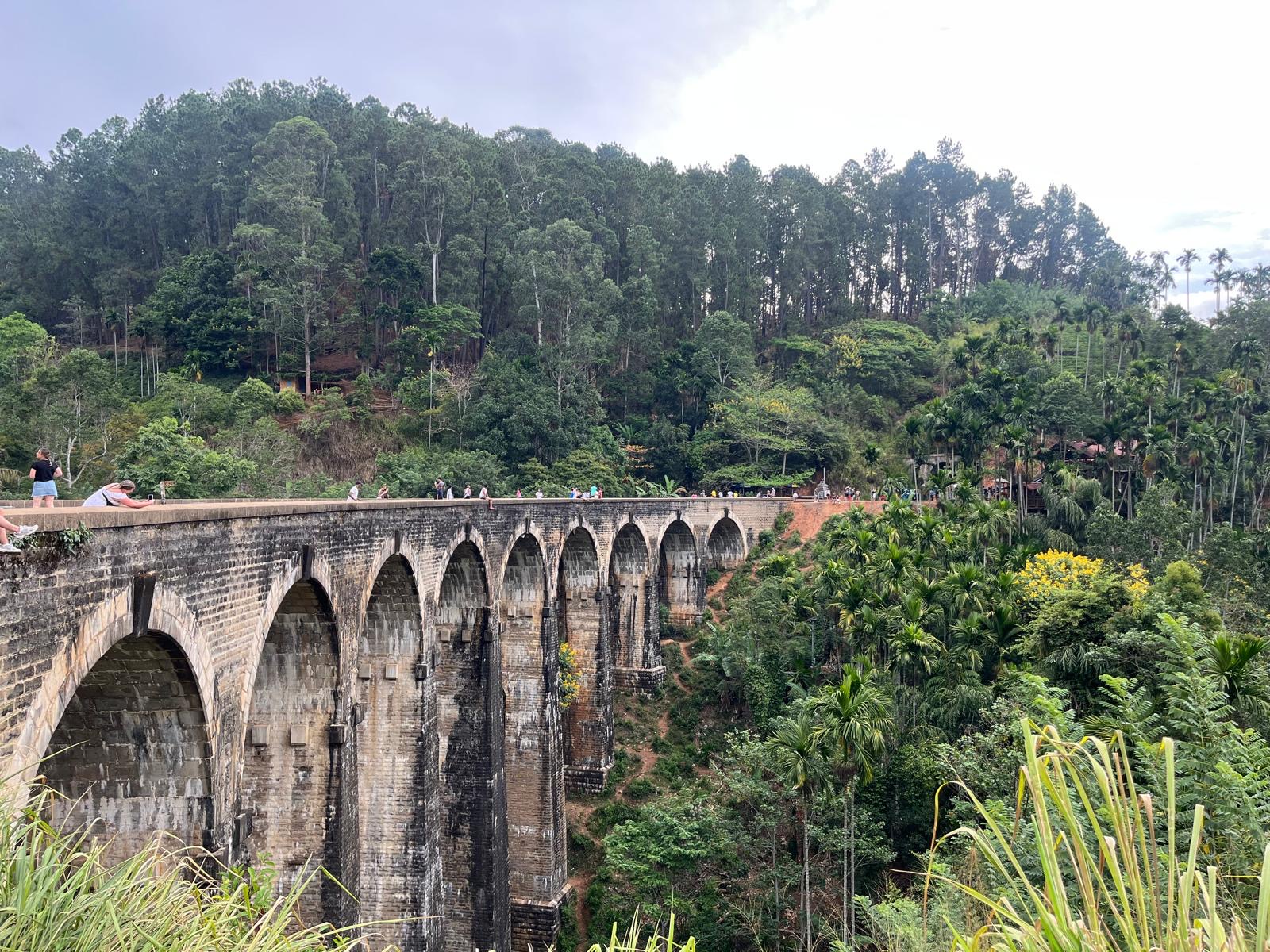
The stretch from Ambewela to Ella takes around two hours and is spectacular regardless of which section it replaces. About ten minutes before Ella station, the train crosses the Nine Arch Bridge; standing in the doorway between carriages gives you an unobstructed view as the bridge curves away behind you.

Ella is small, walkable and noticeably more tourist-facing than anywhere on the route so far. The main street has cafés, smoothie bars, western food and a backpacker energy that will either feel welcome or jarring depending on your mood after the highlands. Check in, eat at Matey Hut on the main street for a solid first dinner of kottu roti (a dish of chopped roti mixed with egg, vegetables and meat on a hot griddle, the rhythmic chopping sound is characteristic of Sri Lankan street cooking), and walk up to the Nine Arch Bridge at sunset. The valley view from the bridge path with the bridge in the foreground is what most of the Ella photographs you have seen look like.

Day 6:  Ella Rock, and a Slow Afternoon

This hike starts from the railway track near Ella station, follows the tracks for about twenty minutes, then branches into the forest and climbs to a viewpoint at around 1,200 m with views across the valley and the surrounding tea country. Four hours round trip, no entrance fee, clearly marked trail from the station. Start by 7 am to avoid the heat and the tour groups.

For an afternoon: Little Adam's Peak is a shorter hike (two hours, easy, good views) accessible by a ten-minute tuk-tuk ride from town. The Nine Arch Bridge is worth a second visit in the morning light if you only saw it at sunset. Café Chill on the main road has reliably good smoothie bowls and coffee for a mid-morning break. The Ella market area on Saturday mornings sells local produce and is worth a wander.

Day 7: South to Weligama and the Coast

The drive from Ella to Weligama is roughly 110 km and takes around two and a half hours by private car or taxi, descending from 1,000 m to sea level through rubber plantations, rice paddies and progressively warmer, greener landscapes before the Indian Ocean appears ahead.

There is no direct public bus between Ella and Weligama. By public transport, take the number 31 bus from Bandarawela (a short tuk-tuk ride from Ella) to Matara, a five to six-hour journey to the south coast transport hub. From Matara, the number 350 bus runs regularly to Galle, passing through Weligama and Ahangama along the way. This is the cheap option and gives you a genuine local-transport experience, but it is slow and requires two changes. A private car is faster and easier; arrange through your Ella accommodation for around 7,000 to 10,000 LKR.

Weligama is the right base for the coast section. It is the principal beginner surf town on the island: a long bay with a sandy break that produces consistently small, forgiving waves. Surf schools and camps line the beachfront. Prices for lessons run around 3,000 to 5,000 LKR for a two-hour session including board.

Ahangama, three kilometres east by tuk-tuk (ten to fifteen minutes, 300 to 500 LKR), is where the better restaurants and cafés are. The distinction is useful to understand early: Weligama has the beach and the surf; Ahangama has the food scene and the boutique accommodation. You will move between both regularly.

Arrive in the early afternoon, rent a scooter if you are comfortable riding one (around 1,500 to 2,000 LKR per day; helmets are legally required and worth insisting on), and spend the first evening finding your bearings at The Cliff in Weligama for sunset.

Day 8: Weligama Beaches and Local Life

Coconut Beach in Weligama is the main surf beach: long, sandy, consistent, good for beginners and fun for watching better surfers. Kima Surf is one of the best-regarded surf camps; lessons are bookable on the day.

For a swim rather than surf, Secret Beach in Ahangama is a sheltered cove, calmer than Weligama Bay, better for swimming without waves. Follow the road through Ahangama toward Kabalana; local tuk-tuk drivers know it. Kabalana itself is a beautiful stretch of sand with a reef break popular with intermediate surfers and bodyboarders.

Cactus Cafe in Ahangama is the morning ritual spot of choice: smoothie bowls, good coffee, and a terrace view of the road and sea. It fills up by 9 am. The main road through Ahangama has the best concentration of cafés on the whole south coast.

The Cliff in Weligama for sunset: a restaurant built out over a rocky promontory with a 180-degree ocean view. The food is secondary to the setting. Arrive before 5:30 pm to get the best table.

Day 9: Food, Surf Town Rhythms and Ahangama Evenings

Plan B Weligama is a coworking space and café on the Weligama beachfront. Their hoppers are the recommended breakfast: a Sri Lankan rice flour pancake cooked in a small wok, bowl-shaped, crispy at the edges, softer in the centre, served with an egg broken in and curries on the side. This is one of those dishes that sounds like a breakfast option but is actually a complete meal. Order two.

Ceylon Sliders in Ahangama is a surf shop and bar on the main road. The food is secondary to the atmosphere: cold beer, loud music, boards everywhere, the entire south coast beach crowd passing through in the late afternoon. A solid two-hour stop before dinner.

Follow the White Rabbit is a beachside bar near Ahangama, usually open from late afternoon. Sunset cocktails here with the ocean in front of you is the defining south coast experience this itinerary is aiming at.

For dinner, Kuma in Weligama serves fresh fish simply prepared. The local catch changes daily; the kitchen does not overcomplicate it. This is the meal to eat on a beach stretch of the trip.

Day 10: Slower Day Between Weligama and Ahangama

Use the morning for anything the previous days did not leave time for. The route between Weligama and Ahangama by scooter takes fifteen minutes and passes through Midigama and Kabalana. Both have their own surf breaks and small restaurant strips worth discovering at your own pace.

If you want a day trip: Galle Fort is forty-five minutes west by bus or tuk-tuk. The Dutch-built fort walls enclose a small city of colonial streets, independent boutiques, art galleries and cafés that is one of the most architecturally distinctive places in Sri Lanka. A half-day visit is plenty; walk the ramparts for the ocean view and the interior streets for the colonial detail.

Udawalawe National Park is two hours east of Weligama and is one of the best places in Sri Lanka to see wild elephants; herds of several dozen animals are a regular sighting. A half-day jeep safari starts at around 5,000 LKR per person. Book through your accommodation the evening before.

Day 11: Final Coast Day

Swim, read, surf or move between cafés at your own pace. The south coast is built around slow mornings and social evenings. Breakfast at a different spot from the previous days; the little local rice and curry shops away from the tourist strip open early and cost almost nothing.

If you are flying home from Colombo, note the distance: Weligama to the airport is roughly two and a half hours by expressway in good traffic, more in the morning rush. A departure before noon on Day 12 means leaving Weligama by 6 am or staying in Colombo the final night. Build this into your planning.

Day 12: Departure

If flying from Colombo, take the Southern Expressway from the south coast; the road is modern and fast and significantly quicker than the old coastal highway through Galle and Kalutara. The expressway toll is small. The airport is at Negombo, on the north side of Colombo; allow three hours from Weligama for a comfortable connection, or four in Friday afternoon traffic.

In pictures

No items found.

Traveller suggestions

Accomodation

Sigiriya area

Premium : Water Garden Sigiriya (thirty private villas facing directly onto the Lion Rock; each villa has its own plunge pool), Jetwing Vil Uyana (eco-luxury stilted villas built over a wetland)

Mid-tier : Aliya Resort and Spa (opposite Sigiriya Rock, large pool facing Lion Rock), Sigiriya Village Hotel (colonial-style property a short walk from the rock entrance), EKHO Sigiriya (boutique-style)

Budget : Mango Tree Hostel (run by host named Shayen), il Frangipane (family-run, pool in a garden setting)

Stay in Sigiriya village rather than Habarana. Habarana is a more convenient transit hub but further from the rock and with less atmosphere. Sigiriya village puts you close enough to climb at 7 am before the crowds and the heat arrive.

Kandy

Premium : The Kandy House (restored 200-year-old manor), Kings Pavilion Kandy (colonial luxury in hills above the lake)

Mid-tier : Thilanka Hotel (directly above the lake), Helga's Folly (eccentric, theatrical, boutique hotel), .Earl's Regency (hillside resort)

Budget : Freedom Lodge (guesthouse in the hills above Kandy, popular with backpackers), Hotel Suisse (heritage building near the lake)

Ella

Premium : 98 Acres Resort (tea estate property)

Mid-tier : Zion View (boutique guesthouse), Ambiente Ella (terrace views), Ella Escapade (sociable mid-range option)

Budget : Ella Flower Garden Resort

Weligama

Premium : Cape Weligama (clifftop resort)

Mid-tier : Kima Surf Camp, Weligama Bay Resort

Budget : Hangtime Hostel (rooftop bar with ocean views, social), Rise Bed and Breakfast, Plan B

Ahangama

Premium : Harding Boutique Hotel (architecturally striking property)

Mid-tier : The Kip (restored colonial villa), Dreamsea Sri Lanka (surf camp and boutique hotel combined), The Nuga House (yoga and surf retreat)

Budget : Surfing Wombats (social hostel in Ahangama)

If staying four or more nights on the south coast, Ahangama is the better base over Weligama. The beaches are nicer, the food scene is more interesting, and the boutique hotel options are more considered. Weligama makes more sense if learning to surf is your primary focus and you want the widest choice of surf schools on a single bay.

Food & Drink

Kandy

Best local rice and curry : Mandiya (in Pushpadana complex on DS Senanayake Veediya, four tables, changing daily menu of traditional dishes), Hela Bojun Hala (government-run Sri Lankan dish food court)

Best sit-down meal : Kandyan Muslim Hotel, Devon Restaurant (Sri Lankan and Chinese)

Budget and street food : Balaji Dosai (vegetarian, South Indian), Delight Bakers and Sweet House (Sri Lankan pastries)

Cafes : Soul Food (wraps, jackfruit burgers, fresh juices), Cafe The Vibe

Ella

Best local Sri Lankan : Matey Hut (okra fry and banana flower curry reccommendation, also runs cooking classes), Wimala

Worth knowing : Cafe Chill (rooftop seating, order lamprais, live music some nights), The Barn by Starbeans (wood-fired pizza)

For breakfast : Rainbow Cafe

Weligama

Mid-tier : The Cliff (clifftop promontory, come for sunset), Hangten Rooftop (smash burgers and ocean views), Meewitha (Sri Lankan and international plates), Kuma

Budget : Plan B (beachfront café and coworking space)

Ahangama

Best overall : Cactus (defining morning café), Indigo (tandoori seafood), Alaia (beachside, sashimi and seafood), Frida (taqueria)

Bars and evenings : Ceylon Sliders, Follow the White Rabbit (beachside, sunset cocktails), Hotel de Uncles (bar, less polished, more local)

Reminders & Cautions

Transport across the route: the most practical approach is a private driver for Days 1 to 4 (airport to Sigiriya to Dambulla to Kandy), then the highland train from Ambewela to Ella, then a combination of tuk-tuk and scooter on the south coast. A private driver for the first four days costs roughly 35,000 to 50,000 LKR negotiated in advance and covers all road transfers without logistical friction. Most drivers earn commissions at spice gardens, gem shops and certain restaurants; this is standard but worth knowing so you can decline add-ons that are not your own choice.

Train situation as of mid-2026: Cyclone Ditwah in November 2025 severely damaged the Kandy to Ella highland railway. The Kandy end of the line remains suspended; restoration is expected by early 2027. The train currently departs from Ambewela, reached by a two-hour private car or taxi from Kandy (roughly 3,500 to 5,000 LKR). The Ambewela to Ella section is fully operational and covers the most dramatic part of the original journey. Check current status at srilanka.travel or 12Go Asia before booking. When the full line reopens, take the Podi Menike (departs Kandy around 5:55 am) or Udarata Menike (around 9:45 am). Book second class reserved seats two to four weeks ahead in peak season through 12Go Asia or the Sri Lanka Railways official site. Sit on the left side of the train facing the direction of travel for the best valley views. The observation car is available on some services but faces backwards and has sealed windows; second class reserved generally gives a better experience for the price.

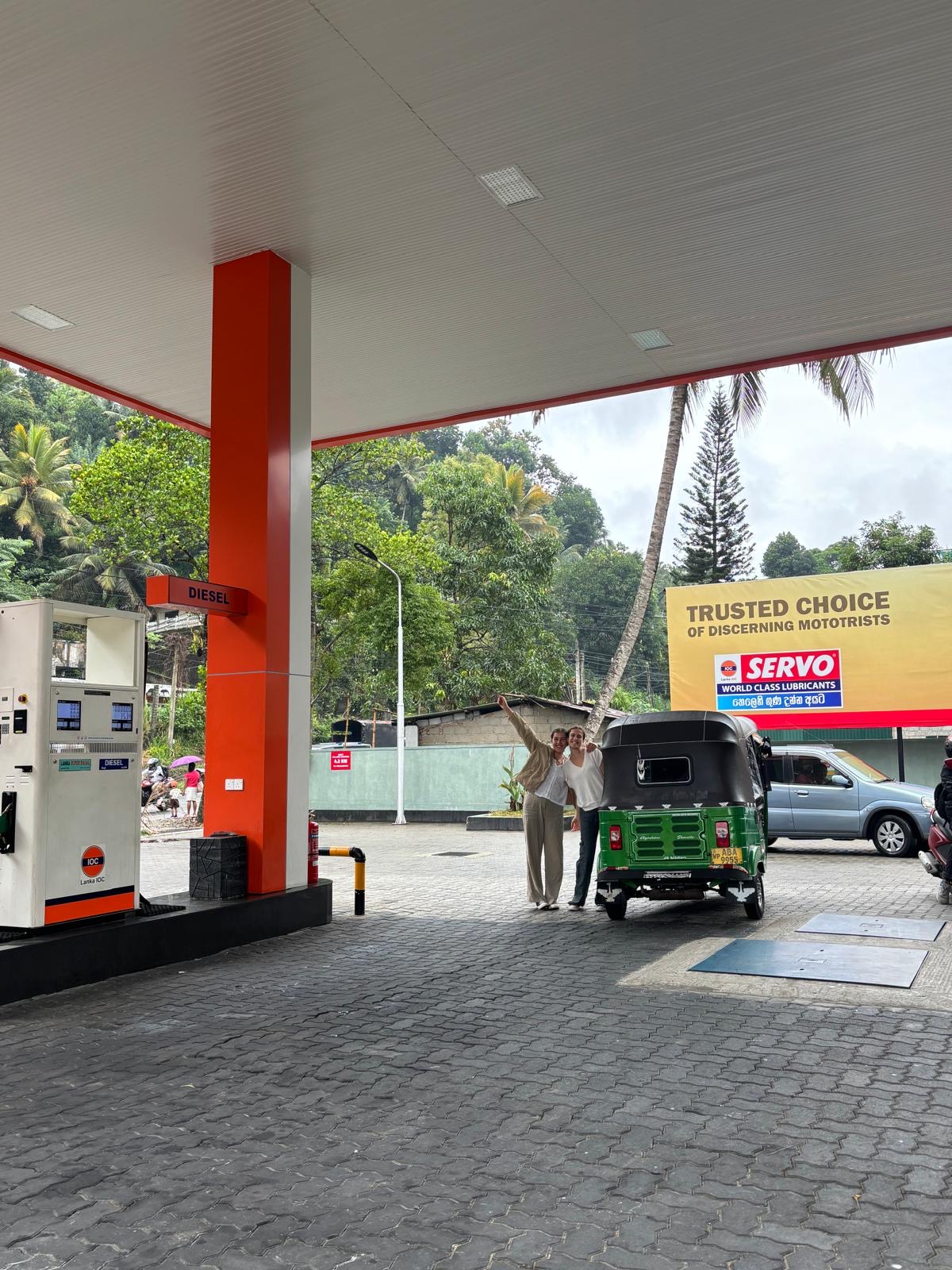
South coast transport: Tuk-tuks handle short hops between towns and to beaches; agree the fare before getting in. Scooter rental runs around 1,500 to 2,000 LKR per day and is the most practical way to move between Weligama, Ahangama, Midigama and the various beaches. Helmets are legally required; insist on one. Sri Lanka drives on the left.

Money: The Sri Lankan Rupee (LKR). ATMs are available in Kandy, Ella and on the south coast. Carry cash in smaller denominations for tuk-tuks, market stalls and small guesthouses. Cards are accepted at mid-range and upmarket accommodation and restaurants but not universally.

Season: The dry season for the west and south runs roughly November to April, which covers this entire route. December to February is peak season: best weather, highest prices, fullest accommodation. April to June and September to November are shoulder months with fewer tourists and lower prices but some rain. Avoid the south coast May to September when the south-west monsoon hits; seas are rough and many beach cafés close or reduce hours.

Dress: Buddhist temples require shoulders and knees covered and shoes removed. The Temple of the Tooth in Kandy is strict. Carry a light scarf or sarong throughout the cultural section of the trip as a backup.

Health: Tap water is not drinkable. Use bottled water or a filter bottle throughout. Dengue is present across Sri Lanka; use repellent consistently, particularly in the Sigiriya area and the south coast in wetter months. Stomach issues in the first few days are common; eat at busy places where food is freshly cooked rather than sitting out.

Scams: The most common pattern is a driver steering you toward a gem shop, Ayurvedic massage centre or overpriced spice garden on commission. Be politely firm. The Ayurvedic massage stop is the one most consistently flagged; skip it unless you have independently chosen the centre.

image of vibrant dining space (for a mexican restaurant)

Sigiriya and Pidurangala at First Light

Climb the Sigiriya Rock at dawn and stand where the fifth century kings once ruled. Explore cave temples carved deep into boulders and wander markets filled with spices that still define the soul of Sri Lankan cuisine.

image of a guided tour group

Tea Country Trains and Ella’s Green Spine

Ride the classic hill train into Ella, then spend two days on foot in the bright green interior, weaving between tea plantations, waterfalls, and ridge hikes with endless views.
image of a local tour guide (for a travel agency)

South Coast Surf

Sip coconut drinks in Weligama, ride waves in Ahangama, and find hidden beaches shaded by palm forests. End your days at clifftop bars that glow gold as the sun sinks into the Indian Ocean.

Reminders from Collective travellers

Transport across the route: the most practical approach is a private driver for Days 1 to 4 (airport to Sigiriya to Dambulla to Kandy), then the highland train from Ambewela to Ella, then a combination of tuk-tuk and scooter on the south coast. A private driver for the first four days costs roughly 35,000 to 50,000 LKR negotiated in advance and covers all road transfers without logistical friction. Most drivers earn commissions at spice gardens, gem shops and certain restaurants; this is standard but worth knowing so you can decline add-ons that are not your own choice.

Train situation as of mid-2026: Cyclone Ditwah in November 2025 severely damaged the Kandy to Ella highland railway. The Kandy end of the line remains suspended; restoration is expected by early 2027. The train currently departs from Ambewela, reached by a two-hour private car or taxi from Kandy (roughly 3,500 to 5,000 LKR). The Ambewela to Ella section is fully operational and covers the most dramatic part of the original journey. Check current status at srilanka.travel or 12Go Asia before booking. When the full line reopens, take the Podi Menike (departs Kandy around 5:55 am) or Udarata Menike (around 9:45 am). Book second class reserved seats two to four weeks ahead in peak season through 12Go Asia or the Sri Lanka Railways official site. Sit on the left side of the train facing the direction of travel for the best valley views. The observation car is available on some services but faces backwards and has sealed windows; second class reserved generally gives a better experience for the price.

South coast transport: Tuk-tuks handle short hops between towns and to beaches; agree the fare before getting in. Scooter rental runs around 1,500 to 2,000 LKR per day and is the most practical way to move between Weligama, Ahangama, Midigama and the various beaches. Helmets are legally required; insist on one. Sri Lanka drives on the left.

Money: The Sri Lankan Rupee (LKR). ATMs are available in Kandy, Ella and on the south coast. Carry cash in smaller denominations for tuk-tuks, market stalls and small guesthouses. Cards are accepted at mid-range and upmarket accommodation and restaurants but not universally.

Season: The dry season for the west and south runs roughly November to April, which covers this entire route. December to February is peak season: best weather, highest prices, fullest accommodation. April to June and September to November are shoulder months with fewer tourists and lower prices but some rain. Avoid the south coast May to September when the south-west monsoon hits; seas are rough and many beach cafés close or reduce hours.

Dress: Buddhist temples require shoulders and knees covered and shoes removed. The Temple of the Tooth in Kandy is strict. Carry a light scarf or sarong throughout the cultural section of the trip as a backup.

Health: Tap water is not drinkable. Use bottled water or a filter bottle throughout. Dengue is present across Sri Lanka; use repellent consistently, particularly in the Sigiriya area and the south coast in wetter months. Stomach issues in the first few days are common; eat at busy places where food is freshly cooked rather than sitting out.

Scams: The most common pattern is a driver steering you toward a gem shop, Ayurvedic massage centre or overpriced spice garden on commission. Be politely firm. The Ayurvedic massage stop is the one most consistently flagged; skip it unless you have independently chosen the centre.

Reminders from Collective travellers

Transport across the route: the most practical approach is a private driver for Days 1 to 4 (airport to Sigiriya to Dambulla to Kandy), then the highland train from Ambewela to Ella, then a combination of tuk-tuk and scooter on the south coast. A private driver for the first four days costs roughly 35,000 to 50,000 LKR negotiated in advance and covers all road transfers without logistical friction. Most drivers earn commissions at spice gardens, gem shops and certain restaurants; this is standard but worth knowing so you can decline add-ons that are not your own choice.

Train situation as of mid-2026: Cyclone Ditwah in November 2025 severely damaged the Kandy to Ella highland railway. The Kandy end of the line remains suspended; restoration is expected by early 2027. The train currently departs from Ambewela, reached by a two-hour private car or taxi from Kandy (roughly 3,500 to 5,000 LKR). The Ambewela to Ella section is fully operational and covers the most dramatic part of the original journey. Check current status at srilanka.travel or 12Go Asia before booking. When the full line reopens, take the Podi Menike (departs Kandy around 5:55 am) or Udarata Menike (around 9:45 am). Book second class reserved seats two to four weeks ahead in peak season through 12Go Asia or the Sri Lanka Railways official site. Sit on the left side of the train facing the direction of travel for the best valley views. The observation car is available on some services but faces backwards and has sealed windows; second class reserved generally gives a better experience for the price.

South coast transport: Tuk-tuks handle short hops between towns and to beaches; agree the fare before getting in. Scooter rental runs around 1,500 to 2,000 LKR per day and is the most practical way to move between Weligama, Ahangama, Midigama and the various beaches. Helmets are legally required; insist on one. Sri Lanka drives on the left.

Money: The Sri Lankan Rupee (LKR). ATMs are available in Kandy, Ella and on the south coast. Carry cash in smaller denominations for tuk-tuks, market stalls and small guesthouses. Cards are accepted at mid-range and upmarket accommodation and restaurants but not universally.

Season: The dry season for the west and south runs roughly November to April, which covers this entire route. December to February is peak season: best weather, highest prices, fullest accommodation. April to June and September to November are shoulder months with fewer tourists and lower prices but some rain. Avoid the south coast May to September when the south-west monsoon hits; seas are rough and many beach cafés close or reduce hours.

Dress: Buddhist temples require shoulders and knees covered and shoes removed. The Temple of the Tooth in Kandy is strict. Carry a light scarf or sarong throughout the cultural section of the trip as a backup.

Health: Tap water is not drinkable. Use bottled water or a filter bottle throughout. Dengue is present across Sri Lanka; use repellent consistently, particularly in the Sigiriya area and the south coast in wetter months. Stomach issues in the first few days are common; eat at busy places where food is freshly cooked rather than sitting out.

Scams: The most common pattern is a driver steering you toward a gem shop, Ayurvedic massage centre or overpriced spice garden on commission. Be politely firm. The Ayurvedic massage stop is the one most consistently flagged; skip it unless you have independently chosen the centre.

Reminders from Collective travellers

Transport across the route: the most practical approach is a private driver for Days 1 to 4 (airport to Sigiriya to Dambulla to Kandy), then the highland train from Ambewela to Ella, then a combination of tuk-tuk and scooter on the south coast. A private driver for the first four days costs roughly 35,000 to 50,000 LKR negotiated in advance and covers all road transfers without logistical friction. Most drivers earn commissions at spice gardens, gem shops and certain restaurants; this is standard but worth knowing so you can decline add-ons that are not your own choice.

Train situation as of mid-2026: Cyclone Ditwah in November 2025 severely damaged the Kandy to Ella highland railway. The Kandy end of the line remains suspended; restoration is expected by early 2027. The train currently departs from Ambewela, reached by a two-hour private car or taxi from Kandy (roughly 3,500 to 5,000 LKR). The Ambewela to Ella section is fully operational and covers the most dramatic part of the original journey. Check current status at srilanka.travel or 12Go Asia before booking. When the full line reopens, take the Podi Menike (departs Kandy around 5:55 am) or Udarata Menike (around 9:45 am). Book second class reserved seats two to four weeks ahead in peak season through 12Go Asia or the Sri Lanka Railways official site. Sit on the left side of the train facing the direction of travel for the best valley views. The observation car is available on some services but faces backwards and has sealed windows; second class reserved generally gives a better experience for the price.

South coast transport: Tuk-tuks handle short hops between towns and to beaches; agree the fare before getting in. Scooter rental runs around 1,500 to 2,000 LKR per day and is the most practical way to move between Weligama, Ahangama, Midigama and the various beaches. Helmets are legally required; insist on one. Sri Lanka drives on the left.

Money: The Sri Lankan Rupee (LKR). ATMs are available in Kandy, Ella and on the south coast. Carry cash in smaller denominations for tuk-tuks, market stalls and small guesthouses. Cards are accepted at mid-range and upmarket accommodation and restaurants but not universally.

Season: The dry season for the west and south runs roughly November to April, which covers this entire route. December to February is peak season: best weather, highest prices, fullest accommodation. April to June and September to November are shoulder months with fewer tourists and lower prices but some rain. Avoid the south coast May to September when the south-west monsoon hits; seas are rough and many beach cafés close or reduce hours.

Dress: Buddhist temples require shoulders and knees covered and shoes removed. The Temple of the Tooth in Kandy is strict. Carry a light scarf or sarong throughout the cultural section of the trip as a backup.

Health: Tap water is not drinkable. Use bottled water or a filter bottle throughout. Dengue is present across Sri Lanka; use repellent consistently, particularly in the Sigiriya area and the south coast in wetter months. Stomach issues in the first few days are common; eat at busy places where food is freshly cooked rather than sitting out.

Scams: The most common pattern is a driver steering you toward a gem shop, Ayurvedic massage centre or overpriced spice garden on commission. Be politely firm. The Ayurvedic massage stop is the one most consistently flagged; skip it unless you have independently chosen the centre.

Journey adjustments

If you have less time, cut Ella to one night.

One night covers the Nine Arch Bridge at sunset and a morning walk. The hikes (Ella Rock, Little Adam's Peak) need a second night to be worth doing; if hiking is not the priority, one night is enough and saves a day.

If you want to slow down, add a night in Kandy.

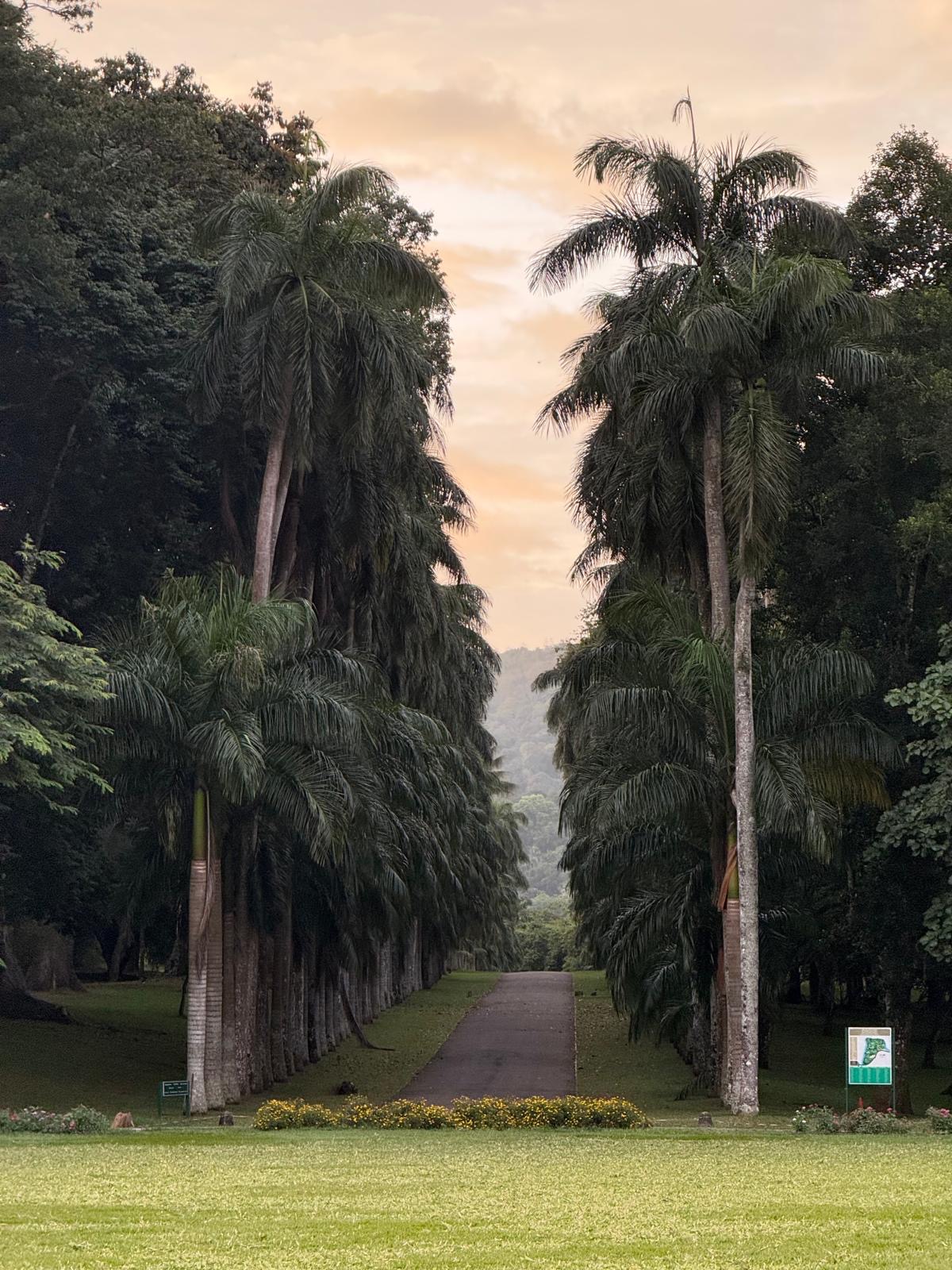
A third day opens up a day trip to Pinnawala Elephant Orphanage (one hour west, a conservation project rather than a performance elephant camp) or a longer drive into the tea estates. A fourth day can take in the Royal Botanical Gardens at Peradeniya, fifteen minutes from Kandy, which are among the largest in Asia and a strong half-day.

If you want to add Adam's Peak, restructure the highland section.

Adam's Peak (Sri Pada) does not work as a day trip from Ella. The correct approach is to base in Dalhousie or Hatton, one hour from the trailhead, and dedicate a full night and day to the climb: depart around midnight, reach the summit at sunrise, descend by mid-morning. Slot this between Kandy and Ella by travelling south from Kandy to the mountain area first, spending one or two nights, then continuing to Ella. The pilgrimage season runs December to May; outside this window the summit is often cloud-covered. Add two days to the total trip length.

If you want a more adventurous version, add the east coast.

Arugam Bay on the east coast operates on a completely different rhythm from the south: better surf, fewer tourists, rawer infrastructure. Getting there from Ella takes roughly four hours by car or bus through the dry zone. Add three to four nights. Note that the east coast dry season runs May to October, the inverse of the south; the best time to combine both is April or October.

If you want more wildlife, add Yala National Park.

Yala is two hours east of Weligama and has the highest leopard density of any national park in the world, alongside large elephant herds. A half-day jeep safari with a 5:30 am departure can be done as a day trip from the south coast base without changing the overall structure.

Collective travellers' testimonials

Nati - Madrid, Spain

"The hike to Pidurangala at sunrise was the moment Sri Lanka clicked. You watch the fortresses light up across the valley and suddenly everything feels ancient and real. It was definitely worth the early wake-up and set a great pace for the day!"

Blanca - Los Angeles, USA

"The hill train into Ella felt like passing through a moving postcard. I loved just staring out the window at the tea hills, mist, and the people working in the fields."

Maria - Barcelona, Spain

"Weligama and Ahangama were the perfect way finish. Laid back surf mornings, secret beach afternoons, and sunsets to recover from the busy travels before flying home."