image of popular travel destinations

Thailand

A journey through Thailand’s temples, rainforests and tropical archipelagos.

A journey through the heart of Thailand, from limestone cliffs and island coves to mountain temples and jungle trekking routes.

Thailand is a country with very varied regions. The south offers warm seas, limestone peaks and an archipelago of islands where long-tail boats drift past hidden coves. The north reveals a gentler rhythm of life, where Buddhist monasteries crown mountain ridges, cooking schools teach century-old traditions and forest villages welcome trekkers with warm hospitality.

This itinerary explores both sides of Thailand’s identity. You will wander temple courtyards in Chiang Mai, dive coral reefs in Koh Tao, sleep in floating bungalows deep inside Khao Sok National Park and join the backpacker energy of Koh Phangan and Koh Phi Phi. It is a journey of culture, landscapes, wildlife and adventure, tied together by the warmth of Thai hospitality and an astonishingly varied cuisine.

Highlights

image of vibrant dining space (for a mexican restaurant)

Floating Bungalows in Khao Sok National Park

Spend a night on Cheow Lan Lake in the middle of Thailand’s oldest rainforest, surrounded by karst formations, caves and wildlife.

image of a guided tour group

Diving in Koh Tao

Learn to dive in one of the world’s most accessible and affordable dive sites, known for coral gardens, reef sharks and calm warm seas.
image of a local tour guide (for a travel agency)

Northern Heritage of Pai

Explore temples, join cooking classes, trek through mountain villages and discover why the north remains Thailand’s cultural heart.
image of vibrant dining space (for a mexican restaurant)

Floating Bungalows in Khao Sok National Park

Spend a night on Cheow Lan Lake in the middle of Thailand’s oldest rainforest, surrounded by karst formations, caves and wildlife.

image of a guided tour group

Diving in Koh Tao

Learn to dive in one of the world’s most accessible and affordable dive sites, known for coral gardens, reef sharks and calm warm seas.
image of a local tour guide (for a travel agency)

Northern Heritage of Pai

Explore temples, join cooking classes, trek through mountain villages and discover why the north remains Thailand’s cultural heart.

Journey itinerary

Itinerary overview
Detailed breakdown follows

Days 1 to 2: Phuket / Big Buddha viewpoint, Patong beach orientation and night markets

Days 3 to 4: Koh Phi Phi / limestone cliffs, Long Beach swimming, lagoon kayaking and long-tail boat circuit

Days 5 to 6: Koh Lanta / moped coastal road, quiet beaches and Pad Thai Rock and Roll

Day 7: Ao Nang and Railay Beach / long-tail boat to the limestone-framed beach, climbing and caves

Days 8 to 9: Khao Sok National Park / floating bungalows on Cheow Lan Lake, kayaking and jungle walks

Days 10 to 13: Koh Tao / PADI Open Water certification or fun dives, Sairee Beach and Sail Rock

Days 14 to 16: Koh Phangan / Zen Beach, Full Moon Party option and yoga retreats

Days 17 to 20: Chiang Mai / old town temples, ethical elephant sanctuary, cooking class and Doi Suthep

Days 21 to 23: Pai / canyon hike, rice field cycling, NOLOS tubing and night market

Days 24 to 25: Chiang Rai / White Temple, Blue Temple and the northern border kingdom

Day-by-day itinerary
Days 1 to 2: Phuket and the Andaman Coast

Phuket International Airport (HKT) handles most international arrivals to southern Thailand. Grab operates from the airport to all beach areas; a ride to Patong takes approximately 45 minutes and costs around 400 to 600 THB. The Andaman coast's most popular bases for the first few days are Patong (central, energetic, functional but not particularly beautiful), Kata and Karon (slightly quieter, better beaches) and Kamala (calmer still, good for a slower start). All are connected by road and short rides.

The first two days are for adjustment: the time difference, the heat, the scale of choice. Thailand's climate runs at 30 to 35°C at the coast with high humidity; the first day under direct sun is tiring regardless of fitness. Give yourself the morning of Day 1 to eat, swim and do nothing of ambition.

Big Buddha Viewpoint: The 45-metre white marble Phra Phuttha Ming Mongkol Akenakkiri Buddha on Nakkerd Hill is the most useful viewpoint in Phuket, giving a full 360-degree panorama of the island and the Andaman Sea from a height of 381 metres above sea level. Tuk-tuks from Patong take approximately 20 minutes and cost 300 to 400 THB. Dress modestly: shoulders and knees covered; sarongs are available to borrow at the entrance. Entry is free. Go at 5 pm as the heat softens for the best light on the sea.

Phuket Old Town: 20 minutes from Patong by Grab, the Sino-Portuguese shophouse architecture of the old town gives a different reading of Phuket than any of the beach areas. The street art circuit, the coffee shops in converted colonial buildings and the Thalang Road heritage district take a morning. Kopitiam by Wilai for local Hokkien-style food is the standard recommendation; the Sunday Walking Street market on Thalang Road runs from 4 pm to 10 pm.

Night markets: Phuket has several night food markets operating simultaneously. Malin Plaza in Patong and the Chillva Market near Phuket Town are both reliable for fresh seafood, grilled meats, pad Thai, mango sticky rice and the full spectrum of Thai street food. Prices are low by any standard; a full plate costs 50 to 100 THB.

Days 1 to 2: Phuket and the Andaman Coast

Phuket International Airport (HKT) handles most international arrivals to southern Thailand. Grab operates from the airport to all beach areas; a ride to Patong takes approximately 45 minutes and costs around 400 to 600 THB. The Andaman coast's most popular bases for the first few days are Patong (central, energetic, functional but not particularly beautiful), Kata and Karon (slightly quieter, better beaches) and Kamala (calmer still, good for a slower start). All are connected by road and short rides.

The first two days are for adjustment: the time difference, the heat, the scale of choice. Thailand's climate runs at 30 to 35°C at the coast with high humidity; the first day under direct sun is tiring regardless of fitness. Give yourself the morning of Day 1 to eat, swim and do nothing of ambition.

Big Buddha Viewpoint: The 45-metre white marble Phra Phuttha Ming Mongkol Akenakkiri Buddha on Nakkerd Hill is the most useful viewpoint in Phuket, giving a full 360-degree panorama of the island and the Andaman Sea from a height of 381 metres above sea level. Tuk-tuks from Patong take approximately 20 minutes and cost 300 to 400 THB. Dress modestly: shoulders and knees covered; sarongs are available to borrow at the entrance. Entry is free. Go at 5 pm as the heat softens for the best light on the sea.

Phuket Old Town: 20 minutes from Patong by Grab, the Sino-Portuguese shophouse architecture of the old town gives a different reading of Phuket than any of the beach areas. The street art circuit, the coffee shops in converted colonial buildings and the Thalang Road heritage district take a morning. Kopitiam by Wilai for local Hokkien-style food is the standard recommendation; the Sunday Walking Street market on Thalang Road runs from 4 pm to 10 pm.

Night markets: Phuket has several night food markets operating simultaneously. Malin Plaza in Patong and the Chillva Market near Phuket Town are both reliable for fresh seafood, grilled meats, pad Thai, mango sticky rice and the full spectrum of Thai street food. Prices are low by any standard; a full plate costs 50 to 100 THB.

Button Text
Days 3 to 4: Koh Phi Phi

Ferries from Phuket's Rassada Pier to Koh Phi Phi run multiple times daily; the journey takes approximately 90 minutes and costs 350 to 500 THB. Book through your accommodation or the pier booking desks. The ferry lands at Tonsai Pier on Phi Phi Don, the inhabited island; Phi Phi Leh (the uninhabited island with Maya Bay) is accessible only by organised boat trip.

Koh Phi Phi Don is shaped like a bowtie: two limestone massifs connected by a narrow sand flat where all the accommodation, restaurants and bars are concentrated. The geography creates the island's drama and also its challenge; everything is within walking distance but the terrain rises steeply into the cliffs on both sides of the central flat.

Long Beach: The most swimmable beach on Phi Phi Don, on the eastern side of the island facing the calm inner channel. The water is clearer and calmer than the open sea beaches; good snorkelling on the reef sections at the north and south ends. 10 minutes by long-tail boat from Tonsai Pier, or 20 minutes on foot over the hill.

Long-tail boat circuit: Hire a long-tail from Tonsai Pier for a full-day circuit of both islands. Standard itinerary: Viking Cave (swiftlet nest collection site, still active), Maya Bay and the Blue Lagoon on Phi Phi Leh (see note below), Monkey Bay, Pileh Lagoon (a shallow turquoise lagoon enclosed by limestone walls, the most dramatic snorkelling on the circuit) and Loh Samah Bay. Cost approximately 2,000 to 3,000 THB for the boat; split between groups.

Maya Bay: The beach made famous by the 2000 film The Beach was closed from 2018 to 2022 to allow coral recovery. It has since reopened but with visitor number limits and strict no-anchor rules. Swimming is prohibited in some sections to protect the reef. The beach is still one of the most visually extraordinary in Thailand; manage the expectation that it will be busy and go on the first departure of the day for the lowest crowds.

Nightlife: Phi Phi's bar scene concentrates on the main flat between the two piers. Fire shows, beach bars and music run from early evening until late. The Stones Bar and Apache Bar are long-running fixtures; the scene is social, international and runs at the specific energy of a small island with too many people having too good a time. If this is not your interest, stay on Long Beach side rather than the main strip.

Accommodation note: Choose a quieter hostel on the Long Beach side of the island if you want sleep; the main flat is loud into the early hours.

Days 5 to 6: Koh Lanta

Ferries from Koh Phi Phi to Koh Lanta run daily in high season; the journey takes approximately 90 minutes. Koh Lanta Yai is 30 km long and feels significantly larger and slower than Phi Phi; the western coast runs for most of this length with beaches at different levels of development and character from north to south.

Rent a moped on arrival: 200 to 300 THB per day from most guesthouses and rental shops near the pier. The coastal road from Long Beach in the north to Saladan Pier and then south through Klong Dao, Phra Ae, Klong Nin and Klong Jark to the southern tip gives you the island in one logical day. The northern beaches are the most developed; the beaches toward the southern tip are quieter and more remote.

Moped safety note: the roads on Koh Lanta are mostly flat and paved; moped riding here is significantly more manageable than on some of Thailand's hillier islands. Nonetheless, wear a helmet, drive on the left, and go slowly on the gravel sections near the southern beaches.

Koh Lanta Old Town: At the northern end of the island, the original fishing settlement has preserved Sino-Portuguese shophouses and stilted homes over the water. The community is predominantly Muslim-Malay in character, distinct from the Buddhist majority elsewhere on this route. Walk the main street slowly; the views over the channel from the wooden pier at the end are good in the late afternoon light.

Pad Thai Rock and Roll on the main Phra Ae beach road is named in multiple traveller accounts as the island's best pad Thai: made to order, generous, cheap (80 to 120 THB), eaten on plastic chairs on the road. The name is not ironic; the music is good and the pad Thai is the correct version, wok-charred rather than stodgy.

Mu Ko Lanta Marine Park: The southern tip of the island includes the marine park where snorkelling and diving tours operate. Day trips to the park's outer islands (including Koh Rok, considered the best coral in the area) depart from the pier. Half-day snorkel tours cost approximately 600 to 900 THB.

Day 7: Ao Nang and Railay Beach

Take a ferry from Koh Lanta to Ao Nang in Krabi, approximately two hours. Ao Nang is a functional base town rather than a destination: good transport connections, reliable food options and a walkable strip of shops and restaurants. Its value is as the gateway to Railay Beach and the surrounding limestone coast.

Railay Beach is accessible only by long-tail boat from Ao Nang (15 minutes, 100 THB per person in a shared boat) because the limestone cliffs behind it have no road. The boat arrives at either Railay East (mangroves, not swimmable) or Railay West (the main beach, white sand, limestone cliffs framing both ends of the bay). Railay West at sunrise and at golden hour is one of the most photographed beach compositions in Thailand; the cliffs turn orange in the light.

Rock climbing: Railay is one of the premier beginner rock climbing destinations in Asia. The limestone cliffs above the beaches have bolted routes across all grades; the most famous sector, Muay Thai Wall at the west end of Railay West, has routes with direct views over the Andaman Sea. Half-day introductory climbing courses run approximately 800 to 1,200 THB per person including instruction and equipment. If you have never climbed before, the single abseil from the cliff top to the beach is more memorable than any zipline you will do elsewhere.

Phra Nang Beach and Cave: 10 minutes' walk east across the narrow Railay peninsula. The beach sits beneath vertical limestone cliffs with a cave shrine at the far end. The cave contains offerings of wooden phalli left by fishermen praying for good catches and fertility, a tradition that has continued for centuries with the same specificity. The beach itself is beautiful; the cave is interesting; the combination is unique.

Sunset dinner: Several restaurants on Railay West serve seafood directly on the beach. Book a table with a sea-facing position for the last hour of light.

Days 8 to 9: Khao Sok National Park

Travel from Ao Nang or Krabi to Khao Sok village; the journey takes approximately two to two and a half hours by minivan. Minivan services connect Krabi to Khao Sok daily; book through any guesthouse or travel desk. The road passes through oil palm plantations and rubber tree forests before the jungle closes in around the Khao Sok approach.

Khao Sok National Park covers 739 square kilometres of the oldest and most biodiverse rainforest in Thailand, estimated to be 160 million years old, pre-dating both the Amazon and the Congo. The biodiversity reflects this: 48 species of bat, 38 reptile species, Malayan tapir, leopard, gaur (wild cattle), clouded leopard and, in the southern section of the park, the giant Rafflesia flower, the world's largest bloom, which appears unpredictably.

Khao Sok village sits just outside the park boundary and has a cluster of guesthouses, restaurants and tour operators organising all activities. The park itself requires an entry fee of 300 THB for international visitors.

The floating bungalow experience: Cheow Lan Lake (also spelled Cheow Larn), created by the construction of Ratchaprapha Dam in 1982, covers 165 square kilometres of the park's interior. The lake is surrounded by vertical limestone karst towers rising 500 to 960 metres from the water and filled with flooded rainforest; the combination is unlike any other landscape in Thailand. 14 floating bungalow operations are anchored on the lake across different inlets.

All floating bungalow access requires booking through a licensed tour operator; independent access to the lake is not possible. The typical two-day, one-night package includes: minibus from the village to the Cheow Lan Pier (one hour), long-tail boat transfer onto the lake (30 minutes to several hours depending on the raft house location), activities on Day 1 (kayaking, cave exploration, swimming, wildlife spotting), overnight in the floating bungalow, morning activities on Day 2, and return to the village. Meals are included and cooked in traditional Thai style.

Book at least one month in advance in high season (November to April and July to August); the floating bungalows are the most in-demand accommodation on the route and sell out. Operators: Khao Sok Lake Co., Ltd. is the only operator physically based on the lake itself; Khao Sok Travel and Our Jungle House are both well-reviewed village-based operators. Budget options use simple bamboo raft houses with thin mats and shared bathrooms; mid-range and premium options have proper beds, private bathrooms and private decks. The basic experience is similar regardless of tier; the difference is comfort.

The park's wildlife is most active at dawn and dusk; a 5 am kayak in still morning water when the mist sits on the lake surface and the karst towers emerge from the cloud is one of the more extraordinary natural experiences in Thailand and is not contingent on any particular creature appearing.

Days 10 to 13: Koh Tao

Travel from Khao Sok to Koh Tao via Surat Thani. The journey involves a minivan from Khao Sok to Surat Thani (approximately two hours) and then the Lomprayah or Seatran ferry from the Surat Thani pier to Koh Tao (approximately four hours with a stop at Koh Phangan and Koh Samui, or a direct high-speed ferry taking three hours). Book the combined minivan-ferry ticket at your Khao Sok guesthouse. Arrive on Koh Tao by early to mid-afternoon.

Koh Tao is 21 square kilometres and has approximately 100 dive schools operating on a single island. This competition has made it the cheapest place in the world to get scuba certified, roughly half the cost of equivalent certification in Australia or Europe, with marine life quality that surpasses many more expensive destinations.

PADI or SSI Open Water course: The standard certification takes three days: online or classroom theory, confined water (pool) skills, and four open water dives across two days. PADI Open Water costs approximately 11,000 THB; SSI Open Water approximately 9,000 THB. Both certifications are globally recognised and valid for life. Crystal Dive and Ban's Diving Resort are the island's most established PADI 5-Star operators, both maintaining instruction in multiple languages. Coral Grand Divers on Sairee Beach is the most prominent PADI 5-Star Career Development Centre with 15 instructors.

If already certified: fun dive packages run 1,000 to 1,800 THB per dive depending on the site. Sail Rock, a submerged pinnacle between Koh Tao and Koh Phangan in the open sea, is consistently rated the best dive site in the Gulf of Thailand: schooling barracuda, whale sharks in season (April to May and July to September), and a vertical swim-through chimney from 18 to 5 metres that is one of the more dramatic underwater passages in the region. Chumphon Pinnacle and White Rock are the other headline sites.

Sairee Beach is the main beach: 1.5 km of sand facing the open sea with dive shops, restaurants, bars and hostels running the full length. The beach fills from mid-morning; go before 8 am for the cleanest light and the fewest people.

Koh Nang Yuan: A private island 10 minutes by longtail from Koh Tao's north coast, consisting of three small islands connected by a sand spit. Entry is 100 THB. The viewpoint at the top of the main island takes 20 minutes to climb and gives one of the best sea-view photographs in the Gulf of Thailand: the sand spit connecting all three islands visible from above, the sea on both sides. Go before 10 am when the day trip boats start arriving.

Days 14 to 16: Koh Phangan

Ferry from Koh Tao to Koh Phangan takes approximately 45 minutes to one hour; Lomprayah and Seatran both operate this route multiple times daily. Koh Phangan has a split personality that requires understanding before arriving: the south coast (particularly Hat Rin) is the Full Moon Party circuit, one of the largest monthly beach parties in the world with 10,000 to 30,000 people on a single beach; the north and west coasts are quiet beaches, yoga centres and wellness retreats with almost no overlap.

Full Moon Party: Held on the beach at Hat Rin on the night of each full moon. Starts around 10 pm, peaks between midnight and 4 am. Expect every tier of hedonism simultaneously. Half Moon Parties, Black Moon Parties and Jungle Parties also run on schedules staggered between the full moon events. If your trip timing aligns with the full moon and this is of interest, it is a spectacle regardless of your views on it; if it is not of interest, the north and west coasts operate in complete independence of the party circuit.

Zen Beach: On the northeast coast, one of the quieter and more beautiful stretches of coast on Koh Phangan. The beach faces the morning sun and the water is clear. Most of the accommodation here is small guesthouses and bungalows; the atmosphere is substantially different from Hat Rin.

Puk's Palace: Named in the source material as one of the island's most welcoming hostels; social, well-organised, good social events and community feel. Worth booking if the party circuit is part of the plan and you want a hostel that handles that energy well.

Ando Loco for Mexican food: mentioned in the source material as a reliable evening option; nachos, tacos and margaritas on Koh Phangan are a specific and unlikely-sounding pleasure that many travellers end up returning to repeatedly.

Days 17 to 20: Chiang Mai

Fly from Koh Samui (USM) or Surat Thani (URT) to Chiang Mai (CNX); both are short domestic flights. Alternatively, overnight train from Bangkok (if routing through the capital) is the classic overland connection: the 13-hour sleeper from Bangkok Hua Lamphong to Chiang Mai on the Sprinter or Rapid trains is one of the better long-distance train experiences in Thailand. Domestic flights are typically under 1,500 THB booked a week ahead.

Chiang Mai sits at 300 metres in a valley ringed by forested mountain ridges in northern Thailand. The city is the cultural capital of the Lanna Kingdom tradition: a distinct northern Thai culture with its own script, architectural vocabulary and cooking tradition that is noticeably different from central Thai or Bangkok-influenced culture. The old city (the moated square at the centre of Chiang Mai) contains 30 Buddhist temples within walking distance of each other, each representing different periods of Lanna history and a different approach to the same architectural vocabulary.

Old town temples: Wat Phra Singh on the west side of the moat holds the Phra Singh Buddha image, the most revered statue in northern Thailand, in a beautifully restored 14th-century viharn. Wat Chedi Luang at the centre of the old city has the ruins of a 15th-century chedi that was partially destroyed in a 16th-century earthquake and has been deliberately left in its semi-ruined state. Monk Chat sessions operate here on weekday afternoons; novice monks practise English in conversation with visitors. Wat Suan Dok has a courtyard full of white chedi containing the ashes of the Chiang Mai royal family, one of the more atmospheric sunset spots in the city. Entry to most temples is free or 40 to 80 THB.

Doi Suthep: The mountain temple 15 km northwest of the city centre at 1,073 metres above sea level is the most important Buddhist site in northern Thailand. Wat Phra That Doi Suthep was founded in 1383 after a white elephant is said to have climbed the mountain, trumpeted three times and died, indicating the site for a new temple. A 309-step Naga staircase leads to the golden chedi at the summit, surrounded by royal gardens. The view over the Chiang Mai valley from the temple terrace is the most dramatic perspective available on the city. Songthaew (shared red truck taxi) from the Tha Phae Gate area costs 50 THB per person up and 40 THB down.

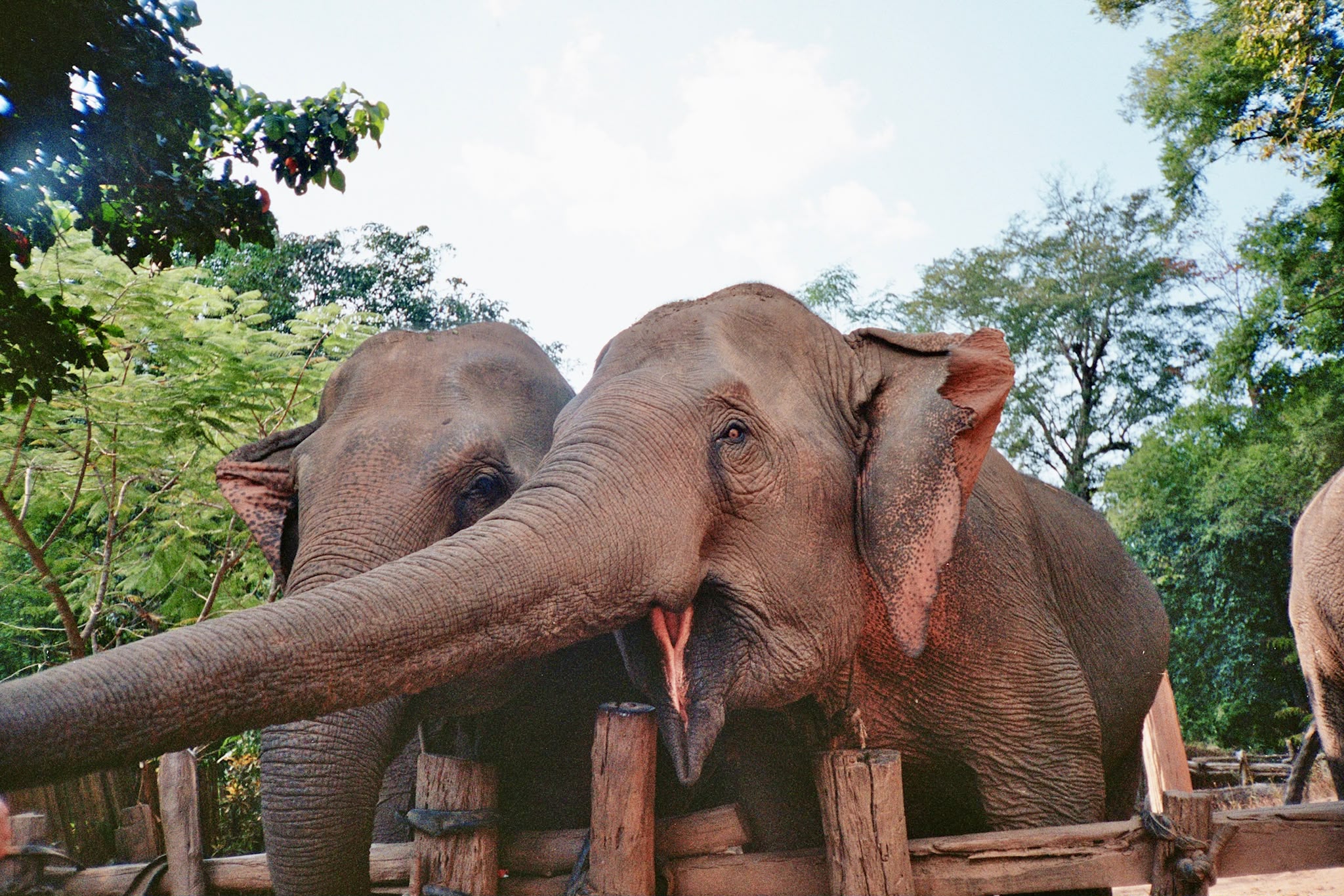
Ethical elephant sanctuary: The most important instruction: do not ride elephants. Any sanctuary offering elephant rides, elephant painting or elephant circus performances is not operating ethically; the training that produces these behaviours involves cruelty. Legitimate sanctuaries allow you to feed, walk alongside and observe elephants in as close to natural behaviour as their rescued animals can manage, explain conservation work and the elephants' individual histories. Well-reviewed ethical operators: Elephant Nature Park (the most established, founded by Lek Chailert, booking often weeks ahead in high season), Chapulin Elephant Park, Elephant EcoValley Experience and Pon Elephant Thailand. Half-day visits cost approximately 1,500 to 2,500 THB per person; full-day visits 2,500 to 4,000 THB.

Cooking class: Chiang Mai's cooking school market is the most developed in Thailand. The standard format includes a morning market visit, an organic garden component, and a session cooking four to five northern Thai dishes. Mama Noi's Thai Cookery School and Grandma's Home Cooking School are both consistently well-reviewed. The specific northern Thai dishes to learn: Khao Soi (the region's signature dish, a coconut curry broth with egg noodles and crispy noodles on top, served with pickled cabbage, shallots and lime), northern-style laap (rawer and more herbal than the Isaan version), and sai oua (northern Thai sausage with lemongrass and galangal). Cost approximately 1,200 to 1,800 THB.

Khao Soi: Chiang Mai's most specific and important food experience. Order it at Khao Soi Khun Yai, Khao Soi Nimman or Huen Muan Jai for the most locally validated versions; each serves a bowl that is meaningfully different from the tourist-area versions. The cooking class teaches you to make it; eating the restaurant version gives you the benchmark. Do both.

Trekking from Chiang Mai: Multi-day treks into the surrounding forest communities typically include village homestays, bamboo rafting, waterfall walks and connection with the hill tribe communities of the Mae Wang or Doi Inthanon corridors. Two to three-day treks run approximately 2,000 to 4,000 THB per person all-inclusive. Choose operators who have transparent community benefit policies and do not market treks as "authentic tribe encounters" in language that objectifies the communities.

Days 21 to 23: Pai

Minibus from Chiang Mai to Pai: approximately 150 THB, three hours through 762 curves in the mountain road (motion sickness medication is worth taking). Alternatively, rent a motorbike in Chiang Mai and drive; the mountain road is scenic and the drive takes three to four hours at a comfortable pace.

Pai sits at 820 metres in a river valley of the Mae Hong Son province close to the Myanmar border. The town is small (the main night market and restaurant strip is walkable in 10 minutes), the surrounding valley is covered in rice fields, and the pace is the most relaxed on the full Thailand route.

NOLOS hostel: Named in the source material as the recommended base; social, runs tubing trips down the Pai River, organises communal dinners and sunset excursions, the kind of small hostel that generates the trip friendships that the larger hostel chains cannot replicate. Book in advance in high season; NOLOS has a limited number of rooms.

Pai Canyon (Yun Lai Viewpoint): A narrow ridge of eroded clay above a valley, 8 km from the town centre, giving dramatic views at sunset over the surrounding countryside. The path along the ridge edge is exposed and requires care; go in the late afternoon. Rent a motorbike from town for this; taxis can also be arranged.

Rice field cycling: The flat valley around Pai is made for bicycle riding. Several guesthouses rent bicycles for 60 to 100 THB per day. A loop through the villages and rice fields south of town takes two to three hours at an easy pace and is the best way to understand the agricultural character of the valley.

Pai hot springs: A natural geothermal spring complex (park entry approximately 200 THB) with a stream of hot spring water running into a jungle-edged canal where you can bathe. Most touristy in the middle of the day; the early morning or late afternoon is when the atmosphere is better and the temperature difference from the mountain air most enjoyable.

Pai night market: Runs daily along the Walking Street from approximately 5 pm. The market has northern Thai street food, handicrafts, coffee and a low-key social scene that involves essentially the town's entire travelling population sitting, eating and talking in the warm evening air.

Days 24 to 25: Chiang Rai

Drive from Pai to Chiang Rai directly (approximately three hours via the Mae Sai road) or return to Chiang Mai and take a bus or songthaew north (three hours on the main road). Chiang Rai is the northernmost major city in Thailand, 60 km from the Chinese border and adjacent to the Golden Triangle where Thailand, Myanmar and Laos meet at the Mekong River.

Wat Rong Khun (White Temple): The most-photographed contemporary building in Thailand, designed by artist Chalermchai Kositpipat and under continuous construction since 1997, funded entirely by Kositpipat's personal resources and donations. The main building is entirely white with embedded mirror glass that produces a blinding, shimmering effect in direct sun; approach it from the east and look at it from the bridge over the decorative moat for the most coherent view. The exterior symbolism is deliberate and complex: the white represents purity, the mirrors are the Buddha's wisdom reflected in the world. The interior murals include depictions of the Twin Towers attacks, Keanu Reeves' Neo from The Matrix, and contemporary pop culture figures alongside traditional Buddhist imagery; this is intentional commentary on modernity rather than artistic confusion. Arrive before 8:30 am; the temple fills with tour buses by mid-morning. Entry approximately 300 THB for foreigners.

Wat Rong Suea Ten (Blue Temple): A 2017 addition to the Chiang Rai temple circuit, visually entirely different from the White Temple: deep cobalt blue exterior with gold details and naga serpents, the interior a complete midnight blue and gold composition with a large white Buddha at the centre. Entry free or 20 THB. Walk between it and the White Temple is not practical (they are 5 km apart); take a Grab or songthaew.

Night Bazaar: The Chiang Rai Night Bazaar runs from approximately 6 pm around the main market square, with northern Thai food stalls, handicrafts and a cultural performance stage. Smaller and less overwhelming than the Chiang Mai equivalents; the pace is noticeably slower.

The Golden Triangle: 60 km north of Chiang Rai, where Thailand, Laos and Myanmar meet at the Mekong River. The historical significance (the region was the centre of opium production through the 20th century) is addressed by the Hall of Opium museum on the Thai side, one of the more serious and comprehensive drug history museums in Southeast Asia. The viewpoint over the confluence is the visual highlight; the actual border point is anticlimactic but the river geography is meaningful.

Return or onward connections: Direct flights from Chiang Rai (CEI) to Bangkok (BKK or DMK) run with multiple daily departures on Air Asia, Nok Air and Thai Smile. Bangkok's Suvarnabhumi and Don Mueang airports both connect internationally. Alternatively, fly from Chiang Mai if returning south before departure.

In pictures

No items found.

Traveller suggestions

Accomodation

Phuket

Premium : Trisara (north coast, over-water villas, the most acclaimed hotel on the island), Keemala (Kamala, treehouse and pod villas, the most design-forward luxury option)

Mid-tier : The Memory at On On Hotel (Phuket Old Town, restored heritage hotel, the most atmospheric mid-range option, affordable and central), Baan Talay Resort (Kata Beach, pool, reliable)

Budget : Lub d Phuket (Patong, pool, social, the reliable backpacker chain), Bodega Phuket (Kata, lively, beach-oriented hostel), Castaway Guesthouse (Old Town, great for those who want less tourist-facing base)

Koh Phi Phi

Mid-tier : Phi Phi The Beach Resort (Long Beach side, quieter than the main flat, pool), Zeavola (quiet northern cove, the premium retreat option)

Budget : Viking Natures Resort (Long Beach, the social hostel pick for backpackers wanting to avoid the main strip noise), Oasis Beach Resort (basic bungalows, Long Beach, one of the cheapest options with a good position)

Stay on the Long Beach side if you want sleep; stay on the main flat if the party atmosphere is the point.

Koh Lanta

Mid-tier : Rawi Warin Resort (southern tip, pool, the most design-forward mid-range on the island), Lanta Sand Resort (Phra Ae Beach, pool, good position)

Budget : Funky Fish Beach Resort (Klong Dao, beach access, social, consistently reviewed for the backpacker crowd), Lanta Hostel (central, the cheapest reliable option, bikes available)

Ao Nang and Railay

Mid-tier : Rayavadee (Railay, the most acclaimed resort on the peninsula, three beaches, exceptional setting), Centara Grand (Ao Nang, pool, reliable chain)

Budget : Basecamp Hostel Krabi (Ao Nang, pool, social, the best reviewed hostel in the area), Pakarang Cape (Ao Nang, budget bungalows, walking distance to the pier)

Khao Sok

Premium : Elephant Hills Rainforest Camp (the luxury floating resort experience, all-inclusive)

Mid-tier : 500 Rai Floating Resort (the most comfortable floating bungalow option on Cheow Lan Lake, private), Our Jungle House (the most social and well-run village base, sister property manages the lake tours)

Budget : Coco Hostel (village, social, organises lake tours, well-reviewed for the budget experience), Bamboo House Khao Sok (cheap bungalows in the village, long-running and reliable)

Koh Tao

Mid-tier : Montra Resort (Sairee Beach, pool, central, the most comfortable mid-range), Koh Tao Resort (Mae Haad Bay, pool, quieter side of the island)

Budget : Wonderland Hostel (Sairee, the island's most reviewed social hostel, very close to the dive shops, good dive school partnerships), In Touch Resort (Sairee, pool, dorms and private rooms, one of the better value options), Ban's Diving Resort (accommodation bundled with the dive school, the most practical option if doing the Open Water course there)

Koh Phangan

Mid-tier : Haad Yao Bayview Resort (north coast, sea view, quiet, pool, away from the party circuit), Anantara Rasananda (Koh Ma, luxury escape from the Full Moon crowd)

Budget : Puk's Palace (source material's named pick, social, the Full Moon Party base, well-organised events), Loy Fa Hostel (north coast, sea views, quieter, for those avoiding the south coast scene)

Chiang Mai

Premium : Dhara Dhevi (the most celebrated hotel in northern Thailand, Lanna architecture across a 60-acre estate), Four Seasons Chiang Mai (rice terrace setting, the classic luxury option)

Mid-tier : Ping Nakara Boutique Hotel (old town, colonial architecture, pool, intimate), De Naga Hotel (old town, moat-adjacent, characterful, reliable mid-range)

Budget : Green Tiger House (old town, consistently the most reviewed hostel in Chiang Mai for cleanliness and social atmosphere), Deejai Backpackers (Nimman area, pool, social, good for the food and café neighbourhood), Mad Monkey Chiang Mai (pool, bar, the party hostel option)

Pai

Mid-tier : Zensala Pai (rice field views, pool, the retreat option), Pai River Corner (riverside, the most relaxed mid-range in town)

Budget : NOLOS (source material's named pick, social, tubing and communal dinners, the correct base for this stop), Spicypai Hostel (reliable, central, pool)

Chiang Rai

Mid-tier : Wangcome Hotel (the established city centre option, pool, reliable), Le Meridien Chiang Rai (riverside, the most upscale city hotel)

Budget : Teak Garden Hostel (the most reviewed backpacker hostel in Chiang Rai, garden setting, central), Cat House Chiang Rai (small, welcoming, well-located for the temples)

Food & Drink

Phuket

Mid-tier : Kopitiam by Wilai (old town, Hokkien-style Phuket Chinese food, the most characterful kitchen in town), Suay (modern Thai-Mediterranean, Phuket Town, consistently acclaimed), Tu Kab Khao (old town, royal Thai cuisine in a restored shophouse)

Budget : Night market food stalls at Malin Plaza or Chillva Market (fresh seafood, grilled meats, pad Thai, 50 to 100 THB per plate), Phuket Old Town Walking Street Sunday market (4 pm to 10 pm, Thalang Road, the most concentrated street food in the city)

Koh Phi Phi

Budget : Papaya restaurant (long-running, reliable, local Thai food at hostel prices), beach barbecue stalls along Tonsai Bay waterfront for grilled seafood in the evenings

Food on Phi Phi is priced significantly above the mainland; eat local and eat simple. The seafood is fresh; the rest is a margin exercise.

Koh Lanta

Budget : Pad Thai Rock and Roll (the pad Thai benchmark on the island, 80 to 120 THB, plastic chairs on the road), Drunken Sailors (beachfront, western and Thai, reliable for an evening change of pace), local family restaurants in Koh Lanta Old Town for the cheapest and most authentic eating on the island

Ao Nang and Railay

Mid-tier : The Last Fisherman's Bar (Railay West, seafood directly on the beach, the most atmospheric dinner on this stretch), Sunset Restaurant Railay (cliff edge, sunset views)

Budget : Ao Nang beachfront restaurants for morning seafood and noodle soups before the Railay boat

Khao Sok

Budget : Guesthouses and tour operators in the village all serve Thai food; the meals at your floating bungalow are included and tend to be better than the village restaurants. Art's Riverview Lodge restaurant (the most reviewed village restaurant, good for an evening pad Thai before or after the lake)

Koh Tao

Mid-tier : Barracuda (Sairee Beach, the island's most acclaimed restaurant, European-Mediterranean, reservation recommended), El Gringo (Mexican, the reliable evening change from Thai food, popular with dive school crowds)

Budget : Chopper's (Sairee, consistent Thai and international, cheap and always busy), street food stalls at the Sairee night market (50 to 80 THB), Safety Stop Pub (dive school social bar, cheap Chang and pad Thai)

Koh Phangan

Mid-tier : Ando Loco (Mexican, the source material's specific recommendation, nachos and margaritas unlikely but correct), Fisherman's Restaurant (beachfront, reliable seafood)

Budget : Sunrise Shack (smoothie bowls and café food, the morning institution), local market stalls around Thong Sala pier for the cheapest eating on the island

Chiang Mai

Premium : Blackitch Artisan Kitchen (intimate, tasting menu, the most acclaimed fine dining in Chiang Mai), THE HOUSE by Ginger (classic Thai in a European-style garden, featured in 2025 Asia 100)

Mid-tier : Ginger Farm Kitchen (organic vegetables, traditionally prepared northern Thai), Dash (sai oua and gaeng hanglay, old town, consistent quality), Huen Muan Jai (northern Thai, authentic, local crowd, generous portions)

Budget : Khao Soi Lung Prakit Kaat Gorm (the Netflix-featured khao soi, 50 THB a bowl, opens 9:30 am closes 4:30 pm), Khao Soi Nimman (consistently rated as top khao soi in the Nimman area), SP Chicken (gai yang rotisserie, the city's most-referenced cheap protein), Cowboy Hat Lady (khao kha moo stewed pork leg, Prince Royal College area, famous street vendor, open from morning until sold out), Chang Phueak Night Market (the most local evening food market in the city, 5:30 pm to midnight)

The essential northern Thai dishes to eat in Chiang Mai: khao soi (non-negotiable, order it at a proper local shop not a tourist restaurant), sai oua (northern herbed sausage), gaeng hanglay (Burmese-influenced pork belly curry), nam prik ong (minced pork and tomato chilli dip with crudités), and kanom jeen (soft fermented rice noodles with curry, the 20 THB breakfast that defies its price).

Pai

Budget : Pai night market Walking Street (northern Thai street food, the correct evening ritual), Be Bop (live music bar, good for an evening in the social scene), local rice and noodle restaurants around the bus station for cheap daytime eating

Chiang Rai

Mid-tier : Phu Chaisai Resort restaurant (panoramic valley views, northern Thai cuisine, worth the drive), Muang Thong Restaurant (local institution, khao soi and northern dishes, very cheap)

Budget : Night Bazaar food stalls (the easiest and most varied evening eating), morning market near the clock tower for kanom jeen and fresh noodle soups

Reminders & Cautions

Entry requirements: Thailand implemented mandatory pre-travel digital registration for all foreign visitors in May 2025 (Thailand Digital Arrival Card, TDAC). Complete this before arrival at tdac.immigration.go.th. Most Western nationalities receive a 30-day visa-free entry; the TDAC is separate from visa requirements. Confirm current requirements at the Thai Immigration Bureau before travel as these regulations have changed multiple times.

Internal transport: The route covers both Andaman and Gulf coasts plus the northern highlands, requiring multiple flight and ferry connections. The key junctions: Phuket to Koh Phi Phi by ferry (90 minutes), Koh Lanta to Ao Nang by ferry or minivan (two to three hours), Ao Nang to Khao Sok by minivan (two hours), Khao Sok to Surat Thani ferry pier by minivan (two hours), then ferry to Koh Tao (three to four hours), Koh Tao to Koh Phangan by ferry (45 minutes), Koh Phangan to Surat Thani and fly north to Chiang Mai, Chiang Mai to Pai by minibus (three hours), Pai to Chiang Rai via Chiang Mai (five to six hours total). Book all ferry and minivan tickets the day before through your accommodation or a travel desk; they handle the connections.

Grab and Gojek: Both apps operate throughout Thailand. Grab is the dominant service; Gojek (also called GoJek in Thailand) is consistently cheaper for most routes. Compare before confirming any city ride. Neither operates on the islands or in Pai; songthaew (shared red trucks in Chiang Mai) and local tuk-tuks cover island and mountain town transport.

Moped rental: Available throughout the islands and in Pai from 200 to 300 THB per day. Helmet is legally required and physically important; Thai roads have a high accident rate involving foreign tourists on mopeds. Ride on the left. Never ride at night or after drinking. The most common serious injuries on Thailand's islands involve mopeds on unfamiliar roads after dark.

Money: Thai Baht (THB). ATMs are available throughout the route but charge foreign withdrawal fees of 200 to 220 THB per transaction on top of your bank's charges. Minimise ATM transactions by withdrawing in larger amounts. Cash is essential for markets, street food, temple entries, shared songthaew and boat rides. Cards are accepted at mid-range and upmarket establishments.

Temple dress code: Shoulders and knees covered at all Thai Buddhist temples. This applies to both men and women. Most temples sell or rent sarongs at the entrance; carrying a light scarf in your bag removes the uncertainty. Remove shoes before entering all temple buildings. Photography of the interior is usually permitted but ask if unsure; flash photography is inappropriate in active worship spaces.

Diving and flying: Do not fly within 18 hours of any scuba dive, including introductory or discover dives. If doing the Koh Tao Open Water course, ensure your onward flight to Chiang Mai is scheduled with adequate buffer time after your final dive day.

Season and weather: Thailand's coasts operate on opposite seasonal cycles. The Andaman Coast (Phuket, Phi Phi, Lanta, Ao Nang, Khao Sok) has its best weather from November to April; the southwest monsoon from May to October brings rough seas, ferry cancellations and significant rain. The Gulf Coast (Koh Tao, Koh Phangan, Koh Samui) has its best weather from February to October; the northeast monsoon from October to January brings rough conditions specifically to this coast. The northern region (Chiang Mai, Pai, Chiang Rai) is best from November to April; the hot season (March to May) is very dry but extremely hot, and the rainy season (June to October) is green and lush but with daily afternoon rain. The itinerary works best overall from November to March when both coasts are in reasonable condition simultaneously.

Full Moon Party: Held monthly at Hat Rin beach on Koh Phangan on the night of the full moon. Check the current year's schedule and adjust your Koh Phangan dates accordingly if this is of interest. The surrounding days (Half Moon, parties the night before) also draw significant crowds. If the party circuit is not of interest, base on the north coast (Bottle Beach, Chaloklum) rather than the south; they are different islands in practice.

Khao Sok booking: The floating bungalow packages on Cheow Lan Lake require advance booking, particularly in high season (November to April and July to August). Book one month ahead as a minimum in peak season; some premium options require more. All access to the lake requires a licensed operator; independent access is prohibited.

Health: Drink bottled or filtered water throughout Thailand; tap water is not safe. Mosquito repellent is essential in Khao Sok and in Chiang Mai at dusk; dengue is present across Thailand. Sun protection is critical on the islands and during the Doi Suthep and temple circuits. Thai street food is generally safe when eaten at busy stalls that cook fresh; avoid anything that has been sitting out in the heat.

image of vibrant dining space (for a mexican restaurant)

Floating Bungalows in Khao Sok National Park

Spend a night on Cheow Lan Lake in the middle of Thailand’s oldest rainforest, surrounded by karst formations, caves and wildlife.

image of a guided tour group

Diving in Koh Tao

Learn to dive in one of the world’s most accessible and affordable dive sites, known for coral gardens, reef sharks and calm warm seas.
image of a local tour guide (for a travel agency)

Northern Heritage of Pai

Explore temples, join cooking classes, trek through mountain villages and discover why the north remains Thailand’s cultural heart.

Reminders from Collective travellers

Entry requirements: Thailand implemented mandatory pre-travel digital registration for all foreign visitors in May 2025 (Thailand Digital Arrival Card, TDAC). Complete this before arrival at tdac.immigration.go.th. Most Western nationalities receive a 30-day visa-free entry; the TDAC is separate from visa requirements. Confirm current requirements at the Thai Immigration Bureau before travel as these regulations have changed multiple times.

Internal transport: The route covers both Andaman and Gulf coasts plus the northern highlands, requiring multiple flight and ferry connections. The key junctions: Phuket to Koh Phi Phi by ferry (90 minutes), Koh Lanta to Ao Nang by ferry or minivan (two to three hours), Ao Nang to Khao Sok by minivan (two hours), Khao Sok to Surat Thani ferry pier by minivan (two hours), then ferry to Koh Tao (three to four hours), Koh Tao to Koh Phangan by ferry (45 minutes), Koh Phangan to Surat Thani and fly north to Chiang Mai, Chiang Mai to Pai by minibus (three hours), Pai to Chiang Rai via Chiang Mai (five to six hours total). Book all ferry and minivan tickets the day before through your accommodation or a travel desk; they handle the connections.

Grab and Gojek: Both apps operate throughout Thailand. Grab is the dominant service; Gojek (also called GoJek in Thailand) is consistently cheaper for most routes. Compare before confirming any city ride. Neither operates on the islands or in Pai; songthaew (shared red trucks in Chiang Mai) and local tuk-tuks cover island and mountain town transport.

Moped rental: Available throughout the islands and in Pai from 200 to 300 THB per day. Helmet is legally required and physically important; Thai roads have a high accident rate involving foreign tourists on mopeds. Ride on the left. Never ride at night or after drinking. The most common serious injuries on Thailand's islands involve mopeds on unfamiliar roads after dark.

Money: Thai Baht (THB). ATMs are available throughout the route but charge foreign withdrawal fees of 200 to 220 THB per transaction on top of your bank's charges. Minimise ATM transactions by withdrawing in larger amounts. Cash is essential for markets, street food, temple entries, shared songthaew and boat rides. Cards are accepted at mid-range and upmarket establishments.

Temple dress code: Shoulders and knees covered at all Thai Buddhist temples. This applies to both men and women. Most temples sell or rent sarongs at the entrance; carrying a light scarf in your bag removes the uncertainty. Remove shoes before entering all temple buildings. Photography of the interior is usually permitted but ask if unsure; flash photography is inappropriate in active worship spaces.

Diving and flying: Do not fly within 18 hours of any scuba dive, including introductory or discover dives. If doing the Koh Tao Open Water course, ensure your onward flight to Chiang Mai is scheduled with adequate buffer time after your final dive day.

Season and weather: Thailand's coasts operate on opposite seasonal cycles. The Andaman Coast (Phuket, Phi Phi, Lanta, Ao Nang, Khao Sok) has its best weather from November to April; the southwest monsoon from May to October brings rough seas, ferry cancellations and significant rain. The Gulf Coast (Koh Tao, Koh Phangan, Koh Samui) has its best weather from February to October; the northeast monsoon from October to January brings rough conditions specifically to this coast. The northern region (Chiang Mai, Pai, Chiang Rai) is best from November to April; the hot season (March to May) is very dry but extremely hot, and the rainy season (June to October) is green and lush but with daily afternoon rain. The itinerary works best overall from November to March when both coasts are in reasonable condition simultaneously.

Full Moon Party: Held monthly at Hat Rin beach on Koh Phangan on the night of the full moon. Check the current year's schedule and adjust your Koh Phangan dates accordingly if this is of interest. The surrounding days (Half Moon, parties the night before) also draw significant crowds. If the party circuit is not of interest, base on the north coast (Bottle Beach, Chaloklum) rather than the south; they are different islands in practice.

Khao Sok booking: The floating bungalow packages on Cheow Lan Lake require advance booking, particularly in high season (November to April and July to August). Book one month ahead as a minimum in peak season; some premium options require more. All access to the lake requires a licensed operator; independent access is prohibited.

Health: Drink bottled or filtered water throughout Thailand; tap water is not safe. Mosquito repellent is essential in Khao Sok and in Chiang Mai at dusk; dengue is present across Thailand. Sun protection is critical on the islands and during the Doi Suthep and temple circuits. Thai street food is generally safe when eaten at busy stalls that cook fresh; avoid anything that has been sitting out in the heat.

Reminders from Collective travellers

Entry requirements: Thailand implemented mandatory pre-travel digital registration for all foreign visitors in May 2025 (Thailand Digital Arrival Card, TDAC). Complete this before arrival at tdac.immigration.go.th. Most Western nationalities receive a 30-day visa-free entry; the TDAC is separate from visa requirements. Confirm current requirements at the Thai Immigration Bureau before travel as these regulations have changed multiple times.

Internal transport: The route covers both Andaman and Gulf coasts plus the northern highlands, requiring multiple flight and ferry connections. The key junctions: Phuket to Koh Phi Phi by ferry (90 minutes), Koh Lanta to Ao Nang by ferry or minivan (two to three hours), Ao Nang to Khao Sok by minivan (two hours), Khao Sok to Surat Thani ferry pier by minivan (two hours), then ferry to Koh Tao (three to four hours), Koh Tao to Koh Phangan by ferry (45 minutes), Koh Phangan to Surat Thani and fly north to Chiang Mai, Chiang Mai to Pai by minibus (three hours), Pai to Chiang Rai via Chiang Mai (five to six hours total). Book all ferry and minivan tickets the day before through your accommodation or a travel desk; they handle the connections.

Grab and Gojek: Both apps operate throughout Thailand. Grab is the dominant service; Gojek (also called GoJek in Thailand) is consistently cheaper for most routes. Compare before confirming any city ride. Neither operates on the islands or in Pai; songthaew (shared red trucks in Chiang Mai) and local tuk-tuks cover island and mountain town transport.

Moped rental: Available throughout the islands and in Pai from 200 to 300 THB per day. Helmet is legally required and physically important; Thai roads have a high accident rate involving foreign tourists on mopeds. Ride on the left. Never ride at night or after drinking. The most common serious injuries on Thailand's islands involve mopeds on unfamiliar roads after dark.

Money: Thai Baht (THB). ATMs are available throughout the route but charge foreign withdrawal fees of 200 to 220 THB per transaction on top of your bank's charges. Minimise ATM transactions by withdrawing in larger amounts. Cash is essential for markets, street food, temple entries, shared songthaew and boat rides. Cards are accepted at mid-range and upmarket establishments.

Temple dress code: Shoulders and knees covered at all Thai Buddhist temples. This applies to both men and women. Most temples sell or rent sarongs at the entrance; carrying a light scarf in your bag removes the uncertainty. Remove shoes before entering all temple buildings. Photography of the interior is usually permitted but ask if unsure; flash photography is inappropriate in active worship spaces.

Diving and flying: Do not fly within 18 hours of any scuba dive, including introductory or discover dives. If doing the Koh Tao Open Water course, ensure your onward flight to Chiang Mai is scheduled with adequate buffer time after your final dive day.

Season and weather: Thailand's coasts operate on opposite seasonal cycles. The Andaman Coast (Phuket, Phi Phi, Lanta, Ao Nang, Khao Sok) has its best weather from November to April; the southwest monsoon from May to October brings rough seas, ferry cancellations and significant rain. The Gulf Coast (Koh Tao, Koh Phangan, Koh Samui) has its best weather from February to October; the northeast monsoon from October to January brings rough conditions specifically to this coast. The northern region (Chiang Mai, Pai, Chiang Rai) is best from November to April; the hot season (March to May) is very dry but extremely hot, and the rainy season (June to October) is green and lush but with daily afternoon rain. The itinerary works best overall from November to March when both coasts are in reasonable condition simultaneously.

Full Moon Party: Held monthly at Hat Rin beach on Koh Phangan on the night of the full moon. Check the current year's schedule and adjust your Koh Phangan dates accordingly if this is of interest. The surrounding days (Half Moon, parties the night before) also draw significant crowds. If the party circuit is not of interest, base on the north coast (Bottle Beach, Chaloklum) rather than the south; they are different islands in practice.

Khao Sok booking: The floating bungalow packages on Cheow Lan Lake require advance booking, particularly in high season (November to April and July to August). Book one month ahead as a minimum in peak season; some premium options require more. All access to the lake requires a licensed operator; independent access is prohibited.

Health: Drink bottled or filtered water throughout Thailand; tap water is not safe. Mosquito repellent is essential in Khao Sok and in Chiang Mai at dusk; dengue is present across Thailand. Sun protection is critical on the islands and during the Doi Suthep and temple circuits. Thai street food is generally safe when eaten at busy stalls that cook fresh; avoid anything that has been sitting out in the heat.

Reminders from Collective travellers

Entry requirements: Thailand implemented mandatory pre-travel digital registration for all foreign visitors in May 2025 (Thailand Digital Arrival Card, TDAC). Complete this before arrival at tdac.immigration.go.th. Most Western nationalities receive a 30-day visa-free entry; the TDAC is separate from visa requirements. Confirm current requirements at the Thai Immigration Bureau before travel as these regulations have changed multiple times.

Internal transport: The route covers both Andaman and Gulf coasts plus the northern highlands, requiring multiple flight and ferry connections. The key junctions: Phuket to Koh Phi Phi by ferry (90 minutes), Koh Lanta to Ao Nang by ferry or minivan (two to three hours), Ao Nang to Khao Sok by minivan (two hours), Khao Sok to Surat Thani ferry pier by minivan (two hours), then ferry to Koh Tao (three to four hours), Koh Tao to Koh Phangan by ferry (45 minutes), Koh Phangan to Surat Thani and fly north to Chiang Mai, Chiang Mai to Pai by minibus (three hours), Pai to Chiang Rai via Chiang Mai (five to six hours total). Book all ferry and minivan tickets the day before through your accommodation or a travel desk; they handle the connections.

Grab and Gojek: Both apps operate throughout Thailand. Grab is the dominant service; Gojek (also called GoJek in Thailand) is consistently cheaper for most routes. Compare before confirming any city ride. Neither operates on the islands or in Pai; songthaew (shared red trucks in Chiang Mai) and local tuk-tuks cover island and mountain town transport.

Moped rental: Available throughout the islands and in Pai from 200 to 300 THB per day. Helmet is legally required and physically important; Thai roads have a high accident rate involving foreign tourists on mopeds. Ride on the left. Never ride at night or after drinking. The most common serious injuries on Thailand's islands involve mopeds on unfamiliar roads after dark.

Money: Thai Baht (THB). ATMs are available throughout the route but charge foreign withdrawal fees of 200 to 220 THB per transaction on top of your bank's charges. Minimise ATM transactions by withdrawing in larger amounts. Cash is essential for markets, street food, temple entries, shared songthaew and boat rides. Cards are accepted at mid-range and upmarket establishments.

Temple dress code: Shoulders and knees covered at all Thai Buddhist temples. This applies to both men and women. Most temples sell or rent sarongs at the entrance; carrying a light scarf in your bag removes the uncertainty. Remove shoes before entering all temple buildings. Photography of the interior is usually permitted but ask if unsure; flash photography is inappropriate in active worship spaces.

Diving and flying: Do not fly within 18 hours of any scuba dive, including introductory or discover dives. If doing the Koh Tao Open Water course, ensure your onward flight to Chiang Mai is scheduled with adequate buffer time after your final dive day.

Season and weather: Thailand's coasts operate on opposite seasonal cycles. The Andaman Coast (Phuket, Phi Phi, Lanta, Ao Nang, Khao Sok) has its best weather from November to April; the southwest monsoon from May to October brings rough seas, ferry cancellations and significant rain. The Gulf Coast (Koh Tao, Koh Phangan, Koh Samui) has its best weather from February to October; the northeast monsoon from October to January brings rough conditions specifically to this coast. The northern region (Chiang Mai, Pai, Chiang Rai) is best from November to April; the hot season (March to May) is very dry but extremely hot, and the rainy season (June to October) is green and lush but with daily afternoon rain. The itinerary works best overall from November to March when both coasts are in reasonable condition simultaneously.

Full Moon Party: Held monthly at Hat Rin beach on Koh Phangan on the night of the full moon. Check the current year's schedule and adjust your Koh Phangan dates accordingly if this is of interest. The surrounding days (Half Moon, parties the night before) also draw significant crowds. If the party circuit is not of interest, base on the north coast (Bottle Beach, Chaloklum) rather than the south; they are different islands in practice.

Khao Sok booking: The floating bungalow packages on Cheow Lan Lake require advance booking, particularly in high season (November to April and July to August). Book one month ahead as a minimum in peak season; some premium options require more. All access to the lake requires a licensed operator; independent access is prohibited.

Health: Drink bottled or filtered water throughout Thailand; tap water is not safe. Mosquito repellent is essential in Khao Sok and in Chiang Mai at dusk; dengue is present across Thailand. Sun protection is critical on the islands and during the Doi Suthep and temple circuits. Thai street food is generally safe when eaten at busy stalls that cook fresh; avoid anything that has been sitting out in the heat.

Journey adjustments

If you have less time, choose either the south or the north, not both.

The route as designed requires 21 to 25 days to do properly without rushing. The south (Phuket to Koh Phangan) and the north (Chiang Mai to Chiang Rai) work as separate 10 to 12-day itineraries. The south gives beaches, islands, diving and Khao Sok; the north gives culture, food, elephants and mountains. Both are complete in themselves. Trying to do both in under 18 days produces a trip where the transit time exceeds the experience time at each stop.

If you want to slow down, add a third night on Koh Lanta.

Koh Lanta is the stop where most travellers wish they had stayed longer. A third night allows the full southern coastal road circuit by moped, a day trip to Koh Ngai or Koh Mook (quieter neighbouring islands with beautiful beaches), and the relaxed pace the island rewards. One of the least-rushed and most pleasant additions available on the whole route.

If you want a more adventurous Khao Sok, add a jungle trek overnight.

Most floating bungalow packages include a lake canoe and a cave swim; fewer include an actual jungle trek with a guide into the park's interior. Operators including Our Jungle House arrange multi-day treks with hammock camping in the forest, wildlife spotting for tapir, slow loris and hornbill, and an immersion in the rainforest that the lake experience does not provide. Add one day.

If you want to add Koh Samui, insert it between Koh Phangan and the flight north.

Koh Samui is the largest and most developed of the three Gulf islands, with international-standard resorts, a strong restaurant scene and Chaweng beach as its social centre. Most backpackers skip it in favour of the cheaper and wilder Koh Tao and Koh Phangan; adding one or two nights gives a resort contrast and access to the best Thai food on any of the three islands. The ferry between Koh Phangan and Koh Samui takes 20 minutes; fly from Samui Airport directly to Chiang Mai.

If you want a deeper northern Thailand experience, add Doi Inthanon.

Doi Inthanon at 2,565 metres is Thailand's highest peak, 80 km southwest of Chiang Mai in a national park that covers hill tribe villages, dramatic waterfalls (Wachirathan and Mae Klang are both worth making time for) and the twin chedis built for the King and Queen's 60th birthdays. A full-day trip from Chiang Mai covers the summit, the chedis, the morning mist on the ridges and a return through the villages. Alternatively, join the half-day tour organised by most Chiang Mai hostels. Add a half or full day.

If you want to add Bangkok, use it as the entry or exit point rather than inserting it mid-trip.

Bangkok is a 45-minute to one-hour domestic flight from Chiang Rai or Chiang Mai and connects internationally far more extensively than Phuket. Flying into Bangkok, spending two nights, then flying to Phuket to start the south is the cleanest version; or ending in Bangkok after Chiang Rai before flying home. Bangkok in the middle of this route disrupts the geographic logic without adding much; at either end it functions as an excellent transition.

Collective travellers' testimonials

Francesca - Cecina, Italy

"Khao Sok and Koh Tao alone were worth the entire trip. The balance between nature and culture was perfect and the Thai people we met here were so welcoming and kind. We shared memories, beers, and great laughs."

Saskia - London, UK

"For me the highlight was the Northern loop. Pai was one of the most peaceful places I have ever been. I could've stayed for months (and many do for remote work, especially in Chiang Mai!)"

Felix - Surrey, UK

"We added Bangkok and I thought it would be overwhelming, and in some parts it is, but the temples you see there and the royal family sites are very unique given how unique this culture is."