Day 2: Tashkent to Samarkand, entering the Timurid capital
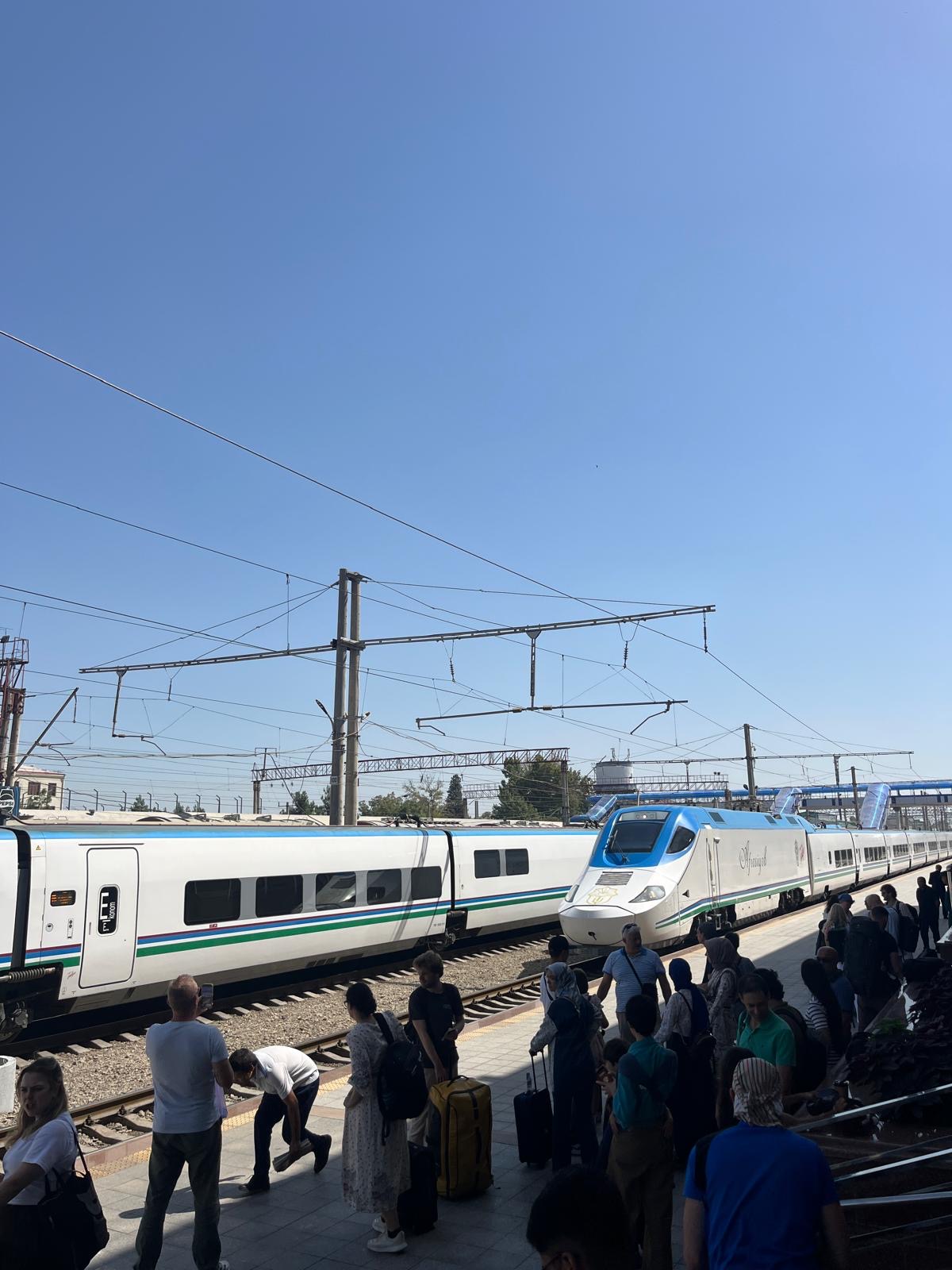
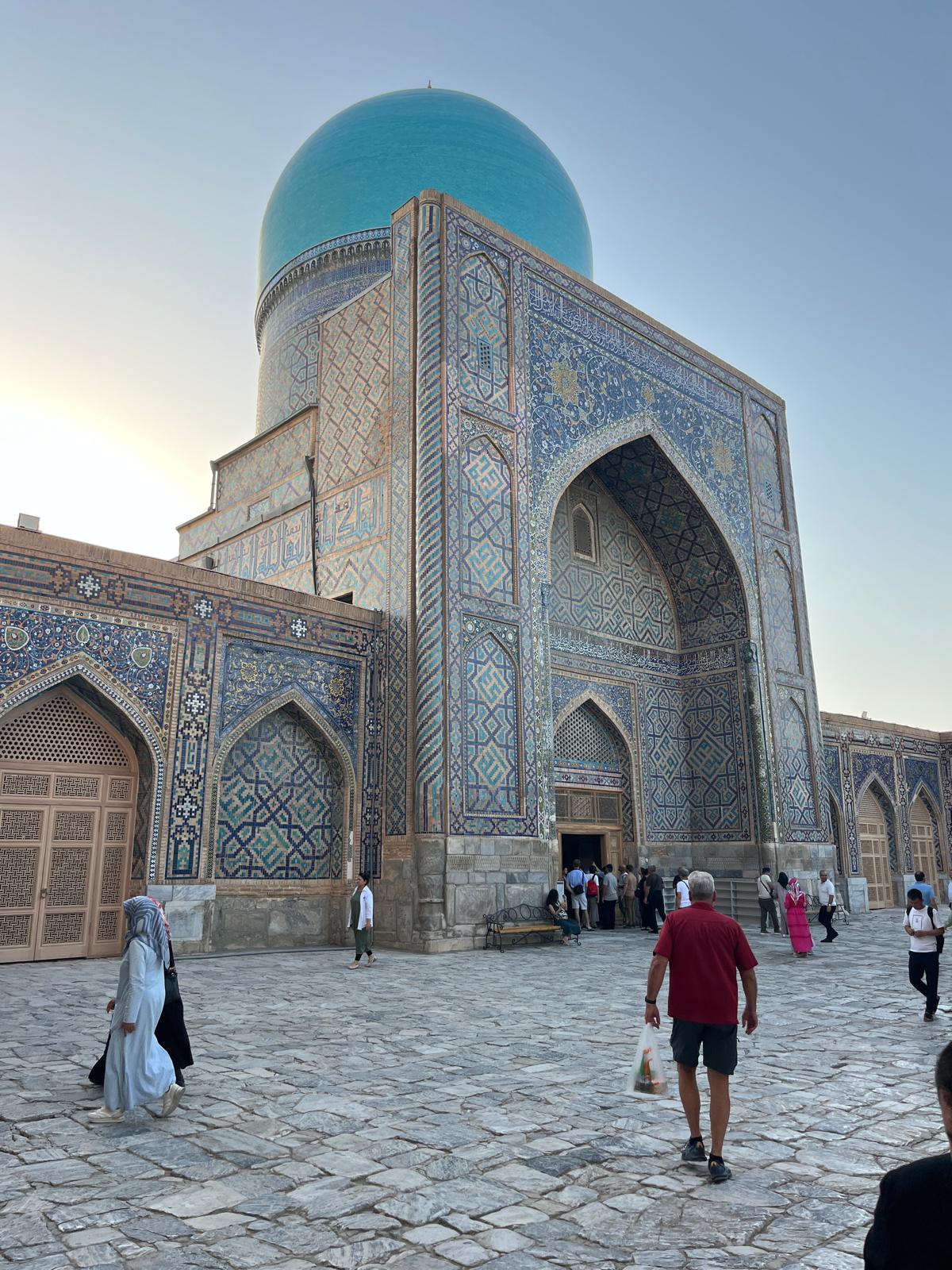
In the morning, board the Afrosiyob high speed train to Samarkand. The journey itself is part of the contrast: modern rail lines crossing the same dry plains that caravans once needed days to cross. On arrival in Samarkand, drop bags at your guesthouse and start at Gur e Amir, the mausoleum of Amir Temur and his descendants. The ribbed blue dome, the carved stone cenotaphs and the interior with its gold and blue decoration all show the ambition of a ruler who saw himself as the heir to Genghis Khan and the restorer of empire. This is where you begin to understand how much wealth and craft were concentrated here.
Continue to a silk carpet workshop, where you see how natural dyes, knot counts and patterns are used in a trade that has existed in Central Asia for centuries. It adds a practical layer to the idea of the Silk Road, showing one of the high value goods that travelled along it.
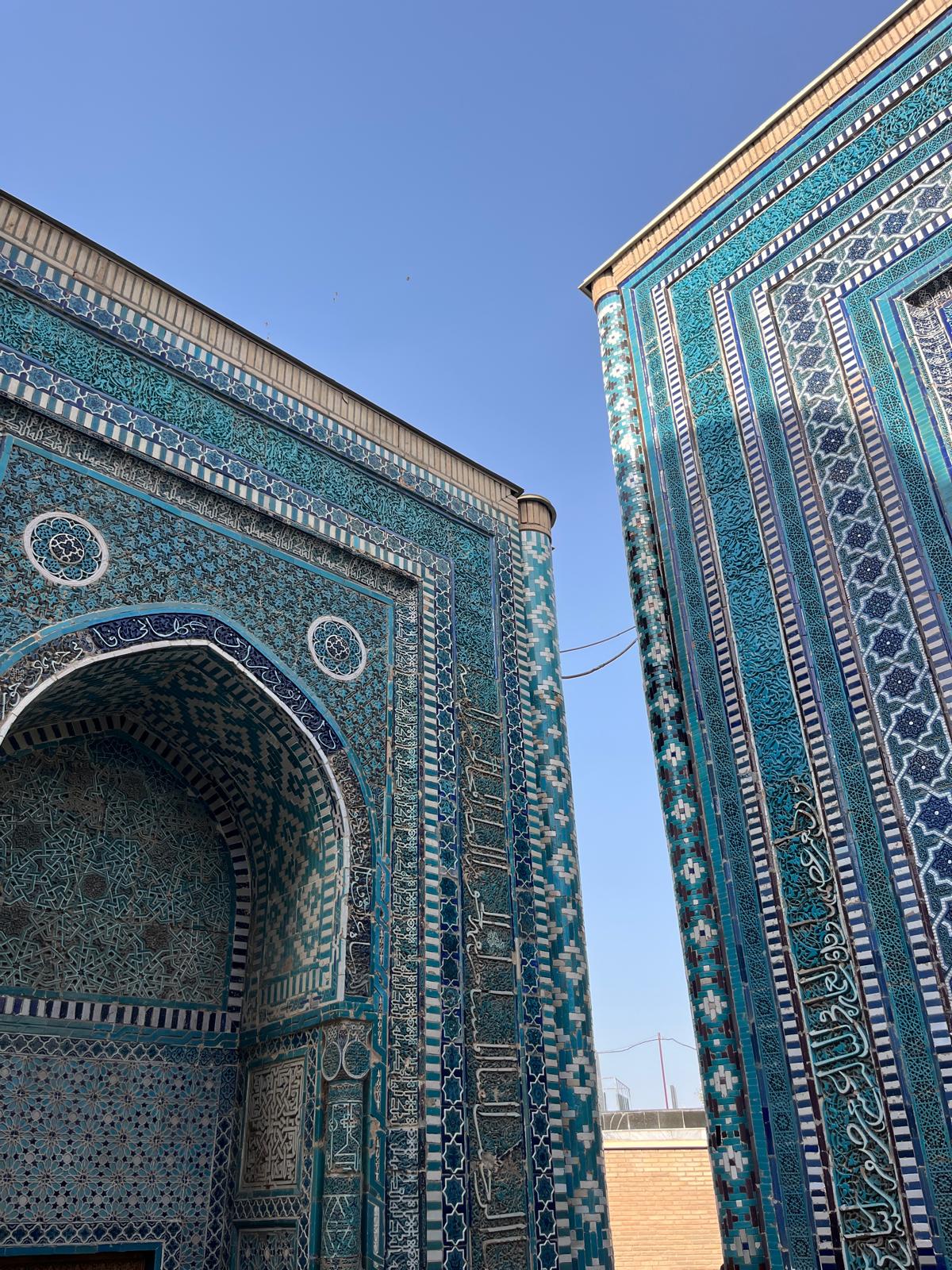
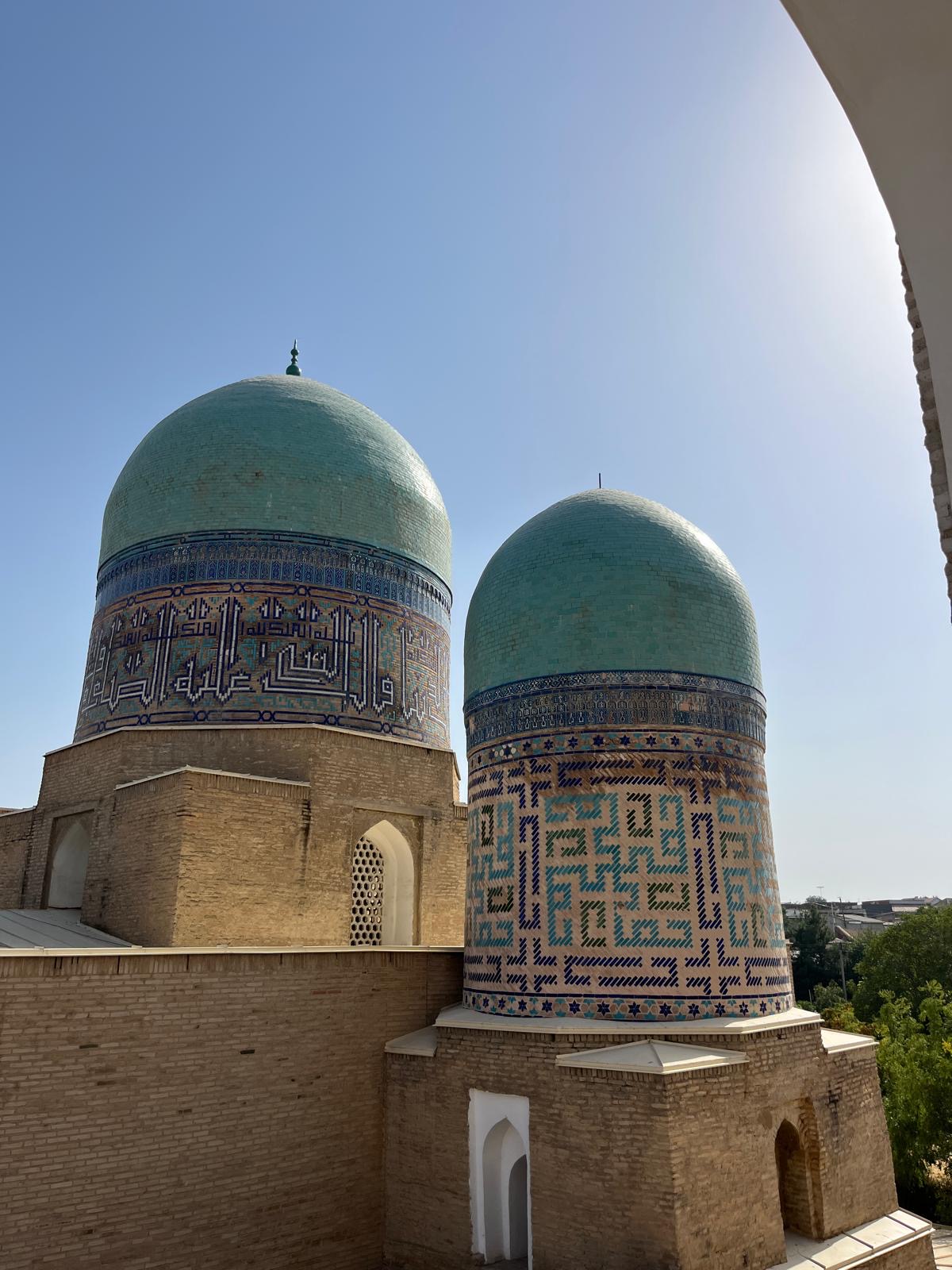
In the afternoon, walk up to Shakhi Zinda, a necropolis on the hillside. Here a series of mausoleums form a narrow corridor of blue tiles, carved stone and inscriptions. Many of these tombs belonged to Temur’s relatives and nobles. The tight space and repeated facades make this one of the most photogenic and atmospheric sites in the country.
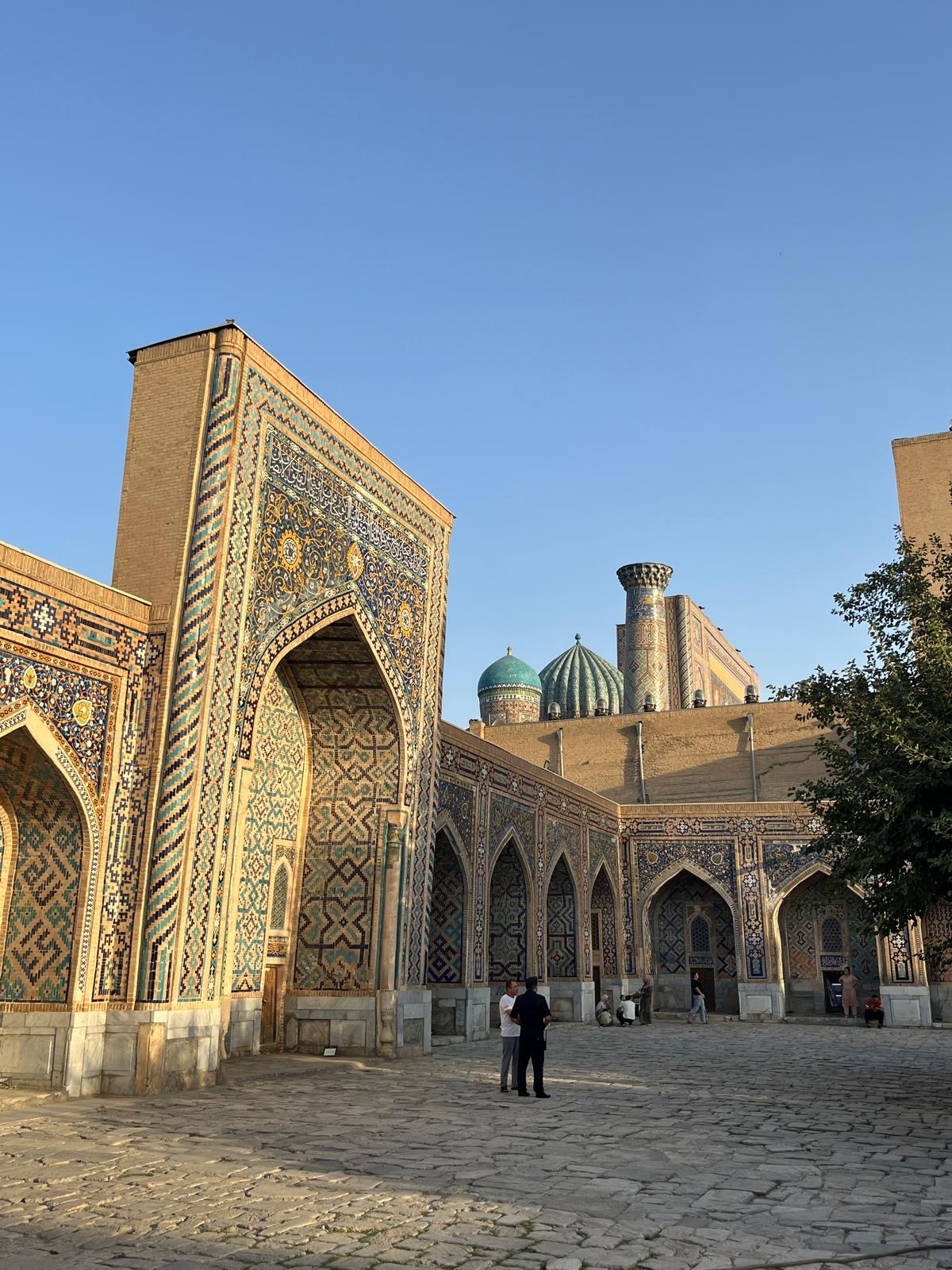
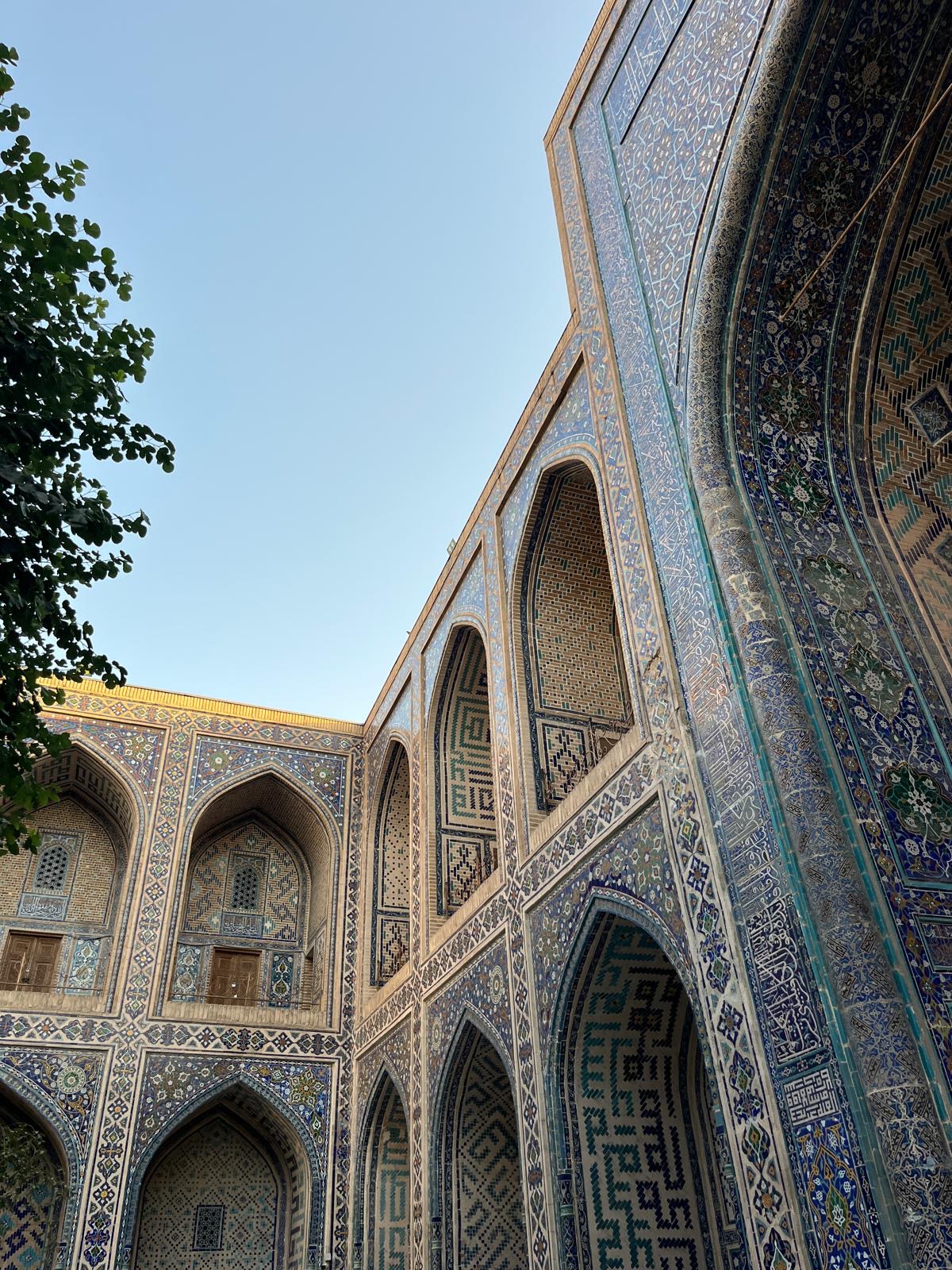
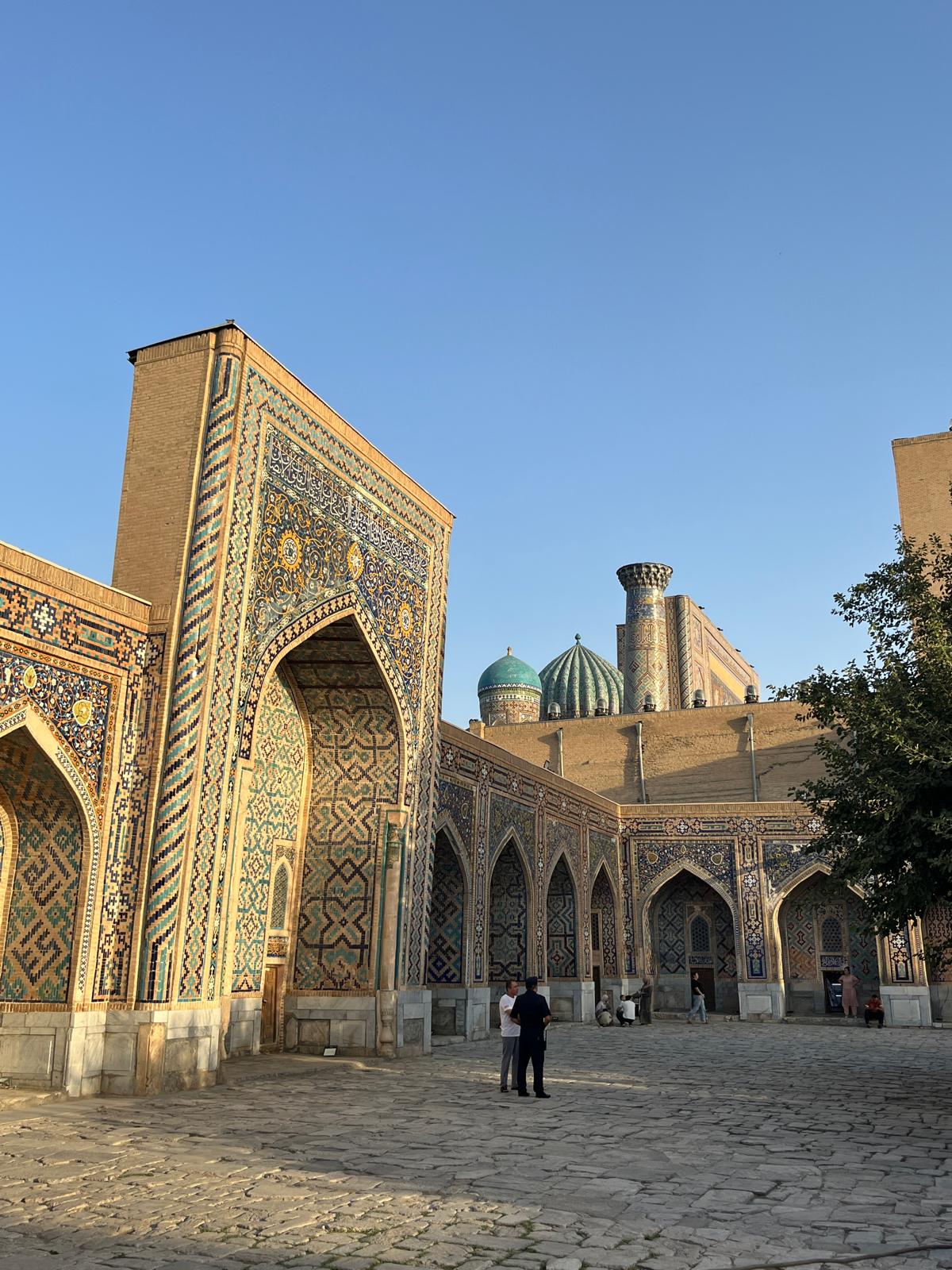
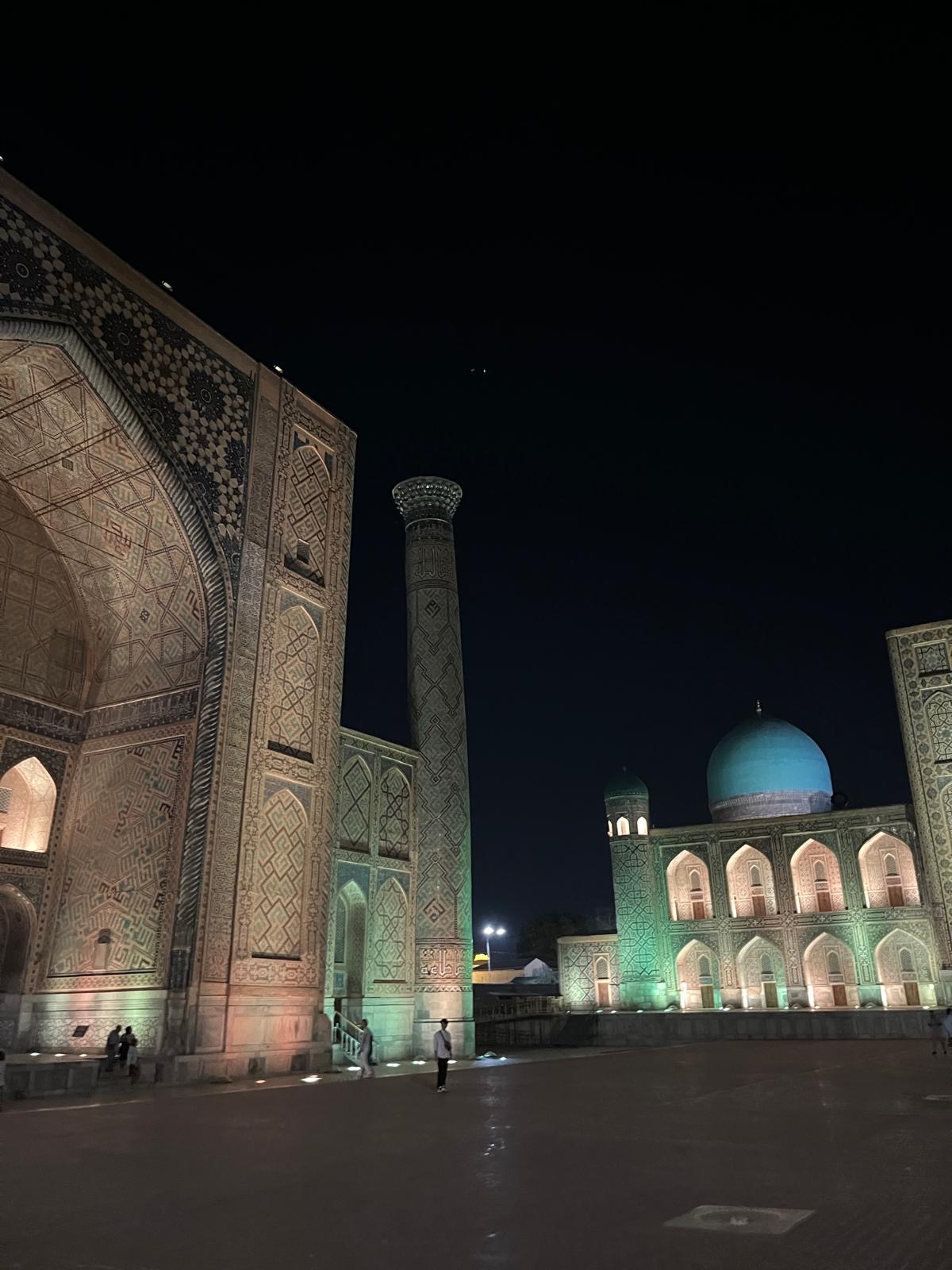
As the light softens, move toward Registan. The three madrasas that frame the square were once centres of religious and scientific learning. Standing in the middle of the square at sunset or early evening, surrounded by tiled facades and high iwans, makes it easier to imagine how this space functioned as a main civic stage.
Day 3: From Samarkand to Bukhara, from imperial stage to caravan city
Use the morning in Samarkand to visit any remaining sites that interest you, such as the Bibi Khanum Mosque or the Siab Bazaar, then board the Afrosiyob train to Bukhara. The desert rolls past outside, reminding you that these cities were islands of water and trade in a very dry landscape. Once in Bukhara, check into a guesthouse in or near the old town and head out on foot.
Start with the sequence of trading domes: Toki Zargaron was known as the dome of the jewellers, Toki Telpakfurushon specialised in headgear such as doppi caps, Timi Abdullakhan was a covered bazaar where carpets and textiles were traded. These buildings are low and functional rather than monumental, but they show the economic engine behind the big monuments.
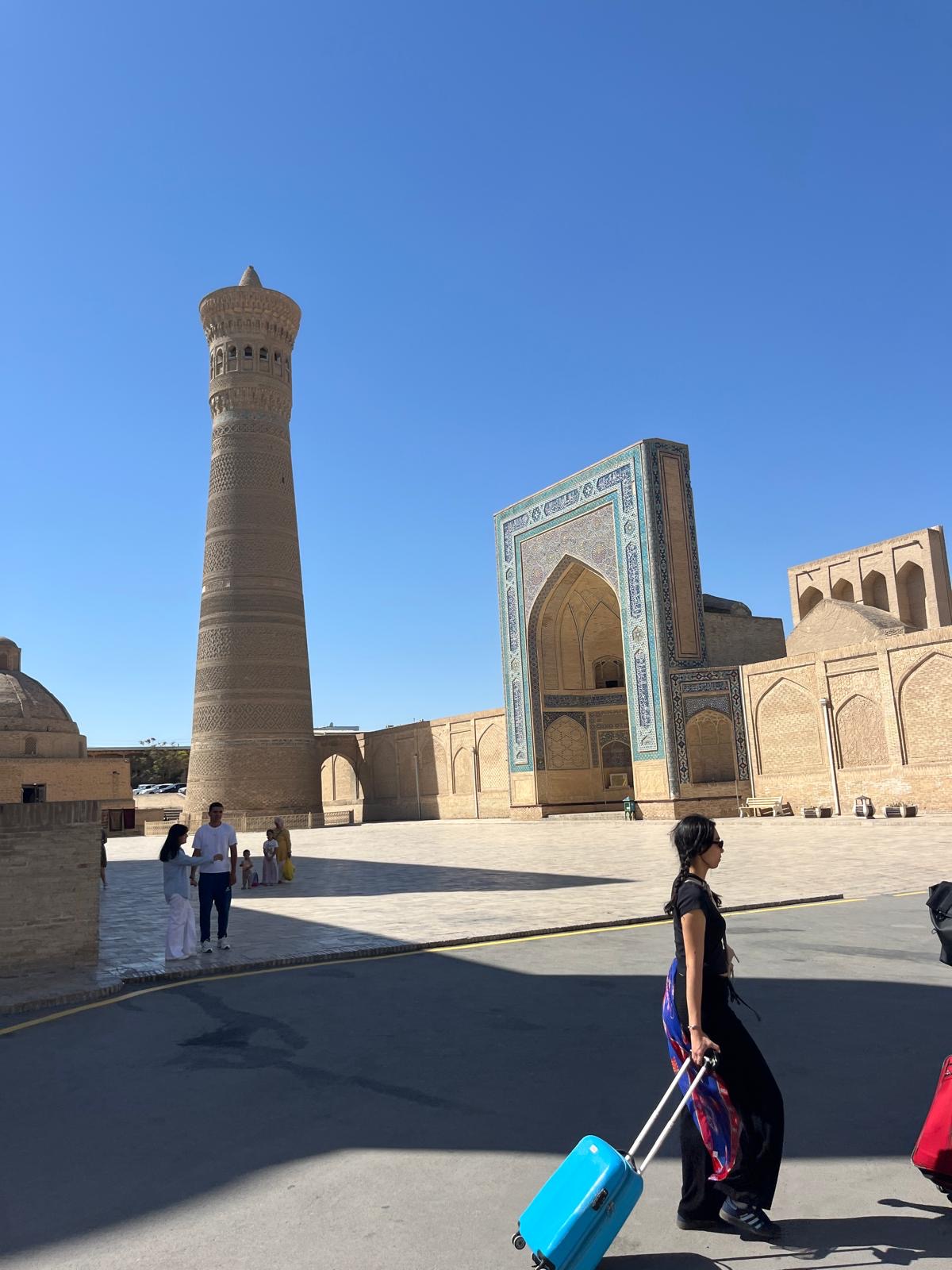
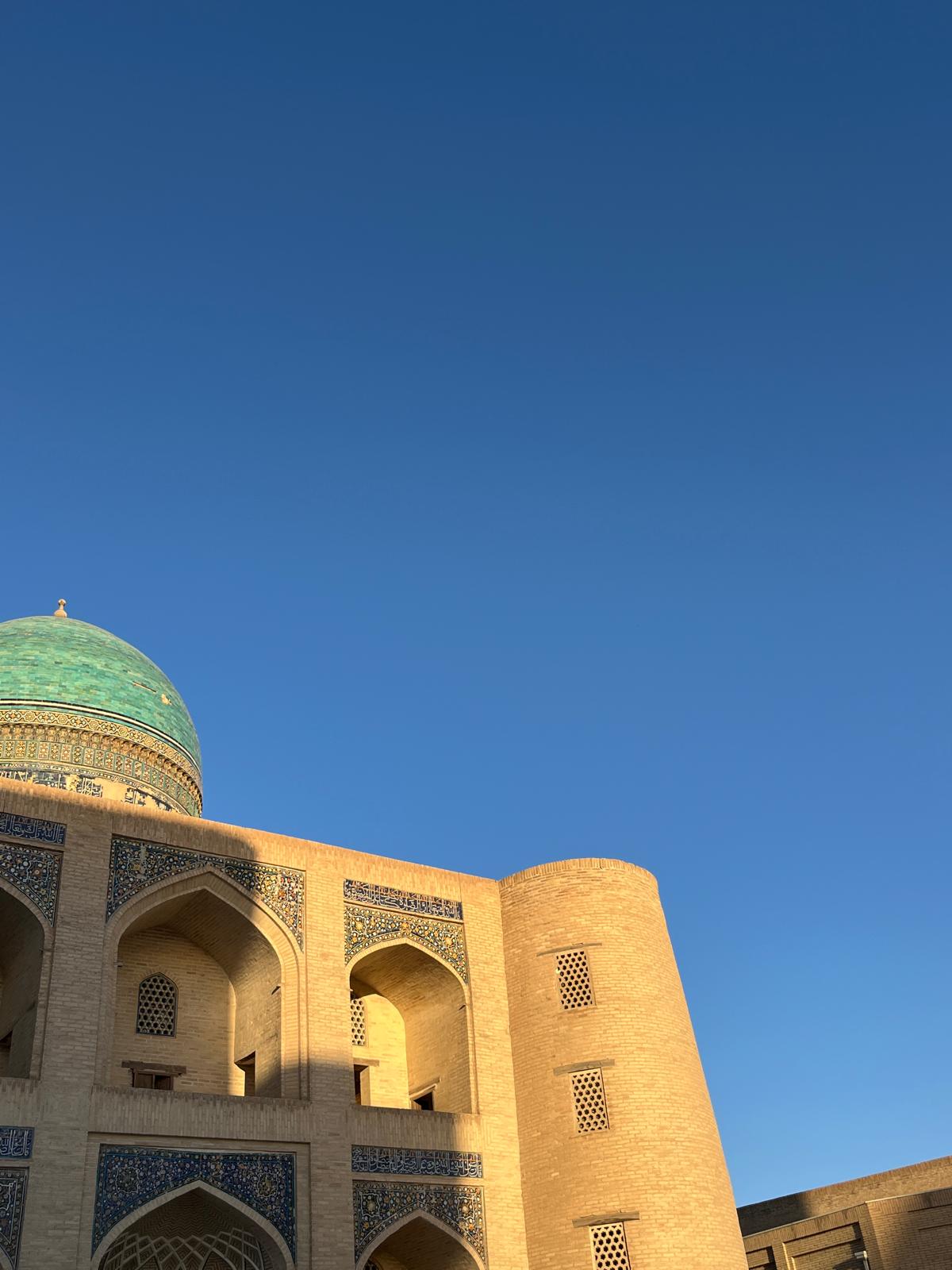
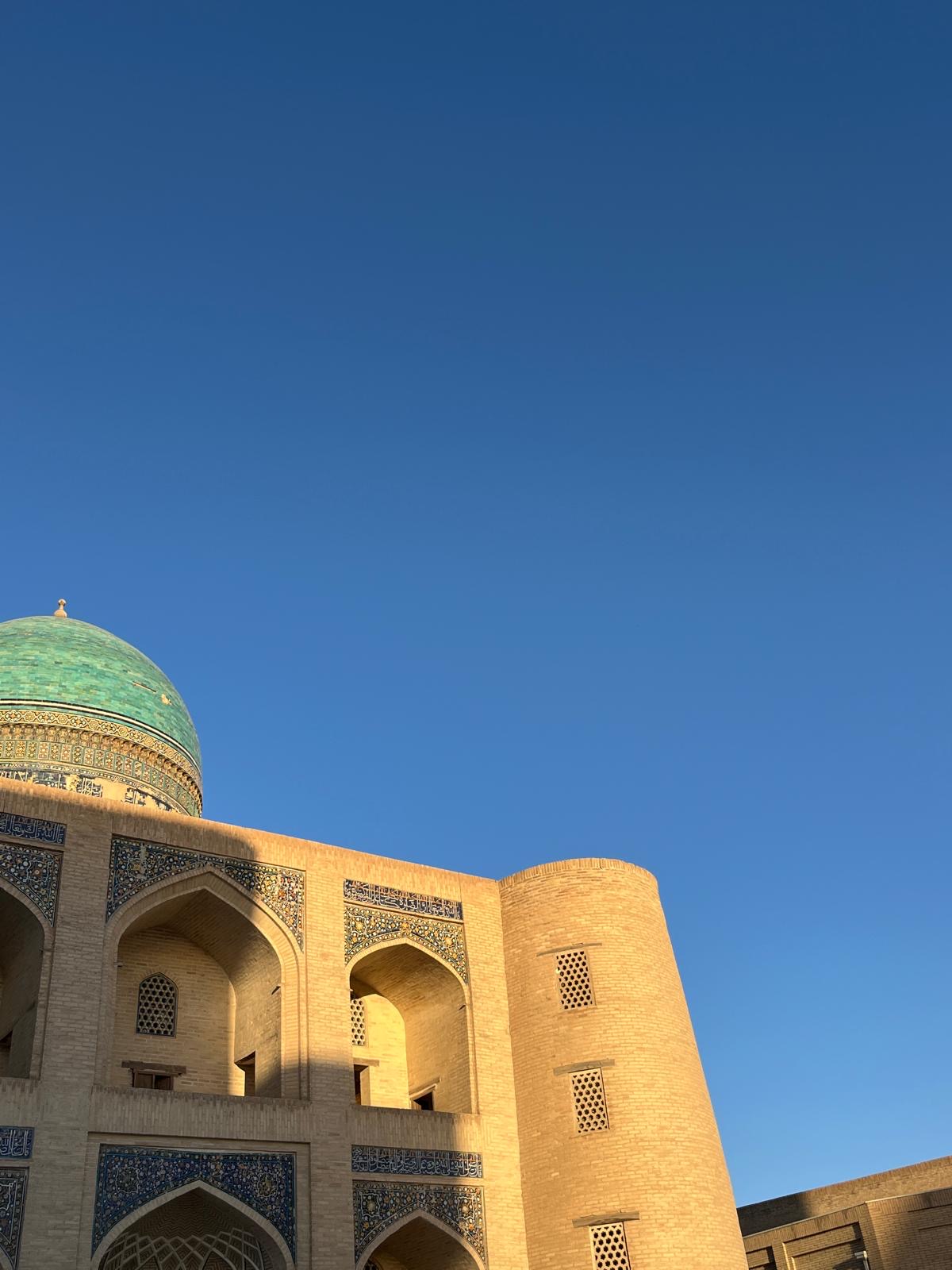
Continue toward the Poi Kalon complex. The Kalon Minaret has dominated the skyline since the twelfth century and was so impressive that Genghis Khan reportedly spared it when he destroyed the city. The mosque courtyard beside it gives a sense of how large Friday prayers once were here. The Mir Arab Madrasah still functions as a religious school, so you usually see it from the outside, but its facade is one of the defining images of Bukhara.
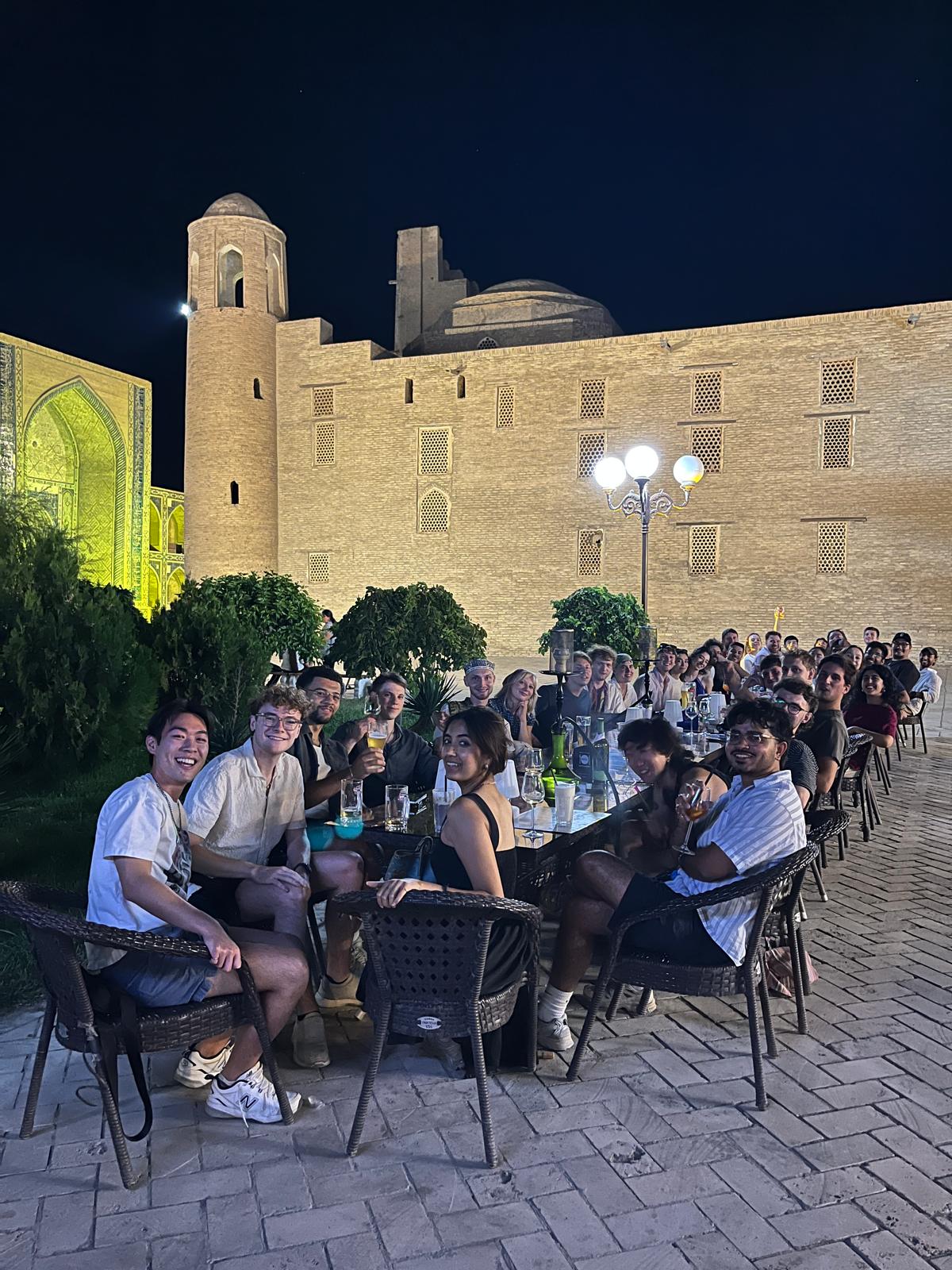
End at Labi Hauz, a square built around an old pool shaded by mulberry trees, flanked by madrasas and old houses. This area has been a public gathering space for centuries and still works that way now, with tea houses, benches and evening life.
Day 4: Bukhara’s deep history and return to Tashkent
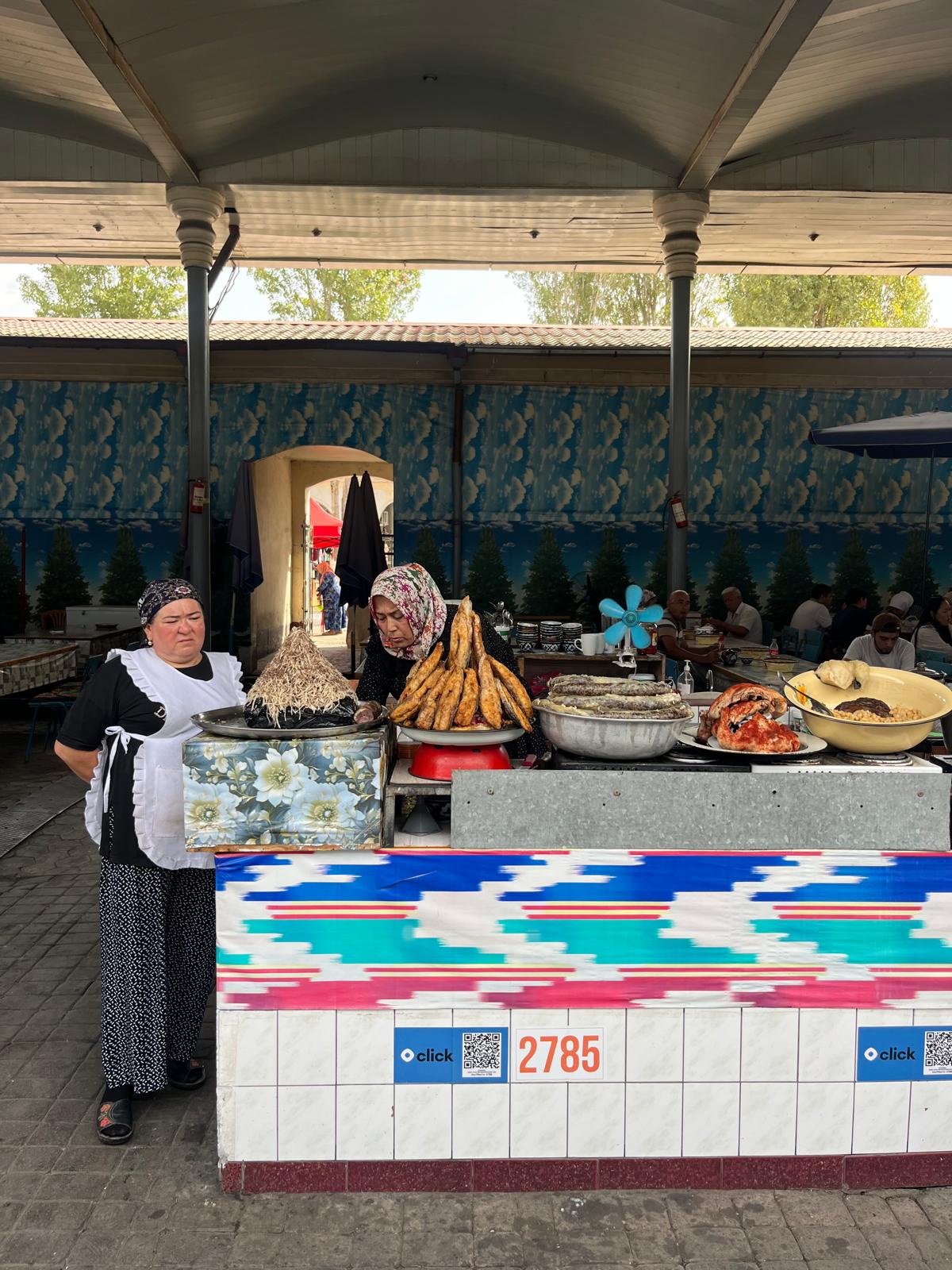
Spend another full day in Bukhara, moving out slightly from the core. Visit the Ismail Samani Mausoleum, one of the oldest surviving Islamic buildings in Central Asia. Its baked brick patterns change appearance with the angle of the light and it shows how early architects experimented with form before the heavy use of tile. Nearby sits Chashma Ayub, linked by tradition to the prophet Job and known as the place of Job’s spring. The building stands out because of its unusual conical dome, which does not follow the usual Central Asian type. Together with the Samani mausoleum, it shows how old Bukhara really is compared to some of the Timurid sites. Walk through a local bazaar where daily fruit, meat and basic goods are sold, then head to Bolo Hauz Mosque, with a pond and a forest of carved wooden pillars that reflect in the water. Directly opposite, across the road, you see the walls and gates of the Ark Fortress, the former seat of the emirs. You can visit the interior museum if time allows, or simply take in the citadel from outside as a statement of power above the old town. After lunch in a chaikhana with tea and simple dishes, catch an afternoon or evening train back to Tashkent (where an impromptu party emerged in the train restaurant car with some locals and some Russians!)
Day 5: Tashkent at your own pace and departure
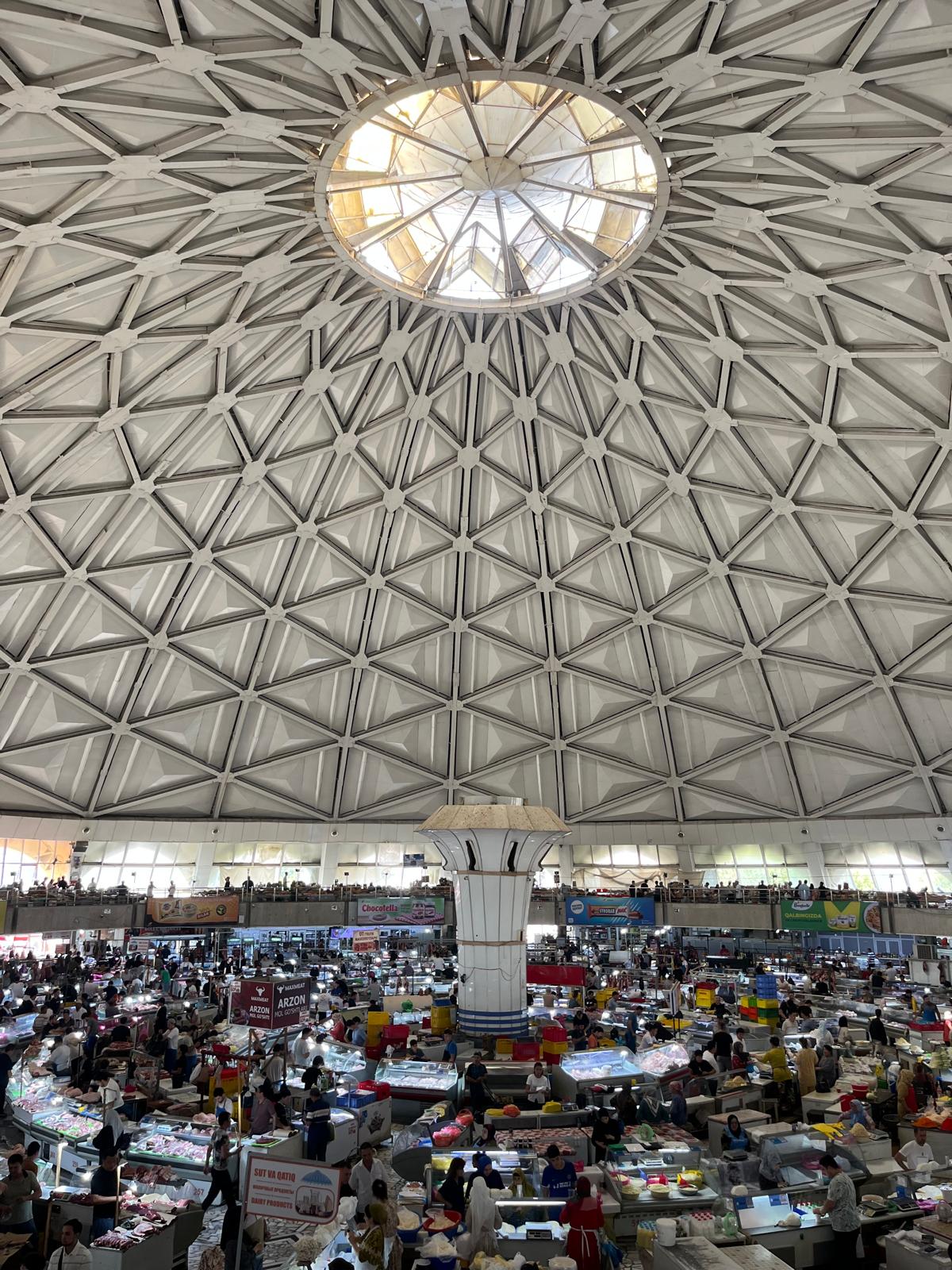
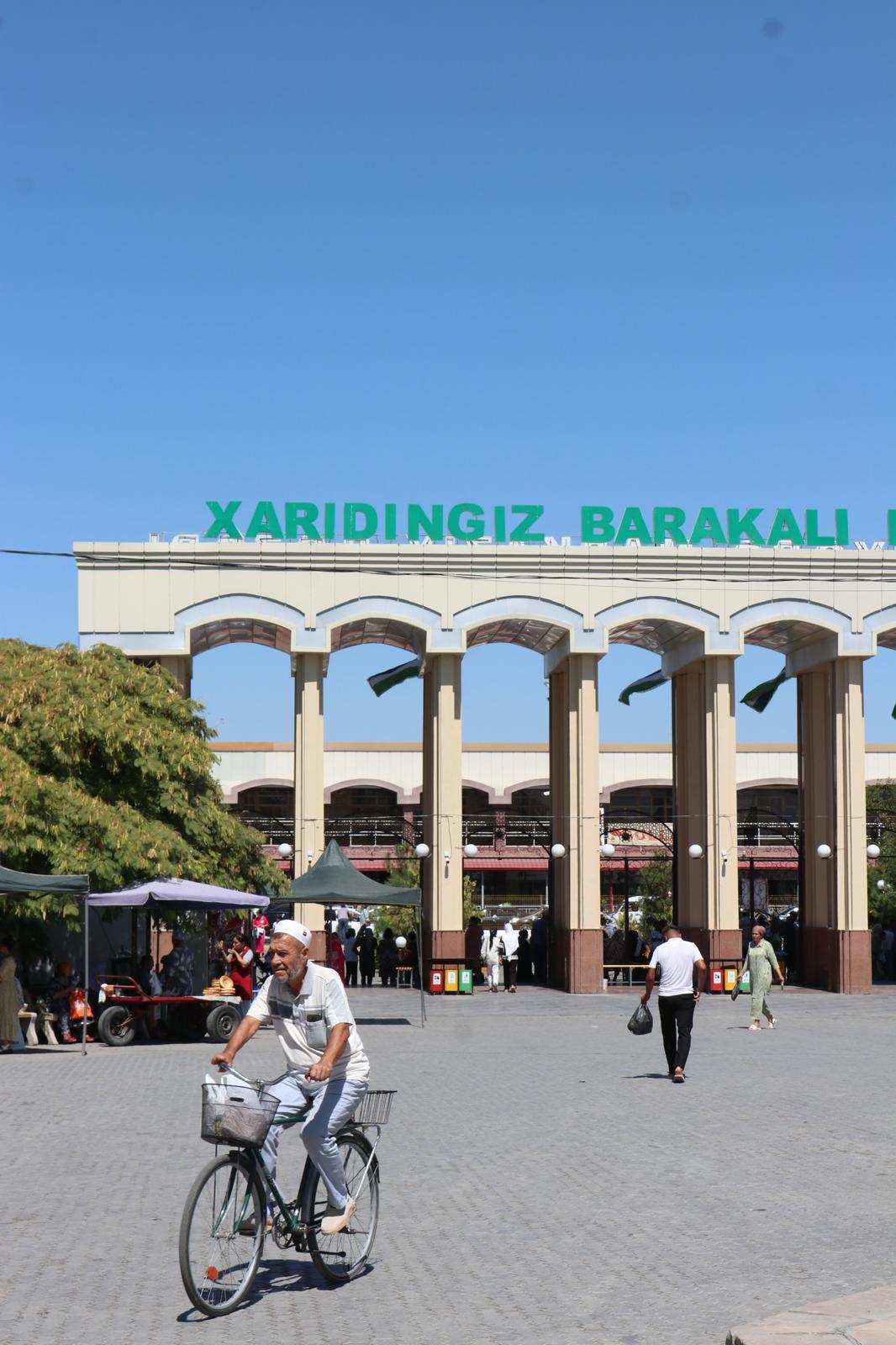
Use the final morning in Tashkent to pick up any souvenirs from Chorsu Bazaar, revisit a favourite metro station or walk some of the broad central boulevards. If you did not have time earlier, you can visit the Khazrati Imam complex to see one of the oldest Qurans in the region. Transfer to the airport and depart.
Optional Khiva Extension - 2 Days
From Tashkent, take a domestic flight to Urgench, then transfer by road to Khiva. The road leads you straight to Itchan Kala, the inner walled city that forms a perfectly contained historic core. Once you pass through the gates, you are inside a compact desert citadel of mud brick walls, low houses and narrow lanes.
Start by exploring the Kunya Ark citadel, where the khans once held court, and the Kalta Minor minaret, famous for its striking turquoise tilework and truncated height. The colour and density of tile here differ from Samarkand and Bukhara, giving Khiva its own visual identity.Wander aimlessly in the late afternoon, letting the grid of streets guide you. Once the day tripping tour groups leave, the city quiets down and the sense of being inside a walled oasis becomes stronger.
Climbing a minaret or section of the city walls where allowed, for wide views over flat rooftops, domes and the surrounding desert. Visit the Juma Mosque, with its forest of carved wooden pillars, some of which date back many centuries. Then explore the Tosh Hovli Palace, which shows how domestic and ceremonial life were structured for the khan’s court, with courtyards, guest areas and family sections all decorated in tile and carved plaster.
Transfer back to Urgench airport for the flight to Tashkent and connect onward.
.png)